Kirjojen hintavertailu. Mukana 11 627 670 kirjaa ja 12 kauppaa.

Kirjahaku

Etsi kirjoja tekijän nimen, kirjan nimen tai ISBN:n perusteella.

1000 tulosta hakusanalla Paul Tengesdal

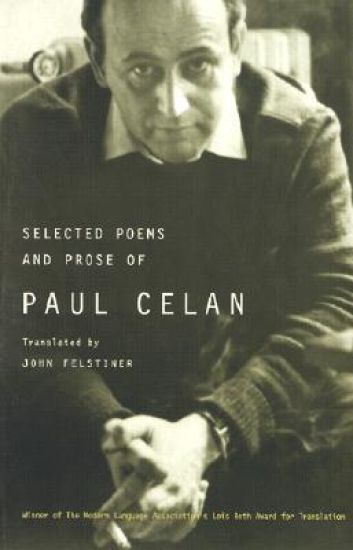
Selected Poems and Prose of Paul Celan
Paul Celan was born in 1920 in the East European province of Bukovina. Soon after his parents, German-speaking Jews, had perished at the hands of the Nazis, Celan wrote "Todesfuge" ("Deathfugue"), the most compelling poem to emerge from the Holocaust. Self-exiled in Paris, for twenty-five years Celan continued writing in his German mother tongue, although it had "passed through the thousand darknesses of deathbringing speech." His writing purges and remakes that language, often achieving a hope-struck radiance never before seen in modern poetry. But in 1970, his psychic wounds unhealed, Celan drowned himself in the Seine. This landmark volume includes youthful lyrics, unpublished poems, and prose. All poems appear in the original and in translation on facing pages. John Felstiner's translations stem from a twenty-year immersion in Celan's life and work. John Bayley wrote in the New York Review of Books, "Felstiner translates ... brilliantly."

Paul Ricoeur

Paul Ricoeur

Steven H. Clark

Routledge
1990
nidottu
This introductory study surveys the entire range of Ricoeur's work, placing it within the context of post-structuralism. Includes a discussion of Time and Narrative and shows how Ricoeur's work links European and American traditions.
Paul de Man

Paul de Man

Martin McQuillian

Routledge
2001
sidottu
Paul de Man's work is key to the American deconstruction movement and to the so-called political turn in critical theory. Seventeen years after his death, his works continue to arouse violent reactions among critics. This book explains why de Man is such an important voice, detailing his critical position, exploring his intellectual and historical contexts, tracing the influence of his work and enabling readers to undertake independent study of his criticism.
Paul de Man

Paul de Man

Martin McQuillian

Routledge
2001
nidottu
Paul de Man's work is key to the American deconstruction movement and to the so-called political turn in critical theory. Seventeen years after his death, his works continue to arouse violent reactions among critics. This book explains why de Man is such an important voice, detailing his critical position, exploring his intellectual and historical contexts, tracing the influence of his work and enabling readers to undertake independent study of his criticism.
Paul Ricoeur

Paul Ricoeur

Karl Simms

Routledge
2002
sidottu
Paul Ricoeur is one of the most wide-ranging thinkers to emerge in the twentieth century. He has developed a unique 'theory of reading' or hermeneutics, which extends far beyond the reading of literary works to build into a theory for the reading of 'life'. For this reason, his work has impacted not only upon literary studies, but upon such disciplines as philosophy, psychoanalysis, history, religion, legal studies and politics.This introductory guide:* details Ricoeur's most significant contributions to contemporary critical thought* provides an intellectual context to his key ideas* explores the debate around his work on good and evil, psychoanalysis, metaphor, narrative, politics and justice* suggests the continuing relevance of Ricoeur's thought and examines the increasing interest in his work across a range of disciplines.Karl Simms also provides a guide to further reading, which offers advice on Ricoeur's publications and relevant secondary texts. Refreshingly clear and impressively comprehensive, Paul Ricoeur is the essential guide to an essential theorist.
Paul Ricoeur

Paul Ricoeur

Karl Simms

Routledge
2002
nidottu
Paul Ricoeur is one of the most wide-ranging thinkers to emerge in the twentieth century. He has developed a unique 'theory of reading' or hermeneutics, which extends far beyond the reading of literary works to build into a theory for the reading of 'life'. For this reason, his work has impacted not only upon literary studies, but upon such disciplines as philosophy, psychoanalysis, history, religion, legal studies and politics.This introductory guide:* details Ricoeur's most significant contributions to contemporary critical thought* provides an intellectual context to his key ideas* explores the debate around his work on good and evil, psychoanalysis, metaphor, narrative, politics and justice* suggests the continuing relevance of Ricoeur's thought and examines the increasing interest in his work across a range of disciplines.Karl Simms also provides a guide to further reading, which offers advice on Ricoeur's publications and relevant secondary texts. Refreshingly clear and impressively comprehensive, Paul Ricoeur is the essential guide to an essential theorist.
Paul Virilio

Paul Virilio

Ian James

Routledge
2007
sidottu
Paul Virilio is a challenging and original thinker whose work on technology, state power and war is increasingly relevant today. Exploring Virilio's main texts from their political and historical contexts, and case studies from contemporary culture and media in order to explain his philosophical concepts, Ian James introduces the key themes in Virlio's work, including:speedvirtualizationwarpoliticsart.As technological and scientific innovations continue to set the agenda for the present and future development of culture, communications, international economy, military intervention and diverse forms of political organization, Virilio's unique theoretical and critical insights are of enormous value and importance for anyone wishing to understand the nature of modern culture and society.
Paul Virilio

Paul Virilio

Ian James

Routledge
2007
nidottu
Paul Virilio is a challenging and original thinker whose work on technology, state power and war is increasingly relevant today. Exploring Virilio's main texts from their political and historical contexts, and case studies from contemporary culture and media in order to explain his philosophical concepts, Ian James introduces the key themes in Virlio's work, including:speedvirtualizationwarpoliticsart.As technological and scientific innovations continue to set the agenda for the present and future development of culture, communications, international economy, military intervention and diverse forms of political organization, Virilio's unique theoretical and critical insights are of enormous value and importance for anyone wishing to understand the nature of modern culture and society.
Paul Tillich, Carl Jung and the Recovery of Religion
Is religion a positive reality in your life? If not, have you lost anything by forfeiting this dimension of your humanity?This book compares the theology of Tillich with the psychology of Jung, arguing that they were both concerned with the recovery of a valid religious sense for contemporary culture. Paul Tillich, Carl Jung and the Recovery of Religion explores in detail the diminution of the human spirit through the loss of its contact with its native religious depths, a problem on which both spent much of their working lives and energies.Both Tillich and Jung work with a naturalism that grounds all religion on processes native to the human being. Tillich does this in his efforts to recover that point at which divinity and humanity coincide and from which they differentiate. Jung does this by identifying the archetypal unconscious as the source of all religions now working toward a religious sentiment of more universal sympathy. This book identifies the dependence of both on German mysticism as a common ancestry and concludes with a reflection on how their joint perspective might affect religious education and the relation of religion to science and technology.Throughout the book, John Dourley looks back to the roots of both men's ideas about mediaeval theology and Christian mysticism making it ideal reading for analysts and academics in the fields of Jungian and religious studies.
Paul de Man (Routledge Revivals)

Paul de Man (Routledge Revivals)

Christopher Norris

Routledge
2010
sidottu
Paul de Man - literary critic, literary philosopher, "American deconstructionist" - changed the landscape of criticism through his rigorous theories and writings. Upon its original publication in 1988, Christopher Norris' book was the first full-length introduction to de Man, a reading that offers a much-needed corrective to the pattern of extreme antithetical response which marked the initial reception to de Man's writings.Norris addresses de Man's relationship to philosophical thinking in the post-Kantian tradition, his concern with "aesthetic ideology" as a potent force of mystification within and beyond that tradition, and the vexed issue of de Man's politics. Norris brings out the marked shift of allegiance in de Man's thinking, from the thinly veiled conservative implications of the early essays to the engagement with Marx and Foucault on matters of language and politics in the late, posthumous writing. At each stage, Norris raises these questions through a detailed close reading of individual texts which will be welcomed by those who lack any specialised knowledge of de Man's work.
Paul de Man (Routledge Revivals)

Paul de Man (Routledge Revivals)

Christopher Norris

Routledge
2010
nidottu
Paul de Man - literary critic, literary philosopher, "American deconstructionist" - changed the landscape of criticism through his rigorous theories and writings. Upon its original publication in 1988, Christopher Norris' book was the first full-length introduction to de Man, a reading that offers a much-needed corrective to the pattern of extreme antithetical response which marked the initial reception to de Man's writings.Norris addresses de Man's relationship to philosophical thinking in the post-Kantian tradition, his concern with "aesthetic ideology" as a potent force of mystification within and beyond that tradition, and the vexed issue of de Man's politics. Norris brings out the marked shift of allegiance in de Man's thinking, from the thinly veiled conservative implications of the early essays to the engagement with Marx and Foucault on matters of language and politics in the late, posthumous writing. At each stage, Norris raises these questions through a detailed close reading of individual texts which will be welcomed by those who lack any specialised knowledge of de Man's work.
Paul Gilroy

Paul Gilroy

Paul Williams

Routledge
2012
sidottu
Paul Gilroy has been a controversial force at the forefront of debates around race, nation, and diaspora. Working across a broad range of disciplines, Gilroy has argued that racial identities are historically constructed, formed by colonization, slavery, nationalist philosophies, and consumer capitalism.Paul Williams introduces Gilroy’s key themes and ideas, including: the essential concepts, including ethnic absolutism, civilizationism, postcolonial melancholia, iconization, and the ‘black Atlantic’ analysis of Gilroy’s broad-ranging cultural references, from Edmund Burke to hip-hop a comprehensive overview of Gilroy’s influences and the academic debates his work has inspired.Emphasizing the timeliness and global relevance of Gilroy’s ideas, this guide will appeal to anyone approaching Gilroy’s work for the first time or seeking to further their understanding of race and contemporary culture.
Paul Gilroy

Paul Gilroy

Paul Williams

Routledge
2012
nidottu
Paul Gilroy has been a controversial force at the forefront of debates around race, nation, and diaspora. Working across a broad range of disciplines, Gilroy has argued that racial identities are historically constructed, formed by colonization, slavery, nationalist philosophies, and consumer capitalism.Paul Williams introduces Gilroy’s key themes and ideas, including: the essential concepts, including ethnic absolutism, civilizationism, postcolonial melancholia, iconization, and the ‘black Atlantic’ analysis of Gilroy’s broad-ranging cultural references, from Edmund Burke to hip-hop a comprehensive overview of Gilroy’s influences and the academic debates his work has inspired.Emphasizing the timeliness and global relevance of Gilroy’s ideas, this guide will appeal to anyone approaching Gilroy’s work for the first time or seeking to further their understanding of race and contemporary culture.
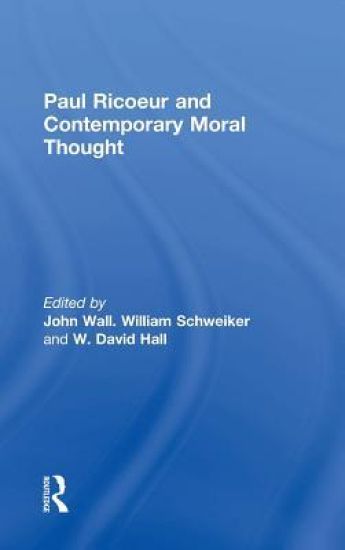
Paul Ricoeur and Contemporary Moral Thought
Here, some of the most influential thinkers in theological and philosophical ethics develop new directions for research in contemporary moral thought. Taking as their starting point Ricoeur's recent work on moral anthropology, the contributors set a vital agenda for future conversations about ethics and just community.
Paul Auster's Postmodernity

Paul Auster's Postmodernity

Brendan Martin

Routledge
2010
nidottu
This book focuses upon the literary and autobiographical writings of American novelist Paul Auster, investigating his literary postmodernity in relation to a full range of his writings. Martin addresses Auster’s evocation of a range of postmodern notions, such as the duplicitous art of self-invention, the role of chance and contingency, authorial authenticity and accountability, urban dislocation, and the predominance of duality.
Paul Auster's Postmodernity

Paul Auster's Postmodernity

Brendan Martin

Routledge
2007
sidottu
This book focuses upon the literary and autobiographical writings of American novelist Paul Auster, investigating his literary postmodernity in relation to a full range of his writings. Martin addresses Auster’s evocation of a range of postmodern notions, such as the duplicitous art of self-invention, the role of chance and contingency, authorial authenticity and accountability, urban dislocation, and the predominance of duality.
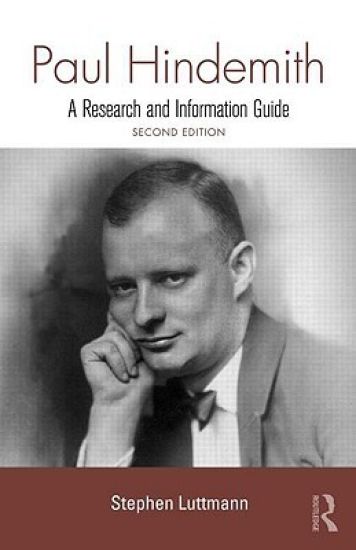
Paul Hindemith

Paul Hindemith

Stephen Luttmann

Routledge
2009
sidottu
Paul Hindemith: A Research and Information Guide is an annotated bibliography concerning both the nature of primary sources related to the composer and the scope and significance of the secondary sources which deal with him, his compositions, and his influence as a musician and teacher. The second edition includes research published since the publication of the first edition and provides electronic resources.
Paul Wilmott on Quantitative Finance, 3 Volume Set
Paul Wilmott on Quantitative Finance, Second Edition provides a thoroughly updated look at derivatives and financial engineering, published in three volumes with additional CD-ROM. Volume 1: Mathematical and Financial Foundations; Basic Theory of Derivatives; Risk and Return. The reader is introduced to the fundamental mathematical tools and financial concepts needed to understand quantitative finance, portfolio management and derivatives. Parallels are drawn between the respectable world of investing and the not-so-respectable world of gambling. Volume 2: Exotic Contracts and Path Dependency; Fixed Income Modeling and Derivatives; Credit Risk In this volume the reader sees further applications of stochastic mathematics to new financial problems and different markets. Volume 3: Advanced Topics; Numerical Methods and Programs. In this volume the reader enters territory rarely seen in textbooks, the cutting-edge research. Numerical methods are also introduced so that the models can now all be accurately and quickly solved. Throughout the volumes, the author has included numerous Bloomberg screen dumps to illustrate in real terms the points he raises, together with essential Visual Basic code, spreadsheet explanations of the models, the reproduction of term sheets and option classification tables. In addition to the practical orientation of the book the author himself also appears throughout the book—in cartoon form, readers will be relieved to hear—to personally highlight and explain the key sections and issues discussed. Note: CD-ROM/DVD and other supplementary materials are not included as part of eBook file.
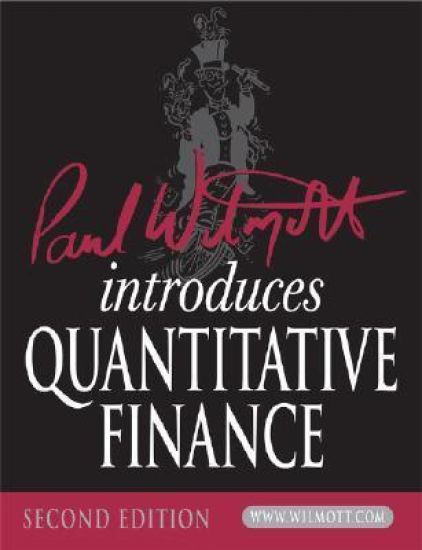
Paul Wilmott Introduces Quantitative Finance
Paul Wilmott Introduces Quantitative Finance, Second Edition is an accessible introduction to the classical side of quantitative finance specifically for university students. Adapted from the comprehensive, even epic, works Derivatives and Paul Wilmott on Quantitative Finance, Second Edition, it includes carefully selected chapters to give the student a thorough understanding of futures, options and numerical methods. Software is included to help visualize the most important ideas and to show how techniques are implemented in practice. There are comprehensive end-of-chapter exercises to test students on their understanding.