Kirjojen hintavertailu. Mukana 11 244 527 kirjaa ja 12 kauppaa.

Kirjahaku

Etsi kirjoja tekijän nimen, kirjan nimen tai ISBN:n perusteella.

1000 tulosta hakusanalla Philippe Labbe

Louis-Philippe: Der Letzte Der Bourbonen
Als Louis Philippe (1773-1850) nach der Julirevolution von 1830 den Thron Frankreichs bestieg und das Burgerkonigtum einfuhrte, hatte er bereits turbulente Zeiten durchlebt: von der Franzosischen Revolution uber die Herrschaft Napoleons bis in die Restauration. Auch wenn der Letzte der Bourbonen 1848 durch eine erneute Revolution entmachtet wurde - was bis heute das Angedenken trubt -, hat er sich in seiner Regierungszeit durchaus erfolgreich bemuht, die franzosische Gesellschaft mit sich selbst zu versohnen. Er verfolgte eine mittlere Linie ("juste milieu") und galt als Kompromissfinder und Garant einer burgerlichen Ordnung in sozial aufgewuhlten Zeiten. Sein politischer Erfolg schlagt sich auch im reichen kulturellen Ausstoss dieser Epoche nieder. Klaus Deinet liefert eine umfassende Biografie und ausgewogene Bewertung des Burgerkonigs.

Louis-Philippe I

Louis-Philippe I

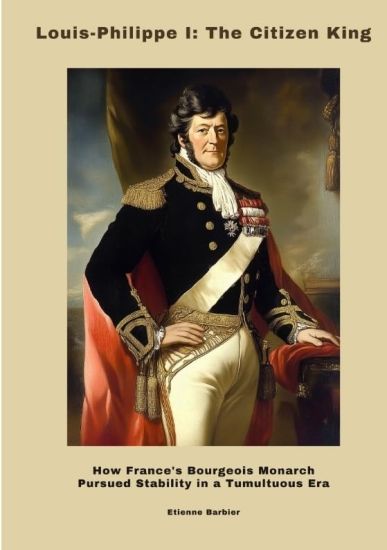
Etienne Barbier

tredition GmbH
2025
pokkari
At the crossroads of revolution and monarchy, Louis-Philippe I emerged as a pivotal fig-ure in French history, embodying the aspirations and contradictions of a nation in search of balance. Crowned in the wake of the July Revolution of 1830, Louis-Philippe rose to power not as a traditional sovereign but as the selfproclaimed Citizen King, a title reflecting his efforts to reconcile France's revolutionary ideals with monarchical governance. In this compelling exploration, Etienne Barbier delves into the complexities of Louis-Philippe's reign, painting a vivid portrait of a ruler who sought stability in an era of political upheaval, economic transformation, and social evolution. From his Enlightenment-influenced upbringing and years of exile to his pragmatic policies and eventual downfall, Barbier traces the journey of a monarch navigating the treacherous waters of 19th-century Europe. Louis-Philippe I: The Citizen King offers a nuanced analysis of a king often overshad-owed by his predecessors and successors, revealing a leader who embodied both the promises and challenges of constitutional monarchy. This richly detailed narrative will captivate readers interested in the intersection of history, politics, and the enduring struggle to balance tradition with progress. Perfect for enthusiasts of European history and those curious about the dynamic inter-play of power, revolution, and reform, Barbier's work sheds new light on a fascinating yet often misunderstood chapter of France's past.
Louis-Philippe I

Louis-Philippe I

Etienne Barbier

tredition GmbH
2025
sidottu
At the crossroads of revolution and monarchy, Louis-Philippe I emerged as a pivotal fig-ure in French history, embodying the aspirations and contradictions of a nation in search of balance. Crowned in the wake of the July Revolution of 1830, Louis-Philippe rose to power not as a traditional sovereign but as the selfproclaimed Citizen King, a title reflecting his efforts to reconcile France's revolutionary ideals with monarchical governance. In this compelling exploration, Etienne Barbier delves into the complexities of Louis-Philippe's reign, painting a vivid portrait of a ruler who sought stability in an era of political upheaval, economic transformation, and social evolution. From his Enlightenment-influenced upbringing and years of exile to his pragmatic policies and eventual downfall, Barbier traces the journey of a monarch navigating the treacherous waters of 19th-century Europe. Louis-Philippe I: The Citizen King offers a nuanced analysis of a king often overshad-owed by his predecessors and successors, revealing a leader who embodied both the promises and challenges of constitutional monarchy. This richly detailed narrative will captivate readers interested in the intersection of history, politics, and the enduring struggle to balance tradition with progress. Perfect for enthusiasts of European history and those curious about the dynamic inter-play of power, revolution, and reform, Barbier's work sheds new light on a fascinating yet often misunderstood chapter of France's past.
Jean-Philippe Rameau, Abaris, ou Les Bor?ades - V?rit?s ?galement ignor?es et interressantes tir?es du sein de la nature. Interpretation der Trag?die lyrique parallel zur metaphysischen Lehre vom Corps Sonore
Jean-Philippe Rameaus Schaffen umfasst gleicherma en B hnenkompositionen wie Schriften zur Musiktheorie. Das zeitgen ssische Publikum feierte seine Musik, die sich zur Tradition der franz sischen Klassik bekannte, mit triumphalen Erfolgen und umk mpfte sie in sthetisch-gesellschaftlichen Auseinandersetzungen. Dennoch blieb die letzte Trag die lyrique Abaris, ou Les Bor ades (1762) zun chst unaufgef hrt. Mit Projekten zur Realisation dieses bedeutenden musikgeschichtlichen Dokumentes im 20. Jahrhundert erhoben sich Fragen nach einer ad quaten Interpretation. Diese Untersuchung widmet sich dem Aspekt, inwieweit das theoretische Denken des Komponisten f r die Auslegung des B hnenwerkes Aufschluss geben kann. Dabei st tzt sie sich auf dessen Tendenz zu kosmologischer Verallgemeinerung, die in den sp ten Abhandlungen verst rkt zutagetritt und im letzten Musiktraktat V rit s galement ignor es et interressantes tir es du sein de la nature (1764) kulminiert. Der Autor: Bernhard M. Strunz, Dr. phil., Jahrgang 1958, Studium der Schulmusik an der Musikhochschule M nchen, Philosophie an der Hochschule f r Philosophie S.J., M nchen, und von 1994 - 1998 Musikwissenschaft an der Friedrich-Alexander-Universit t, Erlangen. Seit 1989 T tigkeit als Gymnasiallehrer f r Musik. Von 1998 - 2000 Auslandsschuldienst an der Deutschen Schule Santiago, Chile. Diese Dissertation wurde von Prof. Dr. Fritz Reckow bis zu dessen Tod im Jahre 1998 betreut und zwei Jahre sp ter bei Prof. Dr. Helmut Schneider an der Universit t des Saarlandes abgeschlossen.
Little Philippe of Belgium

Little Philippe of Belgium

Madeline Brandeis

ALPHA EDITION
2023
pokkari
Little Philippe of Belgium, has been regarded as significant work throughout human history, and in order to ensure that this work is never lost, we have taken steps to ensure its preservation by republishing this book in a contemporary format for both current and future generations. This entire book has been retyped, redesigned, and reformatted. Since these books are not made from scanned copies, the text is readable and clear.