Kirjojen hintavertailu. Mukana 12 390 323 kirjaa ja 12 kauppaa.

Kirjahaku

Etsi kirjoja tekijän nimen, kirjan nimen tai ISBN:n perusteella.

1000 tulosta hakusanalla Philo

Philosophy after Objectivity

Philosophy after Objectivity

Paul K. Moser

Oxford University Press Inc
1999
nidottu
Philosophers have traditionally sought objective knowledge: knowledge of things whose existence does not depend on one's conceiving of them. Philosophy After Objectivity uses lessons from debates over objective knowledge to characterize the kinds of reasons pertinent to philosophical and other theoretical views. It argues that we cannot meet skeptics' typical demands for non-question begging support for claims to objective truth, and that, therefore, we should not regard our supporting reasons as resistant to skeptical challenges.
Philosophy of Mathematics and Mathematical Practice in the Seventeenth Century
The seventeenth century saw dramatic advances in mathematical theory and practice. With the recovery of many of the classical Greek mathematical texts, new techniques were introduced, and within 100 years, the rules of analytic geometry, geometry of indivisibles, arithmetic of infinites, and calculus were developed. Although many technical studies have been devoted to these innovations, Mancosu provides the first comprehensive account of the relationship between mathematical advances of the seventeenth century and the philosophy of mathematics of the period. Starting with the Renaissance debates on the certainty of mathematics, Mancosu leads the reader through the foundational issues raised by the emergence of these new mathematical techniques, including the influence of the Aristotelian conception of science in Cavalieri and Guldin, the foundational relevance of Descartes' Geometrie, the relation between geometrical and epistemological theories of the infinite, and the Leibnizian calculus and the opposition to infinitesimalist procedures. In the process Mancosu draws a sophisticated picture of the subtle dependencies between technical development and philosophical reflection in seventeenth century mathematics.
Philoctetes

Philoctetes

Sophocles

Oxford University Press Inc
2003
nidottu
Based on the conviction that only translators who write poetry themselves can properly re-create the celebrated and timeless tragedies of Aeschylus, Sophocles, and Euripides, the Greek Tragedy in New Translations series offers new translations that go beyond the literal meaning of the Greek in order to evoke the poetry of the originals. Under the general editorship of Peter Burian and Alan Shapiro, each volume includes a critical introduction, commentary on the text, full stage directions, and a glossary of the mythical and geographical references in the play. En route to fight the Trojan War, the Greek army has abandoned Philoctetes, after the smell of his festering wound made it unbearable to keep him on ship. Ten years later, an oracle makes it clear that the war cannot be won without the assistance of Philoctetes and his famous bow, inherited from Hercules himself. Philoctetes focuses on the attempt of the heroes Odysseus and Neoptolemus to persuade the bowman to sail with them to Troy. First, though, they must assuage his bitterness over having been abandoned, then win his trust. But how should they do this--through trickery, or with the truth? To what extent do the ends justify the means? To what degree should private interest be compromised for the sake of public duty? These are among the questions that Sophocles puts forward in this, one of his most morally complex and penetrating plays.
Philosophy and Democracy

Philosophy and Democracy

Oxford University Press Inc
2003
nidottu
This volume collects some of the leading essays in contemporary democratic theory published in the past thirty years. The anthology presents the work of a select group of contributors (including Peter Singer, Joshua Cohen, Ronald Dworkin, Richard Arneson, and others) and covers many foundational approaches defended by scholars from a range of different disciplines. The chapters address many issues that are central to philosophical reflections on democracy, such as questions pertaining to deliberative and economic approaches, as well as to such topics as intrinsic fairness, the role of equality in relation to minority groups, and the limits of democracy. Covering representative work in economics, political science, legal theory, and philosophy, this comprehensive volume is suited to courses in political theory and political philosophy.
Philosophy of Mathematics

Philosophy of Mathematics

Stewart Shapiro

Oxford University Press Inc
2000
nidottu
Do numbers, sets, and so forth, exist? What do mathematical statements mean? Are they literally true or false, or do they lack truth values altogether? Addressing questions that have attracted lively debate in recent years, Stewart Shapiro contends that standard realist and antirealist accounts of mathematics are both problematic. As Benacerraf first noted, we are confronted with the following powerful dilemma. The desired continuity between mathematical and, say, scientific language suggests realism, but realism in this context suggests seemingly intractable epistemic problems. As a way out of this dilemma, Shapiro articulates a structuralist approach. On this view, the subject matter of arithmetic, for example, is not a fixed domain of numbers independent of each other, but rather is the natural number structure, the pattern common to any system of objects that has an initial object and successor relation satisfying the induction principle. Using this framework, realism in mathematics can be preserved without troublesome epistemic consequences. Shapiro concludes by showing how a structuralist approach can be applied to wider philosophical questions such as the nature of an "object" and the Quinean nature of ontological commitment. Clear, compelling, and tautly argued, Shapiro's work, noteworthy both in its attempt to develop a full-length structuralist approach to mathematics and to trace its emergence in the history of mathematics, will be of deep interest to both philosophers and mathematicians.
Philosophical Questions

Philosophical Questions

James Fieser; Norman Lillegard

Oxford University Press Inc
2004
sidottu
This is a topically arranged textbook/reader (hybrid) covering the major writings in Eastern & Western philosophy intended for introduction to philosophy courses. This book combines commentary, primary texts, and study questions that guide students to better understand the philosophical works, ask focused questions, and ultimately spark in-depth discussions about the works.
Philosophy for the 21st Century

Philosophy for the 21st Century

Steven M. Cahn

Oxford University Press Inc
2003
nidottu
This will be the most comprehensive and challenging of available topically organized introductory anthologies. The volume draws on the judgments of a new generation of scholars as the selections were chosen by a team of young associate editors highly regarded in their respective fields. All the major subjects of philosophy are covered: metaphysics, epistemology, ethics, philosophy of religion, philosophy of language, philosophy of mind, political philosophy, philosophy of science, and philosophy of art.
Philosophy of Religion

Philosophy of Religion

William L. Rowe; William J. Wainwright

Oxford University Press Inc
1998
nidottu
This third edition of Philosophy of Religion offers a wide variety of readings designed to introduce students to important issues in the philosophy of religion. The authors have coupled new readings--including essays by Robert M. Adams, Peter Van Inwagen, and William P. Alston--with readings from classical philosophers, thus offering instructors and students an even more comprehensive and well-focused textbook. Many of the essays are particularly accessible to beginning philosophy students. New essays cover religious pluralism, teleological and moral arguments for God's existence, and the problem of evil. Philosophy of Religion, 3/e is an excellent choice for use as a main text or as a supplement for introductory courses in philosophy and religion.
Philosophy of Law

Philosophy of Law

Frederick Schauer; Walter Sinnott-Armstrong

Oxford University Press Inc
1995
sidottu
Ideal for undergraduate courses in philosophy of law, this comprehensive anthology examines such topics as the concept of law, the dispute between natural law theorists and legal positivists, the relations between law and morality, criminal responsibility and legal punishment, the rights of the individual against the state, justice and equality, and legal evidence as compared with scientific evidence. The readings have been selected from both philosophy and law journals and include classic texts, contemporary theoretical developments, and well-known recent court cases. The text features extensive introductions that make even the most profound writings accessible to undergraduates.
Philosophical Papers: Volume One

Philosophical Papers: Volume One

Peter Unger

Oxford University Press Inc
2006
sidottu
While well-known for his book-length work, philosopher Peter Unger's articles have been less widely accessible. These two volumes of Unger's Philosophical Papers include articles spanning more than 35 years of Unger's long and fruitful career. Dividing the articles thematically, this first volume collects work in epistemology and ethics, among other topics, while the second volume focuses on metaphysics. Unger's work has advanced the full spectrum of topics at the heart of philosophy, including epistemology, metaphysics, philosophy of language and philosophy of mind, and ethics. Unger advances radical positions, going against the so-called "commonsense philosophy" that has dominated the analytic tradition since its beginnings early in the twentieth century. In epistemology, his articles advance the view that nobody ever knows anything and, beyond that, argue that nobody has any reason to believe anything--and even beyond that, they argue that nobody has any reason to do anything, or even want anything. In metaphysics, his work argues that people do not really exist--and neither do puddles, plants, poodles, and planets. But, as Unger has often changed his favored positions, from one decade to the next, his work also advances the opposite, "commonsense" positions: that there are in fact plenty of people, puddles, plants and planets and, quite beyond that, we know it all to be true. On most major philosophical questions, both of these sides of Unger's significant work are well represented in this major two volume collection. Unger's vivid writing style, intellectual vitality, and fearlessness in the face of our largest philosophical questions, make these volumes of great interest not only to the philosophical community but to others who might otherwise find contemporary philosophy dry and technical.
Philosophical Relativity

Philosophical Relativity

Peter Unger

Oxford University Press Inc
2002
nidottu
In this short volume (first published in 1984), Peter Unger questions the objective answers that have have been given to traditional problems in philosopy. He casts doubt on the generally unquestioned view that fundamental questionspertaining to meaning and existence have direct solutions, arguing that by their very nature they remain ultimiately unanswerable. He suggests that the answers to these questions must be viewed in terms of a general philosophical and semantic relativily, proposing that truth cannot be arrived at in absolute sense but rather with relative degrees of precision. Written with unusual clarity, Philosophical Relativity, is provocative, highly readable and ambitious in scope.
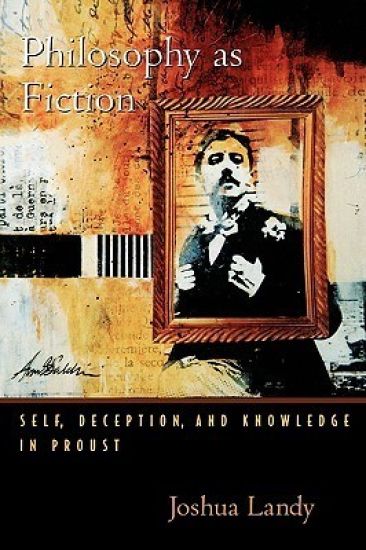
Philosophy As Fiction

Philosophy As Fiction

Joshua Landy

Oxford University Press Inc
2004
sidottu
Philosophy as Fiction reconstructs Proust's powerful, coherent and original outlook on knowledge, self-deception and self-fashioning. In addition, it explains why these ideas had to give rise to a work of art and not a philosophical treatise. Parts of the philosophy serve literary ends, with certain assertions forming part of the novel's intricate lace-work; and aspects of the aesthetics also serve philosophical ends, enabling a reader to engage in an active manner with an alternative art of living.
Philosophers without Gods

Philosophers without Gods

Oxford University Press Inc
2007
sidottu
Atheists are frequently demonized as arrogant intellectuals, antagonistic to religion, devoid of moral sentiments, advocates of an "anything goes" lifestyle. Now, in this revealing volume, nineteen leading philosophers open a window on the inner life of atheism, shattering these common stereotypes as they reveal how they came to turn away from religious belief. These highly engaging personal essays capture the marvelous diversity to be found among atheists, providing a portrait that will surprise most readers. Many of the authors, for example, express great affection for particular religious traditions, even as they explain why they cannot, in good conscience, embrace them. None of the contributors dismiss religious belief as stupid or primitive, and several even express regret that they cannot, or can no longer, believe. Perhaps more important, in these reflective pieces, they offer fresh insight into some of the oldest and most difficult problems facing the human mind and spirit. For instance, if God is dead, is everything permitted? Philosophers Without Gods demonstrates convincingly, with arguments that date back to Plato, that morality is independent of the existence of God. Indeed, every writer in this volume adamantly affirms the objectivity of right and wrong. Moreover, they contend that secular life can provide rewards as great and as rich as religious life. A naturalistic understanding of the human condition presents a set of challenges--to pursue our goals without illusions, to act morally without hope of reward--challenges that can impart a lasting value to finite and fragile human lives. Collectively, these essays highlight the richness of atheistic belief--not only as a valid alternative to religion, but as a profoundly fulfilling and moral way of life.
Philosophers Explore The Matrix

Philosophers Explore The Matrix

Oxford University Press Inc
2005
sidottu
The Matrix trilogy is unique among recent popular films in that it is constructed around important philosophical questions--classic questions which have fascinated philosophers and other thinkers for thousands of years. Editor Christopher Grau here presents a collection of new, intriguing essays about some of the powerful and ancient questions broached by The Matrix and its sequels, written by some of the most prominent and reputable philosophers working today. They provide intelligent, accessible, and thought-provoking examinations of the philosophical issues that support the films. Philosophers Explore The Matrix includes an introduction that surveys the use of philosophical ideas in the film. Topics that the contributors tackle include: how a collaborative dream could differ from hallucination, the difference between the Matrix and the "real" world; why living in the Matrix would be considered "bad"; the similarities between the Matrix and Plato's Cave; the moral status of artificially created beings, whether one can behave immorally in illusory circumstances, and the true nature of free will and responsibility. This volume also includes an appendix of classic philosophical writing on these issues by Plato, Berkeley, Descartes, Putnam, and Nozick. Philosophers Explore The Matrix will fascinate any fan of the films who wants to delve deeper into their themes, as well as any student of philosophy who desires an accessible entry into this challenging and profoundly vital world of ideas.
Philosophers Explore The Matrix

Philosophers Explore The Matrix

Oxford University Press Inc
2005
nidottu
The Matrix trilogy is unique among recent popular films in that it is constructed around important philosophical questions--classic questions which have fascinated philosophers and other thinkers for thousands of years. Editor Christopher Grau here presents a collection of new, intriguing essays about some of the powerful and ancient questions broached by The Matrix and its sequels, written by some of the most prominent and reputable philosophers working today. They provide intelligent, accessible, and thought-provoking examinations of the philosophical issues that support the films. Philosophers Explore The Matrix includes an introduction that surveys the use of philosophical ideas in the film. Topics that the contributors tackle include: how a collaborative dream could differ from hallucination, the difference between the Matrix and the "real" world; why living in the Matrix would be considered "bad"; the similarities between the Matrix and Plato's Cave; the moral status of artificially created beings, whether one can behave immorally in illusory circumstances, and the true nature of free will and responsibility. This volume also includes an appendix of classic philosophical writing on these issues by Plato, Berkeley, Descartes, Putnam, and Nozick. Philosophers Explore The Matrix will fascinate any fan of the films who wants to delve deeper into their themes, as well as any student of philosophy who desires an accessible entry into this challenging and profoundly vital world of ideas. Contributors include David Chalmers, Andy Clark, Julia Driver, Hubert Dreyfus, Stephen Dreyfus, Frances Flannery -Dailey, Christopher Grau, Richard Hanley, Tim Mawson, Colin McGinn, Michael McKenna, John Partridge, James Pryor, Iakovos Vasiliou, Rachel Wagner, and Kevin Warwick
Philosophical Papers: Volume Two

Philosophical Papers: Volume Two

Peter Unger

Oxford University Press Inc
2006
sidottu
While well-known for his book-length work, philosopher Peter Unger's articles have been less widely accessible. These two volumes of Unger's Philosophical Papers include articles spanning more than 35 years of Unger's long and fruitful career. Dividing the articles thematically, the first volume collects work in epistemology and ethics, among other topics, while the second volume focuses on metaphysics. Unger's work has advanced the full spectrum of topics at the heart of philosophy, including epistemology, metaphysics, philosophy of language and philosophy of mind, and ethics. Unger advances radical positions, going against the so-called "commonsense philosophy" that has dominated the analytic tradition since its beginnings early in the twentieth century. In epistemology, his articles advance the view that nobody ever knows anything and, beyond that, argue that nobody has any reason to believe anything--and even beyond that, they argue that nobody has any reason to do anything, or even want anything. In metaphysics, his work argues that people do not really exist--and neither do puddles, plants, poodles, and planets. But, as Unger has often changed his favored positions, from one decade to the next, his work also advances the opposite, "commonsense" positions: that there are in fact plenty of people, puddles, plants and planets and, quite beyond that, we know it all to be true. On most major philosophical questions, both of these sides of Unger's significant work are well represented in this major two volume collection. Unger's vivid writing style, intellectual vitality, and fearlessness in the face of our largest philosophical questions, make these volumes of great interest not only to the philosophical community but to others who might otherwise find contemporary philosophy dry and technical.
Philosopher Kings?

Philosopher Kings?

George C. Christie

Oxford University Press Inc
2011
sidottu
Philosopher Kings? The Adjudication of Conflicting Human Rights and Social Values, by George C. Christie, examines the attempts by courts to sort out conflicts involving freedom of expression, including religious expression, on the one hand, and rights to privacy and other important social values on the other. It approaches the subject from a comparative perspective, using principally cases decided by European and United States courts. A significant part of this book analyzes conflicts between freedom of expression and the right to privacy. In a world in which, freedom of expression and privacy are said to be of equal value, the book explores whether it is possible to develop, through case-by-case adjudication, a legal regime which can give clear direction as to what expression is or is not permitted. Otherwise, if such a regime proves impossible, in the guise of recognizing the equal value of expression and privacy, privacy may become de facto the preferred value.
Philosophy of Science

Philosophy of Science

Gillian Barker; Philip Kitcher

Oxford University Press Inc
2013
nidottu
Offering an engaging and accessible portrait of the current state of the field, Philosophy of Science: A New Introduction shows students how to think philosophically about science and why it is both essential and fascinating to do so. Gillian Barker and Philip Kitcher reconsider the core questions in philosophy of science in light of the multitude of changes that have taken place in the decades since the publication of C.G. Hempel's classic work, Philosophy of Natural Science (1966)--both in the field and also in history and sociology of science and the sciences themselves. They explore how philosophical questions are connected to vigorous current debates--including climate change, science and religion, race, intellectual property rights, and medical research priorities--showing how these questions, and philosophers' attempts to answer them, matter in the real world. Featuring numerous illustrative examples and extensive further reading lists, Philosophy of Science: A New Introduction is ideal for courses in philosophy of science, history and philosophy of science, and epistemology/theory of knowledge. It is also compelling and illuminating reading for scientists, science students, and anyone interested in the natural sciences and in their place in global society today.
Philosophy as Fiction

Philosophy as Fiction

Joshua Landy

Oxford University Press Inc
2009
nidottu
Is it possible (or desirable) to live without illusions? Can artistry assist in the project of forging a unified self? What does our use of metaphor have to do with who we are? In this groundbreaking study, Joshua Landy explores Proust's original and sophisticated answers to these and related questions. At the same time, he asks why Proust chose to embed his theories within a work of fiction-one, indeed, in which the narrator's claims cannot always be trusted-rather than a straightforward treatise. What we stand to gain, it turns out, from reading Proust's philosophical narrative is something far more than a new way of thinking: it is also, and more importantly, a new way of living. Provocative and illuminating, Philosophy as Fiction will transform the way we think about the relationship between philosophy, literature, and life.
Philosophical Dialogues

Philosophical Dialogues

Timothy Smiley

Oxford University Press
1995
sidottu
Many of the greatest philosophers have used the form of the dialogue to expound their arguments, yet the vehicle itself has been inadequately studied. The three essays in this volume examine the reasons why particular philosophers have chosen to use the dialogue as a tool to interact between the philosophical content and the literary form.