Kirjojen hintavertailu. Mukana 12 097 251 kirjaa ja 12 kauppaa.

Kirjahaku

Etsi kirjoja tekijän nimen, kirjan nimen tai ISBN:n perusteella.

1000 tulosta hakusanalla Phyllis Hall

Art, Culture, and Cuisine

Art, Culture, and Cuisine

Phyllis Pray Bober

University of Chicago Press
1999
sidottu
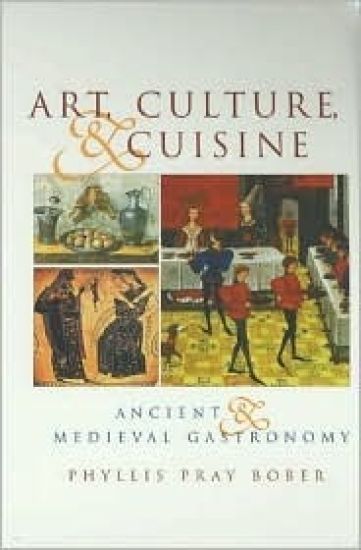
Examines cooking through the dual lens of archaeology and art history. This book shows that cuisine - the higher, skilled and creative manifestation of cooking - is an art that should be elevated to the level of those more generally termed "fine". Phyllis Pray Bober describes prehistoric eating in ancient Turkey; traditions of the great civilizations of Egypt, Mesopotamia, Greece and Rome; and rituals of the Middle Ages and the "Late Gothic International" period. To satisfy the adventurous reader, Bober has included old menus with contemporary adaptations.
Art, Culture, and Cuisine

Art, Culture, and Cuisine

Phyllis Pray Bober

University of Chicago Press
2001
nidottu
Examines cooking through the dual lens of archaeology and art history. This book shows that cuisine - the higher, skilled and creative manifestation of cooking - is an art that should be elevated to the level of those more generally termed "fine". Phyllis Pray Bober describes prehistoric eating in ancient Turkey; traditions of the great civilizations of Egypt, Mesopotamia, Greece and Rome; and rituals of the Middle Ages and the "Late Gothic International" period. To satisfy the adventurous reader, Bober has included old menus with contemporary adaptations.
Making Local News

Making Local News

Phyllis Kaniss

University of Chicago Press
1991
sidottu
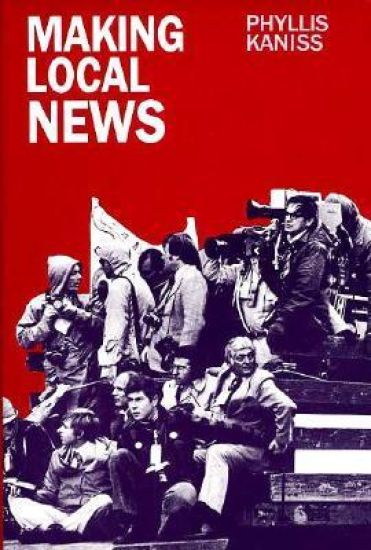
Why do crimes and accidents earn more news coverage than development and policy issues affecting thousands of people? Filled with revealing interviews with both journalists and city officials, Making Local News is the first comprehensive look at how the economic motives of media owners, professional motives of journalists, and the strategies of media-wise politicians shape the news we see and hear, thereby influencing urban policy. "Making Local News by Phyllis Kaniss ...is significant...If we can continue to get smarter about that which journalism leaves out or distorts in its coverage of politics, we may eventually get smarter about politics itself."--Mitchell Stephens, The Philadelphia Inquirer View "A convincing analysis of the factors and forces which color how and why local issues do, or do not, become newsworthy." --Michael H. Ebner, Journal of Interdisciplinary History "This work serves as a reminder of the importance of a medium that is often overlooked until economic realities threaten its very existence." --Choice "Kaniss is truly a pioneer in the study of local news."--Susan Herbst, Contemporary Sociology
Making Local News

Making Local News

Phyllis Kaniss

University of Chicago Press
1997
nidottu
This is an examination into the reasons why crimes and accidents earn more news coverage than development and policy issues affecting thousands of people. Containing revealing interviews with both journalists and city officials, this is a comprehensive look at how the economic motives of media owners, professional motives of journalists, and the strategies of media-wise politicians shape the news we see and hear, thereby influencing urban policy.
Breastfeeding and the Pursuit of Happiness

Breastfeeding and the Pursuit of Happiness

Phyllis L.F. Rippey

McGill-Queen's University Press
2021
sidottu
Breastfeeding is a human bodily function that differs in practice across cultural and historical boundaries, yet is framed as “natural” and morally virtuous. Breastfeeding and the Pursuit of Happiness rejects the dichotomy of right versus wrong, exploring the historical, political, and symbolic roots of this sacrosanct belief in “breast is best” – from allusions to biblical milk and honey to contemporary claims of parenting and wellness experts.Within disparate contexts such as medieval Europe, eighteenth-century France, contemporary Indonesia, and the mommy blogosphere, Phyllis Rippey finds that infant feeding prescriptions often serve the interests of the powerful rather than meeting the needs of women, infants, and families. Upending some of our most cherished beliefs about the maternal breast, Rippey reveals the ways historical and contemporary debates over breast versus bottle feeding distract from the underlying issues of poverty, environmental destruction, and violence against women. Rippey balances science-based and historical analysis with the stories of lesbian mothers and trans fathers, Black and White breastfeeding advocates, and Indonesian mothers, among other mothers who express feelings of empowerment, pleasure, pain, and moral failure.At turns witty, heartbreaking, and intellectually compelling, Breastfeeding and the Pursuit of Happiness draws on Hannah Arendt, Black feminist thought, affect theory, the ethics of care, and theories of political humility to offer a new framework for valuing and affirming the human power of giving and receiving care, including through the breast.
Modern Girls, Shining Stars, the Skies of Tokyo

Modern Girls, Shining Stars, the Skies of Tokyo

Phyllis Birnbaum

Columbia University Press
1998
sidottu
The stunning biographical portraits in Modern Girls, Shining Stars, the Skies of Tokyo, some adapted from essays that first appeared in The New Yorker, explore the lives of five women who did their best to stand up and cause more trouble than was considered proper in Japanese society. Their lives stretch across a century and a half of explosive cultural and political transformations in Japan. These five artists-two actresses, two writers, and a painter-were noted for their talents, their beauty, and their love affairs rather than for any association with politics. But through the fearlessness of their art and their private lives, they influenced the attitudes of their times and challenged the status quo. Phyllis Birnbaum presents her subjects from various perspectives, allowing them to shine forth in all of their contradictory brilliance: generous and petulant, daring and timid, prudent and foolish. There is Matsui Sumako, the actress who introduced Ibsen's Nora and Wilde's Salome to Japanese audiences but is best remembered for her ambition, obstreperous temperament and turbulent love life. We also meet Takamura Chieko, a promising but ultimately disappointed modernist painter whose descent into mental illness was immortalized in poetry by a husband who may well have been the source of her troubles. In a startling act of rebellion, the sensitive, aristocratic poet Yanagiwara Byakuren left her crude and powerful husband, eloped with her revolutionary lover, and published her request for a divorce in the newspapers. Uno Chiyo was a popular novelist who preferred to be remembered for the romantic wars she fought. Willful, shrewd, and ambitious, Uno struggled for sexual liberation and literary merit. Birnbaum concludes by exploring the life and career of Takamine Hideko, a Japanese film star who portrayed wholesome working-class heroines in hundreds of films, working with such directors as Naruse, Kinoshita, Ozu, and Kurosawa. Angry about a childhood spent working to provide for greedy relatives, Takamine nevertheless made peace with her troubled past and was rewarded for years of hard work with a brilliant career. Drawing on fictional accounts, interviews, memoirs, newspaper reports, and the creative works of her subjects, Birnbaum has created vivid, seamless narrative portraits of these five remarkable women.
Modern Girls, Shining Stars, the Skies of Tokyo

Modern Girls, Shining Stars, the Skies of Tokyo

Phyllis Birnbaum

Columbia University Press
2000
pokkari
The stunning biographical portraits in Modern Girls, Shining Stars, the Skies of Tokyo, some adapted from essays that first appeared in The New Yorker, explore the lives of five women who did their best to stand up and cause more trouble than was considered proper in Japanese society. Their lives stretch across a century and a half of explosive cultural and political transformations in Japan. These five artists-two actresses, two writers, and a painter-were noted for their talents, their beauty, and their love affairs rather than for any association with politics. But through the fearlessness of their art and their private lives, they influenced the attitudes of their times and challenged the status quo. Phyllis Birnbaum presents her subjects from various perspectives, allowing them to shine forth in all of their contradictory brilliance: generous and petulant, daring and timid, prudent and foolish. There is Matsui Sumako, the actress who introduced Ibsen's Nora and Wilde's Salome to Japanese audiences but is best remembered for her ambition, obstreperous temperament and turbulent love life. We also meet Takamura Chieko, a promising but ultimately disappointed modernist painter whose descent into mental illness was immortalized in poetry by a husband who may well have been the source of her troubles. In a startling act of rebellion, the sensitive, aristocratic poet Yanagiwara Byakuren left her crude and powerful husband, eloped with her revolutionary lover, and published her request for a divorce in the newspapers. Uno Chiyo was a popular novelist who preferred to be remembered for the romantic wars she fought. Willful, shrewd, and ambitious, Uno struggled for sexual liberation and literary merit. Birnbaum concludes by exploring the life and career of Takamine Hideko, a Japanese film star who portrayed wholesome working-class heroines in hundreds of films, working with such directors as Naruse, Kinoshita, Ozu, and Kurosawa. Angry about a childhood spent working to provide for greedy relatives, Takamine nevertheless made peace with her troubled past and was rewarded for years of hard work with a brilliant career. Drawing on fictional accounts, interviews, memoirs, newspaper reports, and the creative works of her subjects, Birnbaum has created vivid, seamless narrative portraits of these five remarkable women.
Manchu Princess, Japanese Spy: The Story of Kawashima Yoshiko, the Cross-Dressing Spy Who Commanded Her Own Army
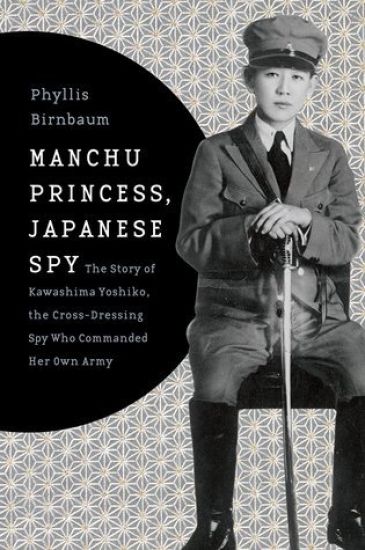
Aisin Gioro Xianyu (1907-1948) was the fourteenth daughter of a Manchu prince and a legendary figure in China's bloody struggle with Japan. After the fall of the Manchu dynasty in 1912, Xianyu's father gave his daughter to a Japanese friend who was sympathetic to his efforts to reclaim power. This man raised Xianyu, now known as Kawashima Yoshiko, to restore the Manchus to their former glory. Her fearsome dedication to this cause ultimately got her killed. Yoshiko had a fiery personality and loved the limelight. She shocked Japanese society by dressing in men's clothes and rose to prominence as Commander Jin, touted in Japan's media as a new Joan of Arc. Boasting a short, handsome haircut and a genuine military uniform, Commander Jin was credited with many daring exploits, among them riding horseback as leader of her own army during the Japanese occupation of China. While trying to promote the Manchus, Yoshiko supported the puppet Manchu state established by the Japanese in 1932--one reason she was executed for treason after Japan's 1945 defeat. The truth of Yoshiko's life is still a source of contention between China and Japan: some believe she was exploited by powerful men, others claim she relished her role as political provocateur. China holds her responsible for unspeakable crimes, while Japan has forgiven her transgressions. This biography presents the richest and most accurate portrait to date of the controversial princess spy, recognizing her truly novel role in conflicts that transformed East Asia.
Manchu Princess, Japanese Spy

Manchu Princess, Japanese Spy

Phyllis Birnbaum

Columbia University Press
2017
nidottu
Aisin Gioro Xianyu (1907-1948) was the fourteenth daughter of a Manchu prince and a legendary figure in China's bloody struggle with Japan. After the fall of the Manchu dynasty in 1912, Xianyu's father gave his daughter to a Japanese friend who was sympathetic to his efforts to reclaim power. This man raised Xianyu, now known as Kawashima Yoshiko, to restore the Manchus to their former glory. Her fearsome dedication to this cause ultimately got her killed. Yoshiko had a fiery personality and loved the limelight. She shocked Japanese society by dressing in men's clothes and rose to prominence as Commander Jin, touted in Japan's media as a new Joan of Arc. Boasting a short, handsome haircut and a genuine military uniform, Commander Jin was credited with many daring exploits, among them riding horseback as leader of her own army during the Japanese occupation of China. While trying to promote the Manchus, Yoshiko supported the puppet Manchu state established by the Japanese in 1932-one reason she was executed for treason after Japan's 1945 defeat.The truth of Yoshiko's life is still a source of contention between China and Japan: some believe she was exploited by powerful men, others claim she relished her role as political provocateur. China holds her responsible for unspeakable crimes, while Japan has forgiven her transgressions. This biography presents the richest and most accurate portrait to date of the controversial princess spy, recognizing her truly novel role in conflicts that transformed East Asia.
Frame by Frame I

Frame by Frame I

Phyllis Rauch Klotman

Indiana University Press
1979
pokkari
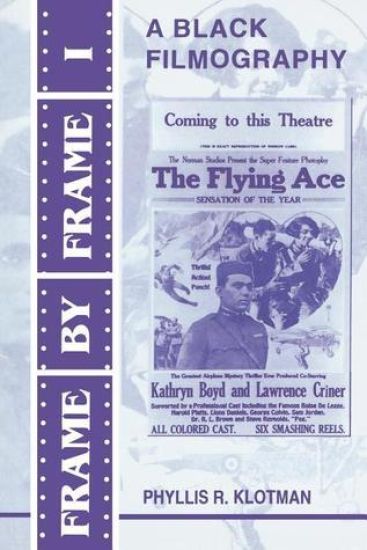
A reprint of the classic 1979 edition, containing listings of over 3000 film items with Black themes and subject matter from the period 1900–1977. For the past decade or so scholars have been looking at the role of Blacks in a medium that has profoundly influenced attitudes toward race and society. Here is a compendium of approximately 3,000 film items. Listed are films with black themes or subject matter (even before black actors appeared in them); films featuring substantial participation by Blacks as writers, actors, producers, directors, musicians, and consultants; and films in which Blacks play incidental roles. Productions by both American and foreign companies made between 1900 and 1977 are included. Each entry is categorized by type and fully identified and annotated, with complete cast lists. Because general information about many of the films is readily accessible, the emphasis in Frame by Frame—A Black Filmography is on the presence and participation of Blacks—an emphasis that brings to the fore their important contributions to the art of filmmaking.
Catholic Women of Congo-Brazzaville

Catholic Women of Congo-Brazzaville

Phyllis M. Martin

Indiana University Press
2009
pokkari
Catholic Women of Congo-Brazzaville explores the changing relationship between women and the Catholic Church from the establishment of the first mission stations in the late 1880s to the present. Phyllis M. Martin emphasizes the social identity of mothers and the practice of motherhood, a prime concern of Congolese women, as they individually and collectively made sense of their place within the Church. Martin traces women's early resistance to missionary overtures and church schools, and follows their relationship with missionary Sisters, their later embrace of church-sponsored education, their participation in popular Catholicism, and the formation of women's fraternities. As they drew together as mothers and sisters, Martin asserts, women began to affirm their place in a male-dominated institution. Covering more than a century of often turbulent times, this rich and readable book examines an era of far-reaching social change in Central Africa.
The Novels and Plays of Eduardo Manet

The Novels and Plays of Eduardo Manet

Phyllis Zatlin

Pennsylvania State University Press
2000
sidottu
Despite Eduardo Manet's impressive accomplishments extending over half a century, this extraordinarily talented Cuban-French author remains relatively unknown in the United States. Phyllis Zatlin's book is the first to examine the multifaceted career of this dynamic bilingual writer. Playwright and novelist, theater and film director, Eduardo Manet (b. 1930) has been a major participant in the cultural worlds of both Cuba and France. His works have been internationally acclaimed: he has been nominated for the Prix Goncourt and was awarded a special Goncourt youth prize, and his novels and plays have been translated into twenty-one languages. Manet's work, however, has often been overlooked by both French and Spanish-American critics because of his unique position as a Latin American writing in French. Zatlin sets out to correct this oversight by offering a detailed analysis of Manet's many genres and themes. She begins with his work in Cuba, from his youthful poetry and plays to the films he directed in revolutionary Cuba. She then examines his seven full-length novels, all written in French but typically reflective of Cuban experience. Finally, Zatlin concludes her study by considering Manet's early plays of entrapment and enclosure and his later theater, defined by its metatheatrical and multicultural themes.Through the lenses of multiculturalism, postmodernism, metatheater, and farce, Zatlin provides a perceptive and comprehensive examination of this significant yet neglected figure. Zatlin's book will do the important work of introducing Manet to a North American audience.
The Novels and Plays of Eduardo Manet

The Novels and Plays of Eduardo Manet

Phyllis Zatlin

Pennsylvania State University Press
2000
pokkari
Despite Eduardo Manet's impressive accomplishments extending over half a century, this extraordinarily talented Cuban-French author remains relatively unknown in the United States. Phyllis Zatlin's book is the first to examine the multifaceted career of this dynamic bilingual writer. Playwright and novelist, theater and film director, Eduardo Manet (b. 1930) has been a major participant in the cultural worlds of both Cuba and France. His works have been internationally acclaimed: he has been nominated for the Prix Goncourt and was awarded a special Goncourt youth prize, and his novels and plays have been translated into twenty-one languages. Manet's work, however, has often been overlooked by both French and Spanish-American critics because of his unique position as a Latin American writing in French. Zatlin sets out to correct this oversight by offering a detailed analysis of Manet's many genres and themes. She begins with his work in Cuba, from his youthful poetry and plays to the films he directed in revolutionary Cuba. She then examines his seven full-length novels, all written in French but typically reflective of Cuban experience. Finally, Zatlin concludes her study by considering Manet's early plays of entrapment and enclosure and his later theater, defined by its metatheatrical and multicultural themes.Through the lenses of multiculturalism, postmodernism, metatheater, and farce, Zatlin provides a perceptive and comprehensive examination of this significant yet neglected figure. Zatlin's book will do the important work of introducing Manet to a North American audience.
Pregnancy for Older Women

Pregnancy for Older Women

Phyllis Mansfield

Praeger Publishers Inc
1986
sidottu
As more and more women decide to have children in later life, the medical establishment is being forced to reevaluate its traditional stance that such women are high-risk. Pregnancy for Older Women is the only book to present a comprehensive scientific analysis of the medical literature, exploring such controversial issues as amniocentesis, the use of cesarean section, and the effect of doctor's assumptions on case outcomes.
The Political Economy of East German Privatization

The Political Economy of East German Privatization

Phyllis Dininio

Praeger Publishers Inc
1999
sidottu
Dininio examines patterns of industrial assistance in the new German Länder (federal states) during the difficult transition from central planning to a market economy. She identifies the restructuring assistance given by the privatization agency, the Treuhandanstalt and the new federal state governments as the chief instruments of eastern industrial policy. In seeking to explain how the aid was allocated, Dr. Dininio examines the interests and policy resources of state and societal actors. The analysis shows that institutions condition to a significant extent the societal forces to which state actors respond in their policy choices.In the case of East Germany, the interplay of institutions and circumstances led to a large-firm bias. The unitary business and labor organizations that were extended into the East could not accommodate the divergent interests of new members and so failed to lobby on their behalf for industrial assistance. While societal actors remained relatively passive, state actors intervened on behalf of select firms. The primacy of certain state actors but not others in these interventions as well as their primary policy agendas, derived from the institutional contours of the German polity. First, the constitution of a federal agency to privatize 13,000 firms singly and under severe time pressure prompted agency officials to give priority to large firms in the interest of expediency. Second, the dominance of the executive branch enabled Chancellor Kohl to help his supporters in the chemical industry and at Carl Zeiss Jena as well as troubled firms of national significance, such as the shipyards and the giant steel mill EKO-Stahl. Third, the federal structure of the government gave Länder officials significant resources to support big employers in their state, especially those from regionally dominant industries.
A Necessary Relationship

A Necessary Relationship

Phyllis L. Soybel

Praeger Publishers Inc
2005
sidottu
The relationship of the United States and Great Britain has been the subject of numerous studies with a particular emphasis on the idea of a special relationship based on traditional common ties of language, history, and political affinity. Although certainly special, Anglo-American cooperation arose from mutual necessity. Soybel examines the special relationship through a new lens—that of the most intimate of wartime collaborations, the naval intelligence relationship. Rather than looking at the uses of intelligence and espionage, Soybel explores how the cooperation was established and maintained, particularly through the creation of administrative bureaucracies, as well as how World War I and pre-war efforts helped pave the way towards wartime cooperation.The development of the wartime cooperation in naval intelligence between 1939 and 1943 highlights the best and worst of the alliance and shows both its advantages and its limitations. It demonstrates that the Anglo-American partnership during World War II was a necessary one, and its intimacy demanded by the exigencies of the total war then being fought. Its problems were the result of traditional conflicts based on economics, imperial concerns, and national interests. Its successes found their bases in individual partnerships formed during the war, not in the overall one given mythical status by men like Winston Churchill. While still giving credit to the unique alliance that has survived in the last fifty years, this study shows that the close ties were necessary, not special.
Challenges of Black Pentecostal Leadership in the 21st Century
A collection of five pictures which address issues and challenges pertinent (but not exclusively so) to the Black Majority Church in the UK. They sharpen understanding of the way the BMCs have come to do church, and also challenge whether the vision is to maintain the status quo or be a prophetic church. 1. Introductory address by Bishop Joe Aldred 2. Moving beyond maintenance to mission: resisting the bewitchment of colonial Christianity by Dr Robert Beckford 3. Pentecostal Hermeneutics by Revd Ruthlyn Bradshaw 4. Women in Leadership by Dr Elaine Storkey 5. Youth Culture: Friend or Foe? By the Revd Carver Anderson.
Challenges of Pentecostal Theology in the 21st Century
Where is Pentecostal theology going in the 21st century? How does it address issues of spirituality, politics and justice? What does it have to offer the worldwide Church? These and other vital questions are explored here by leading Pentecostal theologians from the UK and the USA as they assess the challenges and opportunities facing Pentecostalism today. With stimulating contributions by Joel Edwards, Charlotte Johnson, Steven Land, Douglas Nelson, Phyllis Thompson and Keith Warrington, this book offers valuable guidance to church leaders and to students training for the ministry throughout the Pentecostal world. 'There is passion and information here, advice for the present and hope for the future.' William K. Kay, Institute for Pentecostal Theology, Regents Theological College 'When we consider that one in four Christians are Pentecostals, this book is a "must" for all who are seeking to improve their knowledge of Pentecostal theology and recognize its distinctives.' Bishop Dr Donald Bolt, New Testament Church of God England and Wales
Brazil and the Quiet Intervention, 1964

Brazil and the Quiet Intervention, 1964

Phyllis R. Parker

University of Texas Press
1979
pokkari
When the Brazilian military overthrew President João Goulart in 1964, American diplomats characterized the coup as a "100 percent Brazilian movement." It has since become apparent, largely through government documents declassified during the course of research for this book, that the United States had an invisible but pervasive part in the coup. Relying principally on documents from the Johnson and Kennedy presidential libraries, Phyllis Parker unravels the events of the coup in fascinating detail. The evidence she presents is corroborated by interviews with key participants. U.S. interference in the Goulart regime began when normal diplomatic pressure failed to produce the desired enthusiasm from him for the Alliance of Progress. Political and economic manipulations also proving ineffective, the United States stood ready to back a military takeover of Brazil's constitutional democracy. U.S. operation "Brother Sam" involved shipments of petroleum, a naval task force, and tons of arms and ammunition in preparation for intervention during the 1964 coup. When the Brazilian military gained control without calling on the ready assistance, U.S. policy makers immediately accorded recognition to the new government and set in motion plans for economic support.