Kirjojen hintavertailu. Mukana 12 016 292 kirjaa ja 12 kauppaa.

Kirjahaku

Etsi kirjoja tekijän nimen, kirjan nimen tai ISBN:n perusteella.

1000 tulosta hakusanalla Regena Thomashauer

La Regenta

La Regenta

John Rutherford; Leopoldo Alas

Penguin Classics
1984
pokkari
Married to the retired magistrate of Vetusta, Ana Ozores cares deeply for her much older husband but feels stifled by the monotony of her life in the shabby and conservative provincial town. And when she embarks on a quest for fulfillment through religion and even adultery, a bitter struggle begins between a powerful priest and a would-be Don Juan for the passionate young woman's body and soul. Scandalizing contemporary Spain when it was first published in 1885, with its searing critique of the Church and its frank treatment of sex, La Regenta is a compelling and witty depiction of the complacent and frivolous world of upper-class society.
Salve Regina

Salve Regina

Oxford University Press
2006
muu
for SATB unaccompanied This is an exquisite piece, simple and homophonic in style, and with a luminescent beauty characteristic of many of Jackson's choral works. The piece begins quietly and reverently. There is a graceful soprano solo in the central section, after which the harmony opens out and richly blossoms in ecstatic praise of the Virgin Mary, before ending serenely as it began. Suitable for liturgical or concert use.
Ave Regina

Ave Regina

Oxford University Press
2006
muu
for SSATB unaccompanied No. 1 of McDowall's 'Three Latin Motets', Ave Regina is a gentle and lyrical setting of the text 'Hail, Queen of the Heavens'. The calm and memorable opening phrase is hinted at in passages of more intensity, and its partial statement at the end leaves it lingering after the voices have faded away. Ave Regina has been recorded by the renowned American choir, the Phoenix Chorale, and released on a Grammy award-winning CD by Chandos (Spotless Rose CHSA 5066)).
Salve Regina

Salve Regina

Oxford University Press
2013
muu
for SATB unaccompanied This edition of the Salve Regina by Portuguese composer Diogo Dias Melgás (1638-1700) is the first published version of the work, which has previously only been available in a library edition. Suitable for liturgical or concert performance, this setting is in four equally active parts throughout, each of which takes the initial plainsong motif at the opening. The effectiveness of this moving work lies in the skilful manipulation of simple motivic material, through the use of devices such as parallel writing, sequences, repetition, suspensions, and hocket. The vocal score is presented alongside detailed performance and editorial notes, and an optional basso continuo part appears as an appendix. Salve Regina is featured on The Sixteen's CD 'A Golden Age of Portuguese Music', conducted by Harry Christophers (COR16020).
Salve Regina 2

Salve Regina 2

Oxford University Press
2012
muu
for SSAATTBB anaccompanied Written in 2004, Jackson harks back to the time of the Eton Choirbook with this expansive polyphonic Salve Regina, with its intricate and delicate interspersions in English decorating the celebrated Latin hymn in praise of Mary. He sets the words thoughtfully with climaxes and resolutions, contemplative passages, and grandiose fanfare-like moments.
Salve Regina

Salve Regina

Oxford University Press
2007
muu
for SATB unaccompanied This setting of the popular hymn to the Blessed Virgin Mary is typical of Pearsall's style, mainly homophonic with the occasional imitative section. It would appear to have been a favourite of Pearsall, appearing in many sources, both printed and MS, including an arrangement by the composer for upper voices only.
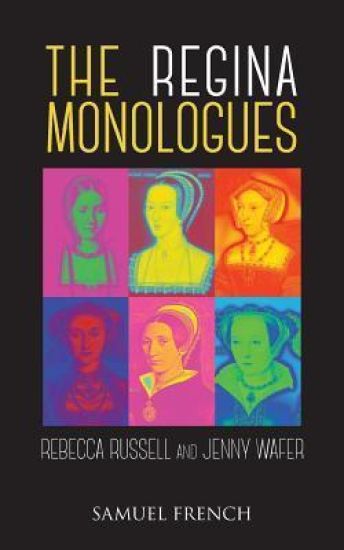
The Regina Monologues

The Regina Monologues

Rebecca Russell; Jenny Wafer

Samuel French Ltd
2014
nidottu
"Divorced, beheaded, died, divorced, beheaded, survived..." Admired, vilified, de-humanised. Three Catherines, two Annes and a Jane. Six women with one thing in common - marriage to a man called Henry - have passed into historical legend. Of course, it couldn't happen these days... Six modern women have also married one man. Their lives are both separate and intertwined as they tell their stories from a room in which they have all once lived. Their experiences - miscarriage, love affairs, betrayal, and a shared loathing of all things ginger - are portrayed with humour, pathos and a great deal of wine. The plight of those sixteenth century women is personal, poignant and still relevant five hundred years on.
Cartas a Maria Regina (Letters to Maria Regina)
From Simon & Schuster, Cartas a Maria Regina includes personal letters and Avila's common-sense advice that provide for a very entertaining read.This is a collection of letters sent to author Maria Regina, a well-known journalist resembling Dear Abby, whose columns appear in many Spanish-language newspapers and magazines in the U.S.
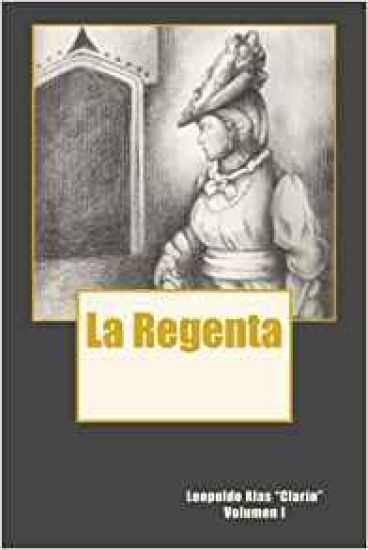
La Regenta Vol. I

La Regenta Vol. I

Leopoldo Alas Clarin

Libros Medio Siglo
2014
nidottu
La Regenta, la obra maestra de Leopoldo Alas, fue publicada entre 1884 y 1885. Considerada por los especialistas la mejor novela del siglo XIX, esta edici n va acompa ada de un listado de preguntas para facilitar el estudio y la lectura de la obra.
La Regenta Vol. II

La Regenta Vol. II

Leopoldo Alas

Libros Medio Siglo
2014
nidottu
Este volumen presenta los capitulos XVI al XXX de la magnifica obra de Leopoldo Alas "Clarin". La mejor novela del siglo XIX y la segunda en importancia despues de El Quijote. La presente edicion contiene una serie de preguntas de enfoque para ayudar a quienes desean hacer una lectura profunda y organizada de la obra.
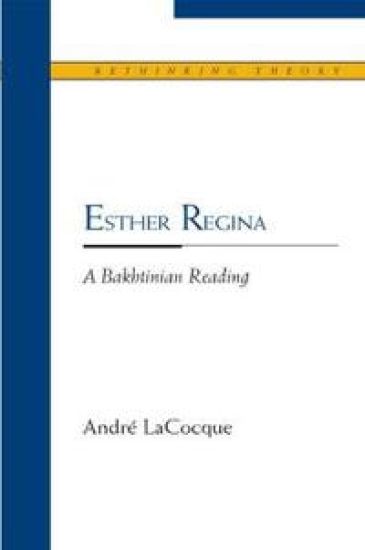
Esther Regina

Esther Regina

Andre LaCocque

Northwestern University Press
2007
sidottu
Readers and scholars often question the inclusion of the ""Book of Esther"" in the canon. Where, they wonder, do the book's flagrant displays of hatred, deceit, violence, and the antidotal grotesqueries of Purim figure in the biblical tradition? Such confusion, this book tells us, arises from a wrong appraisal of ""Esther's"" literary genre. Distinguished scriptural scholar Andre LaCocque draws on the lessons of Russian critic Mikhail Bakhtin to reveal the true comedic nature of the story of Esther and Mordecai. In particular, LaCocque finds in the book's grotesque elements - from royal banquets that last a half-year to an improbable succession of coincidences and reversals of fortunes neutralizing a planned genocide - a natural fit with Bakhtin's description of the ""carnivalesque."" Bakhtin's rediscovery of the carnivalesque employs such key notions and categories as the dialogic, the novelistic, the chronotopic, the polyphonic, and authoring-as-creating. Using these and other Bakhtinian tools, LaCocque rereads Esther to show how the book's comedic mood is paradoxically proportional to the catastrophic predicament of the Jews. Here, as biblical theocentrism shifts to Judeocentrism, we see how the carnivalesque becomes subversive of the Establishment and liberating. In ""Esther"", the underlying conviction is that Jewish survival is providential - and that anti-Semitism is anti-God. This is, as LaCocque tells us with a nod to Aristotle, a worthy lesson disguised as a ""low genre.
Esther Regina

Esther Regina

Andre LaCocque

Northwestern University Press
2007
nidottu
Readers and scholars often question the inclusion of the ""Book of Esther"" in the canon. Where, they wonder, do the book's flagrant displays of hatred, deceit, violence, and the antidotal grotesqueries of Purim figure in the biblical tradition? Such confusion, this book tells us, arises from a wrong appraisal of Esther's literary genre. Distinguished scriptural scholar Andre LaCocque draws on the lessons of Russian critic Mikhail Bakhtin to reveal the true comedic nature of the story of Esther and Mordecai. In particular, LaCocque finds in the book's grotesque elements - from royal banquets that last a half-year to an improbable succession of coincidences and reversals of fortunes neutralizing a planned genocide - a natural fit with Bakhtin's description of the ""carnivalesque."" Bakhtin's rediscovery of the carnivalesque employs such key notions and categories as the dialogic, the novelistic, the chronotopic, the polyphonic, and authoring-as-creating. Using these and other Bakhtinian tools, LaCocque rereads Esther to show how the book's comedic mood is paradoxically proportional to the catastrophic predicament of the Jews. Here, as biblical theocentrism shifts to Judeocentrism, we see how the carnivalesque becomes subversive of the Establishment and liberating. In ""Esther"", the underlying conviction is that Jewish survival is providential - and that anti-Semitism is anti-God. This is, as LaCocque tells us with a nod to Aristotle, a worthy lesson disguised as a ""low genre.
Dear Regina

Dear Regina

UNIVERSITY OF GEORGIA PRESS
2022
sidottu
Dear Regina offers a remarkable window into the early years of one of America’s best-known literary figures. While at the University of Iowa Writer’s Workshop from 1945 to 1948, Flannery O’Connor wrote to her mother Regina Cline O’Connor (who she addressed by her first name) nearly every day and sometimes more than once a day. The complete correspondence of more than six hundred letters is housed at the Stuart A. Rose Manuscript, Archives, and Rare Book Library at Emory University. From that number, Miller selects 486 letters to show us a young adult learning to adjust to life on her own for the first time. In these letters, O’Connor shares details about living in a boardinghouse and subsisting on canned food and hot-plate dinners, and she asks for advice about a wide range of topics, including how to assuage her relatives’ concerns about her well-being and how to buy whiskey to use for cough medicine.These letters, which are being published for the first time with the unprecedented permission of the Mary Flannery O’Connor Charitable Trust, also off er readers important insights into O’Connor’s intellectually formative years, when her ideas about writing, race, class, and interpersonal relationships were developing and changing. Her preoccupation with money, employment, and other practical matters reveals a side of O’Connor that we do not often see in her previously published letters. Most importantly, the letters show us her relationship with her mother in a much more intimate, positive light than we have seen before. The importance of this aspect of the letters cannot be overstated, given that so much literary analysis conflates her and Regina with the “sour, deformed daughters and self-righteous mothers” that critic Louise Westling sees so often in O’Connor’s work.
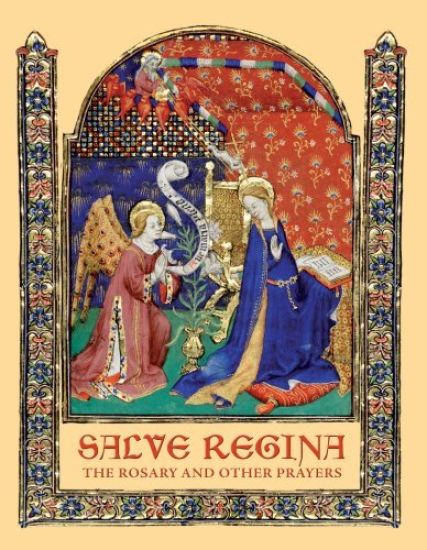
Salve Regina

Salve Regina

St Omers Press
2017
sidottu
The rosary is one of the ancient devotions of Christianity, its recurring rythms providing a means of meditating the central mysteries of life of Christ. This book illustrates sacred mysteries of the Rosary as well as prayers of the Rosary. It also contains a selection of 16th century prayers, and a section on the art of manuscript illumination.