Kirjojen hintavertailu. Mukana 11 605 960 kirjaa ja 12 kauppaa.

Kirjahaku

Etsi kirjoja tekijän nimen, kirjan nimen tai ISBN:n perusteella.

1000 tulosta hakusanalla Reginald Dwayne Betts

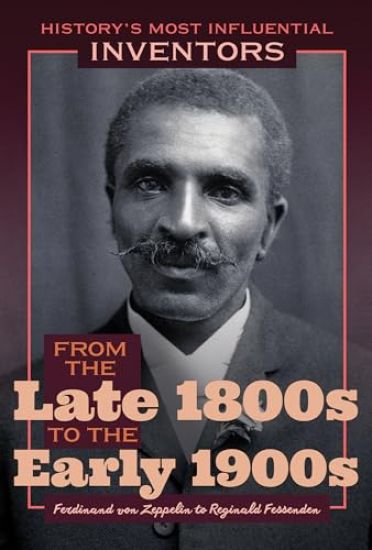
From the Late 1800s to the Early 1900s: Ferdinand Von Zeppelin to Reginald Fessenden
Ferdinand von Zeppelin invented the floating airship that bears his name in the late 1800s and made way for a wave of advances in aviation. Reginald Fessenden was a different sort of pioneer, making the first radio broadcasts over long distances in the early 1900s. The time period in which Zeppelin and Fessenden worked also includes the discoveries of Thomas Edison, Alexander Graham Bell, Nikola Tesla, George Washington Carver, and many others. Their work is profiled in this volume and supported with well-chosen photographs. Informative text introduces the lives of both familiar and little-known inventors to readers of all interests.
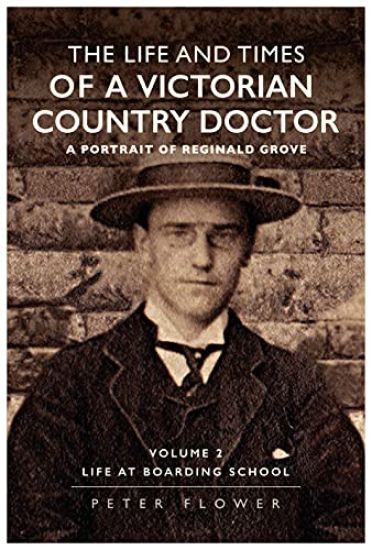
The Life and Times Of A Victorian Country Doctor : A Portrait Of Reginald Grove
This is the second volume of a trilogy that describes the life of Reginald Grove, a country GP, who began his medical career in the late Victorian period after training at Guy’s Hospital, London. It vividly describes his life at boarding school from aged eight to eighteen. The fictional life of Victorian boarding schools is well known from Dicken’s description of Dotheboys Hall, in ‘Nicolas Nickleby’ featuring the sadistic Headmaster, Wackford Squeers to Thomas Hughes’s ‘Tom Brown’s School Days’, remembered chiefly for the brutish bully, the infamous Harry Flashman, at Rugby School. But there are very few accounts based on true life. This is one of them. Using his diaries and other contemporary documents, it portrays his life as a chorister at King’s College Chapel Cambridge, and then at Uppingham School under the great Victorian Headmaster, Edward Thring. The brutality described in the fictious accounts is replaced by a more balanced portrait of school life describing lessons in the classics, sports and games, punishments, the battle for moral purity, sixth form privileges and the friendships that he made. He left Uppingham a good all rounder, presented with a medal by Thring ‘for good work and unblemished character’. On the last day of the summer term 1887 ‘all the house came to my dormitory very early to say goodbye to me’. It was an emotional end to his school life.
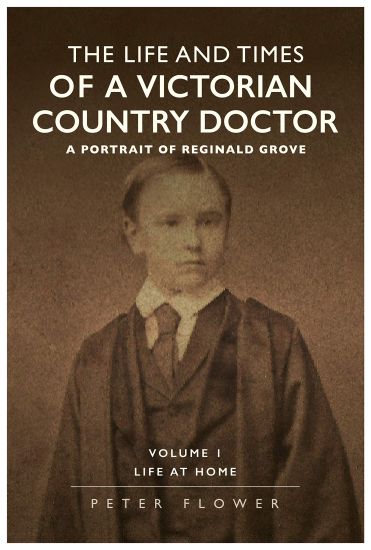
The Life And Times Of A Victorian Country Doctor : A Portrait Of Reginald Grove
In the year of Queen Victoria’s Golden Jubilee, eighteen-year-old Reginald Grove left Uppingham School for Cambridge before training at Guy’s Hospital and then taking over his father’s medical practice in Huntingdonshire. As he later reflected ‘I was born in a country practice and destined from my earliest years for a medical career’. The three-volume biography, based on his diaries and letters from 1881 to 1910, draws also on contemporary accounts of social life in a period of massive change in education, science, medicine, sport, railways, communication, agriculture and religion. This first volume covers his upbringing in a Victorian market town; it paints a charming portrait of family life, his friends, hobbies, reading, holidays on his cousin’s farms, summer days fishing and boating and in the winter, skating on the Fens.
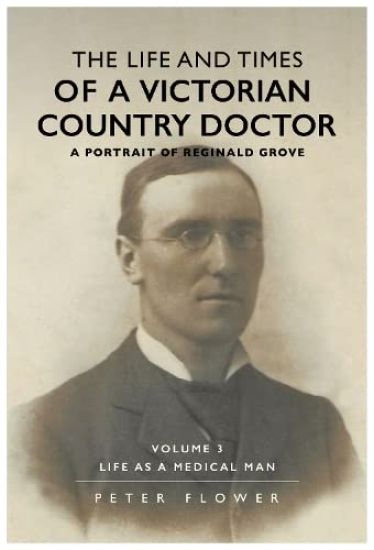
The Life and Times of a Victorian Country Doctor : A Portrait of Reginald Grove
This is the third of a biographical trilogy of Reginald Grove who, within weeks of becoming qualified, was catapulted into running his father’s medical practice in 1894. His career spanned a period of immense change in medical practice ranging from house calls on horseback to carrying out surgical operations on the kitchen tables of his patients. But it’s also a love story between Reginald and Hilda described in over 500 letters that they wrote to each other during their courtship and marriage. All the world’s a stage - and across Reginald’s stage flitted a cavalcade of colourful characters. Fraudsters like ‘’Sequah’, a Yorkshireman, who posed as Native American, to sell bottles of the elixir of life with his Wild West entertainment show. Tyndale-Biscoe, a young curate, attacked by a mob in London’s East End which thought he was ‘Jack the Ripper’. Rob Tattersall, a musical hall ventriloquist, who used life sized dolls for his end of the pier performances. Gustave Kunne who murdered his lover and then committed suicide as she lay beside him. And Major Herbert Armstrong, the only solicitor in England ever to be hanged for murder. These, and many others, form the backdrop of Reginald’s life in the Victorian and Edwardian periods. He made a distinctive mark on the life of his community and was remembered at his death by his patients with great affection and respect as a reassuring family doctor who knew each of them personally. *** Revd Jonathan Aitken, Prison Chaplain, former MP and Chief Secretary to the Treasury, author of John Newton: From Disgrace to Amazing Grace, and many other publications. ‘Reginald sounds a most interesting and impressive figure and I congratulate you on having done so much research in order to create a literary and historical portrait of his life’. *** Dr Gareth Tuckwell, Vice President, Phyllis Tuckwell Hospice Care, former General Practitioner, Chairman of Sanctuary Care Boards, Chairman ME Trust and joint author of 'Talking about Dying', and 'A Question of Healing’. ‘This is a remarkable book and a timely publication when so many people today long for a doctor who knows them well. Reginald made personal friends of his patients and knew their past history and domestic troubles. He always emphasised the fact that doctors have to deal with human beings, with their body, mind, spirit and emotions affecting every aspect of their wellbeing.’
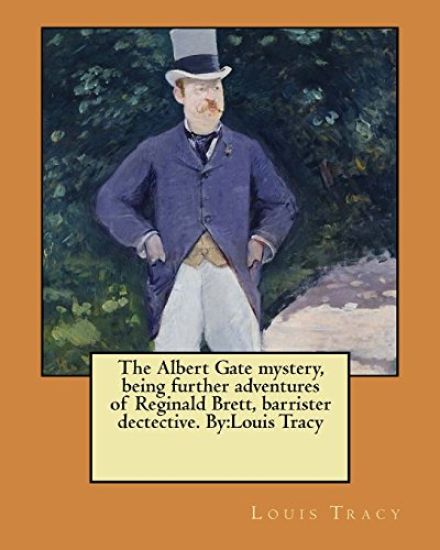
The Albert Gate mystery, being further adventures of Reginald Brett, barrister dectective. By: Louis Tracy
Louis Tracy (1863 - 1928) was a British journalist, and prolific writer of fiction. He used the pseudonyms Gordon Holmes and Robert Fraser, which were at times shared with M. P. Shiel, a collaborator from the start of the twentieth century. He was born in Liverpool to a well-to-do middle-class family. At first he was educated at home and then at the French Seminary at Douai. Around 1884 he became a reporter for a local paper - 'The Northern Echo' at Darlington, circulating in parts of Durham and North Yorkshire; later he worked for papers in Cardiff and Allahabad. During 1892-1894 he was closely associated with Arthur Harmsworth, in 'The Sun' and 'The Evening News and Post'
The Albert Gate Mystery; Being Further Adventures of Reginald Brett, Barrister Detective
This book has been considered important throughout the human history, and so that this work is never forgotten Alpha Editions has made efforts in its preservation by republishing this book in a modern format for the present and future generations. This whole book has been re-formatted, re-typed and re-designed. These books are not made of scanned copies of their original work, and hence the text is clear and readable.
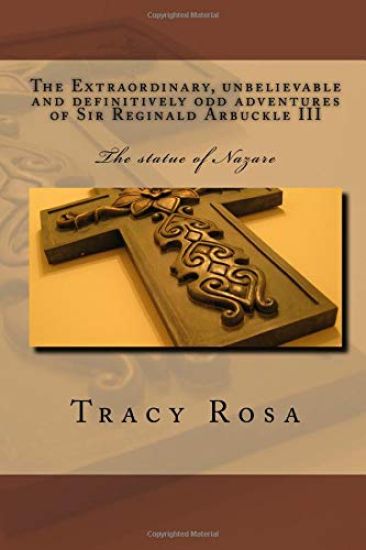
The Extraordinary, Unbelievable and Definitively Odd Adventures of Sir Reginald: The Statue of Nazare
Sir Reginald Albert Arbuckle III held court every week inside the Trophy Room of the Order of Distinguished Gentlemen's Club back in the 1700's, telling his extraordinary, unbelievable and definitively odd adventures. They have been passed down verbally for generations, until finally being put down on paper, for better or worse.
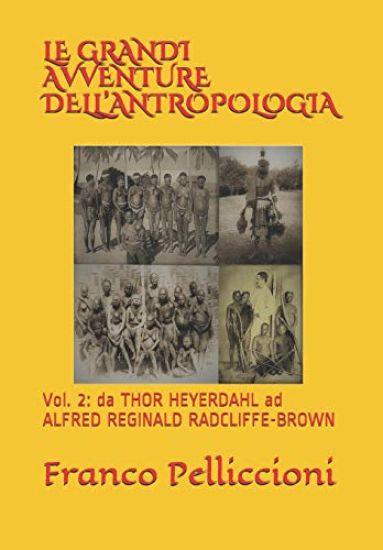
Le Grandi Avventure Dell'antropologia: Vol. 2: Da Thor Heyerdahl Ad Alfred Reginald Radcliffe-Brown
Questo secondo volume delle Grandi Avventure dell'Antropologia contiene altri 20 personaggi, oltre ai membri di una spedizione russo-tedesco-americana svoltasi a cavallo tra il XIX e il XX secolo tra Siberia, Alaska e Canada. Molto sommessamente potrei forse aggiungere come il lettore si trovi qui di fronte ad un autentico parterre de roi. Non solo perch vi figura una studiosa statunitense, che per molto tempo stata considerata la pi grande antropologa vivente O perch , allo scopo di dimostrare le sue teorie un norvegese stato il primo ad attraversare Oceano Pacifico, Atlantico e Indiano con una zattera, o con tradizionali imbarcazioni di giunchi e papiri. E che dire di chi, per cercare di dare finalmente "un taglio" alla plurisecolare, senz'altro singolare agli occhi di un europeo, pessima "abitudine" di tagliare le teste, organizzer nel Borneo una regata intertribale? Entrata giustamente a far parte della Storia dell'Antropologia. Sempre in Asia, nell'Oceano Indiano, un funzionario britannico si poi "improvvisato" etnografo delle popolazioni da lui amministrate. In Sud America c' stato anche chi, sia pure inconsapevolmente, ha offerto su un piatto d'argento a Conan Doyle, l'autore di Sherlock Holmes (e a tanti altri dopo di lui, scrittori e registi), allettanti e sostanziosi argomenti capaci di suscitare nell'immaginario collettivo favolosi racconti di terre perdute nel tempo, di un "Mondo Perduto". Scalando il tepuis del Roraima, dopo essersi interessato per anni agli indios della Guyana. Per quanto riguarda gli indiani del Nord America, il volume include quattro studiosi statunitensi, che hanno lavorato tra Navaho, Comanche e Indiani delle Pianure, in toto. Mentre una quinta antropologa ha saputo "dividersi" tra due continenti e... Hollywood Ancora un anglo-statunitense ha dedicato tutta la sua vita scientifica a sconfessare, "carte alla mano", il mito della razza. Qui sono presenti anche cinque francesi. Il primo si dedicato allo studio degli indios sudamericani e dell'Isola di Pasqua. Altri due hanno preferito rivolgere le loro attenzioni alle genti del Grande Nord, sia europeo, che americano. Anche se uno di loro, tuttora vivente, all'inizio non ha certo disdegnato di percorrere i deserti del Nord Africa. Come del resto ha fatto il quarto. Dedicatosi allo studio dei nomadi berberi del Sahara, cio dei famosi Tuareg. Anche se poi ha preferito indagare le raffigurazioni rupestri (dipinti e incisioni) presenti in abbondanza tra le montagne del sud algerino. L'ultimo, il quinto, un poeta, letterato e critico d'arte, tanto da aderire al movimento surrealista. Anche se partecip alla grande ricerca continentale africana, che port un drappello di studiosi d'oltralpe dalle coste dell'Atlantico fino al Golfo di Aden. Forse che il menu appena elaborato non sia di per s gi sufficientemente appetitoso? Peraltro "all'appello" mancano ancora altri quattro personaggi: uno svedese, due britannici, un tedesco naturalizzato brasiliano. Il primo un barone scandinavo. Ha un cognome assai noto, sia agli studiosi di Antropologia, che a quelli di Geografia e di Storia delle Esplorazioni. Dall'inizio del XX secolo si interessato ai popoli indios del Chaco e del Per , cio da quando la missione Chaco Cordillera, scortata per l'occasione da soldati boliviani, giunse fin sulle sponde del Pilcomayo, dove venti anni prima quasi tutti i numerosi membri di un'importante spedizione francese erano stati massacrati a coltellate e bastonate e, infine, "mangiati" dagli indios Uscito indenne da una regione di indubbia pericolosit , una decina di anni dopo uno dei componenti della sua missione in Bolivia e Brasile sar invece barbaramente assassinato... Il secondo ha studiato due popoli in Nigeria e Sudan. Il terzo il Padre dell'Antropologia Sociale. Infine il tedesco, poi fattosi brasiliano, quindi, indio Guaran . L'etnologo che per 40 anni ha studiato e vissuto presso 45 trib indie e
The Admiral's Caravan (1909) by: Charles Edward Carryl. illustrated by: Reginald B.

The Admiral's Caravan (1909) by: Charles Edward Carryl. illustrated by: Reginald B.

Charles Edward Carryl

Createspace Independent Publishing Platform
2017
nidottu
Charles Edward Caryl (December 30, 1841 - July 3, 1920) was an American children's literature author.Born in New York, Carryl became a second-generation successful businessman; and a stockbroker, who for 34 years starting in 1874 held a seat on the New York Stock Exchange. In 1869 he married Mary Wetmore. Their elder child was the poet and humorist Guy Wetmore Carryl. In 1882 Charles E. Carryl published his first work: Stock Exchange Primer. In 1884 he published the children's fantasy Davy and the Goblin; or, What Followed Reading "Alice's Adventures in Wonderland", serialized in the magazine St Nicholas. His work includes the children's nonsense poem "The Walloping Window Blind", published in 1885, in a verse style similar to Lewis Carroll's: A capital ship for an ocean trip/Was the Walloping Window-Blind;/No wind that blew dismayed her crew/Or troubled the captain's mind. A second novel, The Admiral's Caravan, also serialized in St Nicholas beginning in December 1891, was dedicated to his daughter Constance.
Tobacco From the Grower to the Smoker. Fourth Revised Edition, by E. Reginald Fairweather
This work has been selected by scholars as being culturally important and is part of the knowledge base of civilization as we know it.This work is in the public domain in the United States of America, and possibly other nations. Within the United States, you may freely copy and distribute this work, as no entity (individual or corporate) has a copyright on the body of the work.Scholars believe, and we concur, that this work is important enough to be preserved, reproduced, and made generally available to the public. To ensure a quality reading experience, this work has been proofread and republished using a format that seamlessly blends the original graphical elements with text in an easy-to-read typeface.We appreciate your support of the preservation process, and thank you for being an important part of keeping this knowledge alive and relevant.