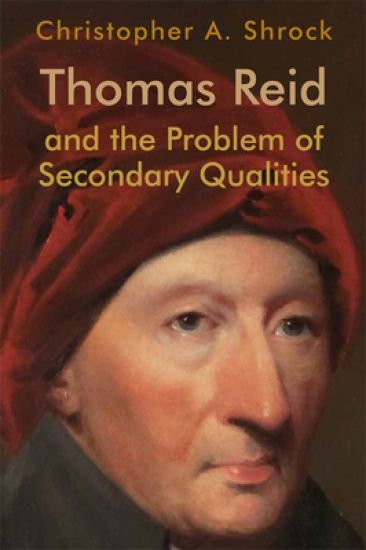
With a new reading of Thomas Reid on primary and secondary qualities, Christopher A. Shrock illuminates the Common Sense theory of perception. Shrock follow's Reid's lead in defending common sense philosophy against the problem of secondary qualities, which claims that our perceptions are only experiences in our brains, and don't let us know about the world around us. At the same time, Schrock maintains a healthy optimism about science and reason.
Is morality a subjective matter, dependent on our desires and interests, or are there objective moral truths? And if the latter, can we explain the objectivity of morality without appeal to metaphysics, a robust teleology, or divine command? This book argues that we find just such an account of moral objectivity in Thomas Reid's defence of duty. To make this case, this book provides an explanation of Reid's way of philosophy and his reasons for rejecting moral subjectivism; presents Reid's account of the concept, perception, and motivational force of duty; and responds to contemporary challenges of moral subjectivism and moral pessimism from the perspective of his moral philosophy. Further, this book argues that if Reid is correct, then there is an urgent need to reform current pedagogical practice and return to the teaching of practical ethics.
Is morality a subjective matter, dependent on our desires and interests, or are there objective moral truths? And if the latter, can we explain the objectivity of morality without appeal to metaphysics, a robust teleology or divine command?This book argues that we find just such an account of moral objectivity in Thomas Reid's Defence of Duty. To make this case, the book provides an explanation of Reid's way of philosophy and his reasons for rejecting moral subjectivism; presents Reid's account of the concept, perception, and motivational force of duty; and responds to contemporary challenges of moral subjectivism and moral pessimism from the perspective of his moral philosophy. Further, this book argues that if Reid is correct, then there is an urgent need to reform current pedagogical practice and return to the teaching of practical ethics.
The diversity and complexity of the legal issues that can arise in the course of the activities of a club, society or association present numerous questions for those advising and managing those bodies for which they need guidance. Problems range from the interpretation of rules to anti-discrimination legislation. Legal issues can span alcohol licensing, charities, company law, employment law, expulsion procedures, litigation, meetings, promotion of lotteries, property law and taxation.This is the definitive guide to the legal framework within which clubs, societies and associations operate, bringing together the various strands of law (including new case law and recent legislation) to provide practical legal advice for these bodies, their advisers and officers.The work includes a full set of model rules as well as other useful material in the appendices.
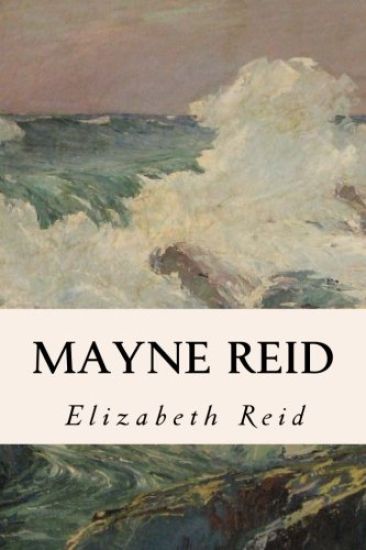
Mayne Reid is a classic literary biography by Elizabeth Reid. Thomas Mayne Reid (April 4, 1818 - October 22, 1883), was a Scots-Irish American novelist. "Captain" Reid wrote many adventure novels akin to those written by Frederick Marryat and Robert Louis Stevenson. He was a great admirer of Lord Byron. These novels contain action that takes place primarily in untamed locations including, but not limited to: the American West, Mexico, South Africa, the Himalayas, and Jamaica. Reid was born in Ballyroney, a small hamlet near Katesbridge, County Down, in the north of Ireland, the son of Rev. Thomas Mayne Reid Sr., who was a senior clerk of the General Assembly of the Presbyterian Church in Ireland. His father wanted him to become a Presbyterian minister, so in September 1834 he enrolled at the Royal Belfast Academical Institution. Although he stayed for four years, he could not motivate himself enough to complete his studies and receive a degree. He headed back home to Ballyroney to teach school. In December 1839 he boarded the Dumfriesshire bound for New Orleans, Louisiana, arriving in January 1840. Shortly afterward he found a job as a clerk for a corn factor, or trader in the corn market. He stayed in New Orleans for six months. It is said that he left his position for refusing to whip slaves. (Reid later used Louisiana as the setting of one of his best-selling books, an anti-slavery novel entitled The Quadroon.) From New Orleans, Reid traveled to Tennessee. On a plantation near Nashville, he tutored the children of Dr. Peyton Robertson, who some Reid biographers have confused with the Doctor's father, General James Randolph Robertson. (Some twenty years later, Reid would make mid-Tennessee the setting for his novel The Wild Huntress.) Following Dr. Robertson's death, Reid founded a short-lived private school in Nashville. In 1841 he found work as a clerk for a provision dealer in either Natchez, Mississippi or Natchitoches, Louisiana (the latter place seems more likely). Although Reid later claimed to have made several trips to the West during this period of his life (on which he purportedly based some of his novels), the evidence for such journeys is sketchy and confusing at best. In late 1842 Reid arrived in Pittsburgh, Pennsylvania, where he began his literary career writing both prose and poetry for the Pittsburgh Morning Chronicle under the pen-name The Poor Scholar. (He also apparently worked as a carrier for the paper.) His earliest verifiable work was a series of epic poems called Scenes in the West Indies. In early 1843, Reid moved to Philadelphia, where he remained for three years. During this time he worked as a journalist and from time to time had poetry published in Godey's Lady's Book, Graham's Magazine, the Ladies National Magazine, and similar publications, using the same pseudonym he had employed in Pittsburgh. It was in Philadelphia that he met Edgar Allan Poe and the two became drinking companions for a time. Poe would later call Reid "a colossal but most picturesque liar. He fibs on a surprising scale but with the finish of an artist, and that is why I listen to him attentively." When the Mexican-American War began in the spring of 1846, Reid was working as a correspondent for the New York Herald in Newport, Rhode Island (which would later become the setting for yet another novel). At this time he began using the pen-name Ecolier, in addition to the Poor Scholar. On November 23, 1846, Reid joined the First New York Volunteer Infantry as a second lieutenant. In January 1847 the regiment left New York by ship. The New Yorkers camped for several weeks at Lobos Island before taking part in Major General Winfield Scott's invasion of Central Mexico, which began on March 9 at Vera Cruz. Using the pseudonym "Ecolier", Reid was a correspondent for the a New York newspaper, Spirit of the Times, which published his Sketches by a Skirmisher.
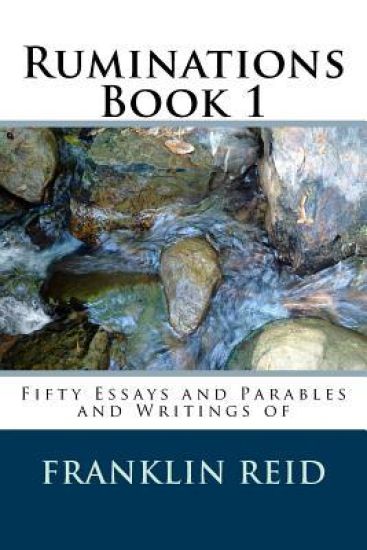
Over a twenty year period I have been teaching church doctrine classes and have had other thoughts that were not part of the lesson. These I wrote down as essays. They are all too short for a book. When I reached 180 of them a family member suggested I publish them all in one book. I broke them up and this is the first fifty essays which I call Ruminations Book 1.
From Sportsnet Central host and broadcaster Ken Reid comes an inspiring and entertaining new collection of hockey stories about local legends who define the game and its values. In many communities across Canada, hockey lives in the nearby arenas and leagues that forge both decades-long rivalries and unbreakable friendships. Fans show up to cheer not for distant NHL superstars, but for the homegrown heroes who define their town. These players don't always make it to the big leagues, but they inevitably become legends. In this entertaining collection, Canadian broadcaster and Sportsnet Central host Ken Reid tells their uplifting stories, from Pictou, Nova Scotia, to Kimberley, British Columbia--and everywhere in between. There's Robbie Forbes, who arrived in Newfoundland in the mid-eighties still dreaming of the pros and ended up giving the town a dream of its own when he led the Corner Brook Royals to a Canadian Senior Hockey title. He also happens to be Sidney Crosby's uncle. In a legendary Ontario community, the name Paul Polillo is spoken in the same reverential breath as Wayne Gretzky in their shared hometown of Brantford. There's also the tragic story of George Pelawa, who may have been the inspiration for Tom Cochrane & Red Rider's famous song "Big League." And Tyson Wuttunee, an Indigenous player in Saskatchewan who, through hockey, found the family and home he'd always longed for. Featuring heartwarming stories of grit, leadership, and lifelong bonds, Ken Reid's Hometown Hockey Heroes celebrates how hockey, and the values the game teaches, can shape our communities for the better.