Kirjojen hintavertailu. Mukana 12 354 727 kirjaa ja 12 kauppaa.

Kirjahaku

Etsi kirjoja tekijän nimen, kirjan nimen tai ISBN:n perusteella.

1000 tulosta hakusanalla Robert Atkinson

Robert Louis Stevenson and the Pictorial Text
Robert Louis Stevenson and the Pictorial Text explores the genesis, production and the critical appreciation of the illustrations to the fiction of Robert Louis Stevenson. Stevenson is one of the most copied and interpreted authors of the late nineteenth century, especially his novels Treasure Island and Strange Case of Dr Jekyll and Mr Hyde. These interpretations began with the illustration of his texts in their early editions, often with Stevenson’s express consent, and this book traces Stevenson’s understanding and critical responses to the artists employed to illustrate his texts. In doing so, it attempts to position Stevenson as an important thinker and writer on the subject of illustrated literature, and on the marriage of literature and visual arts, at a moment preceding the dawn of cinema, and the rejection of such popular tropes by modernist writers of the early twentieth century.
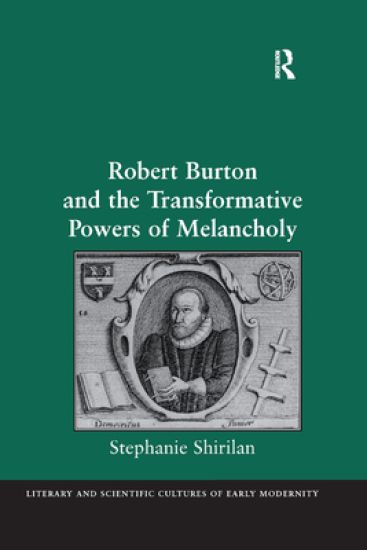
Robert Burton and the Transformative Powers of Melancholy
Few English books are as widely known, underread, and underappreciated as Robert Burton’s The Anatomy of Melancholy. Stephanie Shirilan laments that modern scholars often treat the Anatomy as an unmediated repository of early modern views on melancholy, overlooking the fact that Burton is writing a cento - an ancient form of satire that quotes and misquotes authoritative texts in often subversive ways - and that his express intent in so doing is to offer his readers literary therapy for melancholy. This book explores the ways in which the Anatomy dispenses both direct physic and more systemic medicine by encouraging readers to think of melancholy as a privileged mental and spiritual acuity that requires cultivation and management rather than cure. Refuting the prevailing historiography of anxious early modern embodiment that cites Burton as a key witness, Shirilan submits that the Anatomy rejects contemporary Neostoic and Puritan approaches to melancholy. She reads Burton’s erraticism, opacity, and theatricality as modes of resistance against demands for constancy, transparency, and plainness in the popular literature of spiritual and moral hygiene of his day. She shows how Burton draws on rhetorical, theological, and philosophical traditions that privilege the transformative powers of the imagination in order to celebrate melancholic impressionability for its capacity to inspire and engender empathy, charity, and faith.
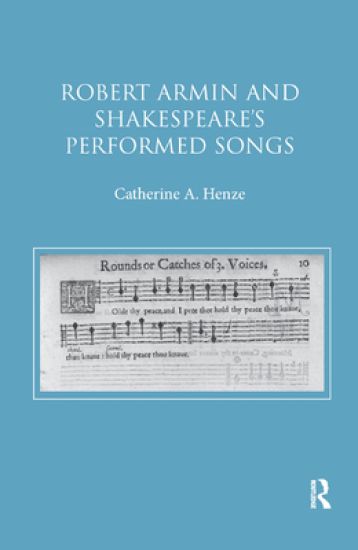
Robert Armin and Shakespeare's Performed Songs
After Robert Armin joined the Chamberlain's Men, singing in Shakespeare's dramas catapulted from 1.25 songs and 9.95 lines of singing per play to 3.44 songs and 29.75 lines of singing, a virtually unnoticed phenomenon. In addition, many of the songs became seemingly improvisatory—similar to Armin's personal style as an author and solo comedian. In order to study Armin's collaborative impact, this interdisciplinary book investigates the songs that have Renaissance music that could have been heard on Shakespeare's stage. They occur in some of Shakespeare's most famous plays, including Much Ado About Nothing, Twelfth Night, Hamlet, and The Tempest. In fact, Shakespeare's plays, as we have them, are not complete. They are missing the music that could have accompanied the plays’ songs. Significantly, Renaissance vocal music, far beyond just providing entertainment, was believed to alter the bodies and souls of both performers and auditors to agree with its characteristics, directly inciting passions from love to melancholy. By collaborating with early modern music editor and performing artist Lawrence Lipnik, Catherine Henze is able to provide new performance editions of seventeen songs, including spoken interruptions and cuts and rearrangement of the music to accommodate the dramatist's words. Next, Henze analyzes the complete songs, words and music, according to Renaissance literary and music primary sources, and applies the new information to interpretations of characters and scenes, frequently challenging commonly held literary assessments. The book is organized according to Armin's involvement with the plays, before, during, and after the comic actor joined Shakespeare's company. It offers readers the tools to interpret not only these songs, but also vocal music in dramas by other Renaissance playwrights. Moreover, Robert Armin and Shakespeare's Performed Songs, written with non-specialized terminology, provides a
Robert Louis Stevenson and the Great Affair
In his travel narrative Travels with a Donkey in the Cevennes (1879), Robert Louis Stevenson declares, "I travel not to go anywhere, but to go. I travel for travel's sake. The great affair is to move." Taking up the concepts of time, place, and memory, the contributors to this collection explore in what ways the dynamic view of life suggested by this quotation permeates Stevenson's work. The essays adopt a wide variety of critical approaches, including post-colonial theory, post-structuralism, new historicism, art history, and philosophy, making use of the vast array of literary materials that Stevenson left across a global journey that began in Scotland in 1850 and ended in Samoa in 1894. These range from travel journals, letters, and classic literary staples such as Treasure Island and The Strange Case of Dr. Jekyll and Mr. Hyde, to rarely read masterpieces such as The Master of Ballantrae or The Ebb-Tide. While much recent scholarship on Stevenson foregrounds geography, the present volume also examines the theme of movement across memory, time, and generic boundaries. Taken together, the essays offer a view of Stevenson that demonstrates how the protean nature of his literary output reflects the radical developments in science, technology, and culture that characterized the age in which he lived.
Robert Bloomfield, Romanticism and the Poetry of Community
Robert Bloomfield, whom John Clare described as 'the most original poet of the age,' was a widely read and critically acclaimed poet throughout the first decade of the nineteenth century, and remained popular until the beginning of the twentieth century. Yet until now, no modern critic has undertaken a full-length study of his poetry and its contexts. Simon J. White considers the relationship between Bloomfield's poetry and that of other Romantic poets. For example, her argues that Wordsworth's poetics of rural life was in some respects a response to Bloomfield's The Farmer's Boy. White considers Bloomfield's emphasis on the importance of local tradition and community in the lives of labouring people. In challenging the idea that the formal and rhetorical innovation of Wordsworth and Coleridge was principally responsible for the emergence of a new kind of poetry at the turn of the eighteenth century, he also shows that it is impossible to understand how the lyric and the literary ballad evolved during the Romantic period without considering Bloomfield's poetry. White's authoritative study demonstrates that, on the contrary, Bloomfield's poetry was pivotal in the development of Romanticism.
Robert's Rules of Order

Robert's Rules of Order

Henry M Robert

Blurb
2024
pokkari
Robert's Rules of Order Newly Revised, commonly referred to as Robert's Rules of Order, RONR, or simply Robert's Rules, is the most widely used manual of parliamentary procedure in the United States. It governs the meetings of a diverse range of organizations-including church groups, county commissions, homeowners associations, nonprofit associations, professional societies, school boards, and trade unions-that have adopted it as their parliamentary authority.
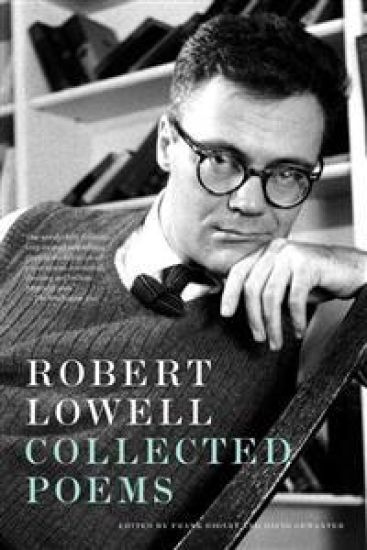
Robert Lowell Collected Poems

Robert Lowell Collected Poems

Robert Lowell

Farrar, Straus and Giroux
2007
nidottu
The first full collection of Robert Lowell's work introduces readers to the literary genius of the nation's most important postwar poet, including several never-before-anthologized poems, with works frorm Land of Unlikeness, the Pulitzer Prize-winning Lord Weary's Castle, and Day by Day, his final book, among others. Reprint.
The Letters of Robert Lowell

The Letters of Robert Lowell

Robert Lowell

Farrar, Straus and Giroux
2007
nidottu
One of the most influential poets of the twentieth century, Robert Lowell was also a prolific letter writer who corresponded with many of the remarkable writers and thinkers of his day, including Elizabeth Bishop, Ezra Pound, Hannah Arendt, William Carlos Williams, T. S. Eliot, Robert Frost, and Edmund Wilson. These letters, conversations in writing, document the evolution of Lowell's work and illuminate another side of the intimate life that was the subject of so many of his poems: his deep friendships with other writers; the manic-depressive illness he struggled to endure and understand; his marriages to three prose writers; and his engagement with politics and the antiwar movement of the 1960s. The Letters of Robert Lowell shows us, in many cases for the first time, the private thoughts and passions of a figure unrivaled in his influence on American letters.
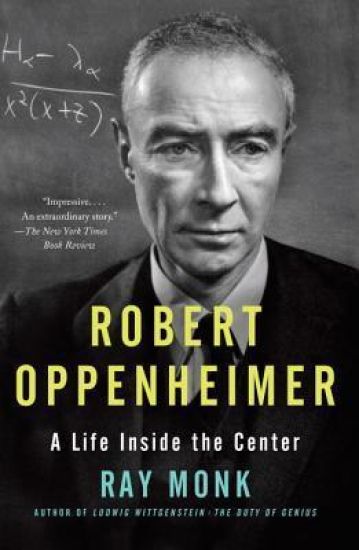
Robert Oppenheimer: A Life Inside the Center
An unforgettable story of discovery and unimaginable destruction and a major biography of one of America's most brilliant--and most divisive--scientists, Robert Oppenheimer: A Life Inside the Center vividly illuminates the man who would go down in history as "the father of the atomic bomb." "Impressive. . . . An extraordinary story."--The New York Times Book Review "Judicious, comprehensive and reliable. . . . By far the most thorough survey yet written of Oppenheimer's physics."--Washington Post Oppenheimer's talent and drive secured him a place in the pantheon of great physicists and carried him to the laboratories where the secrets of the universe revealed themselves. But they also led him to contribute to the development of the deadliest weapon on earth, a discovery he soon came to fear. His attempts to resist the escalation of the Cold War arms race--coupled with political leanings at odds with post-war America--led many to question his loyalties, and brought down upon him the full force of McCarthyite anti-communism. Digging deeply into Oppenheimer's past to solve the enigma of his motivations and his complex personality, Ray Monk uncovers the extraordinary, charming, tortured man--and the remarkable mind--who fundamentally reshaped the world.
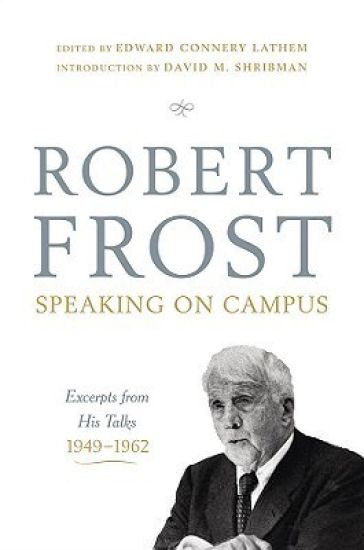
Robert Frost: Speaking on Campus

Robert Frost: Speaking on Campus

Robert Frost

WW Norton Co
2009
sidottu
Robert Frost’s poetry has triumphantly survived him, but most readers today have not known him in one of his most significant capacities—as teacher and lecturer. Here, collected for the first time, are excerpts from forty-six of his presentations delivered to students at more than thirty academic institutions over three decades. Frost’s topics include: “What I think I’m doing when I write a poem,” “Getting up things to say for yourself,” “The future of the world,” “Fall in love at sight,” and “Not freedom from, but freedom of.” Gathered by Edward Connery Lathem, editor of The Poetry of Robert Frost, and introduced by Pulitzer Prize–winning journalist David M. Shribman, Robert Frost: Speaking on Campus reveals Frost in the setting of both classroom and lecture hall, where he inspired thousands.
Robert E. Lee

Robert E. Lee

Emory M. Thomas

WW Norton Co
1997
nidottu
The life of Robert E. Lee is a story not of defeat but of triumph—triumph in clearing his family name, triumph in marrying properly, triumph over the mighty Mississippi in his work as an engineer, and triumph over all other military men to become the towering figure who commanded the Confederate army in the American Civil War. But late in life Lee confessed that he "was always wanting something." In this probing and personal biography, Emory Thomas reveals more than the man himself did. Robert E. Lee has been, and continues to be, a symbol and hero in the American story. But in life, Thomas writes, Lee was both more and less than his legend. Here is the man behind the legend.
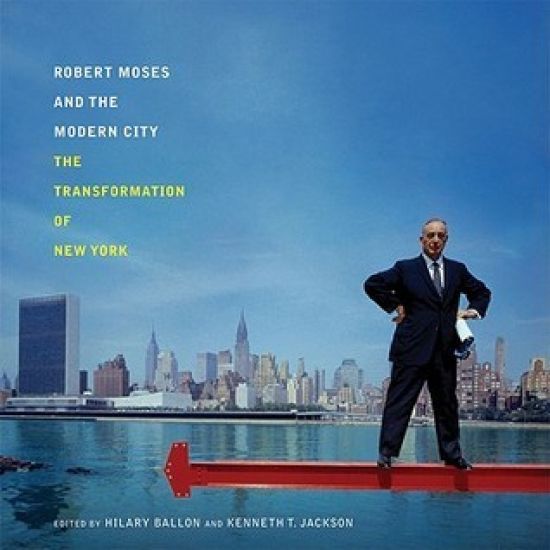
Robert Moses and the Modern City
“We are rebuilding New York, not dispersing and abandoning it”: Robert Moses saw himself on a rescue mission to save the city from obsolescence, decentralization, and decline. His vast building program aimed to modernize urban infrastructure, expand the public realm with extensive recreational facilities, remove blight, and make the city more livable for the middle class. This book offers a fresh look at the physical transformation of New York during Moses’s nearly forty-year reign over city building from 1934 to 1968. It is hard to imagine that anyone will ever have the same impact on New York as did Robert Moses. In his various roles in city and state government, he reshaped the fabric of the city, and his legacy continues to touch the lives of all New Yorkers. Revered for most of his life, he is now one of the most controversial figures in the city’s history. Robert Moses and the Modern City is the first major publication devoted to him since Robert Caro’s damning 1974 biography, The Power Broker: Robert Moses and the Fall of New York. In these pages eight short essays by leading scholars of urban history provide a revised perspective; stunning new photographs offer the first visual record of Moses’s far-reaching building program as it stands today; and a comprehensive catalog of his works is illustrated with a wealth of archival records: photographs of buildings, neighborhoods, and landscapes, of parks, pools, and playgrounds, of demolished neighborhoods and replacement housing and urban renewal projects, of bridges and highways; renderings of rejected designs and controversial projects that were defeated; and views of spectacular models that have not been seen since Moses made them for promotional purposes.Robert Moses and the Modern City captures research undertaken in the last three decades and will stimulate a new round of debate. Robert Moses and the Modern City captures research undertaken in the last three decades and will stimulate a new round of debate.
Robert Moses and the Modern City
“We are rebuilding New York, not dispersing and abandoning it”: Robert Moses saw himself on a rescue mission to save the city from obsolescence, decentralization, and decline. His vast building program aimed to modernize urban infrastructure, expand the public realm with extensive recreational facilities, remove blight, and make the city more livable for the middle class. This book offers a fresh look at the physical transformation of New York during Moses’s nearly forty-year reign over city building from 1934 to 1968.It is hard to imagine that anyone will ever have the same impact on New York as did Robert Moses. In his various roles in city and state government, he reshaped the fabric of the city, and his legacy continues to touch the lives of all New Yorkers. Revered for most of his life, he is now one of the most controversial figures in the city’s history. Robert Moses and the Modern City is the first major publication devoted to him since Robert Caro’s damning 1974 biography, The Power Broker: Robert Moses and the Fall of New York.In these pages eight short essays by leading scholars of urban history provide a revised perspective; stunning new photographs offer the first visual record of Moses’s far-reaching building program as it stands today; and a comprehensive catalog of his works is illustrated with a wealth of archival records: photographs of buildings, neighborhoods, and landscapes, of parks, pools, and playgrounds, of demolished neighborhoods and replacement housing and urban renewal projects, of bridges and highways; renderings of rejected designs and controversial projects that were defeated; and views of spectacular models that have not been seen since Moses made them for promotional purposes.Robert Moses and the Modern City captures research undertaken in the last three decades and will stimulate a new round of debate.
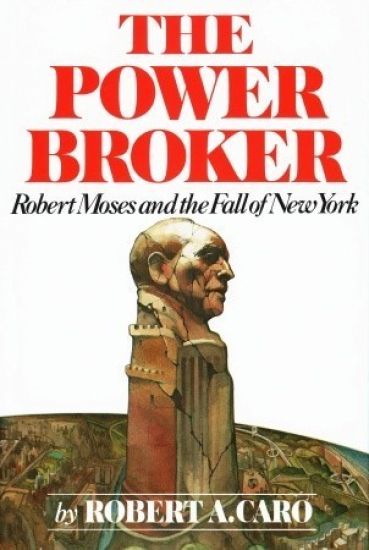
The Power Broker: Robert Moses and the Fall of New York

The Power Broker: Robert Moses and the Fall of New York

Robert A. Caro

Knopf Publishing Group
1974
sidottu
PULITZER PRIZE WINNER - A modern American classic, this huge and galvanizing biography of Robert Moses reveals not only the saga of one man's incredible accumulation of power but the story of his shaping (and mis-shaping) of twentieth-century New York. One of the Modern Library's hundred greatest books of the twentieth century, Robert Caro's monumental book makes public what few outsiders knew: that Robert Moses was the single most powerful man of his time in the City and in the State of New York. And in telling the Moses story, Caro both opens up to an unprecedented degree the way in which politics really happens--the way things really get done in America's City Halls and Statehouses--and brings to light a bonanza of vital information about such national figures as Alfred E. Smith and Franklin D. Roosevelt (and the genesis of their blood feud), about Fiorello La Guardia, John V. Lindsay and Nelson Rockefeller. But The Power Broker is first and foremost a brilliant multidimensional portrait of a man--an extraordinary man who, denied power within the normal framework of the democratic process, stepped outside that framework to grasp power sufficient to shape a great city and to hold sway over the very texture of millions of lives. We see how Moses began: the handsome, intellectual young heir to the world of Our Crowd, an idealist. How, rebuffed by the entrenched political establishment, he fought for the power to accomplish his ideals. How he first created a miraculous flowering of parks and parkways, playlands and beaches--and then ultimately brought down on the city the smog-choked aridity of our urban landscape, the endless miles of (never sufficient) highway, the hopeless sprawl of Long Island, the massive failures of public housing, and countless other barriers to humane living. How, inevitably, the accumulation of power became an end in itself. Moses built an empire and lived like an emperor. He was held in fear--his dossiers could disgorge the dark secret of anyone who opposed him. He was, he claimed, above politics, above deals; and through decade after decade, the newspapers and the public believed. Meanwhile, he was developing his public authorities into a fourth branch of government known as "Triborough"--a government whose records were closed to the public, whose policies and plans were decided not by voters or elected officials but solely by Moses--an immense economic force directing pressure on labor unions, on banks, on all the city's political and economic institutions, and on the press, and on the Church. He doled out millions of dollars' worth of legal fees, insurance commissions, lucrative contracts on the basis of who could best pay him back in the only coin he coveted: power. He dominated the politics and politicians of his time--without ever having been elected to any office. He was, in essence, above our democratic system. Robert Moses held power in the state for 44 years, through the governorships of Smith, Roosevelt, Lehman, Dewey, Harriman and Rockefeller, and in the city for 34 years, through the mayoralties of La Guardia, O'Dwyer, Impellitteri, Wagner and Lindsay, He personally conceived and carried through public works costing 27 billion dollars--he was undoubtedly America's greatest builder. This is how he built and dominated New York--before, finally, he was stripped of his reputation (by the press) and his power (by Nelson Rockefeller). But his work, and his will, had been done.
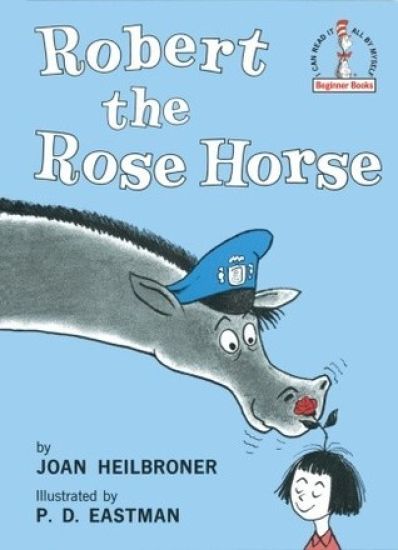
Robert the Rose Horse

Robert the Rose Horse

Joan Heilbroner

Random House Books for Young Readers
1962
sidottu
Illustrated in vibrant colors, a city horse faces many problems due to his allergy to roses, until one day, his sneezes save the day. Beginner Books are fun, funny, and easy to read Launched by Dr. Seuss in 1957 with the publication of The Cat in the Hat, this beloved early reader series motivates children to read on their own by using simple words with illustrations that give clues to their meaning. Featuring a combination of kid appeal, supportive vocabulary, and bright, cheerful art, Beginner Books will encourage a love of reading in children ages 3-7.
Best of Robert Service

Best of Robert Service

Robert Service

TarcherPerigee
1989
nidottu
Here, collected in a single volume, are the most popular verses of the great English-born Canadian poet. His famous ballads of the Klondike are here: "The Shooting of Dan McGrew," "The Spell of the Yukon," and "The Cremation of Sam McGee." Also included are unforgettable portrayals of the artists, grisettes, and models of the merry, tragic life of bohemian Paris, and other verses inspire by the First World War, during which Service drove an ambulance in France. And not to be overlooked are the many expressions of the poet's own homespun philosophy--his comments on women, on life and death, ambition, and success and failure, which strike a responsive chord in the reader's heart. Gaiety, humor, nostalgia, and pathos fill every page, along with the genuine Service ring of virility which has made his verse loved throughout the English reading world.