

Kirjahaku
Etsi kirjoja tekijän nimen, kirjan nimen tai ISBN:n perusteella.
1000 tulosta hakusanalla Robin de Ruiter

Première Année d'Histoire Naturelle: Zoologie Élémentaire, Notions de Botanique
Ferdinand Faideau; Auguste Robin
Hachette Livre - BNF
2013
pokkari
Exploration et test d'une méthode de priorisation des risques en santé
Julien Giraud; Mélanie Pubert; Stéphane Robin
ÉDITIONS UNIVERSITAIRES EUROPÉENNES
2016
nidottu
Synthèse, caractérisation et application de nouveaux tensioactifs
Omar Senhaji; Mohammed Khalid Skalli; Jean-Jacques Robin
ÉDITIONS UNIVERSITAIRES EUROPÉENNES
2017
nidottu
Investigates the current state of selling, whether this is groceries, politicians, information or motorcars. Unlike any other phenomenon, retailization reflects the complexity and diffusion of information processes and the media in the online market. The authors explore the all-pervasive nature of retail in the physical world, the virtual world and the peripheral spaces in between.Coverage includes:interviews with Asda, MOMA, the Tate Modern, Wal-Mart, Sony, Habitat, Manchester United and Volkswagen, while Bill Mitchell, Dean of Architecture at MIT, architects Jon Jerde, Rem Koolhas and Ben van Berkel, as well as David Peek, psychologist behind the Bluewater Shopping Mall, are all individually interviewed.

Presents basic concepts, experimental methodology and data acquisition, and processing standards of in vivo NMR spectroscopy This book covers, in detail, the technical and biophysical aspects of in vivo NMR techniques and includes novel developments in the field such as hyperpolarized NMR, dynamic 13C NMR, automated shimming, and parallel acquisitions. Most of the techniques are described from an educational point of view, yet it still retains the practical aspects appreciated by experimental NMR spectroscopists. In addition, each chapter concludes with a number of exercises designed to review, and often extend, the presented NMR principles and techniques. The third edition of In Vivo NMR Spectroscopy: Principles and Techniques has been updated to include experimental detail on the developing area of hyperpolarization; a description of the semi-LASER sequence, which is now a method of choice; updated chemical shift data, including the addition of 31P data; a troubleshooting section on common problems related to shimming, water suppression, and quantification; recent developments in data acquisition and processing standards; and MatLab scripts on the accompanying website for helping readers calculate radiofrequency pulses. Provide an educational explanation and overview of in vivo NMR, while maintaining the practical aspects appreciated by experimental NMR spectroscopistsFeatures more experimental methodology than the previous editionEnd-of-chapter exercises that help drive home the principles and techniques and offer a more in-depth exploration of quantitative MR equationsDesigned to be used in conjunction with a teaching course on the subject In Vivo NMR Spectroscopy: Principles and Techniques, 3rd Edition is aimed at all those involved in fundamental and/or diagnostic in vivo NMR, ranging from people working in dedicated in vivo NMR institutes, to radiologists in hospitals, researchers in high-resolution NMR and MRI, and in areas such as neurology, physiology, chemistry, and medical biology.
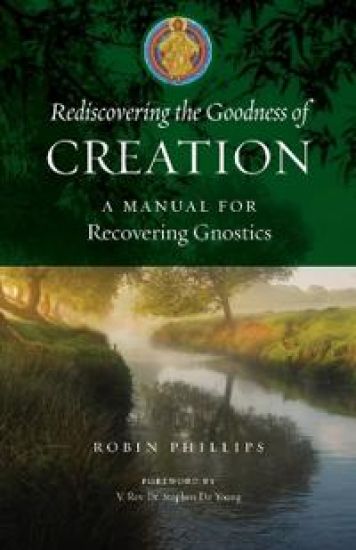
Rediscovering the Goodness of Creation
Robin Phillips; V Stephen de Young
Ancient Faith Publishing
2023
pokkari

Therapeutic Gaming
Jimmy de Bontridder; Robin Authom
Editions Universitaires Europeennes
2018
pokkari

Even though the fractal approach to sustainability and organizational change management is not new, no authors so far seem to have truly attempted to use fractals as a mathematical means to map and measure organizational sustainability. Several sustainability maturity models and change management models and frameworks, concepts and computer generated systems came to the fore during the past two decades. They provided a set of useful tools for managers, academics and students to refer to, or on which to base their own actions and plans. However, one issue remains: most of those models and frameworks share a rather similar linear ‘skeleton’; the main difference between them is the quantitative variety of steps within each phase, stage, and parameter and how in depth each of these is presented. The authors' work addresses a clear gap in the literature and in applied research, as it emphasizes the relevance of using a complex mathematically-based but user-friendly fractal approach. Readers are able to better understand, implement, map and measure change management processes leading to a sustainability-focused mindset. Subsequent chapters guide you through the steps towards creating committed sustainability-based strategies, attitudes, actions and practices across all levels in the broad organizational context.This text is essential reading for students researching business and management and who are interested in the Fractal Sustainability concept.
Even though the fractal approach to sustainability and organizational change management is not new, no authors so far seem to have truly attempted to use fractals as a mathematical means to map and measure organizational sustainability. Several sustainability maturity models and change management models and frameworks, concepts and computer generated systems came to the fore during the past two decades. They provided a set of useful tools for managers, academics and students to refer to, or on which to base their own actions and plans. However, one issue remains: most of those models and frameworks share a rather similar linear ‘skeleton’; the main difference between them is the quantitative variety of steps within each phase, stage, and parameter and how in depth each of these is presented. The authors' work addresses a clear gap in the literature and in applied research, as it emphasizes the relevance of using a complex mathematically-based but user-friendly fractal approach. Readers are able to better understand, implement, map and measure change management processes leading to a sustainability-focused mindset. Subsequent chapters guide you through the steps towards creating committed sustainability-based strategies, attitudes, actions and practices across all levels in the broad organizational context.This text is essential reading for students researching business and management and who are interested in the Fractal Sustainability concept.
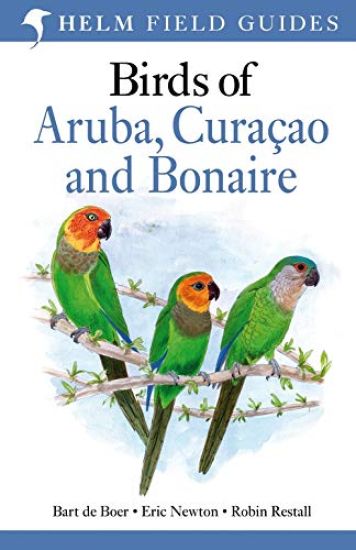
Field Guide to Birds of Aruba, Curaçao and Bonaire
Bart de Boer; Eric Newton; Robin Restall
Helm
2020
nidottu
A comprehensive field guide covering the birds of the Dutch Caribbean.Located in the southern Caribbean off the coast of Venezuela, the constituent countries of Aruba and Curaçao and the special municipality of Bonaire along with some smaller islands are popular tourist destinations. They are also home to a fine selection of Caribbean specialities, such as Brown-throated Parakeet, Venezuelan Troupial, Roseate Spoonbill and White-tailed Nightjar, while migrant hotspots on the islands can be exceptional. This field guide is designed to help you identify the many wonderful birds that live in this part of the western Lesser Antilles. It features 71 colour plates, with facing text describing key identification features, voice, habitat, behaviour and status of every species known to occur on the islands.This compact yet comprehensive guide is an important addition to the suitcase for any visiting wildlife traveller or birder on these beautiful islands.

Science and Song - Sing for the Earth - Little Wild Animals
Claudia Robin Gunn; Melissa R Gunn; Elise Silva de
Little Wild Music
2025
pokkari

Crises et migrations dans les pays du sud
Marc-Antoine Perouse de Montclos; Nelly Robin; Véronique Petit
Populations
2020
nidottu
Von Fröschen, Einhörnern und Schmetterlingen
Josch Hoenes; Robin Bauer; Adrian de Silva
Melusina Press
2023
nidottu

Maritime Networks, Port Efficiency, and Hinterland Connectivity in the Mediterranean
Jean-François Arvis; Vincent Vesin; Robin Carruthers; Cesar Ducruet; Peter de Langen
World Bank Publications
2018
nidottu
This book is a practical exploration of the three interdependent dimensions of trade connectivity in the Mediterranean: maritime networks, port efficiency, and hinterland connectivity. Understanding how trade connectivity works is important to policy makers concerned with the economic benefits of large investments in infrastructure.

Downtown Mardi Gras
Leslie A. Wade; Robin Roberts; Frank de Caro
University Press of Mississippi
2019
sidottu
After Hurricane Katrina devastated New Orleans and the surrounding region in 2005, the city debated whether to press on with Mardi Gras or cancel the parades. Ultimately, they decided to proceed. New Orleans's recovery certainly has resulted from a complex of factors, but the city's unique cultural life—perhaps its greatest capital—has been instrumental in bringing the city back from the brink of extinction. Voicing a civic fervor, local writer Chris Rose spoke for the importance of Carnival when he argued to carry on with the celebration of Mardi Gras following Katrina: “We are still New Orleans. We are the soul of America. We embody the triumph of the human spirit. Hell, we ARE Mardi Gras.""Since 2006, a number of new Mardi Gras practices have gained prominence. The new parade organizations or krewes, as they are called, interpret and revise the city's Carnival traditions but bring innovative practices to Mardi Gras. The history of each parade reveals the convergence of race, class, age, and gender dynamics in these new Carnival organizations. Downtown Mardi Gras: New Carnival Practices in Post-Katrina New Orleans examines six unique, offbeat, Downtown celebrations. Using ethnography, folklore, cultural, and performance studies, the authors analyze new Mardi Gras's connection to traditional Mardi Gras. The narrative of each krewe's development is fascinating and unique, illustrating participants' shared desire to contribute to New Orleans's rich and vibrant culture.

Downtown Mardi Gras
Leslie A. Wade; Robin Roberts; Frank de Caro
University Press of Mississippi
2019
nidottu
After Hurricane Katrina devastated New Orleans and the surrounding region in 2005, the city debated whether to press on with Mardi Gras or cancel the parades. Ultimately, they decided to proceed. New Orleans's recovery certainly has resulted from a complex of factors, but the city's unique cultural life—perhaps its greatest capital—has been instrumental in bringing the city back from the brink of extinction. Voicing a civic fervor, local writer Chris Rose spoke for the importance of Carnival when he argued to carry on with the celebration of Mardi Gras following Katrina: “We are still New Orleans. We are the soul of America. We embody the triumph of the human spirit. Hell, we ARE Mardi Gras.""Since 2006, a number of new Mardi Gras practices have gained prominence. The new parade organizations or krewes, as they are called, interpret and revise the city's Carnival traditions but bring innovative practices to Mardi Gras. The history of each parade reveals the convergence of race, class, age, and gender dynamics in these new Carnival organizations. Downtown Mardi Gras: New Carnival Practices in Post-Katrina New Orleans examines six unique, offbeat, Downtown celebrations. Using ethnography, folklore, cultural, and performance studies, the authors analyze new Mardi Gras's connection to traditional Mardi Gras. The narrative of each krewe's development is fascinating and unique, illustrating participants' shared desire to contribute to New Orleans's rich and vibrant culture.

Comparative Politics
J. Tyler Dickovick; Jonathan Eastwood; Robin M. LeBlanc; Zoila Ponce de Leon
OXFORD UNIVERSITY PRESS INC
2023
nidottu
An engaging and accessible introduction to the subject, Comparative Politics: Integrating Theories, Methods, and Cases gives students the methodological tools they need to answer the "big questions" in the field. The authors introduce methods early in the text and integrate them throughout, in Thinking Comparatively features, to help students develop a systematic way of thinking about comparative politics. Offering a hybrid format, the text's unique structure offers the best of thematic and country-by-country approaches. Sixteen succinct thematic chapters--organized around the "big questions" in the field--are followed by a separate section at the end of the book offering full-length profiles and case studies for twelve countries. Examples of some of the "big picture questions discussed in the thematic chapters are, "Why do countries have different institutions and forms of government? Why do some social revolutions succeed and endure while others fail? Why are some societies subjected to terrorism and not others?" Each chapter integrates several standalone country case studies in Case in Context features; these features tie into the narrative, pose questions, and point students to the full case discussions in the country profiles section of the book.