Kirjojen hintavertailu. Mukana 12 459 402 kirjaa ja 12 kauppaa.

Kirjahaku

Etsi kirjoja tekijän nimen, kirjan nimen tai ISBN:n perusteella.

1000 tulosta hakusanalla S. Jason Cunningham

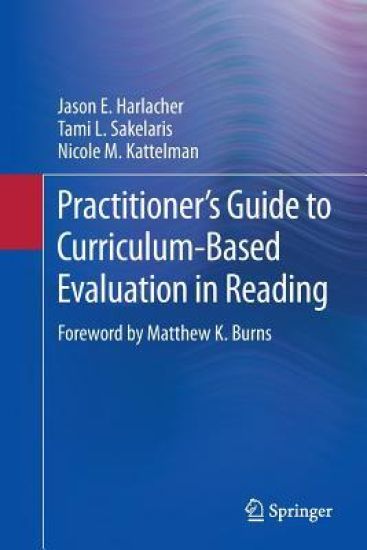
Practitioner’s Guide to Curriculum-Based Evaluation in Reading

Practitioner’s Guide to Curriculum-Based Evaluation in Reading

Jason E. Harlacher; Tami L. Sakelaris; Nicole M. Kattelman

Springer-Verlag New York Inc.
2013
sidottu
The educators are dedicated and concerned. The curriculum is successful. Yet some students aren't reading at grade level, and meetings air problems without making progress. Many students continue to flounder, leading to more meetings with the same lack of meaningful results. The Practitioner’s Guide to Curriculum-Based Evaluation in Reading gives researchers and professionals the means to break this frustrating cycle, crafted by authors who have not only been there and done that, but can explain in depth how to replicate the method. Focusing on reading but applicable across subject areas, this highly accessible guide defines curriculum-based evaluation (CBE), provides conceptual background, and analyzes its component steps. Assessment and intervention are given equal attention within a problem-solving model featuring tools for skill assessment, progress monitoring, goal setting, and other bedrock tasks. Chapters build to lead readers beyond classroom strategies to guidelines for problem solving and decision making to effectively address individual student needs. Included in the coverage: The curriculum-based evaluation process.Relating CBE to the Multi-Tier System of Support model.Using CBE in daily practice, both in classwork and schoolwide.Decoding, early literacy, and reading comprehension.Progress monitoring and decision making.Plus FAQs, handouts, and other supplemental materials. This level of educational insight and pedagogical detail make the Practitioner’s Guide to Curriculum-Based Evaluation in Reading a clarion call for researchers, graduate students, and professionals in school and clinical childpsychology; assessment, testing, and evaluation; applied linguistics; language education; special education and allied education; educational psychology; and social work.
Baynard's List

Baynard's List

Jason Vail

Createspace Independent Publishing Platform
2011
nidottu
A secret list identifying the supporters of both King Henry and his rival for power Simon de Montfort has disappeared following the murder of the King's master spy in the west of England. Stephen Attebrook, the part-time deputy coroner for medieval Ludlow, must find Baynard's list for his former master, the grasping and ambitious crown justice Ademar de Valence - projecting Attebrook into a cesspit of medieval murder, espionage, intrigue and betrayal.Attebrook faces his greatest challenge as a discoverer of secrets as he races to obtain the list before a rival gets it first, while the life of someone close to him hangs on the outcome.
Pittsburgh's Lost Outpost: Captain Trent's Fort
As 1753 came to a close, European empires were set on a collision course for a triangular piece of land known as the Forks of the Ohio.The valuable patch of land, now known as Point State Park, is located at the confluence of the Allegheny and Monongahela Rivers; the navigable waterways were valuable to the French to complete their control of the Ohio Valley as the British looked to create a center for their booming fur trade and westward expansion. Former soldier turned trader William Trent set out for the untamed wilderness to stake Britain's claim, and he would build the first fort to form the humble beginnings of Pittsburgh and to set the stage for the French and Indian War. Author Jason A. Cherry details the history of William Trent and Pittsburgh's forgotten first outpost.
Cincinnati's Mt. Lookout Neighborhood

Cincinnati's Mt. Lookout Neighborhood

Jason Fitzhugh

Arcadia Publishing (SC)
2024
nidottu
With its undulating hills and sweeping views of the river valleys, located less than eight miles from downtown Cincinnati, Mt. Lookout quickly grew from rural farms to a picturesque suburb that could have inspired Norman Rockwell to paint it. Originally a small village called Delta, Mt. Lookout was annexed by the City of Cincinnati in 1870 and was renamed after the new Cincinnati Observatory was built at the end of Observatory Place. Thanks to John and Charles Kilgour, brothers who invested in real estate and public transportation, Mt. Lookout became an upscale destination by the turn of the 20th century. This book showcases the people, buildings, landmarks, and events that have made Mt. Lookout such an idyllic place for its residents to call home. It is equally important to mention the cozy, bustling Mt. Lookout Square, the heart of the town; many businesses have been open and operating for over 50 years, while Geo. H. Rohde & Sons Funeral Home has already celebrated its centennial anniversary.Jason Fitzhugh is a teacher, historian, and collector. He has carefully selected over 150 images to create a nostalgic time line from Mt. Lookout's early beginnings to the thriving, established neighborhood it is today.
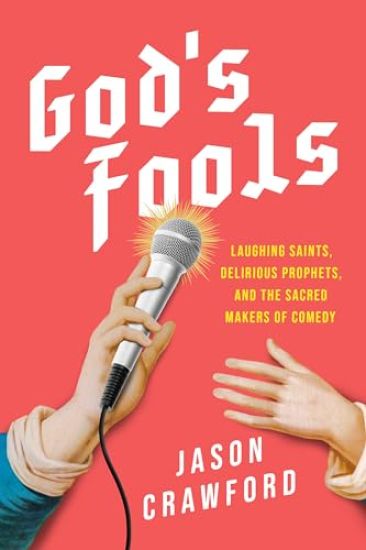
God's Fools

God's Fools

Jason Crawford

GLOBE PEQUOT PRESS
2025
sidottu
From the self-abasements of Charlie Chaplin and Lenny Bruce’s provocations to the present-day culture warring over figures like Dave Chappelle and Hannah Gadsby, comedians have always been not simply entertainers, but charismatic observers of (and participants in) social anxieties and pathologies. Performers as varied as Mort Sahl, Richard Pryor, Margaret Cho, and Louis CK have courted both devotion and outrage at various points in their careers, as they cavort at the outer extremities of taboo, good taste, and received opinion.In God’s Fools:Laughing Saints, Delirious Prophets, and the Sacred Makers of Comedy religion and literature scholar Jason Crawford gives a penetrating and surprising look at the social role that comedians play by placing them in their proper historical lineage—one that begins not with vaudeville and minstrelry but with the mystics, martyrs, and misfits of the premodern Judeo-Christian world. In Crawford’s expansive account, comedians like Chaplin and Chappelle mingle with such motley historical figures as St. Francis of Assisi, the first-century rabbi Akiba, and the Shakespearean collaborator Robert Armin. In lively and memorable character sketches, Crawford reveals the compelling through-lines that connect these figures to modern comedians, showing how, they attract devotion as exemplars of bad behavior—of a shabbiness transfigured by mystical insight—and act as lightning rods for rejection and punishment during times of deep cultural division.
Practitioner’s Guide to Curriculum-Based Evaluation in Reading

Practitioner’s Guide to Curriculum-Based Evaluation in Reading

Jason E. Harlacher; Tami L. Sakelaris; Nicole M. Kattelman

Springer-Verlag New York Inc.
2016
nidottu
The educators are dedicated and concerned. The curriculum is successful. Yet some students aren't reading at grade level, and meetings air problems without making progress. Many students continue to flounder, leading to more meetings with the same lack of meaningful results. The Practitioner’s Guide to Curriculum-Based Evaluation in Reading gives researchers and professionals the means to break this frustrating cycle, crafted by authors who have not only been there and done that, but can explain in depth how to replicate the method. Focusing on reading but applicable across subject areas, this highly accessible guide defines curriculum-based evaluation (CBE), provides conceptual background, and analyzes its component steps. Assessment and intervention are given equal attention within a problem-solving model featuring tools for skill assessment, progress monitoring, goal setting, and other bedrock tasks. Chapters build to lead readers beyond classroom strategies to guidelines for problem solving and decision making to effectively address individual student needs. Included in the coverage: The curriculum-based evaluation process.Relating CBE to the Multi-Tier System of Support model.Using CBE in daily practice, both in classwork and schoolwide.Decoding, early literacy, and reading comprehension.Progress monitoring and decision making.Plus FAQs, handouts, and other supplemental materials. This level of educational insight and pedagogical detail make the Practitioner’s Guide to Curriculum-Based Evaluation in Reading a clarion call for researchers, graduate students, and professionals in school and clinical childpsychology; assessment, testing, and evaluation; applied linguistics; language education; special education and allied education; educational psychology; and social work.

China's Cyber Warfare

China's Cyber Warfare

Jason R. Fritz

Lexington Books
2017
sidottu
The turn of the century was accompanied by two historically significant phenomena. One was the emergence of computer networks as a vital component of advanced militaries and interdependent global economic systems. The second concerned China’s rise on the global stage through economic reforms that led to sustained growth and military modernization. At the same time, Chinese government policies and actions have drawn international criticisms including persistent allegations of online espionage, domestic Internet censorship, and an increased military capability, all of which utilize computer networks. These threat perceptions are heightened by a lack of transparency. Unlike the United States or the North Atlantic Treaty Organization, China does not articulate its strategic doctrine. Further, open source material on this topic is often contradictory, cursory, and unclear due, in part, to the absence of consensus on cyber-related terminology and the infancy of this field. With a focus on the period 1998 to 2016, this book identifies and analyzes the strategic context, conceptual framework, and historical evolution of China’s cyber warfare doctrine.
China's Cyber Warfare

China's Cyber Warfare

Jason R. Fritz

Lexington Books
2018
nidottu
The turn of the century was accompanied by two historically significant phenomena. One was the emergence of computer networks as a vital component of advanced militaries and interdependent global economic systems. The second concerned China’s rise on the global stage through economic reforms that led to sustained growth and military modernization. At the same time, Chinese government policies and actions have drawn international criticisms including persistent allegations of online espionage, domestic Internet censorship, and an increased military capability, all of which utilize computer networks. These threat perceptions are heightened by a lack of transparency. Unlike the United States or the North Atlantic Treaty Organization, China does not articulate its strategic doctrine. Further, open source material on this topic is often contradictory, cursory, and unclear due, in part, to the absence of consensus on cyber-related terminology and the infancy of this field. With a focus on the period 1998 to 2016, this book identifies and analyzes the strategic context, conceptual framework, and historical evolution of China’s cyber warfare doctrine.
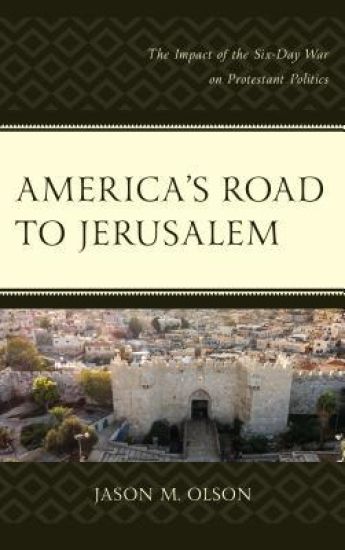
America's Road to Jerusalem

America's Road to Jerusalem

Jason M. Olson

Lexington Books
2018
sidottu
This study examines the role of the Six-Day War in American Protestant politics and culture. The author argues that American foreign policy towards the Arab-Israeli conflict, culminating in the Trump Administration’s 2017 recognition of Jerusalem as Israel’s capital, and the domestic Evangelical communities who supported it, has a direct correlation with the long-term consequences of the 1967 Six-Day War. For most of America’s history, biblical literalists, or Evangelicals, dominated the religious culture of the country. But, in 1925, the Scopes trial on science, evolution, and religion embarrassed Evangelicals and caused them to retreat from American culture and politics. Modern and liberal Protestants won dominance and established control in nearly all of the Mainline seminaries, publishing houses, and denominations, leading to the creation of the National Council of Churches by 1950. This book argues that the Six-Day War reversed that power structure in American religion, with Evangelicals returning to a place of prominence in American culture and politics. Whereas the Scopes trial showed much of American Protestantism that the Modernists had the right understanding of the Bible; the Six-Day War demonstrated that, ironically, Evangelicals may have had it right all along. They used this historic leverage to vaunt themselves into the highest planes of American life, with Billy Graham becoming “America’s Pastor.” In this historic process, the 1967 war between Israel and the surrounding Arab states clarified the way those different branches of American Protestantism thought about the Arab-Israeli conflict, particularly the issue of Jerusalem. Indeed, the nature of the Six-Day War was deep and appeared to be of Biblical proportions. Because Israel gained territories in Jerusalem, Bethlehem, and the ancient Biblical heartlands formerly held by Jordan; historical, messianic, and even apocalyptic intrusions entered the various branches of American Protestantism. In some branches, supersessionism, a belief that the Church had replaced the Jewish people as God’s chosen, was stoked. In other branches, supersessionism was rejected and the nature of Judaism and its connection to the Holy Land was re-evaluated. The important point is that the territories that Israel captured had thick theological meaning, and this would force all branches of American Protestantism to reconsider their assumptions about Judaism and Zionism, as well as Islam and Palestinian nationalism. Evangelicalism.
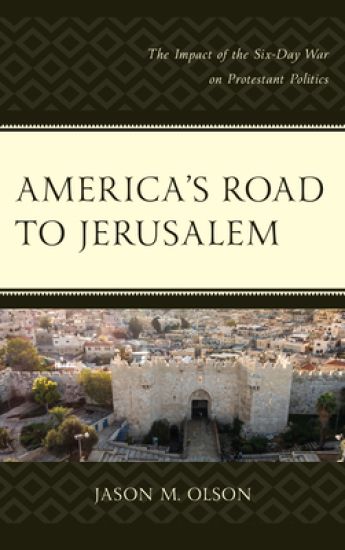
America's Road to Jerusalem

America's Road to Jerusalem

Jason M. Olson

Lexington Books
2021
nidottu
This study examines the role of the Six-Day War in American Protestant politics and culture. The author argues that American foreign policy towards the Arab-Israeli conflict, culminating in the Trump Administration’s 2017 recognition of Jerusalem as Israel’s capital, and the domestic Evangelical communities who supported it, has a direct correlation with the long-term consequences of the 1967 Six-Day War.For most of America’s history, biblical literalists, or Evangelicals, dominated the religious culture of the country. But, in 1925, the Scopes trial on science, evolution, and religion embarrassed Evangelicals and caused them to retreat from American culture and politics. Modern and liberal Protestants won dominance and established control in nearly all of the Mainline seminaries, publishing houses, and denominations, leading to the creation of the National Council of Churches by 1950.This book argues that the Six-Day War reversed that power structure in American religion, with Evangelicals returning to a place of prominence in American culture and politics. Whereas the Scopes trial showed much of American Protestantism that the Modernists had the right understanding of the Bible; the Six-Day War demonstrated that, ironically, Evangelicals may have had it right all along. They used this historic leverage to vaunt themselves into the highest planes of American life, with Billy Graham becoming “America’s Pastor.”In this historic process, the 1967 war between Israel and the surrounding Arab states clarified the way those different branches of American Protestantism thought about the Arab-Israeli conflict, particularly the issue of Jerusalem. Indeed, the nature of the Six-Day War was deep and appeared to be of Biblical proportions.Because Israel gained territories in Jerusalem, Bethlehem, and the ancient Biblical heartlands formerly held by Jordan; historical, messianic, and even apocalyptic intrusions entered the various branches of American Protestantism. In some branches, supersessionism, a belief that the Church had replaced the Jewish people as God’s chosen, was stoked. In other branches, supersessionism was rejected and the nature of Judaism and its connection to the Holy Land was re-evaluated. The important point is that the territories that Israel captured had thick theological meaning, and this would force all branches of American Protestantism to reconsider their assumptions about Judaism and Zionism, as well as Islam and Palestinian nationalism.Evangelicalism.