Gjennom boken undersøker forfatteren joik i den gamle samiske religionen før 1600- og 1700-tallet. Forfatteren har gjennomgått tilgjengelig joikemateriale fra 1600-tallet fram til 1940-tallet, som så er analysert i lys av den gamle religionen. Hvordan fenomenet joik er blitt presentert i ulike misjonskilder, samt analysen av utvalgte joiketekster, er i denne boken blitt brukt som inngangsporter til forståelse av joik i den gamle samiske religionen. Har litteraturliste.
För hundra år sedan, kom geografen Väinö Tanner (1881- 1948) till skoltsamernas vinterbyar i Petsamo, folktomma utom under vinterns kallaste och mörkaste tid. Människorna samlades då efter att familjevis ha levt i olika resursområden med flyttningar i en årscykel. Nu möttes också Norrãz, ett forum för politik, rättskipning och fördelning av resurser, till synes lika uråldrigt som vinterbyn - en survival bortanför stater och modernitet? Tanner tänkte sig att alla samer med fångstekonomi en gång i tiden levt som skolterna. Nordiska forskare accepterade teorin, kanske mest i brist på alternativ. Tanners teori är ohållbar. Svenska 1600-talskartor visar inte vinterbyar som han trodde, utan i stället statliga, politiska utposter. Tidens maktdoktriner kring människor, äganderätt och landskap, hade fått fäste (c:a 1600). Kolonialismen stod för dörren. Boken handlar om samisk kulturhistoria och kunglig makt vid introduktionen av den territoriella statens princip, men även om hur en teori från 1929 blev ett axiom.
Samene og noaidikunsten er den første boken skrevet av en same om den gamle åndelige arven. Den kom ut i København i 1920 på samisk og engelsk og har ikke tidligere blitt gitt ut her i landet. Alene må man gjøre det om man ønsker å bli noaidi, skriver Johan Turi her. Noaidi er det samiske ordet for sjaman. Johan Turi er kjent som grunnleggeren av den moderne samiske litteraturen, men var også billedkunstner, kunsthåndverker og helbreder. Man kan si at han gjennom hele sitt multikunstneriske virke førte noaidikunsten videre. Sámit ja noaidevuohta lea vuosttas girji, man sápmelas lea cállán dolos vuoinnalas árbevierustis. Dat almmustuvai Københámmanis 1920s, sámegillii ja engelasgillii, iige leat almmuhuvvon Norggas ovdal. Okto galgá dahkat, guhte háliida noaidin, cállá Johan Turi girjjis. Johan Turi lea dovddus oddaáiggi sámi girjjálasvuoda vuoddudeaddjin, muhto leai maiddái govvadáiddár, duojár ja guvhllár. Oazzu lohkat su mánggadáiddalasvuodainis joatkán noaidevuoda.
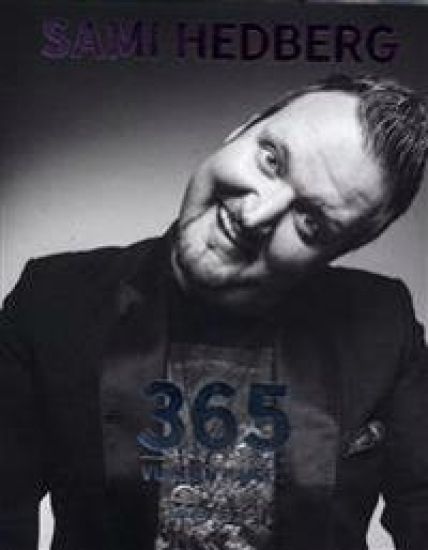
Monitoimikoomikko ilmeili kirjan! Stand-up koomikko Sami Hedberg on hauska mies. Jo miehen hiljainen ilmeikkyys saa yleisön ulvomaan naurusta. Nyt ilmeet on kääritty yksiin kansiin. Tai ainakin 365 niistä. Hedberg pääsi 365 stand up -kiertueellaan Guinnessin ennätystenkirjaan. Hän tahkosi 10-vuotisjuhlakiertueellaan keikkoja siihen tahtiin, että nimi komeilee nyt Eniten stand up -keikkoja vuodessa maailmanennätyksen yhteydessä. Vuoden kiertueisiin perustuu myös 365 vuoden ilmeet ?kirjaprojekti. Kirja esittelee nimensä mukaisesti Sami Hedbergin 365 ilmettä.
Vanja - fantazjor i vydumschik. Izobretatel! V svojom bloknote on risoval mnozhestvo raznykh neobychnykh veschej - poleznykh i nuzhnykh. A odnazhdy, v kanun Novogo goda, pridumal nechto osobennoe - chudo-sani, kotorye mogli ezdit kak mashina, plavat i dazhe letat!
The Law And The Promise (Includes Rare Lecture, "Sami's Question.") (1st edition, 12pt/Georgia font.) by Neville Goddard. 6x9 Paperback, matte finish cover. Sami's Question: Sami: I have been living by your teachings, and have had many wonderful things that I imagined come to pass. I imagined financial prosperity and it doesn't seem to have come to pass, at least not as I imagined it. What should I do? Neville: This question is not just Sami's question; it is a question we all must answer, as every day all of us are called upon to witness to the truth of God. And when something doesn't seem to happen as we expected and imagined it to be, then we have to find out what has happened and do the right thing to get a better result. The word Satan means doubt. Desiring a certain state, reason may tell you it will be difficult to attain. If you listen to your reason, and doubt your desires, Satan has made himself known to you. And this happens to all of us. The Law and the Promise Book Excerpt: The future will not be fundamentally different from the imaginal activities of man; therefore, the individual who can summon at will whatever imaginal activity he pleases and to whom the visions of his imagination are as real as the forms of nature, is master of his fate. The future is the imaginal activity of man in its creative march. Imagining is the creative power not only of the poet, the artist, the actor and orator, but of the scientist, the inventor, the merchant and the artisan. Its abuse in unrestrained unlovely image-making is obvious; but its abuse in undue repression breeds a sterility which robs man of actual wealth of experience. Imagining novel solutions to ever more complex problems is far more noble than to run from problems. Life is the continual solution of a continuously synthetic problem. Imagining creates events. The world, created out of men's imagining, comprises un-numbered warring beliefs; therefore, there can never be a perfectly stable or static state. Today's events are bound to disturb yesterday's established order. Imaginative men and women invariably unsettle a pre-existing peace of mind. "Neville may eventually be recognized as one of the world's great mystics." -Joseph Murphy, author of The Power of Your Subconscious Mind "A popular speaker on metaphysical themes from the late '30s until his death in 1972, Neville authored ten books in which he captured the sheer logic of creative mind principles. His work has impacted me in a very profound way; in fact, he's been a great mentor to me in the past few years." -Dr. Wayne Dyer in Wishes Fulfilled "Neville may be the positive-thinking movement's most radical and subtly influential voice." -Mitch Horowitz, Time.com "Of all the metaphysical systems with which I am acquainted, Neville's is the most magical." -Israel Regardie "The words of spiritual teacher Neville Goddard retain their power to electrify... Neville captured the sheer logic of creative mind principles as perhaps no other figure of his era." -Science of Mind magazine
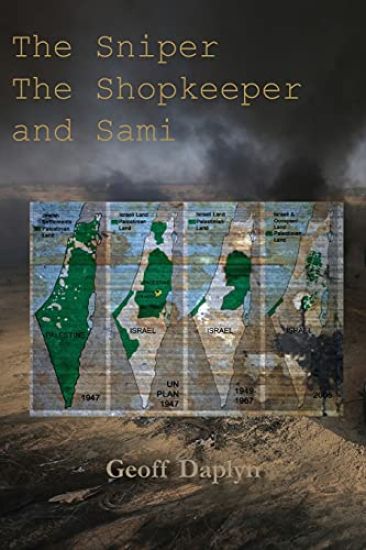
A suicide bombing in Jerusalem brings Medad, a 20 year old Israeli Defence Forces sniper and Hani, a young Palestinian shopkeeper, into each other's lives. Their lives will become deeply intertwined in a peace process.Ayshaa, Hani's wife, wants a different life for her little girl Rena and begins working with other Palestinian organisations to empower women with the risk of religious and cultural tensions. As the story unfolds, there is the inevitable role for Chuck, the American diplomat; Abd Alraheem the Palestinian traitor; Larry the CIA contact, Angra Mainyu, the Iranian 'diplomat' based in Lebanon and Sami, the teenage blogger from Gaza.A well connected, yet shadowy Israeli hard right wing group also begin to take matters into their own hands to even up the odds, as they see it.What will Hamas do? Who will win? Who will lose? Who will survive?
Svetlana Troitskaja - bessmennyj rukovoditel tsentra estestvennoj korrektsii zrenija i ozdorovlenija - uzhe 28 let pomogaet ljudjam vosstanavlivat zrenie i izbavljatsja ot glaznykh boleznej bez operatsij i lekarstv. Avtor razrushaet stereotipy o prichinakh vozniknovenija tekh ili inykh problem s glazami i daet chitateljam ne prosto nabor uprazhnenij, a kompleksnuju programmu dlja vosstanovlenija zrenija i zdorovja. Blagodarja ej mnozhestvo ljudej ne tolko izbavilis ot ochkov i strashnykh diagnozov, izbezhali operativnogo vmeshatelstva, no i uluchshili svoe samochuvstvie v tselom. Normalizatsija davlenija i urovnja sakhara v krovi, snizhenie vesa i izbavlenie ot bessonnitsy - eto lish malaja chast "pobochnykh effektov" unikalnoj sistemy vosstanovlenija zrenija Svetlany Troitskoj. Pri etom programma postroena takim obrazom, chto vypolnjat ee smozhet dazhe samyj zanjatoj chelovek. Podarite sebe i svoim detjam zdorove i prekrasnoe zrenie na vsju zhizn!
Unveil the dynamic world of Sami education across Finland, Norway, Sweden, and Russia in this book. This vital volume presents cutting-edge research from top scholars, enriching teacher education with innovative, interdisciplinary insights. Discover unique contributions through a blend of Sami and Māori perspectives, and navigate the profound impacts of history on modern educational challenges and Indigenous self-determination. Contributors are: Rauni rel -Vihri l , Kristina Belancic, Karianne Berg, Anna-Lill Drugge, Heidi Harju-Luukkainen, M ret J. Heatta, Hanna Helander, Huia Tomlins Jahnke, Ylva Jannok Nutti, Pigga Keskitalo, Asbj rn Kolberg, David Kroik, Marikaisa Laiti, Inker-Anni Linkola-Aikio, Torjer Olsen, Hanna Outakoski, Annika Pasanen, Rauna Rahko-Ravantti, Hilde Sollid, Tuija Turunen and Ekaterina Zmyvalova.
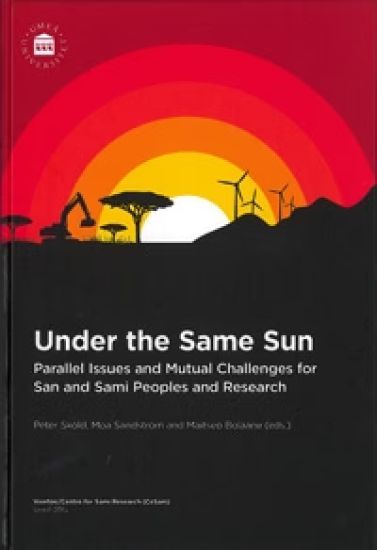
Denna bok är resultatet av ett samarbetsprojekt mellan San Research Centre, University of Botswana och Vaartoe – Centrum för samisk forskning (CeSam) vid Umeå universitet. De olika kapitlen är skrivna av projektdeltagare som representerar urfolksforskning, urfolksstudenter, urfolksorganisationer och – samhällsarbetare samt personal vid universitetsbibliotek. Olika aspekter diskuteras kring ämnen som sårbarhet och satsningar på hållbar utveckling för Sanfolket och det samiska folket genom teman som urfolksrätt, samhällsutveckling, traditionell kunskap, etnicitet, språk, utbildning, hälsa och urfolksforskning. Utgångspunkten är att toppstyrda tillvägagångsätt och externa perspektiv sällan uppnår positiv förändring på lång sikt, vare sig det gäller utvecklingsinsatser eller forskning. För att lyckas måste hållbar utveckling förankras hos och definieras av de berörda folken själva.
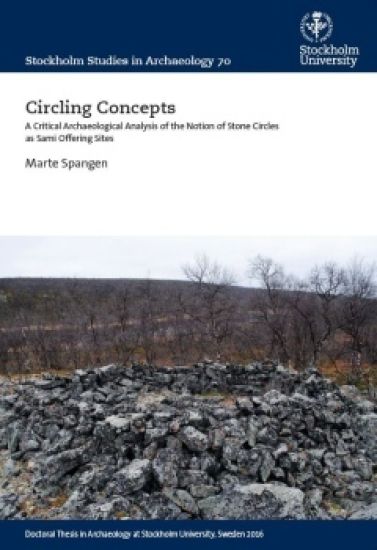
”Sami circular offering sites” is an established category of cultural heritage in northern Norway, but details of their origin, time of use, function and significance in contemporary society have been little explored. This study aims to establish some basic facts about these stone enclosures, but a surprising conclusion is that the very offering site interpretation is uncertain. Substantial evidence rather suggests that the large structures were initially built for an entirely different purpose, while some have apparently later been reused and reconceptualised as offering sites. The question also arises if a range of structures with diverging characteristics that have recently been added to the same category can in fact be defined as the same phenomenon. The exploration of the genesis and distribution of the offering site interpretation for stone circles leads to a discussion of the socio-political implications of archaeological categorisation in general, and the preference for ritual explanations in Sami contexts in particular. It is maintained that while the materiality of the archaeological remains constitutes useful corrections and limitations to these narratives, any archaeological interpretations, including the present one, cannot escape the embeddedness in certain discourses and relations of power. Marte Spangen (b. 1977) is an archaeologist with special interest in Sami archaeology, archaeology of rituals and religion, and critical heritage studies. Circling Concepts is her doctoral dissertation.
In the making of the modern Nordic states in the first half of the twentieth century, elementary education was paramount in creating a notion of citizenship that was universal and equal for all citizens. Yet these elementary education policies ignored, in most cases, the language, culture, wishes, and needs of minorities such as the indigenous Sámi.Presenting the Sámi as an active, transnational population in early twentieth-century northern Europe, Otso Kortekangas examines how educational policies affected the Sámi people residing in the northern parts of Norway, Sweden, and Finland. In this detailed study, Kortekangas explores what the arguments were for the lack of Sámi language in schools, how Sámi teachers have promoted the use of their mother tongue within the school systems, and how the history of the Sámi compares to other indigenous and minority populations globally.Timely in its focus on educational policies in multiethnic societies, and ambitious in its scope, the book provides essential information for educators, policy-makers, and academics, as well as anyone interested in the history of education, and the relationship between large-scale government policies and indigenous peoples.
In the making of the modern Nordic states in the first half of the twentieth century, elementary education was paramount in creating a notion of citizenship that was universal and equal for all citizens. Yet these elementary education policies ignored, in most cases, the language, culture, wishes, and needs of minorities such as the indigenous Sámi.Presenting the Sámi as an active, transnational population in early twentieth-century northern Europe, Otso Kortekangas examines how educational policies affected the Sámi people residing in the northern parts of Norway, Sweden, and Finland. In this detailed study, Kortekangas explores what the arguments were for the lack of Sámi language in schools, how Sámi teachers have promoted the use of their mother tongue within the school systems, and how the history of the Sámi compares to other indigenous and minority populations globally.Timely in its focus on educational policies in multiethnic societies, and ambitious in its scope, the book provides essential information for educators, policy-makers, and academics, as well as anyone interested in the history of education, and the relationship between large-scale government policies and indigenous peoples.
The Law And The Promise (Includes Rare Lecture, "Sami's Question.") (1st edition, 12pt/Georgia font.) by Neville Goddard. 7x10 Paperback, matte finish cover. Sami's Question Snippet: Sami: I have been living by your teachings, and have had many wonderful things that I imagined come to pass. I imagined financial prosperity and it doesn't seem to have come to pass, at least not as I imagined it. What should I do? Neville: This question is not just Sami's question; it is a question we all must answer, as every day all of us are called upon to witness to the truth of God. And when something doesn't seem to happen as we expected and imagined it to be, then we have to find out what has happened and do the right thing to get a better result. The word Satan means doubt. Desiring a certain state, reason may tell you it will be difficult to attain. If you listen to your reason, and doubt your desires, Satan has made himself known to you. And this happens to all of us. The Law and the Promise Book Excerpt: The future will not be fundamentally different from the imaginal activities of man; therefore, the individual who can summon at will whatever imaginal activity he pleases and to whom the visions of his imagination are as real as the forms of nature, is master of his fate. The future is the imaginal activity of man in its creative march. Imagining is the creative power not only of the poet, the artist, the actor and orator, but of the scientist, the inventor, the merchant and the artisan. Its abuse in unrestrained unlovely image-making is obvious; but its abuse in undue repression breeds a sterility which robs man of actual wealth of experience. Imagining novel solutions to ever more complex problems is far more noble than to run from problems. Life is the continual solution of a continuously synthetic problem. Imagining creates events. The world, created out of men's imagining, comprises un-numbered warring beliefs; therefore, there can never be a perfectly stable or static state. Today's events are bound to disturb yesterday's established order. Imaginative men and women invariably unsettle a pre-existing peace of mind. "Neville may eventually be recognized as one of the world's great mystics." -Joseph Murphy, author of The Power of Your Subconscious Mind "A popular speaker on metaphysical themes from the late '30s until his death in 1972, Neville authored ten books in which he captured the sheer logic of creative mind principles. His work has impacted me in a very profound way; in fact, he's been a great mentor to me in the past few years." -Dr. Wayne Dyer in Wishes Fulfilled "Neville may be the positive-thinking movement's most radical and subtly influential voice." -Mitch Horowitz, Time.com "Of all the metaphysical systems with which I am acquainted, Neville's is the most magical." -Israel Regardie "The words of spiritual teacher Neville Goddard retain their power to electrify... Neville captured the sheer logic of creative mind principles as perhaps no other figure of his era." -Science of Mind magazine