A young Ohio architect, Nathan Goldstein, testifies at a 1979 Congressional subcommittee hearing about his experiences with the national examination required to obtain his license to practice his profession. A retired professor of English, Walter Rubin, visits Ellis Island searching for meaning in his memories of his arrival there in the 1930's. In 2005, their stories come together in GATEKEEPERS, a tale of academic and professional intrigue whose parallels in the larger world echo in both their lives and in the events of their times. Rubin inherits the diaries of his late friend and neighbor, Harry Rosenberg, and finds himself fascinated by hints of a conspiracy dating back some thirty years to Harry's career at Ohio State's School of Architecture, where one of Harry's most promising students, Nathan Goldstein, had launched a study that his profession had seen as a threat to its most integral marketing practices and political influence. Forced to stop his work, Nathan began to encounter one inexplicable failure after another on licensing examinations, at appeals to state agencies, even in his relations with his major advisor. More from necessity than choice, Nathan becomes a champion for a cause soon seen as of national interest and concern. Rubin, whose own background includes acquaintance with more than one form of violence, learns how important it is to distinguish justice from revenge. GATEKEEPERS, a collaborative novel, alternates the stories of Nathan Goldstein and Walter Rubin told through the eyes, emotions, and recollections of the architect and the professor. Intended to inform and provoke as well as to entertain, the story of Nathan's persistence in his quest for entrance to his chosen profession will appeal especially to those readers still scarred by their experiences with standardized, machine-scored, multiple-choice examinations-on which so much and so many of our lives depend.
Trieste Publishing has a massive catalogue of classic book titles. Our aim is to provide readers with the highest quality reproductions of fiction and non-fiction literature that has stood the test of time. The many thousands of books in our collection have been sourced from libraries and private collections around the world.The titles that Trieste Publishing has chosen to be part of the collection have been scanned to simulate the original. Our readers see the books the same way that their first readers did decades or a hundred or more years ago. Books from that period are often spoiled by imperfections that did not exist in the original. Imperfections could be in the form of blurred text, photographs, or missing pages. It is highly unlikely that this would occur with one of our books. Our extensive quality control ensures that the readers of Trieste Publishing's books will be delighted with their purchase. Our staff has thoroughly reviewed every page of all the books in the collection, repairing, or if necessary, rejecting titles that are not of the highest quality. This process ensures that the reader of one of Trieste Publishing's titles receives a volume that faithfully reproduces the original, and to the maximum degree possible, gives them the experience of owning the original work.We pride ourselves on not only creating a pathway to an extensive reservoir of books of the finest quality, but also providing value to every one of our readers. Generally, Trieste books are purchased singly - on demand, however they may also be purchased in bulk. Readers interested in bulk purchases are invited to contact us directly to enquire about our tailored bulk rates.
America Unequal demonstrates how powerful economic forces have diminished the prospects of millions of Americans and why "a rising tide no longer lifts all boats." Changes in the economy, public policies, and family structure have contributed to slow growth in family incomes and rising economic inequality. Poverty remains high because of an erosion of employment opportunities for less-skilled workers, not because of an erosion of the work ethic; because of a failure of government to do more for the poor and the middle class, not because of social programs.There is nothing about a market economy, the authors say, that ensures that a rising standard of living will reduce inequality. If a new technology, such as computerization, leads firms to hire more managers and fewer typists, then the wages of lower-paid secretaries will decline and the wages of more affluent managers will increase. Such technological changes as well as other economic changes, particularly the globalization of markets, have had precisely this effect on the distribution of income in the United States.America Unequal challenges the view, emphasized in the Republicans' "Contract with America," that restraining government social spending and cutting welfare should be our top domestic priorities. Instead, it proposes a set of policies that would reduce poverty by supplementing the earnings of low-wage workers and increasing the employment prospects of the jobless. Such demand-side policies, Sheldon Danziger and Peter Gottschalk argue, are essential for correcting a labor market that has been increasingly unable to absorb less-skilled and less-experienced workers.
How has the Japanese government persuaded its citizens to save substantial portions of their incomes? And to care for the elderly within the family? How did the public come to support legalized prostitution as in the national interest? What roles have women's groups played in Japan's "economic miracle"? What actually unites the Japanese to achieve so many economic and social goals that have eluded other polities? Here Sheldon Garon helps us to understand this mobilizing spirit as he taps into the intimate relationships everyday Japanese have with their government. To an extent inconceivable to most Westerners, state directives trickle into homes, religious groups, and even into individuals' sex lives, where they are frequently welcomed by the Japanese and reinforced by their neighbors. In a series of five compelling case studies, Garon demonstrates how average citizens have cooperated with government officials in the areas of welfare, prostitution, and household savings, and in controlling religious "cults" and promoting the political participation of women. The state's success in creating a nation of activists began before World War II, and has hinged on campaigns that mobilize the people behind various policies and encourage their involvement at the local level. For example, neighborhoods have been socially managed on a volunteer basis by small-business owners and housewives, who strive to rid their locales of indolence and to contain welfare costs. The story behind the state regulation of prostitution is a more turbulent one in which many lauded the flourishing brothels for preserving Japanese tradition and strengthening the "family system," while others condemned the sexual enslavement of young women. In each case, we see Japanese citizens working closely with the state to recreate "community" and shape the thought and behavior of fellow citizens. The policies often originate at the top, but in the hands of activists they take on added vigor. This phenomenon, which challenges the conventional dichotomy of the "state" versus the "people," is well worth exploring as Western governments consider how best to manage their own changing societies.
Alexis de Tocqueville may be the most influential political thinker in American history. He also led an unusually active and ambitious career in French politics. In this magisterial book, one of America's most important contemporary theorists draws on decades of research and thought to present the first work that fully connects Tocqueville's political and theoretical lives. In doing so, Sheldon Wolin presents sweeping new interpretations of Tocqueville's major works and of his place in intellectual history. As he traces the origins and impact of Tocqueville's ideas, Wolin also offers a profound commentary on the general trajectory of Western political life over the past two hundred years. Wolin proceeds by examining Tocqueville's key writings in light of his experiences in the troubled world of French politics. He portrays Democracy in America, for example, as a theory of discovery that emerged from Tocqueville's contrasting experiences of America and of France's constitutional monarchy. He shows us how Tocqueville used Recollections to reexamine his political commitments in light of the revolutions of 1848 and the threat of socialism. He portrays The Old Regime and the French Revolution as a work of theoretical history designed to throw light on the Bonapartist despotism he saw around him. Throughout, Wolin highlights the tensions between Tocqueville's ideas and his activities as a politician, arguing that--despite his limited political success--Tocqueville was "perhaps the last influential theorist who can be said to have truly cared about political life." In the course of the book, Wolin also shows that Tocqueville struggled with many of the forces that constrain politics today, including the relentless advance of capitalism, of science and technology, and of state bureaucracy. He concludes that Tocqueville's insights and anxieties about the impotence of politics in a "postaristocratic" era speak directly to the challenges of our own "postdemocratic" age. A monumental new study of Tocqueville, this is also a rich and provocative work about the past, the present, and the future of democratic life in America and abroad.
Sheldon Wolin was one of the most influential and original political thinkers of the past fifty years. Fugitive Democracy brings together his most important writings, from classic essays such as "Political Theory as a Vocation," written amid the Cold War and the conflict in Vietnam, to his late radical essays on American democracy such as "Fugitive Democracy," in which he offers a controversial reinterpretation of democracy as an episodic phenomenon distinct from the routinized political management that passes for democracy today. The breathtaking range of Wolin's scholarship, political commitment, and critical acumen are on full display in this authoritative and accessible collection. He critically engages a diverse range of political theorists, including Thomas Hobbes, Karl Marx, Max Weber, Hannah Arendt, John Rawls, Michel Foucault, and Richard Rorty. These essays grapple with topics such as power, modernization, the sixties, revolutionary politics, and inequality, all the while showcasing Wolin's enduring commitment to writing civic-minded theoretical commentary on the most pressing political issues of the day. Here, Wolin laments the rise of conservatives who style themselves as revolutionary, criticizes Rawlsian liberals as abstract to the point of being apolitical, diagnoses postmodern theory as a form of acquiescence, and much more. Fugitive Democracy offers enduring insights into many of today's most pressing political predicaments, and introduces a whole new generation of readers to this provocative figure in contemporary political thought.
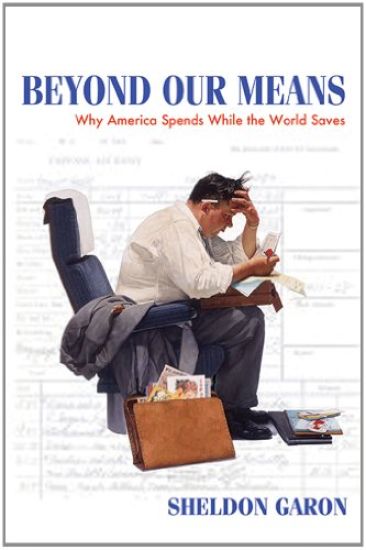
If the financial crisis has taught us anything, it is that Americans save too little, spend too much, and borrow excessively. What can we learn from East Asian and European countries that have fostered enduring cultures of thrift over the past two centuries? Beyond Our Means tells for the first time how other nations aggressively encouraged their citizens to save by means of special savings institutions and savings campaigns. The U.S. government, meanwhile, promoted mass consumption and reliance on credit, culminating in the global financial meltdown. Many economists believe people save according to universally rational calculations, saving the most in their middle years as they plan for retirement, and saving the least in welfare states. In reality, Europeans save at high rates despite generous welfare programs and aging populations. Americans save little, despite weaker social safety nets and a younger population. Tracing the development of such behaviors across three continents from the nineteenth century to today, this book highlights the role of institutions and moral suasion in shaping habits of saving and spending. It shows how the encouragement of thrift was not a relic of indigenous traditions but a modern movement to confront rising consumption. Around the world, messages to save and spend wisely confronted citizens everywhere - in schools, magazines, and novels. At the same time, in America, businesses and government normalized practices of living beyond one's means. Transnational history at its most compelling, Beyond Our Means reveals why some nations save so much and others so little.
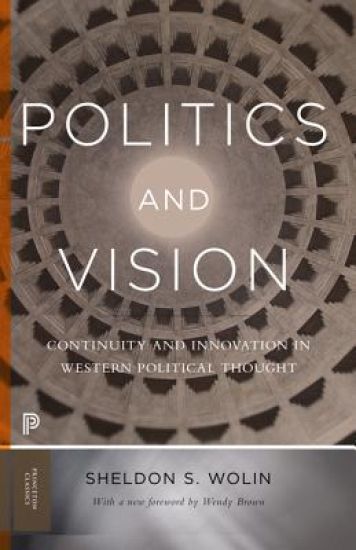
Politics and Vision is a landmark work by one of the great thinkers of the twentieth century. This is a significantly expanded edition of one of the greatest works of modern political theory. Sheldon Wolin's Politics and Vision inspired and instructed two generations of political theorists after its appearance in 1960. Substantially expanded for republication in 2004, it is both a sweeping survey of Western political thought and a powerful account of contemporary predicaments of power and democracy. In lucid and compelling prose, Sheldon Wolin offers original, subtle, and often surprising interpretations of political theorists from Plato to Rawls. Situating them historically while sounding their depths, he critically engages their diverse accounts of politics, theory, power, justice, citizenship, and institutions. The new chapters, which show how thinkers have grappled with the immense possibilities and dangers of modern power, are themselves a major theoretical statement. They culminate in Wolin's remarkable argument that the United States has invented a new political form, "inverted totalitarianism," in which economic rather than political power is dangerously dominant. In this expanded edition, the book that helped to define political theory in the late twentieth century should energize, enlighten, and provoke generations of scholars to come. Wolin originally wrote Politics and Vision to challenge the idea that political analysis should consist simply of the neutral observation of objective reality. He argues that political thinkers must also rely on creative vision. Wolin shows that great theorists have been driven to shape politics to some vision of the Good that lies outside the existing political order. As he tells it, the history of theory is thus, in part, the story of changing assumptions about the Good. Acclaimed as a tour de force when it was first published, and a major scholarly event when the expanded edition appeared, Politics and Vision will instruct, inspire, and provoke for generations to come.
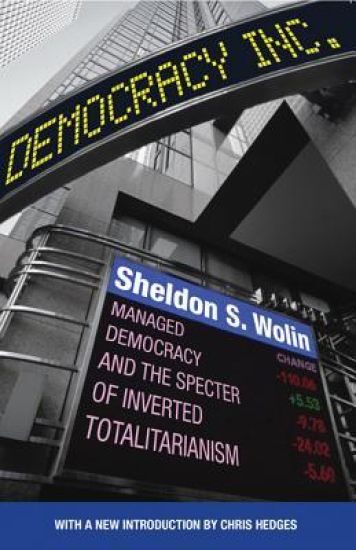
Democracy is struggling in America--by now this statement is almost cliche. But what if the country is no longer a democracy at all? In Democracy Incorporated, Sheldon Wolin considers the unthinkable: has America unwittingly morphed into a new and strange kind of political hybrid, one where economic and state powers are conjoined and virtually unbridled? Can the nation check its descent into what the author terms "inverted totalitarianism"? Wolin portrays a country where citizens are politically uninterested and submissive--and where elites are eager to keep them that way. At best the nation has become a "managed democracy" where the public is shepherded, not sovereign. At worst it is a place where corporate power no longer answers to state controls. Wolin makes clear that today's America is in no way morally or politically comparable to totalitarian states like Nazi Germany, yet he warns that unchecked economic power risks verging on total power and has its own unnerving pathologies. Wolin examines the myths and mythmaking that justify today's politics, the quest for an ever-expanding economy, and the perverse attractions of an endless war on terror. He argues passionately that democracy's best hope lies in citizens themselves learning anew to exercise power at the local level. Democracy Incorporated is one of the most worrying diagnoses of America's political ills to emerge in decades. It is sure to be a lightning rod for political debate for years to come. Now with a new introduction by Pulitzer Prize-winning journalist Chris Hedges, Democracy Incorporated remains an essential work for understanding the state of democracy in America.
An authoritative collection of the most important writings of an influential political thinkerSheldon Wolin was one of the most influential and original political thinkers of the past fifty years. In Fugitive Democracy, the breathtaking range of Wolin’s scholarship, political commitment, and critical acumen are on full display in this authoritative and accessible collection of essays. This book brings together his most important writings, from classic essays to his late radical essays on American democracy such as "Fugitive Democracy," in which he offers a controversial reinterpretation of democracy as an episodic phenomenon distinct from the routinized political management that passes for democracy today. Wolin critically engages a diverse range of political theorists, and grapples with topics such as power, modernization, the sixties, revolutionary politics, and inequality, all the while showcasing enduring commitment to writing civic-minded theoretical commentary on the most pressing political issues of the day. Fugitive Democracy offers enduring insights into many of today’s most pressing political predicaments, and introduces a whole new generation of readers to this provocative figure in contemporary political thought.