

Kirjahaku
Etsi kirjoja tekijän nimen, kirjan nimen tai ISBN:n perusteella.
1000 tulosta hakusanalla Stephan Mitsch


Ladies and Gentlemen, the President of the United States
Stephan Joseph Clark
iUniverse
2002
sidottu


How to start a profitable worm business on a shoestring budget
Stephan Kloppert
Srk Publications
2014
pokkari
- This book will teach you in easy to follow steps all you need to know to raise, multiply and make money with earthworms.- You will learn to either make some pocket money selling bait worms to keen fishermen or to become your own boss and create a full time income raising worms and recycling kitchen- and garden waste. - You will be shown proven, low cost methods to start a profitable worm business and make your mark in the constantly growing market of the worm farming industry. - If you are looking for a way to create extra income from home, using very little space and just a tiny investment then worm composting could be the right thing for you. - Raising earthworms and making money with them is fun and can be done by virtually anyone.- No special skills required. - Follow the guidelines given in this book and raise and multiply earthworms easily. - With a tiny investment and a little effort you will be able to produce and sell several products that are environmentally friendly and beneficial for a wide variety of people. -Amongst your potential customers could be nurseries, gardeners, pet shops, garden centers, pet lovers, property developers, fishing clubs, hotels, guest houses, restaurants, private households, dog owners, horse stables, farmers, schools, universities and many more... - Everything you need to know to create an income with earthworms has been tried and tested by the author and is covered in this book - Detailed instructions make it easy to multiply your worms and produce your own range of worm bins, organic fertilizers and soil conditioners that you can market to your future customers. Act now, start your own environmentally friendly business from home and step forward into a brighter future.

Welcome to Follicle Farm Bobby is a Mitochondria and he works as a humble Follicle Farmer. He, with millions of colleagues, is part of the amazing organisation dedicated to growing hair for the human male that they live inside of. Recently, Bobby made an important discovery when he learned how to reverse the effects of alopecia and greying hair. Now it's up to management to debate if they should use his technique. Join Bobby as he travels the body, ably assisted by Banjo and Skip, as he meets and deals with other human cells in various systems throughout the body. Bobby quickly learns there is more to management than just servicing the body's needs. Cliques, quirks, politics, unions, and hidden agendas all thrive in Bobby's world. You'll share in his adventure of personal growth as he encourages other Follicle Farmers to utilise best-practises in growing quality hair. Follicle Farm is comic and imaginative insight into organisational structure and behaviour of the trillions of cells that make up the microscopic world of every living person. It reveals how cells within the human body really think and how they, mostly, work well together. This is Bobby's story....

I've combined my interest in philosophy, sociology, psychology, and history to delve into the true meaning of life. The reader will not only understand why they are here, but how to make their experience more meaningful. My main aim is inspiring readers into taking more control of how they make decisions that positively affect their achievements, successes, happiness, and therefore their wellbeing. The book is a summary of concise points that are easy to learn and apply to the readers life for an immediate benefit. It includes popular relevant quotes to reenforce the messages and teaching. I have also included personal anecdotes that give real life and meaningful examples of how the material applies to all readers.

the constellation Pisces and the story of Aphrodite and Eros, the Two Fishes.Aphrodite is well known as the Greek goddess of love, romance, and sexuality. Aphrodite is also known to us as Venus, and the planet is named after her in her honour. This is the story of how Aphrodite came to be. Born in the ocean during a struggle between father and son, she was raised on an island. As an adult she was carried by Zeus to Mount Olympus to work and play with the gods and goddesses who resided there. After a brief marriage to Hephaestus, she formed a steamy relationship with Hephaestus's brother, Ares and they had a son they named Eros. All her life, she struggled with the unwanted, yet amorous advances of the Titan monster named, Typhon. Eventually, she and Eros had to flee Mount Olympus to escape his wrath, and they eventually became the constellation of the Two Fishes, known to us as Pisces.

Novella three - Saturn's moon Pandora and the story of the first human woman.Zeus, king of the Greek God's, commissioned his son Hephaestus to craft the first human woman. Aided by Athena, he carefully researched the perfect form and then moulded her from clay He then painted and glazed her into the perfect woman. After being fired in his kiln, she was given the breath of life by the wind god Zephyr. She was named Pandora, being the bearer of the gifts bequeathed to her by the gods and goddesses of Mount Olympus. Her main purpose for humanity was to become the role model for all future human women. Zeus then commanded that she be properly trained so that she can navigate life's complexities, but her tutors, Herme's and Aphrodite, do too good a job with her, and she quickly became too powerful for a normal human life. She is honoured at a civic function and introduced to the gods and goddesses of Mount Olympus. She presented with numerous gifts, jewellery, and words of wisdom that she keeps in a clay jar situated in a wooden box. Hera is cautious about Pandora and worries about her husband's intentions for this female. Zeus himself became disillusioned with her, and so he decided that she should be married off to a minor god, so that she'll do no harm to herself, or to others.Pandora's story is so significant that I have included it in this series of novellas. Pandora is not a constellation, but she is honoured as one of Saturn's moons.

The Greek Constellations - Cancer and Leo
Stephan de Jonghe; Janey Emery
Stephan De Jonghe
2025
pokkari
Novella eight - the constellations of Cancer and Leo and the stories of Karkinos the giant crab, Zosma the Nemean lioness, Astron the hydra, Aquila the eagle, Sagitta the arrow, and the constellation named after Herakles the Demi-God.The birth of Herakles was surrounded by controversy. Being the demi-god son of the King of all the gods, he found it difficult to live a routine life with his wife and children.Herakles was persecuted by Hera for being her husband Zeus's illegitimate son, and so he was inflicted by incessant painful headaches. He was told of a remedy by the oracle in Delphi, but before he could be cured, it required him to agree to take on many incredible tasks which were assigned to him by the local king. By completing these labours, he should be able to go on to live a long and fulfilling life. He later became immortal, and Herakles is forever remembered as a Greek Mythological hero for defeating the giant crab that became known as constellation Cancer. He also killed the man-eating lioness that became known as the constellation Leo. He slew the serpent of Lake Lerna, which is now known as the constellation Hydra. Herakles used an arrow now known as the constellation Sagitta to kill a giant eagle that became to be known as the constellation Aquila or "The Eagle".Herakles was finally accepted at Mount Olympus and was honoured with the constellation Herakles also known as Hercules.

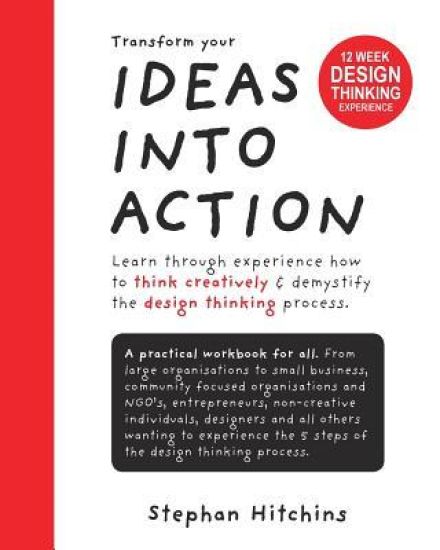
12 WEEK DESIGN THINKING EXPERIENCE. Learn through experience how to THINK CREATIVELY and DEMYSTIFY the DESIGN THINKING process. A practical, interactive and fun workbook for those wanting to start their journey to understanding the problem-solving process of design thinking. Suitable for large organisations and small business, community focused organisations and NGO's, entrepreneurs, non-creative individuals, designers and all others wanting to learn about the design thinking process.

Against Essentialism presents a sociological theory of culture. This interdisciplinary and foundational work deals with basic issues common to current debates in social theory, including society, culture, meaning, truth, and communication. Stephan Fuchs argues that many mysteries about these concepts lose their mysteriousness when dynamic variations are introduced.Fuchs proposes a theory of culture and society that merges two core traditions--American network theory and European (Luhmannian) systems theory. His book distinguishes four major types of social "observers"--encounters, groups, organizations, and networks. Society takes place in these four modes of association. Each generates levels of observation linked with each other into a "culture"--the unity of these observations. Against Essentialism presents a groundbreaking new approach to the construction of society, culture, and personhood. The book invites both social scientists and philosophers to see what happens when essentialism is abandoned.

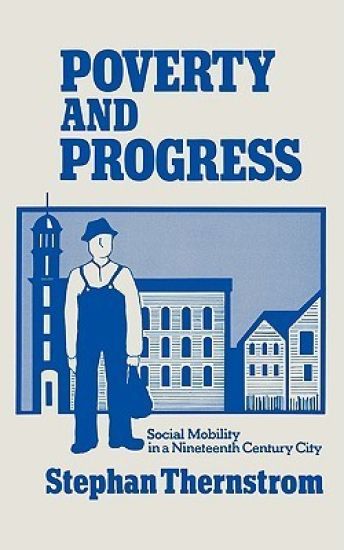
Embedded in the consciousness of Americans throughout much of the country’s history has been the American Dream: that every citizen, no matter how humble his beginnings, is free to climb to the top of the social and economic ladder. Poverty and Progress assesses the claims of the American Dream against the actual structure of economic and social opportunities in a typical nineteenth century industrial community—Newburyport, Massachusetts.Here is local history. With the aid of newspapers, census reports, and local tax, school, and savings bank records Stephan Thernstrom constructs a detailed and vivid portrait of working class life in Newburyport from 1850 to 1880, the critical years in which this old New England town was transformed into a booming industrial city. To determine how many self-made men there really were in the community, he traces the career patterns of hundreds of obscure laborers and their sons over this thirty year period, exploring in depth the differing mobility patterns of native-born and Irish immigrant workmen. Out of this analysis emerges the conclusion that opportunities for occupational mobility were distinctly limited. Common laborers and their sons were rarely able to attain middle class status, although many rose from unskilled to semiskilled or skilled occupations.But another kind of mobility was widespread. Men who remained in lowly laboring jobs were often strikingly successful in accumulating savings and purchasing homes and a plot of land. As a result, the working class was more easily integrated into the community; a new basis for social stability was produced which offset the disruptive influences that accompanied the first shock of urbanization and industrialization.Since Newburyport underwent changes common to other American cities, Thernstrom argues, his findings help to illuminate the social history of nineteenth century America and provide a new point of departure for gauging mobility trends in our society today. Correlating the Newburyport evidence with comparable studies of twentieth century cities, he refutes the popular belief that it is now more difficult to rise from the bottom of the social ladder than it was in the idyllic past. The “blocked mobility” theory was proposed by Lloyd Warner in his famous “Yankee City” studies of Newburyport; Thernstrom provides a thorough critique of the “Yankee City” volumes and of the ahistorical style of social research which they embody.

In a book destined to become a classic, Stephan and Abigail Thernstrom present important new information about the positive changes that have been achieved and the measurable improvement in the lives of the majority of African-Americans. Supporting their conclusions with statistics on education, earnings, and housing, they argue that the perception of serious racial divisions in this country is outdated -- and dangerous.

The Political Economy of Democratic Transitions
Stephan Haggard; Robert R. Kaufman
Princeton University Press
1995
pokkari
In the last two decades, there has been a widespread movement from authoritarian to democratic rule among developing countries, often occurring against a backdrop of severe economic crises and the adoption of market-oriented reforms. The coincidence of these events raises long-standing questions about the relationship between economic and political change. In this book, Stephan Haggard and Robert Kaufman explore this relationship, addressing a variety of questions: What role have economic crises played in the current wave of political liberalization and democratization? Can new democracies manage the daunting political challenges posed by economic reform? Under what economic and institutional conditions is democracy most likely to be consolidated? Drawing on contemporary political economy and the experiences of twelve Latin American and Asian countries, they develop a new approach to understanding democratic transitions. Haggard and Kaufman first analyze the relationship between economic crisis and authoritarian withdrawal and then examine how the economic and institutional legacies of authoritarian rule affect the capacity of new democratic governments to initiate and sustain economic policy reform. Finally, the authors analyze the consolidation of political and economic reform over the long run. Throughout, they emphasize the relationship between economic conditions, the interests and power of contending social groups, and the mediating role of representative institutions, particularly political parties.

Development, Democracy, and Welfare States
Stephan Haggard; Robert R. Kaufman
Princeton University Press
2008
pokkari
This is the first book to compare the distinctive welfare states of Latin America, East Asia, and Eastern Europe. Stephan Haggard and Robert Kaufman trace the historical origins of social policy in these regions to crucial political changes in the mid-twentieth century, and show how the legacies of these early choices are influencing welfare reform following democratization and globalization. After World War II, communist regimes in Eastern Europe adopted wide-ranging socialist entitlements while conservative dictatorships in East Asia sharply limited social security but invested in education. In Latin America, where welfare systems were instituted earlier, unequal social-security systems favored formal sector workers and the middle class. Haggard and Kaufman compare the different welfare paths of the countries in these regions following democratization and the move toward more open economies. Although these transformations generated pressure to reform existing welfare systems, economic performance and welfare legacies exerted a more profound influence. The authors show how exclusionary welfare systems and economic crisis in Latin America created incentives to adopt liberal social-policy reforms, while social entitlements from the communist era limited the scope of liberal reforms in the new democracies of Eastern Europe. In East Asia, high growth and permissive fiscal conditions provided opportunities to broaden social entitlements in the new democracies. This book highlights the importance of placing the contemporary effects of democratization and globalization into a broader historical context.

From the 1980s through the first decade of the twenty-first century, the spread of democracy across the developing and post-Communist worlds transformed the global political landscape. What drove these changes and what determined whether the emerging democracies would stabilize or revert to authoritarian rule? Dictators and Democrats takes a comprehensive look at the transitions to and from democracy in recent decades. Deploying both statistical and qualitative analysis, Stephen Haggard and Robert Kaufman engage with theories of democratic change and advocate approaches that emphasize political and institutional factors. While inequality has been a prominent explanation for democratic transitions, the authors argue that its role has been limited, and elites as well as masses can drive regime change. Examining seventy-eight cases of democratic transition and twenty-five reversions since 1980, Haggard and Kaufman show how differences in authoritarian regimes and organizational capabilities shape popular protest and elite initiatives in transitions to democracy, and how institutional weaknesses cause some democracies to fail. The determinants of democracy lie in the strength of existing institutions and the public's capacity to engage in collective action. There are multiple routes to democracy, but those growing out of mass mobilization may provide more checks on incumbents than those emerging from intra-elite bargains. Moving beyond well-known beliefs regarding regime changes, Dictators and Democrats explores the conditions under which transitions to democracy are likely to arise.

From the 1980s through the first decade of the twenty-first century, the spread of democracy across the developing and post-Communist worlds transformed the global political landscape. What drove these changes and what determined whether the emerging democracies would stabilize or revert to authoritarian rule? Dictators and Democrats takes a comprehensive look at the transitions to and from democracy in recent decades. Deploying both statistical and qualitative analysis, Stephen Haggard and Robert Kaufman engage with theories of democratic change and advocate approaches that emphasize political and institutional factors. While inequality has been a prominent explanation for democratic transitions, the authors argue that its role has been limited, and elites as well as masses can drive regime change. Examining seventy-eight cases of democratic transition and twenty-five reversions since 1980, Haggard and Kaufman show how differences in authoritarian regimes and organizational capabilities shape popular protest and elite initiatives in transitions to democracy, and how institutional weaknesses cause some democracies to fail. The determinants of democracy lie in the strength of existing institutions and the public's capacity to engage in collective action. There are multiple routes to democracy, but those growing out of mass mobilization may provide more checks on incumbents than those emerging from intra-elite bargains. Moving beyond well-known beliefs regarding regime changes, Dictators and Democrats explores the conditions under which transitions to democracy are likely to arise.