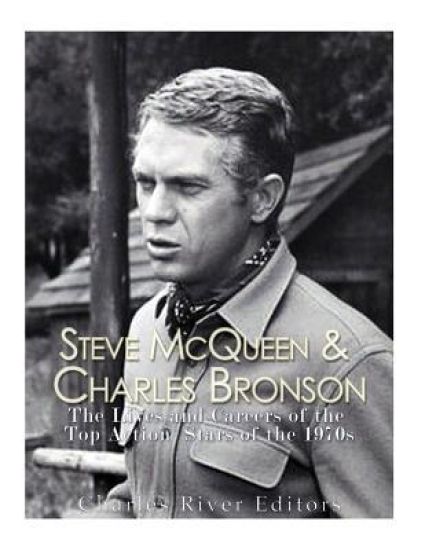
*Includes pictures*Includes the actors' quotes about their lives and careers*Includes a bibliography for further reading In the 1960s and 1970s, no actor personified cool, calm and collected like Steve McQueen, whose suave anti-hero protagonists made men jealous and women swoon. As actor Donald Logue puts it in The Tao of Steve, "Steve is the prototypical cool American male. He's the guy on his horse, the guy alone. He has his own code of honor, his own code of ethics, his own rules of living. He never, ever tries to impress the women, but he always gets the girl." And indeed, that was the case not only in movies like The Thomas Crown Affair, Bullitt, The Getaway, and Papillon, but also in real life. Actress Ali MacGraw, who later became one of his wives, described his effect on women: "I remember seeing him across the swimming pool and my knees were knocking. He radiated such macho energy. Men wanted to be like him. Uptight society ladies and biker molls wanted to be with him."Unlike many actors who become this type of heartthrob, McQueen seemed to have the bona fides. Growing up rough and tough in the Midwest, McQueen was sent to a juvenile facility California because he didn't get along with his stepfather, and after that there he became a Marine. Like Jim Dean before him, McQueen also loved to race, and before he became an actor, he was actually making a living winning races in New York. As he once put it, "Racing is life. Anything before or after is just waiting."However, McQueen was destined to become "The King of Cool" on screen, and after a few quick stints in acting jobs in the early 1950s, he began to look at it as an actual occupation. He once noted, "I really don't like to act. At the beginning, back in '51, I had to force myself to stick with it. I was real uncomfortable, real uncomfortable." Eventually, McQueen was comfortable enough to simply act natural and thus exude the tough confidence that made him an idol. That kind of performance translated well on the old TV Westerns, and a few of those, Tales of Wells Fargo and Trackdown, catapulted McQueen to the conscience of Hollywood. From there, it would only take a few years and a few movie appearances for McQueen to become a huge box office draw. By the time Charles Bronson emerged from a series of miniscule, uncredited roles in the mid-1950s, the singing cowboy was two generations gone, save vestiges in television serials, such as Roy Rogers and Dale Evans. The dancing romantic lead of the Gene Kelly and Fred Astaire variety would soon exhaust itself as a genre in an age increasingly bent on realism and a more severe form of escape. Bronson possessed none of the gifts common to the heroes of the previous era. Light-heartedness did not become him, and by all accounts, he was neither a singer nor dancer. He could not offer the heft of Gary Cooper or John Wayne, although he shared a reserved quality with the former. He did not possess the pristine good looks of Gregory Peck. In fact, one good-natured description making the rounds in Bronson's heyday likened him to "A Clark Gable who has been left out in the sun too long." To accompany the rough-hewn appearance of Bronson's new class of hero, the typical script gave his remarkably enduring persona, little to say in terms of dialogue that would reveal his inner thoughts. With minimal text, even those he attempts to help are unsure of his intentions, and few clues are offered by which the viewer can come to know his mind. As the grotesqueness of his characters' violent acts increased, so did the heinous deeds of the criminals he fought, upping the ante to an eager public in search of a simple cure for its social ills. In a career of almost eighty films and a total body of work totaling 160 appearances including television, Bronson pushed the envelope of what graphic action the studios were willing to offer, and what the censors would accept.
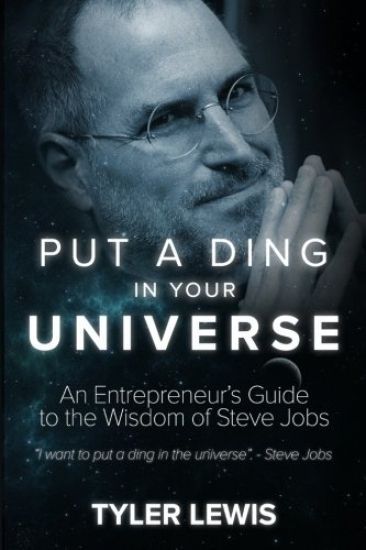
Steve Jobs. The co-founder of Apple. Macintosh computers, iMacs, iPods, iPhones, iPads, iTunes, even Toy Story and Finding Nemo. What an amazing legacy. What an amazing leader. In business. And in life. Steve Jobs definitely put a ding in his universe.Don't you? Don't you want to put a ding in YOUR universe? In your life? Deep down, don't we all desire that? I certainly do.In Put a Ding in Your Universe, I will walk with you through Steve Jobs's "Top Ten Rules for Success". This is not another retelling of the life story of Steve Jobs. This book is a compilation of the wisdom of one of the most successful and innovative business leaders of our generation. Why Steve Jobs? I've been asked that question. The economy was not doing well and I was let go from my job. That was the first time I realized that I was not in control of my life. I was going with the flow and waiting for life to make the decisions for me. With Steve Jobs, it really was serendipity. I came across a 1994 video clip of Steve Jobs in which he said in part: "... when you grow up you tend to get told that the world is the way it is and your life is just to live your life inside the world, try not to bash into the walls too much, try to have a nice family life, have fun, save a little money... That's a very limited life. Life can be much broader once you discover one simple fact, and that is that everything around you that you call life was made up by people that were no smarter than you. And you can change it, you can influence it, you can build your own things that other people can use."As I reflected on those words, my life changed. It really did change. The clip is bookmarked on my browser. I still watch it every day to motivate myself. It was the first step in really beginning to direct my own life rather than letting life direct me. I realized I had never tried to shape my life, I was just waiting for life to shape me. And that is Rule #1: Don't live a limited life. And that video clip is in this book.If you are an entrepreneur, or a prospective entrepreneur, and aren't we all at heart, the words of Steve Jobs will inspire you to move your ideas and your dreams to that next level. Just like they did me. Even if you are not in business, you, your career and your life will benefit from studying these "Top Ten Rules for Success". Ideas such as: Have passion. Don't sell crap. Build a great team. Be proud of your products. Stay hungry. Stay foolish. These concepts, these mantras, these values, even rules, they are as relevant today, in 2017, as they were when Steve Jobs first spoke or wrote of them. In Put a Ding in Your Universe, I bring together a significant number of Steve Jobs's talks, interviews and articles spanning a time frame of more than 20 years. Every single major presentation is here. All linked in one place. Read Steve Jobs's original words. Watch the videos of him speaking and sharing his rules for success in business. This book is simple and easy to understand. Nothing is complicated, difficult or technical. Let Steve Jobs inspire you. Encourage you. Mentor you. Guide you in how you yourself can put a ding in YOUR universe.
Daniel Allen had it all. He wanted for nothing. He had a beautiful wife, daughter and career. On his journey to find a missing piece of his past, Daniel changed his future. Will he be able to restore what was supposed to be? Or will his destiny be forever altered?
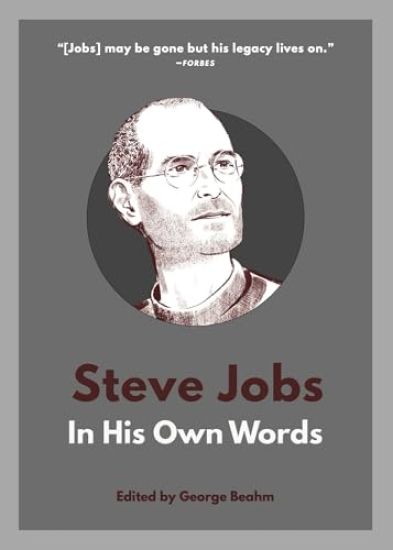
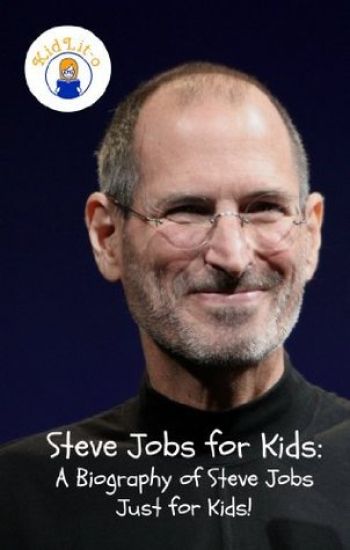
A new, updated edition of the New York Times bestseller. Get inside the head of Steve Jobs: inventor, visionary, business mogul, and one of the most influential entrepreneurs in the world.Drawn from more than three decades of media coverage, this tribute serves up the best, most thought-provoking insights ever spoken by Steve Jobs: more than 200 quotations that are essential reading for everyone who seeks innovative solutions and inspirations applicable to their business, regardless of size.Jobs, who passed away on October 5, 2011, at the age of 56, cofounded Apple in 1976. He stepped down from that role in August 2011, bringing an end to one of the greatest, most transformative business careers in history. Over the years, Jobs gave countless interviews to the media, explaining what he called “the vision thing”—his unmatched ability to envision, and successfully bring to the marketplace, consumer products that people find simply irresistible.Jobs made an indelible mark in multiple industries, and played an enormous role in creating others. Consider how Jobs and Apple shaped the following fields: personal computers (laptop and desktop), apps (for multiple electronic devices), computer animation (Pixar), music (iTunes), telecommunications (iPhone), personal digital devices (iPod), books (iBook), and tablets (iPad). Jobs was the greatest business visionary of our era.Steve Jobs: In His Own Words is the perfect gift or reference item for everyone interested in this great American original.
(Homespun Tapes). Steve Martin's latest CD, Rare Bird Alert, has received raves from critics, fans and players alike. His 13 songs and sparkling banjo solos, in both clawhammer and three-finger picking styles, are whimsical and fun-filled, always beautifully crafted and superbly played. This new book features tablature and lyrics, and Steve has added brief instructions for playing each tune. Songs: Rare Bird Alert * Yellow-Backed Fly * Best Love * Northern Island * Go Away, Stop, Turn Around, Come Back * Jubilation Day * More Bad Weather on the Way * You * The Great Remember (For Nancy) * Women Like to Slow Dance * Hide Behind a Rock * Atheists Don't Have No Songs * King Tut.
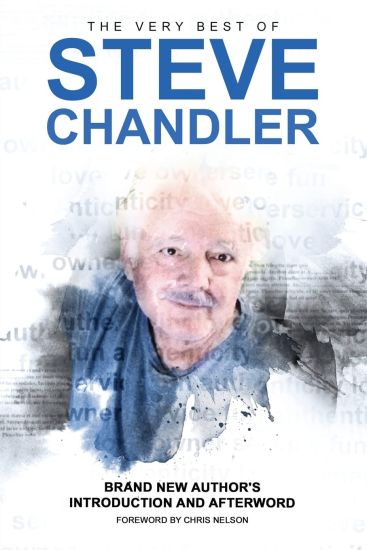
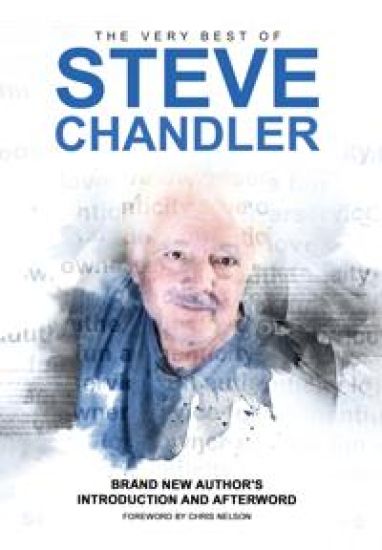
Over the past twenty-five years, life coach and author, Steve Chandler, has produced an immense and diverse body of work on creativity, time management, mindfulness, business, coaching, recovery and more. Yet a central message runs through it all: you are not at the mercy of the world-of your childhood, your habits, your beliefs . . . In fact, you have the freedom to create who you are in the world. Chandler's books speak to the brilliance and creativity in all of us. They feature a unique blend of wisdom, practical advice, stories and humor. Written in short, conversational-style chapters, Chandler's prose is a joy to read and packed with lasting insights. The Very Best of Steve Chandler draws selections from ten of his most powerful books. It is the perfect introduction to the brilliance of Steve Chandler-and of yourself And for seasoned readers of Chandler's work, this unique, 192-chapter collection represents an invitation to renew your acquaintance with his perennially rewarding writing. Selections for The Very Best of Steve Chandler were drawn from the following titles: CREATORRIGHT NOWDeath WishCrazy GoodWealth WarriorTime WarriorFearlessShift Your Mind Shift the World (revised edition)Reinventing Yourself50 Ways to Create Great Relationships.
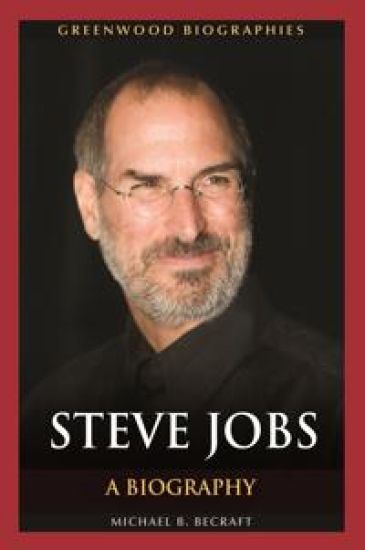
This book provides extensive, comprehensive biographical information on one of technology's most important innovators—Steve Jobs.Steve Jobs was a visionary entrepreneur who contributed immeasurably to information technology, changing not only the way we do business but also the way we communicate and share information. His company, Apple, founded in 1976 with Steve Wozniak, eventually launched the Macintosh computer in 1984, with a graphical user interface that competed with the early versions of Microsoft Windows. This reference biography sheds light on Jobs's departure from Apple in 1985, his extraordinary comeback in 1997, and his innovations in the meantime, which included the founding of the computer animation company Pixar. Jobs and Apple went on to launch the iPod, iTunes, the iPhone, and the iPad. Author Michael Becraft has distilled the vast literature on Jobs into a concise but vivid portrait of the man, his vision, the controversies that have swirled around him, and his lasting impact on business, culture, and society.Arranged chronologically, the book includes extensive primary sources and is written to be accessible to a wide range of readers. Additionally, it incorporates images that heighten reader engagement, provides a timeline for referencing Jobs's achievements across his lifetime, and supplies an extensive bibliography for those seeking original source documents.
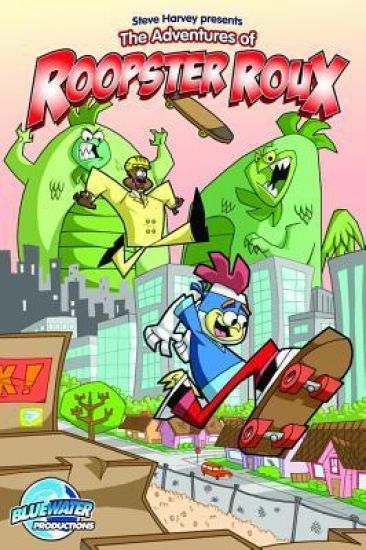
Finals are tough, but they're even tougher when your best friend and sister have been mind controlled by the most sinister villain in the city! And that's exactly the situation Roopster Roux finds himself in his latest escapade. He'll have to use all his wits, book smarts, and his trusty Roux Ripper to overcome his greatest and most dangerous adventure yet!
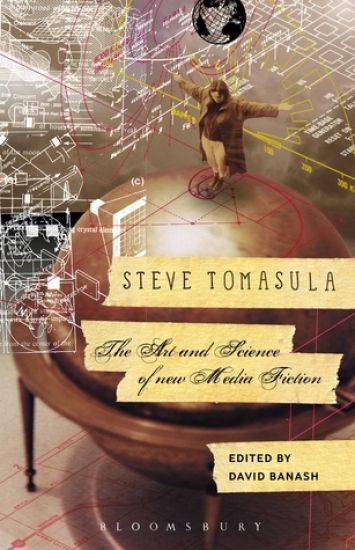
Steve Tomasula's work exists at the cutting edges of scientific knowledge and literary techniques. As such, it demands consideration from multiple perspectives and from critics who can guide the reader through the formal innovations and multimedia involutions while providing critical scientific, aesthetic, historical, and technical contexts. This book, the first of its kind, provides this framework, showing readers the richness and relevance of the worlds Tomasula constructs.Steve Tomasula's work is redefining the form of the novel, reinventing the practice of reading, and wrestling with the most urgent questions raised by massive transformations of media and biotechnologies. His work not only charts these changes, it formulates the problems that we have making meaning in our radically changing technological contexts. Vast in scope, inventive in form, and intimate in voice, his novels, short stories, and essays are read and taught by a surprisingly diverse array of scholars in fields ranging from contemporary experimental writing and literary criticism to the history of science, biotechnology and bioart, book studies, and digital humanities.
What do sandcastles, road trips, and penguins have in common? They're just a few of the many topics in this collection of entertaining and reflective short stories from six years of Steve's life.As a data management professional, Steve has been consulting, training, and writing about data since 1990. For over 20 years, Steve has been sending out a monthly newsletter with currently more than 25,000 subscribers. The newsletter covers technology and ends with Steve sharing a personal story.After years of requests from newsletter subscribers, Steve has turned six years of stories (2019 to 2025) into a book. These short memoirs appear chronologically to present a unique picture of how we change and how world events impact our lives. These years definitely contained some goodies, including Covid, wars, inflation, AI, and the final episode of Game of Thrones. At a personal level, Steve turned 50, his family moved from New Jersey to Arizona, and his two daughters started college, leaving him and his wife as "empty nesters."Ten themes thread through the stories and appear in the last chapter as life tactics. Use these proven techniques to get more out of your days.Whether looking for a lighthearted read or seeking inspiration, these 72 memoirs and ten life tactics will make you smile and reflect. Dive into Steve's world, see Steve see, and discover humor, wisdom, and heart.
The author is a retired Physician and Gastrenterologist born and bred in Glasgow but now living with his wife in Liverpool. An interest in the medical application of lasers led him to the Department of Engineering at the University of Liverpool where he became a Visiting Professor.
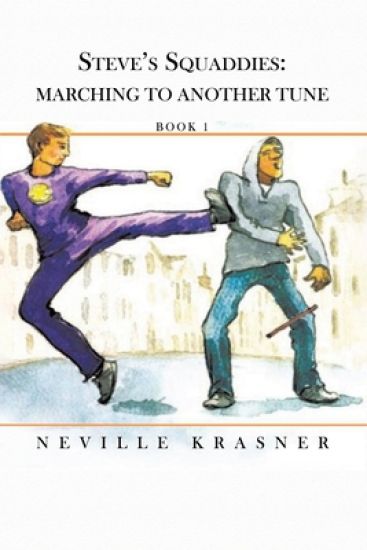
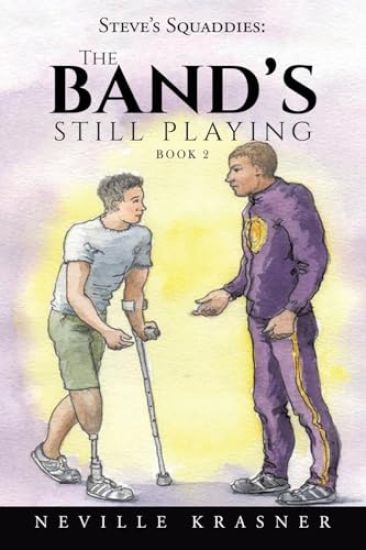
Liverpudlian Tommy Jacksons life has its ups and downs. He is being rehabilitated in Headley Court after losing a leg in Afghanistan and shares his hospital room with double amputee Jimbo and blind Cammy, all injured in combat. Tommy was recently married and has a baby daughter, but he is soon to be discharged from the Rifles and left to find his own way in life. He has no job to go to, and his young family is in danger of outstaying their welcome at his in-laws small house.Steve Chalmers is an ex-marine, invalided out of the service after serious injuries to his leg. His club, Steves Squaddies, of which Tommy was a founding member, takes on difficult youngsters to teach them self-defense, on condition that they make some contribution to the local community. Murphy, thug leader of the eponymous Pipe Band because of their use of copper pipes to instill fear in the population of Wavertree, is Steves sworn enemy and has promised to destroy the club and all it stands for. Will Murphy succeed in disrupting Steves newfound family life and his visionary work with the youngsters he mentors?