
Kirjahaku
Etsi kirjoja tekijän nimen, kirjan nimen tai ISBN:n perusteella.
1000 tulosta hakusanalla Suleiman Musa

In the evolving and complex world of business today, managing risks is vital for the success of business. Small and medium-sized enterprises often encounter challenges due to their limited resources and capabilities in implementing robust risk management practices. The book titled 'Risk Management by Design: A good call or too ambitious goal for SMEs?. Abubakar Suleiman leverages over six years of experience in accounting and finance, coupled with a Master's degree in Finance from Istanbul Sabahattin Zaim University and a Post Graduate in Accounting from OCMT in Canada. With a strong background in risk and information systems control from Canada, Suleiman offers a guide that merges frameworks with practical insights, real-life case studies, and actionable strategies. Beyond a manual, this publication serves as a fundamental for SMEs navigating risks as a small and medium-size businesses. Whether you are an entrepreneur, manager, or risk professional, this book provides you with the tools and knowledge to transform risk management from a chore into an advantage. the success of companies. Medium-sized enterprises often encounter challenges due to their resources and capabilities in implementing robust risk management practices. The book titled 'Risk Management by Design: A good call or too ambitious goal for SMEs' delves into the complexity of integrating risk management procedures into the operations of SMEs.

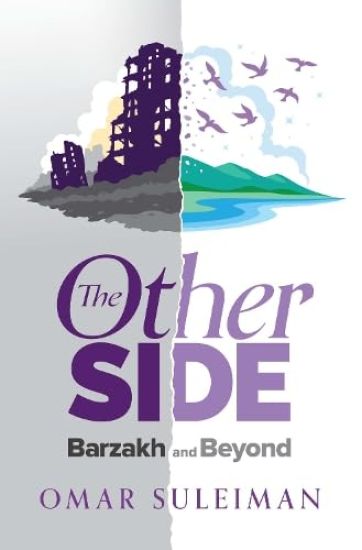
People sometimes say, “I will see you on the other side.” But how certain can one be of this other plane of existence? Where exactly is that “other side”, and how can you be sure you will reach it? Everything begins with a fundamental truth: those whom we have buried from our loved ones are not truly dead. They have merely passed into a special realm known as the Barzakh, a stage of existence between this life and the Hereafter. In that world, the souls of the deceased continue to live: some in peace, others in torment. The souls of martyrs may dwell in the bodies of green birds, flying freely in Paradise, while others may suffer and drown in rivers of blood. Some are reunited with long-deceased loved ones in beautiful homes, while others are subject to terrifying punishment at the hand of the Angels. What is this realm? Who resides within it? And how does knowledge of this world affect the understanding of our current location? To reflect on the Barzakh is to reflect on our ultimate return to Allah and to reconsider the spiritual path we are on today in a world that is plagued with injustice and confusion.
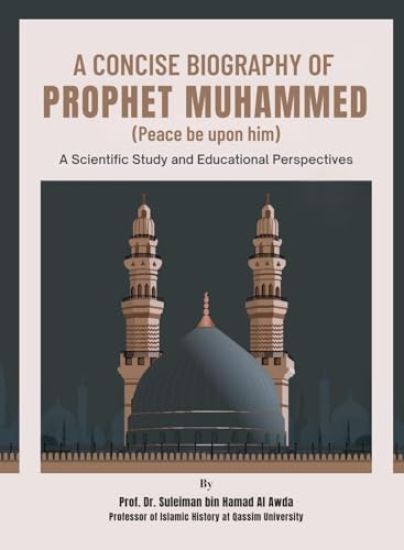
Concise biography of the prophet (Edition1)
Dr Suleiman Bin Hamad Al Awda
Afaq Al Marefa
2025
nidottu

An Introduction to the Anti-Diabetic Potential of Natural Compounds
Kabir Suleiman Kwanaki
Eliva Press
2025
pokkari
The synthetic anti-diabetic drugs have side effect, associated with, and high costs, limiting their accessibility, particularly in resource-constrained settings. The rising global burden of diabetes necessitates innovative approaches to identify safe, effective, and affordable treatments. In silico drug discovery provides a powerful platform to screen natural compounds against diabetes-related protein targets, significantly reducing the time and cost associated with traditional drug development. This research bridges the gap between traditional phytotherapy and modern computational drug design.
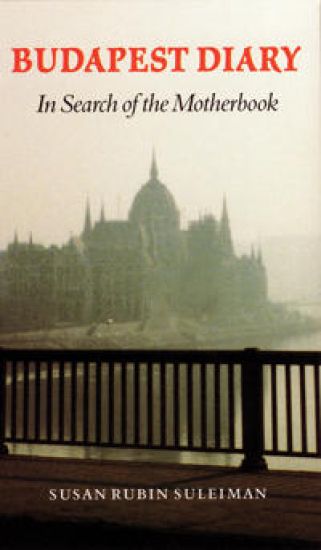
Can you forget the place you once called home? What does it take to make you recapture it? In this moving memoir, Susan Rubin Suleiman describes her returns to the city of her birth-where she speaks the language like a native but with an accent. Suleiman left Budapest in 1949 as a young child with her parents, fleeing communism; thirty-five years later, she returned with her two sons from a brief vacation and began to remember her childhood. Her earliest memories, of Nazi persecution in the final year of World War II, came back to her in fragments, as did memories of her first school years after the war of the stormy marriage between her father, a brilliant Talmudic scholar, and her mother, a cosmopolitan woman from a more secular Jewish family. In 1993, after the fall of communism and the death of her mother, Suleiman returned to Budapest for six-month stay. She recounts her ongoing quest for personal history, interweaving it with the stories of present-day Hungarians struggling to make sense of the changes in their individual and collective lives. Suleiman's search for documents relating to her childhood, the lives of her parents and their families, and the Jewish communities of Hungary and Poland takes her on a series of fascinating journeys within and outside Budapest. Emerging from this eloquent, often suspenseful diary is the portrait of an intellectual who recaptures her past and comes into contact with the vital, troubling world of contemporary Eastern Europe. Suleiman's vivid descriptions of her encounters with a proud, old city and its people in a time of historical change remind us that every life story is at once unique and part of a larger history.

In View of Current Trends in Peace Support Operations
Miraji K Suleiman
Hutson Street Press
2025
sidottu
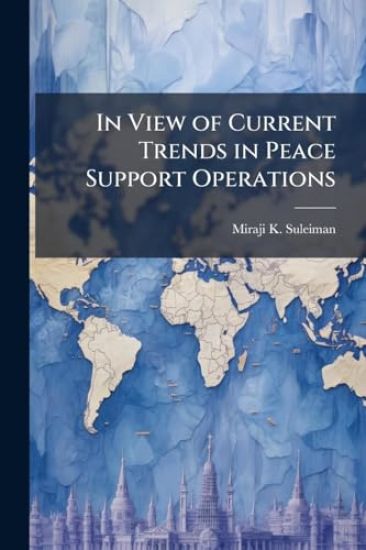
In View of Current Trends in Peace Support Operations
Miraji K Suleiman
Hutson Street Press
2025
pokkari
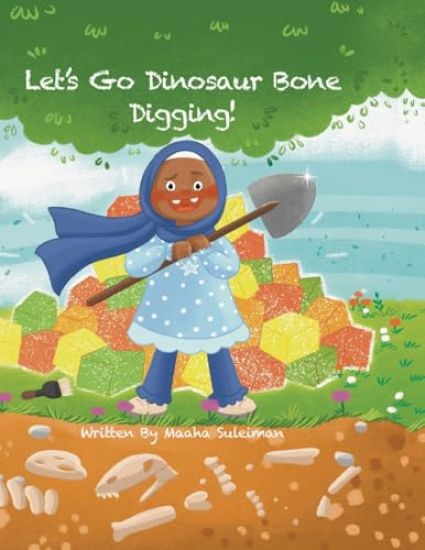
While reading an archaeology book about dinosaur bones, seven-year-old Amina learns that she could become rich by finding fossils of her own. Determined to achieve her goal, Amina enlists the help of her diverse group of friends to dig up some dinosaur bones. Will Amina and her friends succeed in their quest? Let's find out

István Szabó is one of the few Hungarian filmmakers to have earned a major international reputation over the past half century. This thoughtful and original book is the first examination of Szabó’s contribution to contemporary thought, engaging the troubled history of Europe in the 20th and 21st centuries. István Szabó’s importance as a filmmaker lies not only in his attention to film’s formal elements but in his deep and ongoing engagement with some of the most urgent ethical and existential questions of our time. With detailed analyses of István Szabó’s major films, from his 1960s works to his Academy Award for Best Foreign Film winner, Mephisto, and on through Szabó’s last film in 2020, Final Report, Susan Rubin Suleiman focuses on four important questions pertaining to existential choice: to leave home or to stay in a communist country? To collaborate or not with an authoritarian regime? To affirm or to deny one’s Jewishness in the face of antisemitism? To seek or to give up on community in the face of individual or national conflicts? Above all, Suleiman addresses the single most important philosophical question that haunts Szabó’s work, as it does that of many other Central European intellectuals and filmmakers of our time. That is, how do individuals attempt, through the life choices they make or that are foisted on them, to create a viable self in extreme historical situations over which they have no control?

István Szabó is one of the few Hungarian filmmakers to have earned a major international reputation over the past half century. This thoughtful and original book is the first examination of Szabó’s contribution to contemporary thought, engaging the troubled history of Europe in the 20th and 21st centuries. István Szabó’s importance as a filmmaker lies not only in his attention to film’s formal elements but in his deep and ongoing engagement with some of the most urgent ethical and existential questions of our time. With detailed analyses of István Szabó’s major films, from his 1960s works to his Academy Award for Best Foreign Film winner, Mephisto, and on through Szabó’s last film in 2020, Final Report, Susan Rubin Suleiman focuses on four important questions pertaining to existential choice: to leave home or to stay in a communist country? To collaborate or not with an authoritarian regime? To affirm or to deny one’s Jewishness in the face of antisemitism? To seek or to give up on community in the face of individual or national conflicts? Above all, Suleiman addresses the single most important philosophical question that haunts Szabó’s work, as it does that of many other Central European intellectuals and filmmakers of our time. That is, how do individuals attempt, through the life choices they make or that are foisted on them, to create a viable self in extreme historical situations over which they have no control?
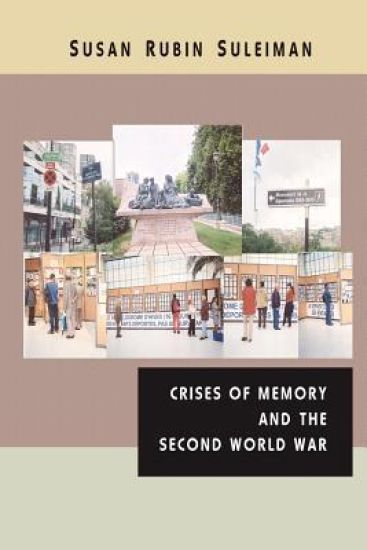
Crises of Memory and the Second World War
Susan Rubin Suleiman
Createspace Independent Publishing Platform
2012
nidottu
In this acclaimed book, renowned Harvard scholar Susan Rubin Suleiman discusses individual and collective memories of World War II, as reflected in literary memoirs, autobiographical novels, works of history and philosophy, and films. Suleiman argues that memories of World War II transcend national boundaries, due not only to the global nature of the war but also to the increasingly global presence of the Holocaust as a site of collective memory. Among the works she discusses are Jean-Paul Sartre's essays on the Occupation and Resistance in France; Marcel Ophuls's innovative documentary on the Nazi interrogator Klaus Barbie, who was tried for crimes against humanity in 1987; Istv n Szab 's film "Sunshine," a chronicle of Jewish identity in central Europe; literary memoirs by Jorge Semprun and Elie Wiesel; and experimental writing by child survivors of the Holocaust, Georges Perec and Raymond Federman.
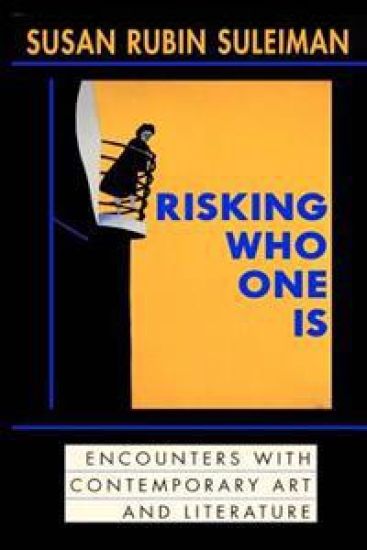
Risking Who One Is: : Encounters with Contemporary Art and Literature
Susan Rubin Suleiman
Createspace Independent Publishing Platform
2013
nidottu
Susan Suleiman sets forth in this insightful work an intimate and provocative exchange with contemporary writers and artists such as Simone de Beauvoir, Hé lè ne Cixous, Elie Wiesel, Mary Gordon, Max Ernst and Angela Carter. Suleiman includes us in her voyages of self-discovery as she confronts the conflicts between the problematic and crucial relations between individual life-story and collective history.
Preparing for a Happy and Comfortable Life in Retirement
Zachariah Dauke Suleiman Mnim
Partridge Publishing
2015
pokkari