Kirjojen hintavertailu. Mukana 11 342 296 kirjaa ja 12 kauppaa.

Kirjahaku

Etsi kirjoja tekijän nimen, kirjan nimen tai ISBN:n perusteella.

1000 tulosta hakusanalla Susan Cheever

The End of A Coil, (1880). By: Susan Warner: Pen name, Elizabeth Wetherell

The End of A Coil, (1880). By: Susan Warner: Pen name, Elizabeth Wetherell

Susan Warner

Createspace Independent Publishing Platform
2016
nidottu
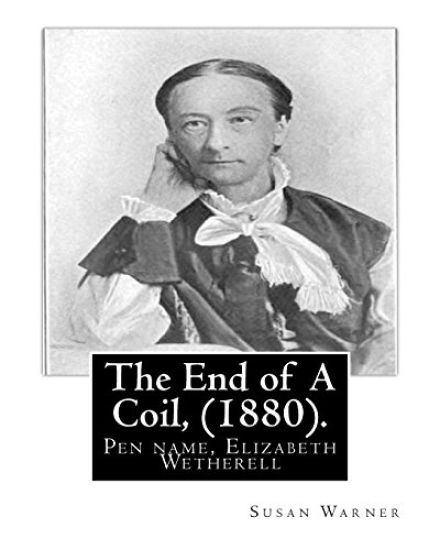
Susan Bogert Warner (July 11, 1819 - March 17, 1885), was an American evangelical writer of religious fiction, children's fiction, and theological works. Biography edit] Born in New York City, she wrote, under the name of "Elizabeth Wetherell", thirty novels, many of which went into multiple editions. However, her first novel, The Wide, Wide World (1850), was the most popular. It was translated into several other languages, including French, German, and Dutch. Other than Uncle Tom's Cabin, it was perhaps the most widely circulated story of American authorship. Other works include Queechy (1852), The Law and the Testimony, (1853), The Hills of the Shatemuc, (1856), The Old Helmet (1863), and Melbourne House (1864). In the nineteenth century, critics admired the depictions of rural American life in her early novels. American reviewers also praised Warner's Christian and moral teachings, while London reviewers tended not to favor her didacticism. Early twentieth-century critics classified Warner's work as "sentimental" and thus lacking in literary value. In the later twentieth century, feminist critics rediscovered The Wide, Wide World, discussing it as a quintessential domestic novel and focusing on analyzing its portrayal of gender dynamics. Some of her works were written jointly with her younger sister Anna Bartlett Warner, who sometimes wrote under the pseudonym "Amy Lothrop". The Warner sisters also wrote famous children's Christian songs. Susan wrote "Jesus Bids Us Shine" while Anna was author of the first verse of the well-known children's song "Jesus Loves Me", which she wrote at Susan's request. Both sisters became devout Christians in the late 1830s. After their conversion, they became confirmed members of the Mercer Street Presbyterian church, although in later life, Warner became drawn into Methodist circles. The sisters also held Bible studies for the West Point cadets. When they were on military duty, the cadets would sing "Jesus Loves Me." The popularity of the song was so great that upon Warner's death, she was buried in the West Point Cemetery. Warner could trace her lineage back to the Puritans on both sides. Her father was Henry Warner, a New York City lawyer originally from New England, and her mother was Anna Bartlett, from a wealthy, fashionable family in New York's Hudson Square. When Warner was a young child, her mother died, and her father's sister Fanny came to live with the Warners. Although Henry Warner had been a successful lawyer, he lost most of his fortune in the Panic of 1837 and in subsequent lawsuits and poor investments. The family had to leave their mansion at St. Mark's Place in New York and move to an old Revolutionary War-era farmhouse on Constitution Island, near West Point, NY. In 1849, seeing little change in their family's financial situation, Susan and Anna started writing to earn income. Susan Warner died in Highland Falls, New York and is buried in the West Point Cemetery.
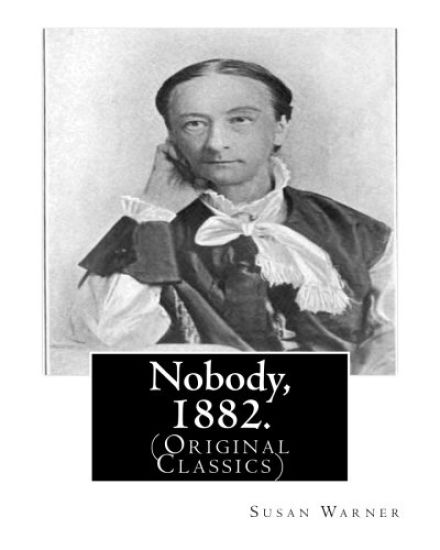
Nobody, 1882. By: Susan Warner: (Original Classics)

Nobody, 1882. By: Susan Warner: (Original Classics)

Susan Warner

Createspace Independent Publishing Platform
2016
nidottu
WHO IS SHE? "Tom, who was that girl you were so taken with last night?" "Wasn't particularly taken last night with anybody." Which practical falsehood the gentleman escaped from by a mental reservation, saying to himself that it was not last night that he was "taken." "I mean the girl you had so much to do with. Come, Tom " "I hadn't much to do with her. I had to be civil to somebody. She was the easiest." "Who is she, Tom?" "Her name is Lothrop." "O you tedious boy I know what her name is, for I was introduced to her, and Mrs. Wishart spoke so I could not help but understand her; but I mean something else, and you know I do. Who is she? And where does she come from?" "She is a cousin of Mrs. Wishart; and she comes from the country somewhere." "One can see that." "How can you?" the brother asked rather fiercely. "You see it as well as I do," the sister returned coolly. "Her dress shows it." "I didn't notice anything about her dress." "You are a man." "Well, you women dress for the men. If you only knew a thing or two, you would dress differently." "That will do You would not take me anywhere, if I dressed like Miss Lothrop." "I'll tell you what," said the young man, stopping short in his walk up and down the floor;-"she can afford to do without your advantages " Susan Bogert Warner (July 11, 1819 - March 17, 1885), was an American evangelical writer of religious fiction, children's fiction, and theological works. Biography Born in New York City, she wrote, under the name of "Elizabeth Wetherell", thirty novels, many of which went into multiple editions. However, her first novel, The Wide, Wide World (1850), was the most popular. It was translated into several other languages, including French, German, and Dutch. Other than Uncle Tom's Cabin, it was perhaps the most widely circulated story of American authorship. Other works include Queechy (1852), The Law and the Testimony, (1853), The Hills of the Shatemuc, (1856), The Old Helmet (1863), and Melbourne House (1864). In the nineteenth century, critics admired the depictions of rural American life in her early novels. American reviewers also praised Warner's Christian and moral teachings, while London reviewers tended not to favor her didacticism. Early twentieth-century critics classified Warner's work as "sentimental" and thus lacking in literary value. In the later twentieth century, feminist critics rediscovered The Wide, Wide World, discussing it as a quintessential domestic novel and focusing on analyzing its portrayal of gender dynamics. Some of her works were written jointly with her younger sister Anna Bartlett Warner, who sometimes wrote under the pseudonym "Amy Lothrop". The Warner sisters also wrote famous children's Christian songs. Susan wrote "Jesus Bids Us Shine" while Anna was author of the first verse of the well-known children's song "Jesus Loves Me", which she wrote at Susan's request. Both sisters became devout Christians in the late 1830s. After their conversion, they became confirmed members of the Mercer Street Presbyterian church, although in later life, Warner became drawn into Methodist circles. The sisters also held Bible studies for the West Point cadets. When they were on military duty, the cadets would sing "Jesus Loves Me." The popularity of the song was so great that upon Warner's death, she was buried in the West Point Cemetery. Susan Warner died in Highland Falls, New York and is buried in the West Point Cemetery.
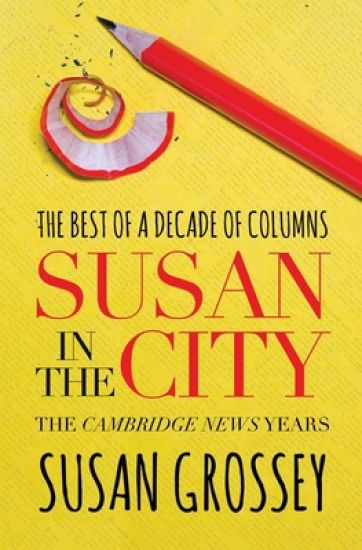
Susan in the City: The Cambridge News Years

Susan in the City: The Cambridge News Years

Susan Grossey

Createspace Independent Publishing Platform
2017
nidottu
Cambridge is more than just a university and a river - let an insider tell you the real stories In August 2006 the editor of the Cambridge Evening News agreed to take me on for six months to write a weekly column called "Susan in the City". His brief for me was this: "I am looking for a female columnist who can write bright, witty, fun, entertaining, off-the-wall, zany, I've done that, I've thought that, that's happened to me, ludicrous, pithy, thought-provoking and occasionally controversial stuff."The six month trial stretched into ten and a half years, outlasting three editors and one name change to the Cambridge News, and producing five hundred and ten columns. This book contains my eighty favourite columns from my reign as "Susan in the City".
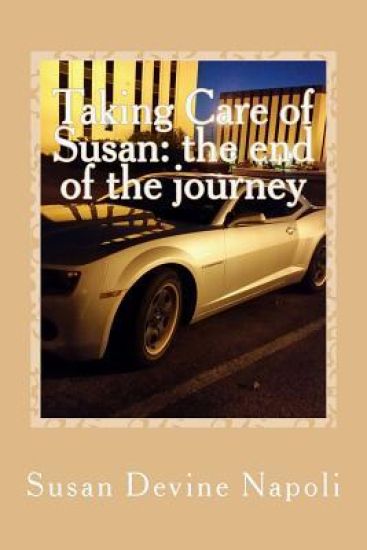
Taking Care of Susan

Taking Care of Susan

Susan Devine Napoli

Createspace Independent Publishing Platform
2017
pokkari
Find out what happened on Susan's journey after she learned to take care of herself, how it evolved, and find out the surprises life had in store for her simply because she kept going.. She kept following her heart and taking action.Buying a Camaro was only a preview to the big changes she made to live the life she could not even dream of at the beginning.
Susan Sarandon

Susan Sarandon

Shapiro Marc

Prometheus Books
2001
sidottu
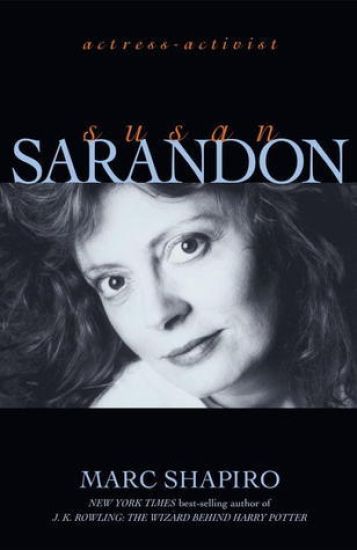
This first biography of Susan Sarandon highlights the real person behind the screen image, exploring her idealism, values, and combative spirit in the service of higher goals, while also celebrating her stunning film career. Renowned celebrity biographer Marc Shapiro traces Sarandonfs life from her strict Catholic upbringing in suburbia and her early days of protest in high school for civil rights and against the Viet Nam War to her more recent involvement with women and children's rights in Nicaragua, the AIDS quilt project, ACT UP, the disruption of an Academy Awards ceremony to protest the internment of Haitians with HIV, and many other ongoing projects. Shapiro also discusses her first career successes through high-profile roles in The Rocky Horror Picture Show, Pretty Baby, Atlantic City, and Thelma and Louise, as well as her openly unconventional relationships with directors Louis Malle and Franco Amuri, and actor Tim Robbins. So motivated is Sarandon by her convictions that she often chooses roles to reflect larger issues. She agreed to play in the film Dry White Season to draw attention to the evils of apartheid, and her opposition to the death penalty resulted in her Academy Award-winning performance in Dead Men Walking. Over the years she has paid a price for her activist positions, and supposedly she has accumulated a sizable FBI file. Nonetheless, she has proved time and again that she is always ready to speak out and act up whenever she believes it will do some good. No ordinary biography, Susan Sarandon is a captivating page-turner about a sexy, alluring, and passionately committed actress who has broken every conventional rule.
Susan B. Anderson's Kids' Knitting Workshop

Susan B. Anderson's Kids' Knitting Workshop

Susan B. Anderson

Artisan Division of Workman Publishing
2019
sidottu
Beloved knitting instructor Susan B. Anderson presents her first book targeted at a young audience. This accessible introduction to knitting in the round includes easy-to-follow illustrated tutorials on techniques from casting on and binding off to joining colors to make stripes, and 17 progressively challenging knitting projects—beginning with simple infinity scarves and hats and building to supersweet toys and decor. Step-by-step text and photographs that kids can read and follow on their own mean they will be knitting independently in no time! Also included is a chapter on stocking your toolbox and sourcing yarn; plus advice on starting a knitting group, connecting with local knitting communities, charity knitting, and more.
Susan B. Anthony and the Struggle for Equal Rights
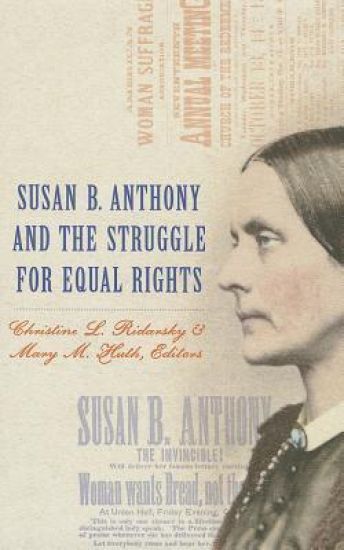
Explores the diversity of thought and action in women's involvement in 19th-century reform movements. Though Susan B. Anthony is best remembered for leading the campaign for women's suffrage, she worked in multiple movements for equality beyond women's right to vote, including antislavery, Native American rights, temperance, and labor reform. In doing so she forged alliances with other activists to forward a broad social justice agenda, but she also faced opposition from these reformers on how best to achieve this goal. Susan B. Anthony and theStruggle for Equal Rights explores the diversity of women's activism in nineteenth-century American reform movements, focusing on how Anthony and other women reformers shaped those movements and our memories of them. The essays here chart the long career of Anthony in this rich historical context of women's activism and display the efforts of a wide variety of women, and the challenges they faced, in the continued struggle for equality. Christine L. Ridarsky, Rochester City Historian, is a PhD candidate in history at the University of Rochester. Mary M. Huth is retired assistant director of the Department of Rare Books, Special Collections, and Preservation, Rush Rhees Library, University of Rochester.
An Account of the Proceedings in the Trial of Susan B. Anthony, on the Charge of Illegal Voting, at the Presidential Election in Nov., 1872. and on the Trial of Beverly W. Jones, Edwin T. Marsh and William B. Hall, the Inspectors of Election by whom her Vote
An account of the landmark suffragist trial before the U.S. Circuit Court for the Northern District of New York, at Canandaigua in June 1873, that brought the cause of women's voting rights to the forefront of national attention in the United States. A group of women led by preeminent abolitionist and woman's rights advocate Susan B. Anthony 1820-1906], attempted to vote during the presidential election of 1872, claiming they were entitled to do so according to the Fourteenth Amendment. The presiding officials, Jones, Hall, and Marsh, decided by a majority to accept their ballots. The women were soon arrested for this act and indicted for "knowingly voting without having a lawful right to vote." The officials were also indicted. This volume reprints the text of the indictment and a transcript of the testimony with connecting commentary. The appendix offers an address by Anthony delivered before her trial, a speech on her behalf cause by Joslyn Gage, and a critical assessment of the trial by John Hooker. vii, 212 pp.
Susan Sarandon

Susan Sarandon

Betty Jo Tucker

Hats Off Books
2004
nidottu
Susan Sarandon's memorable performances have made her an American icon. Passionate and outspoken, she's often controversial. Why did Sarandon choose acting as a career? What is her acting philosophy? How does she select roles? What motivates her to promote social and political causes? Why do some people object to this? How do critics rate her work and her movies? Betty Jo Tucker answers these questions and more in an analysis of Sarandon's achievements from a film critic's perspective. Tucker's book also includes an annotated filmography of Sarandon's movies and selected reviews of her key films.
Susan Haack

Susan Haack

Prometheus Books
2006
sidottu
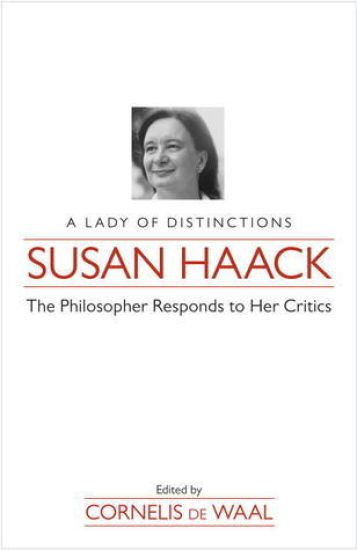
In this critical appraisal of the work of philosopher Susan Haack, editor Cornelis de Waal has assembled sixteen original essays from outstanding international contributors together with responses from Haack on the points raised. The contributors address most of Haack's key publications, from her early writings on metaphysics to her most recent work in the philosophy of science and the philosophy of law. Topics include: the revisability of logic, the role of emotion in reasoning, scientific integrity, postmodernism and the law, the relation of science to religion, preferential hiring, multiple aspects of Haack's "foundherentism," and her crossword analogy. The volume also includes an extensive interview with Haack, which traces the development of her thought, and a complete bibliography of her work. For anyone seeking a better understanding of the work of this important philosopher, this unique collection offers many invaluable insights.
Susan Meiselas: Nicaragua
Originally published in 1981, Susan Meiselas’s Nicaragua is a contemporary classic—a seminal contribution to the literature of concerned photojournalism. Nicaragua forms an extraordinary narrative of a nation in turmoil. Starting with a powerful and chilling evocation of the Somoza regime during its decline in the late 1970s, the images trace the evolution of the popular resistance that led to the insurrection, culminating with the triumph of the Sandinista revolution in 1979. The book includes interviews of various participants in the revolution, along with letters, poems, and statistics. Excerpts from these interviews, gathered during Meiselas’s return to Nicaragua in early 1981, accompany the plates in the book. In 2008, on the thirtieth anniversary of the popular insurrection, and of Meiselas’s first trip to Nicaragua, Aperture published a new edition. Now, as the fortieth anniversary approaches, Aperture is pleased to reissue the book with an augmented reality (AR) function, bringing a selection of images to life via clips from Meiselas’s films Pictures from a Revolution (1991), in which she returns to the scenes she originally photographed, tracking down subjects and interviewing them, and Reframing History (2004), a documentation of her return in 2004 with nineteen mural-sized images of her photographs from 1979, to collaborate with local communities to create sites for collective memory. A conversation with Kristen Lubben addresses the history of Meiselas’s work in Nicaragua, how it has been circulated, revisited, repatriated, and reconsidered—how and why it endures. Expanding upon this, they discuss the new layered content experience of AR in this edition, which takes the reader beyond still photography into a world of video and sound.