
Kirjahaku
Etsi kirjoja tekijän nimen, kirjan nimen tai ISBN:n perusteella.
1000 tulosta hakusanalla THOMAS LECHFORD
Thomas Hardy in the Literary Lives series relates Hardy's life to his career as a writer, giving particular attention to his determination as a young man to make literature his career, his methodical preparation during the first thirty years of his life for that career, the writing of his fourteen published novels and the fame they brought him, and then, the culmination of his life as writer, his emergence in his remaining thirty years as one of the very greatest of English poets and the writer of The Dynasts.
Thomas Hardy in the Literary Lives series relates Hardy's life to his career as a writer, giving particular attention to his determination as a young man to make literature his career, his methodical preparation during the first thirty years of his life for that career, the writing of his fourteen published novels and the fame they brought him, and then, the culmination of his life as writer, his emergence in his remaining thirty years as one of the very greatest of English poets and the writer of The Dynasts.
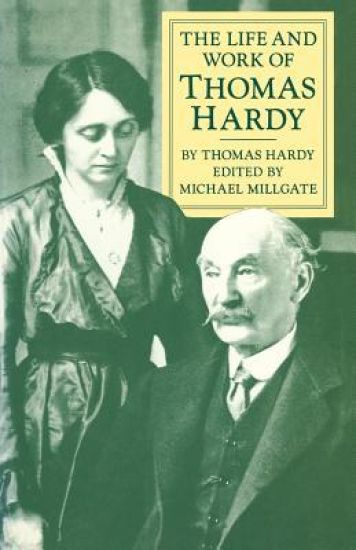
One of the literary world's great deceptions was perpetrated when Thomas Hardy wrote his Life in secret for publication after his death as an official biography. Since the true circumstances of its composition have been known The Early Life and Later Years of Thomas Hardy, published over the name of Florence Emily Hardy, has frequently been referred to as Hardy's autobiography. But this is not the whole truth: Florence altered much of what Hardy meant to appear in his 'biography'. Through careful examination of pre- publication texts, Michael Millgate has retrieved the text as it stood at the time of Hardy's final revision. For the first time The Life and Work of Thomas Hardy can be read as a true work of autobiography - an addition to the Hardy canon.
Johann Sommerville's is an impeccable textbook. Simply written, it provides exposition of Hobbes' arguments in the context of English and continental thought'. P. Springborg, University of Sydney, Political Studies, Vol. XL1, No 2 6/93 Thomas Hobbes was probably the greatest of British political theorists. Too often commentators have failed to grasp his meaning because they have ignored the historical context in which he wrote. Drawing on much recent scholarship and on many little-known seventeenth century sources, this book presents a lucid and jargon-free examination of Hobbes' arguments, setting them against a background of the ideas of his contemporaries and of the political events of his lifetime. By viewing Hobbes in his context, the book both clarifies his theories and illuminates European thinking at a critical stage in the development of modern political ideas.
This biography contains new disclosures and interpretations of evidence, neglecting nothing significant in Hardy's early years or his later life. It draws from innumerable sources, including all his published writings (not least the poems), biographies of him and of contemporaries, correspondence of friends and acquaintances, Emma Hardy's diaries, and many unpublished letters from her and Florence Hardy, and brief background introductions indicate how some of Hardy's friends influenced his career or enriched his life.
This revised edition of the successful Casebook first published in 1975 is now up-to-date for the 1990s, with additional recent criticism reflecting major reassessments of Hardy's novel in the light of the best scholarship of the last two decades. The volume retains its previous and invaluable selection of earlier reviews and articles. The introduction by R.P. Draper, provides a perceptive overview of both the novels and the enormous range of criticism that Hardy's work has generated.
'...essential reading for all students of the English Church.' Patrick Collinson Thomas Cranmer (1489-1556) is arguably the most controversial figure of the English Reformation. The sixteenth century was a period of fierce theological controversy and no doctrine concerned contemporaries more than the vexed issue of the Eucharist. Scholars have always found it notoriously difficult to determine Cranmer's conviction on this central matter of the Christian faith. This and many other questions that have long troubled Cranmer scholars receive fair and full treatment in this absorbing study. This book re-establishes itself as the definitive exposition of Cranmer's doctrine of the Eucharist.
Drawing on aspects of Foucauldian feminist theory Thomas Hardy, Femininity and Dissent offers original and detailed readings of six critically under-valued novels: Desperate Remedies, A Pair of Blue Eyes, The Hand of Ethelberta, A Laodicean, Two on a Tower and The Well-Beloved , demonstrating Hardy's peculiarly modern appreciation of how individuals negotiate the forces which shape their sense of self. Tracing his interest in the evolutionary debate and the woman question this book reveals a new politically engaged rather than a grimly pessimistic Hardy.
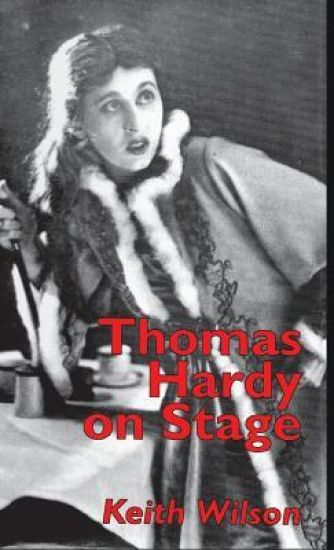
'Meticulously researched and lucidly written, this volume will likely become and remain the definitive study of the history of works Hardy adapted for the stage and of the Hardy Players who, in the main, performed them.' - John J. Conlon, English Literature in Transition 'Much new research informs this first full-length study of Hardy's involvement in stage productions based on his own works. The result is a closely reasoned account of the conflict between his desire to see his plots and characters brought to the stage, and his awareness of the attending difficulties.' - M.S. Vogeler, Choice Despite Hardy's lifelong interest in the theatre, this is the first comprehensive study of all aspects of his involvement with the stage, the only area of his literary activities left substantially unexplored. It discusses his own experiments at crafting scenarios and plays, all productions, both amateur and professional, with which he had any involvement, and his troubled negotiations with adapters, producers, and actors. It is fascinating for what it reveals about both the artist and the man, and offers particular insight into the paradoxical connections between the retiring Dorchester celebrity and the international man of letters.
Taking into account the latest criticism, Langbaum discusses Hardy's fiction and poetry from various contemporary points of view so as to show Hardy as a still-powerful literary presence.
'...a beautiful wrought study that belongs in every good library'. Publishers' Weekly '...remains a major contribution to Hardy studies' - Charles Osborne, Sunday Telegraph Originally published in 1971 and now for the first time reprinted, Thomas Hardy: His Career as a Novelist has long been recognized as a major - and exceptionally well-written - work of Hardy criticism that also set new standards for Hardy scholarship. A recent survey refers to it as 'one of the most permanently useful' of Hardy studies, characterized by an 'admirably clear, unpretentious style'. Although the central chapters are predominantly critical, offering independent readings of each of the novels (including those customarily considered 'minor'), those readings are developed within the context of available knowledge of Hardy's personal and intellectual backgrounds, his friendships and family relationships, and his evolution as a professional writer. Extensive use is made of Hardy's own manuscripts, notebooks, nd letters and of the correspondence and reminiscences of those who knew him, and in a new preface Michael Millgate speaks of having sought to resolve 'the standard work/life dichotomy' by pursuing 'the unitary conception of a career'.
'...a beautiful wrought study that belongs in every good library'. Publishers' Weekly '...remains a major contribution to Hardy studies' - Charles Osborne, Sunday Telegraph Originally published in 1971 and now for the first time reprinted, Thomas Hardy: His Career as a Novelist has long been recognized as a major - and exceptionally well-written - work of Hardy criticism that also set new standards for Hardy scholarship. A recent survey refers to it as 'one of the most permanently useful' of Hardy studies, characterized by an 'admirably clear, unpretentious style'. Although the central chapters are predominantly critical, offering independent readings of each of the novels (including those customarily considered 'minor'), those readings are developed within the context of available knowledge of Hardy's personal and intellectual backgrounds, his friendships and family relationships, and his evolution as a professional writer. Extensive use is made of Hardy's own manuscripts, notebooks, nd letters and of the correspondence and reminiscences of those who knew him, and in a new preface Michael Millgate speaks of having sought to resolve 'the standard work/life dichotomy' by pursuing 'the unitary conception of a career'.
This biography contains new disclosures and interpretations of evidence, neglecting nothing significant in Hardy's early years or his later life. It draws from innumerable sources, including all his published writings (not least the poems), biographies of him and of contemporaries, correspondence of friends and acquaintances, Emma Hardy's diaries, and many unpublished letters from her and Florence Hardy, and brief background introductions indicate how some of Hardy's friends influenced his career or enriched his life.
Thomas Hardy and the Church traces the development of Hardy's attitude towards Christianity. Through an analysis, firmly rooted in documentary evidence, of his use of the motifs of church architecture, religious ritual, and the characters of clergymen, Jan Jedrzejewski argues that the tension between Hardy's emotional attachment to the Christian tradition and his inability to accept its ontological essence generated a response to Christianity that was complex, often ambiguous, and by no means uniformly critical.

The influence and reputation of Thomas Hobbes (1588-1679), the greatest English political theorist and one of the greatest of all intellectuals, has never been higher than it is now. This book gives a comprehensive treatment of Hobbes' thought in the light of the most important research currently being produced by historians, philosophers, and political scientists. His life and political, religious and scientific views are explained within the cultural context of Stuart England.
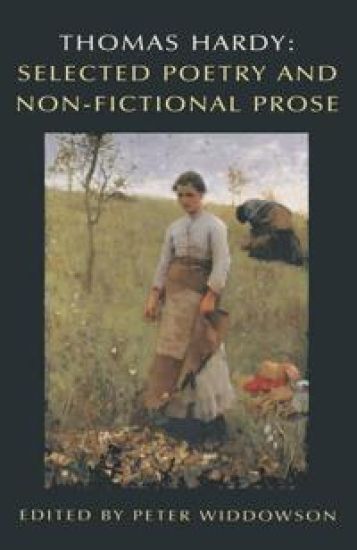
Thomas Hardy
Red Globe Press
1996
nidottu
Peter Widdowson's major new selection of Hardy's poetry offers the student a challenging assessment of his poetic achievement by juxtaposing Hardy's best known poems with some of his least known. In addition to the 184 poems and the selection of Hardy's prose writings (never before so fully annotated), Widdowson includes a lively introduction on Hardy's life and work, a critical essay re-assessing his place in literary history, and extensive explanatory notes on each poem and essay. The volume revitalises our understanding and enjoyment of a most enduringly popular poet and is set to prove a definitive student edition.
This book is designed to serve as a practical guide for students and others wishing to improve their skills in the detailed analysis and discussion of Hardy's prose texts. Its aim is to sharpen readers' awareness of the complexity and subtlety of Hardy's art by encouraging responsiveness to such aspects as language and style, imagery and symbol, descriptive and dramatic method and narrative technique. At the same time extracts are considered not in isolation but in relation to the overall purposes of a highly-organised text.While the main focus is on four of Hardy's most-widely read novels, the twenty-four examples of close analysis cover six major themes that are relevant to all his fiction. There are also numerous references to his other writings in prose and verse. The second part of the book provides, in succinct form, essential background material, including an outline of Hardy's life and career and an account of the literary, historical and intellectual contexts of his fiction. As well as a guide to further reading, a chapter is devoted to samples of criticism illustrating a range of approaches to the chosen texts and representing the work of important critics past and present.
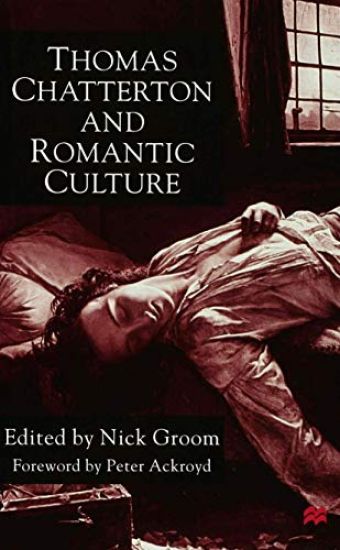
Thomas Chatterton and Romantic Culture
Palgrave Macmillan
1999
sidottu
Thomas Chatterton was a poet, forger, and adolescent suicide, and the debate over his work was a pivotal episode in the history of eighteenth-century literature. It ultimately established Chatterton as the inspiration for Romantic poets like Blake, Coleridge, and Keats. This book is a major collection of diverse new essays by scholars, critics, and writers like Peter Ackroyd and Richard Holmes. They show the mercurial Chatterton in exciting new contexts, and restore him as a seminal figure in English Literature.