Nonlinear and Optimal Control Systems offers a self-contained introduction to analysis techniques used in the design of nonlinear and optimal feedback control systems, with a solid emphasis on the fundamental topics of stability, controllability, optimality, and the corresponding geometry. The book develops and presents these key subjects in a unified fashion. An integrated approach is used to develop stability theory, function minimizing feedback controls, optimal controls, and differential game theory.Starting with a background on differential equations, this accessible text examines nonlinear dynamical systems and nonlinear control systems, including basic results in nonlinear parameter optimization and parametric two-player games. Lyapunov stability theory and control system design are discussed in detail, followed by in-depth coverage of the controllability minimum principle and other important controllability concepts. The optimal control (Pontryagin's) minimum principle is developed and then applied to optimal control problems and the design of optimal controllers.Nonlinear and Optimal Control Systems features examples and exercises taken from a wide range of disciplines and contextsfrom engineering control designs to biological, economic, and other systems. Numerical algorithms are provided for solving problems in optimization and control, as well as simulation of systems using nonlinear differential equations. Readers may choose to develop their own code from these algorithms or solve problems with the help of commercial software programs.Providing readers with a sturdy foundation in nonlinear and optimal control system design and application, this new resource is a valuable asset to advanced students and professional engineers in many different fields.An integrated approach to the fundamentals of nonlinear and optimal control systems. This self-contained text provides a solid introduction to the analysis techniques used in the design of nonlinear and optimal feedback control systems. Building on thorough coverage of the basic concepts of stability, controllability, and optimality, the book develops highly effective feedback controllers for stability, function minimizing control, optimal control, and two-player differential games.Concepts are illustrated throughout with examples that represent a range of disciplines and design contexts, bridging theory and application for advanced students and practicing engineers in many different fields. The book features: *An accessible introduction to nonlinear system dynamics *Lyapunov stability theory and control system design *Controllability of nonlinear systems, including in-depth treatment of the controllability minimum principle and Pontryagin's minimum principle *Optimal control systems and design using Pontryagin's minimum principle *Differential games and design conceptsqualitative and quantitative games, Isaacs' min-max principle, and more *Numerical algorithms for control, optimization, and simulation of nonlinear dynamical systems
This video is designed to review and expand on the themes and language presented in the coursebook, but can also be used with any other teaching programme at this level. The video features a mixture of documentary and dramatized sequences - from a documentary sequence about the history of Wimbledon to a fictional detective story.
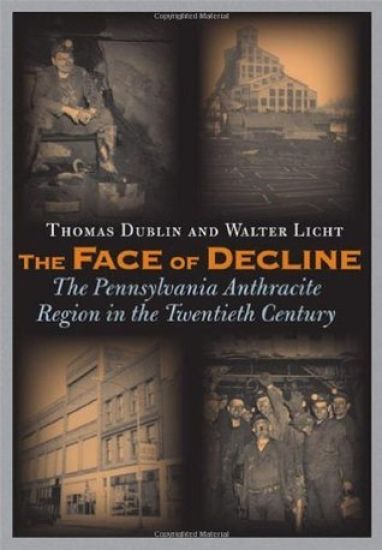
The anthracite coal region of Pennsylvania once prospered. Today, very little mining or industry remains, although residents have made valiant efforts to restore the fabric of their communities. In The Face of Decline, the noted historians Thomas Dublin and Walter Licht offer a sweeping history of this area over the course of the twentieth century. Combining business, labor, social, political, and environmental history, Dublin and Licht delve into coal communities to explore grassroots ethnic life and labor activism, economic revitalization, and the varied impact of economic decline across generations of mining families. The Face of Decline also features the responses to economic crisis of organized capital and labor, local business elites, redevelopment agencies, and state and federal governments. Dublin and Licht draw on a remarkable range of sources: oral histories and survey questionnaires; documentary photographs; the records of coal companies, local governments, and industrial development corporations; federal censuses; and community newspapers. The authors examine the impact of enduring economic decline across a wide region but focus especially on a small group of mining communities in the region's Panther Valley, from Jim Thorpe through Lansford to Tamaqua. The authors also place the anthracite region within a broader conceptual framework, comparing anthracite's decline to parallel developments in European coal basins and Appalachia and to deindustrialization in the United States more generally.
This work has been selected by scholars as being culturally important and is part of the knowledge base of civilization as we know it.This work is in the public domain in the United States of America, and possibly other nations. Within the United States, you may freely copy and distribute this work, as no entity (individual or corporate) has a copyright on the body of the work.Scholars believe, and we concur, that this work is important enough to be preserved, reproduced, and made generally available to the public. To ensure a quality reading experience, this work has been proofread and republished using a format that seamlessly blends the original graphical elements with text in an easy-to-read typeface.We appreciate your support of the preservation process, and thank you for being an important part of keeping this knowledge alive and relevant.
"The Rose Book" is a complete guide to growing a variety of different types of roses, written by H. H. Thomas and originally published in 1914. Contents include: "Roses to Begin With", "Roses to Proceed With", "Some Very Practical Matters", "Rose Growing under Glass", "Round the Year in the Rose Garden", and "List of Varieties for Various Purposes". Written in simple, clear language and full of helpful photographs, this guide contains all the information a gardener might need to know about growing roses and is highly recommended for those with a practical interest in the subject. Many vintage books such as this are becoming increasingly scarce and expensive. It is with this in mind that we are republishing this volume now in an affordable, modern, high-quality edition complete with a specially-commissioned new introduction on the history of gardening.
"Dilorenzo and Block have rendered an invaluable service to scholars and students interested in Public Choice, Austrian Economics and Liberalism. Their critical analysis of Public Choice from the Austrian perspective is timely and relevant to clarify important misconceptions about both schools of thought that although in some aspects are complementary in many others offer a significantly different and even opposite approach. This is a most welcome book that was very necessary and fills an important vacuum in the literature." - Jes s Huerta de Soto"I congratulate DiLorenzo and Block for writing this important and courageous book chastising Public Choice. Austro-Libertarianism and Public Choice are to some degree complements; both veer in the direction of support for private property, fee enterprise and capitalism, and against government involvement in the economy. But they are also substitutes, in that the former is a consistent underpinning of the free marketplace, where the latter is not." - Han-Hermann Hoppe
An introduction to analysis techniques used in the design of linear feedback control systems with emphasis on both classical and matrix methods. This text presents all design methods in a building-block sequence, including a thorough analysis of first- and second-order systems as well as general state space systems.
Since the 1970s, the interrelated areas of medical genetics and biotechnology have developed dramatically and afforded increased control over the design of living organisms. From the very beginning, controversies over these techniques and their applications to plants, animals, and humans have raged in many disciplines—including science, philosophy, ethics, and religion. This book brings together the seminal essays of two leading Catholic moral theologians—Thomas Shannon and James Walter—in an effort to identify the key ethical and theological questions raised by the new genetic medicine. What is unique about this book is that it specifically and directly brings modern genetics and the Roman Catholic theological and ethical tradition into dialogue. While the authors argue that the Catholic tradition has much to offer in putting this current scientific revolution into perspective, they well understand the need to avoid merely repeating the tradition in favor of bringing the best of the tradition to bear on the precise questions posed by modern genetic technology.
dieses Buch bietet eine Einf hrung in die wichtigsten Themen rund um Eingebettete Systeme wie zum Beispiel Technologien, Kommunikation, Mikroprozessoren, Systembeschreibungssprachen, Sensornetzwerke und High-Level-Synthese. Einen breiten Raum nimmt dabei auch das Gebiet der Entwicklungsmethodik ein. Dieser Teil ist besonders f r Studenten und Informatiker gedacht, die als Entwickler t tig werden wollen oder es bereits sind. Als eines der ersten deutschsprachigen Lehrb cher schafft es dieses Buch, grundlegendes praktisches Wissen ber Eingebettete Systeme zu vermitteln. Der Stoff wird anschaulich mit vielen Bildern und Beispielen dargestellt. Auf mathematische Beweise und Formalismen wird dabei bewusst verzichtet. Somit kann der Text auch als Erg nzung f r eine formalere Behandlung des Themas dienen. Das Werk ist didaktisch entsprechend den Vorlesungen an Hochschulen aufgebaut. Einzelne Kapitel k nnen als getrennte Vorlesungseinheiten verwendet werden.
English summary: This teaching and textbook describes the biblical writings, first by content and structure, and then follows their process of coming into being back to the respective reason for their origin. The framework for this is the canon of the Hebrew Bible, which is defined in the introductory section by the Greek and Christian Bible and the so-called Apocrypha. The four parts of the volume are introduced by overview chapters: the Pentateuch as a whole, the Deuteronomistic historical work, the phenomenon of prophecy and Hebrew poetry. The author also appropriately discusses the progress and current state of research. Comprehensive bibliographies characterise the entire work. Anyone wishing to intensively examine the Old Testament and its origins will obtain sound information here. German description: Dieses Lehr- und Studienbuch beschreibt die biblischen Schriften zunachst nach Inhalt und Aufbau und verfolgt dann ihren Werdeprozess zuruck bis zum jeweiligen Entstehungsgrund. Den Rahmen gibt der Kanon der hebraischen Bibel vor, der im Einleitungsteil von der griechischen bzw. christlichen Bibel und den sog. Apokryphen abgegrenzt wird. Die vier Kanonteile werden durch Uberblickskapitel eroffnet: der Pentateuch als ganzer, das deuteronomistische Geschichtswerk, das Phanomen der Prophetie, die hebraische Poesie. Gang und Stand der Forschung kommen angemessen zur Geltung. Umfassende Bibliographien durchziehen das Werk. Wer sich intensiv mit dem Alten Testament und seiner Entstehung befassen will, erhalt hier fundierte Information.