Kirjojen hintavertailu. Mukana 12 016 292 kirjaa ja 12 kauppaa.

Kirjahaku

Etsi kirjoja tekijän nimen, kirjan nimen tai ISBN:n perusteella.

1000 tulosta hakusanalla W Timbrell Pierce

W. E. B. Du Bois and the Critique of the Competitive Society

W. E. B. Du Bois and the Critique of the Competitive Society

Andrew J. Douglas

University of Georgia Press
2019
sidottu
Competition and competitiveness are roundly celebrated as public values and key indicators of a dynamic and forward-thinking society. But the headlong embrace of competitive market principles, increasingly prevalent in our neoliberal age, often obscures the enduring divisiveness of a society set up to produce winners and losers. In this inspired and thoughtfully argued book, Andrew J. Douglas turns to the later writings of W. E. B. Du Bois to reevaluate the very terms of the competitive society.Situating Du Bois in relation to the Depression-era roots of contemporary neoliberal thinking, Douglas shows that into the 1930s Du Bois ratcheted up a race-conscious indictment of capitalism and liberal democracy and posed unsettling questions about how the compulsory pull of market relations breeds unequal outcomes and underwrites the perpetuation of racial animosities. Blending historical analysis with ethical and political theory, and casting new light on several aspects of Du Bois’s thinking, this book makes a compelling case that Du Bois’s sweeping disillusionment with Western liberalism is as timely now as ever.
W. E. B. Du Bois and the Critique of the Competitive Society

W. E. B. Du Bois and the Critique of the Competitive Society

Andrew J. Douglas

UNIVERSITY OF GEORGIA PRESS
2022
pokkari
Competition and competitiveness are roundly celebrated as public values and key indicators of a dynamic and forward-thinking society. But the headlong embrace of competitive market principles, increasingly prevalent in our neoliberal age, often obscures the enduring divisiveness of a society set up to produce winners and losers. In this inspired and thoughtfully argued book, Andrew J. Douglas turns to the later writings of W. E. B. Du Bois to reevaluate the very terms of the competitive society.Situating Du Bois in relation to the Depression-era roots of contemporary neoliberal thinking, Douglas shows that into the 1930s Du Bois ratcheted up a race-conscious indictment of capitalism and liberal democracy and posed unsettling questions about how the compulsory pull of market relations breeds unequal outcomes and underwrites the perpetuation of racial animosities. Blending historical analysis with ethical and political theory, and casting new light on several aspects of Du Bois’s thinking, this book makes a compelling case that Du Bois’s sweeping disillusionment with Western liberalism is as timely now as ever.
W Stands for Women

W Stands for Women

Duke University Press
2007
pokkari
Taking seriously the “W Stands for Women” rhetoric of the 2004 Bush–Cheney campaign, the contributors to this collection investigate how “W” stands for women. They argue that George W. Bush has hijacked feminist language toward decidedly antifeminist ends; his use of feminist rhetoric is deeply and problematically connected to a conservative gender ideology. While it is not surprising that conservative views about gender motivate Bush’s stance on so-called “women’s issues” such as abortion, what is surprising-and what this collection demonstrates-is that a conservative gender ideology also underlies a range of policies that do not appear explicitly related to gender, most notably foreign and domestic policies associated with the post-9/11 security state. Any assessment of the lasting consequences of the Bush presidency requires an understanding of the gender conservatism at its core.In W Stands for Women ten feminist scholars analyze various aspects of Bush’s persona, language, and policy to show how his administration has shaped a new politics of gender. One contributor points out the shortcomings of “compassionate conservatism,” a political philosophy that requires a weaker class to be the subject of compassion. Another examines Lynndie England’s participation in the abuse of prisoners at Abu Ghraib in relation to the interrogation practices elaborated in the Army Field Manual, practices that often entail “feminizing” detainees by stripping them of their masculine gender identities. Whether investigating the ways that Bush himself performs masculinity or the problems with discourse that positions non-Western women as supplicants in need of saving, these essays highlight the far-reaching consequences of the Bush administration’s conflation of feminist rhetoric, conservative gender ideology, and neoconservative national security policy.Contributors. Andrew Feffer, Michaele L. Ferguson, David S. Gutterman, Mary Hawkesworth, Timothy Kaufman-Osborn, Lori Jo Marso, Danielle Regan, R. Claire Snyder, Iris Marion Young, Karen ZiviMichaela Ferguson and Karen Zivi appeared on KPFA’s Against the Grain on September 11, 2007. Listen to the audio.Michaela Ferguson and Lori Jo Marso appeared on WUNC’s The State of Things on August 30, 2007. Listen to the audio.
W Stands for Women

W Stands for Women

Duke University Press
2007
sidottu
Taking seriously the “W Stands for Women” rhetoric of the 2004 Bush–Cheney campaign, the contributors to this collection investigate how “W” stands for women. They argue that George W. Bush has hijacked feminist language toward decidedly antifeminist ends; his use of feminist rhetoric is deeply and problematically connected to a conservative gender ideology. While it is not surprising that conservative views about gender motivate Bush’s stance on so-called “women’s issues” such as abortion, what is surprising-and what this collection demonstrates-is that a conservative gender ideology also underlies a range of policies that do not appear explicitly related to gender, most notably foreign and domestic policies associated with the post-9/11 security state. Any assessment of the lasting consequences of the Bush presidency requires an understanding of the gender conservatism at its core.In W Stands for Women ten feminist scholars analyze various aspects of Bush’s persona, language, and policy to show how his administration has shaped a new politics of gender. One contributor points out the shortcomings of “compassionate conservatism,” a political philosophy that requires a weaker class to be the subject of compassion. Another examines Lynndie England’s participation in the abuse of prisoners at Abu Ghraib in relation to the interrogation practices elaborated in the Army Field Manual, practices that often entail “feminizing” detainees by stripping them of their masculine gender identities. Whether investigating the ways that Bush himself performs masculinity or the problems with discourse that positions non-Western women as supplicants in need of saving, these essays highlight the far-reaching consequences of the Bush administration’s conflation of feminist rhetoric, conservative gender ideology, and neoconservative national security policy.Contributors. Andrew Feffer, Michaele L. Ferguson, David S. Gutterman, Mary Hawkesworth, Timothy Kaufman-Osborn, Lori Jo Marso, Danielle Regan, R. Claire Snyder, Iris Marion Young, Karen ZiviMichaela Ferguson and Karen Zivi appeared on KPFA’s Against the Grain on September 11, 2007. Listen to the audio.Michaela Ferguson and Lori Jo Marso appeared on WUNC’s The State of Things on August 30, 2007. Listen to the audio.
W.B. Yeats

W.B. Yeats

A. Norman Jeffares

Continuum International Publishing Group Ltd.
2001
nidottu
This volume, a reissue of the 1990 edition of Jeffares's biography of Yeats, with a new introduction and bibliography, is an account of Yeats's life and work. It features a collection of previously unpublished letters, photographs and poetry.
W Magazine

W Magazine

Sara Moonves

RIZZOLI INTERNATIONAL PUBLICATIONS
2022
sidottu
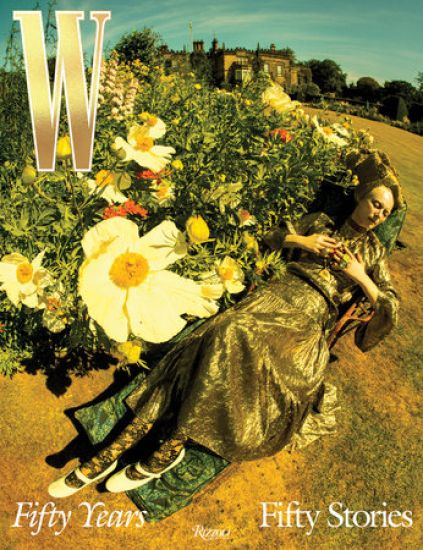
Over the last 50 years, W has been the unparalleled laboratory for the world s top-tier photographers and writers, providing a platform for publishing their most ambitious and creative works. The photos and essays presented here will cover all categories including fashion, design, art, celebrity, film, and interiors. Historic and ground-breaking stories include the controversial shoot by Steven Meisel, 'A Sexual Revolution' featuring male and female models (including Jessica Stam and Karen Elson) depicted in gender-bending styles and provocative poses; photographer Steven Klein s notorious Angelina Jolie and Brad Pitt photos entitled 'Domestic Bliss.' Tom Ford s racy shoot and accompanying article on sexuality in fashion; Bruce Weber s tribute to New Orleans; Hallucinatory photographs of Tilda Swinton by photographer Tim Walker; artist Alex de Corta photos of interiors by Jacques Grange. Many have allowed W into their homes for the magazine s 'W House Tours' feature and include Marc Jacobs, Sir Evelyn Rothschild, Imelda Marcos, and Dua Lipa. This book will appeal to the culturally-curious with a great appreciation for photography, design, art, architecture, the stories behind things, and the people that make them unique.
W. S. Graham

W. S. Graham

Liverpool University Press
2004
nidottu
Graham’s work was published by T. S. Eliot in the 1940s and 50s, but as a major post-war poet, his work has received astonishingly little critical attention given its prestige and influence. This collection of essays covers all aspects of Graham’s work – its critical reception, recent influence and its relations with other developments in the arts, in particular the work of the St Ives School of visual artists. It includes some biographical material (brief reminiscences by and interviews with those who knew him) and discussions of the material contained in several collections of manuscripts. Nothing so far published has paid attention to these manuscript collections or to the large number of uncollected poems published since his death. Neither has enough been written about Graham’s importance to poets of the 1980s and 1990s. ‘I first read a W. S. Graham poem in 1949. It sent a shiver down my spine. Forty-five years later nothing has changed. His song is unique and his work an inspiration.’ Harold Pinter
W.E.B. Du Bois and Race

W.E.B. Du Bois and Race

Sarah Gardner; Chester J. Fontenot; Mary Alice Morgan

Mercer University Press
2001
sidottu
This collection of essays emerged from a symposium held at Mercer University which examined the ways in which W. E. B. DuBois's theories of race have shaped racial discussion and public policy in the twentieth-century. The essays also examine the application of Du Bois's theories to the new millennium, as well as his contributions to the study of the humanities.
W.H.Auden

W.H.Auden

Charles Osborne

M EvansCo, Inc
1995
nidottu
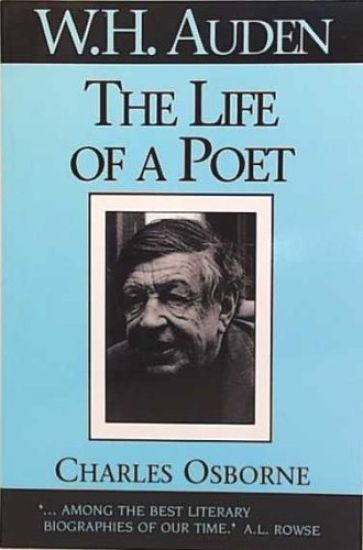
A biography of W.H. Auden, which looks at his career as a poet, and also offers an insight into the personality of the private man behind the public reputation. First published in 1979.
W.B. Yeats

W.B. Yeats

Martin Heather C.

WILFRID LAURIER UNIVERSITY PRESS
1986
sidottu
W. B. Yeats spent a great deal of his life immersing himself in magical, mystical, and philosophic studies in order, as he claimed, to devise a personal system of thought "that would leave [his] ... imagination free to create as it chose and yet make all that it created, or could create, part of the one history, and that the soul's." He succeeded in developing a cohesive metaphysics, and one which is surprisingly original. While he set it down in a series of philosophical treatises culminating in A Vision, it is most clearly elaborated in his plays, which breathe life and meaning into the rather obscure statements of the treatises. In this book, the author traces "the history of the soul" as it is developed in Yeats's plays. She elucidates the underlying system of thought in the drama and establishes its importance to the aim and execution of the plays by drawing attention to a few of the central themes, metaphors, and symbols through which it is developed. The manuscript and the earliest published versions of the plays are indispensable to this study as they retain much of the abstract thought which Yeats eliminated from the later versions. Martin traces the development of the metaphors and images which gradually replaced Yeats's abstractions. In the process, she is able to uncover new meaning in the plays, as many subtle and obscure passages become clearly understandable.
W.E.B. Du Bois: Writings (LOA #34)

W.E.B. Du Bois: Writings (LOA #34)

Du Bois W. E. B.

The Library of America
1987
sidottu
Historian, sociologist, novelist, editor, and political activist, William Edward Burghardt Du Bois was the most gifted and influential black intellectual of his time. This Library of America volume presents his essential writings, covering the full span of a restless life dedicated to the struggle for racial justice.The Suppression of the African Slave-Trade to the United States 1638–1870 (1896), his first book, renders a dispassionate account of how, despite ethical and political opposition, Americans tolerated the traffic in human beings until a bloody civil war taught them the disastrous consequences of moral cowardice.The Souls of Black Folk (1903), a collection of beautifully written essays, narrates the cruelties of racism and celebrates the strength and pride of black America. By turns lyrical, historical, and autobiographical, Du Bois pays tribute to black music and religion, explores the remarkable history of the Reconstruction Freedman’s Bureau, assesses the career of Booker T. Washington, and remembers the death of his infant son.Dusk of Dawn (1940) was described by Du Bois as an attempt to elucidate the “race problem” in terms of his own experience. It describes his boyhood in western Massachusetts, his years at Fisk and Harvard universities, his study and travel abroad, his role in founding the NAACP and his long association with it, and his emerging Pan-African consciousness. He called this autobiography his response to an “environing world” that “guided, embittered, illuminated and enshrouded my life.”Du Bois’s influential essays and speeches span the period from 1890 to 1958. They record his evolving positions on the issues that dominated his long, active life: education in a segregated society; black history, art, literature, and culture; the controversial career of Marcus Garvey; the fate of black soldiers in the First World War; the appeal of communism to frustrated black Americans; his trial and acquittal during the McCarthy era; and the elusive promise of an African homeland.The editorials and articles from The Crisis (1910–1934) belong to the period of Du Bois’s greatest influence. During his editorship of the NAACP magazine that he founded, Du Bois wrote pieces on virtually every aspect of American political, cultural, and economic life. Witty and sardonic, angry and satiric, proud and mournful, these writings show Du Bois at his freshest and most trenchant.LIBRARY OF AMERICA is an independent nonprofit cultural organization founded in 1979 to preserve our nation’s literary heritage by publishing, and keeping permanently in print, America’s best and most significant writing. The Library of America series includes more than 300 volumes to date, authoritative editions that average 1,000 pages in length, feature cloth covers, sewn bindings, and ribbon markers, and are printed on premium acid-free paper that will last for centuries.
W.S

W.S

Jane Cuff

Grindstone Books
2010
pokkari
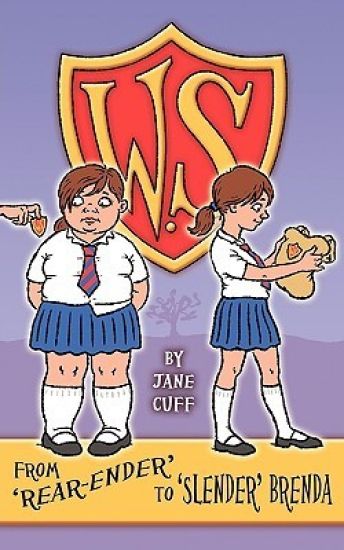
Using humour, W.S skilfully tackles two very topical issues: bullying and obesity. The main storyline involves two 12 year old girls, Brenda and Katie, who over a period of time, find their circumstances reversed. The bully, Katie, gains weight and becomes known as 'Weighty' Katie, whilst the girl she cruelly nicknamed Brenda 'Rear Ender, ' loses weight and is subsequently accepted by her peers and renamed 'Slender' Brenda. By cleverly turning the tables on Katie, the author is able to be very real about the destructive and painful act of bullying. Children are loving a book that is making them laugh and cringe, whilst subtly challenging the way they think and behave. Adults who read W.S with their children are transported back in time, whether they were bullied at school, or simply watched it take place. W.S is a big punchy story in a short book; one you'll struggle to put down once you've picked it up.