Kirjojen hintavertailu. Mukana 12 095 196 kirjaa ja 12 kauppaa.

Kirjahaku

Etsi kirjoja tekijän nimen, kirjan nimen tai ISBN:n perusteella.

1000 tulosta hakusanalla Walter Lippmann

Walter Benjamin: Selected Writings

Walter Benjamin: Selected Writings

Walter Benjamin

The Belknap Press
2006
nidottu
Radical critic of a European civilization plunging into darkness, yet commemorator of the humane traditions of the old bourgeoisie--such was Walter Benjamin in the later 1930s. This volume, the third in a four-volume set, offers twenty-seven brilliant pieces, nineteen of which have never before been translated.The centerpiece, A Berlin Childhood around 1900, marks the first appearance in English of one of the greatest German works of the twentieth century: a profound and beautiful account of the vanished world of Benjamin's privileged boyhood, recollected in exile. No less remarkable are the previously untranslated second version of Benjamin's most famous essay, "The Work of Art in the Age of Its Technological Reproducibility," with its striking insights into the relations between technology and aesthetics, and German Men and Women, a book in which Benjamin collects twenty-six letters by distinguished Germans from 1783 to 1883 in an effort to preserve what he called the true humanity of German tradition from the debasement of fascism.Volume 3 also offers extensively annotated translations of essays that are key to Benjamin's rewriting of the story of modernism and modernity--such as "The Storyteller" and "Paris, the Capital of the Nineteenth Century"--as well as a fascinating diary from 1938 and penetrating studies of Bertolt Brecht, Franz Kafka, and Eduard Fuchs. A narrative chronology details Benjamin's life during these four harrowing years of his exile in France and Denmark. This is an essential collection for anyone interested in his work.
Walter Benjamin: Selected Writings

Walter Benjamin: Selected Writings

Walter Benjamin

The Belknap Press
2006
nidottu
"Every line we succeed in publishing today...is a victory wrested from the powers of darkness." So wrote Walter Benjamin in January 1940. Not long afterward, he himself would fall prey to those powers, a victim of suicide following a failed attempt to flee the Nazis. However insistently the idea of catastrophe hangs over Benjamin's writings in the final years of his life, the "victories wrested" in this period nonetheless constitute some of the most remarkable twentieth-century analyses of the emergence of modern society. The essays on Charles Baudelaire are the distillation of a lifetime of thinking about the nature of modernity. They record the crisis of meaning experienced by a civilization sliding into the abyss, even as they testify to Benjamin's own faith in the written word.This volume ranges from studies of Baudelaire, Brecht, and the historian Carl Jochmann to appraisals of photography, film, and poetry. At their core is the question of how art can survive and thrive in a tumultuous time. Here we see Benjamin laying out an ethic for the critic and artist--a subdued but resilient heroism. At the same time, he was setting forth a sociohistorical account of how art adapts in an age of violence and repression. Working at the height of his powers to the very end, Benjamin refined his theory of the mass media that culminated in the final version of his essay "The Work of Art in the Age of Its Technological Reproducibility." Also included in this volume is his influential piece "On the Concept of History," completed just before his death. The book is remarkable for its inquiry into the nature of "the modern" (especially as revealed in Baudelaire), for its ideas about the transmogrification of art and the radical discontinuities of history, and for its examples of humane life and thought in the midst of barbarism. The entire collection is eloquent testimony to the indomitable spirit of humanity under siege.
Walter Benjamin

Walter Benjamin

Eli Friedlander

Harvard University Press
2012
sidottu
Walter Benjamin is often viewed as a cultural critic who produced a vast array of brilliant and idiosyncratic pieces of writing with little more to unify them than the feeling that they all bear the stamp of his "unclassifiable" genius. Eli Friedlander argues that Walter Benjamin's corpus of writings must be recognized as a unique configuration of philosophy with an overarching coherence and a deep-seated commitment to engage the philosophical tradition.Friedlander finds in Benjamin's early works initial formulations of the different dimensions of his philosophical thinking. He leads through them to Benjamin's views on the dialectical image, the nature of language, the relation of beauty and truth, embodiment, dream and historical awakening, myth and history, as well as the afterlife and realization of meaning. Those notions are articulated both in themselves and in relation to central figures of the philosophical tradition. They are further viewed as leading to and coming together in The Arcades Project. Friedlander takes that incomplete work to be the central theater where these earlier philosophical preoccupations were to be played out. Benjamin envisaged in it the possibility of the highest order of thought taking the form of writing whose contents are the concrete time-bound particularities of human experience. Addressing the question of the possibility of such a presentation of philosophical truth provides the guiding thread for constellating the disparate moments of Benjamin's writings.
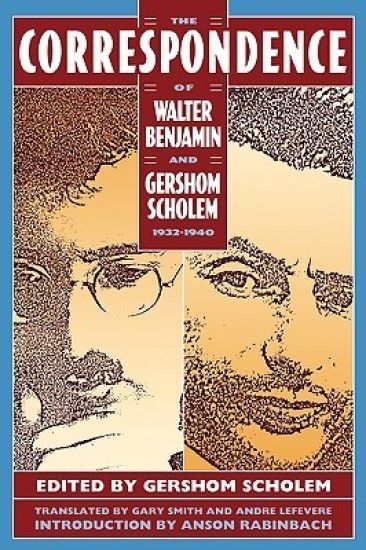
The Correspondence of Walter Benjamin and Gershom Scholem 1932-1940

The Correspondence of Walter Benjamin and Gershom Scholem 1932-1940

Walter Benjamin; Gershom Scholem; Gary (TRN) Smith

Harvard University Press
1992
pokkari
The legendary correspondence between the critic Walter Benjamin and the historian Gershom Scholem bears witness to the inner lives of two remarkable and enigmatic personalities. Benjamin, acknowledged as one of the leading literary and social critics of his day, was known during his lifetime by only a small circle of friends and intellectual confreres. Scholem recognized the genius of his friend and mentor during their student days in Berlin, and the two began to correspond after Scholem's emigration to Palestine. Their impassioned exchange draws the reader into the very heart of their complex relationship during the anguished years from 1932 until Benjamin's death in 1940.
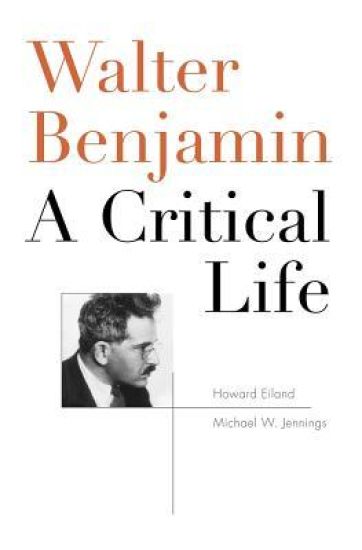
Walter Benjamin

Walter Benjamin

Howard Eiland; Michael W. Jennings

The Belknap Press
2016
nidottu
Walter Benjamin is one of the twentieth century's most important intellectuals, and also one of its most elusive. His writings—mosaics incorporating philosophy, literary criticism, Marxist analysis, and a syncretistic theology—defy simple categorization. And his mobile, often improvised existence has proven irresistible to mythologizers. His writing career moved from the brilliant esotericism of his early writings through his emergence as a central voice in Weimar culture and on to the exile years, with its pioneering studies of modern media and the rise of urban commodity capitalism in Paris. That career was played out amid some of the most catastrophic decades of modern European history: the horror of the First World War, the turbulence of the Weimar Republic, and the lengthening shadow of fascism. Now, a major new biography from two of the world's foremost Benjamin scholars reaches beyond the mosaic and the mythical to present this intriguing figure in full.Howard Eiland and Michael Jennings make available for the first time a rich store of information which augments and corrects the record of an extraordinary life. They offer a comprehensive portrait of Benjamin and his times as well as extensive commentaries on his major works, including "The Work of Art in the Age of Its Technological Reproducibility," the essays on Baudelaire, and the great study of the German Trauerspiel. Sure to become the standard reference biography of this seminal thinker, Walter Benjamin: A Critical Life will prove a source of inexhaustible interest for Benjamin scholars and novices alike.
Walter Benjamin at the Dairy Queen

Walter Benjamin at the Dairy Queen

Larry McMurtry

Simon Schuster
2001
pokkari
In a lucid, brilliant work of nonfiction -- as close to an autobiography as his readers are likely to get -- Larry McMurtry has written a family portrait that also serves as a larger portrait of Texas itself, as it was and as it has become. Using as a springboard an essay by the German literary critic Walter Benjamin that he first read in Archer City's Dairy Queen, McMurtry examines the small-town way of life that big oil and big ranching have nearly destroyed. He praises the virtues of everything from a lime Dr. Pepper to the lost art of oral storytelling, and describes the brutal effect of the sheer vastness and emptiness of the Texas landscape on Texans, the decline of the cowboy, and the reality and the myth of the frontier. McMurtry writes frankly and with deep feeling about his own experiences as a writer, a parent, and a heart patient, and he deftly lays bare the raw material that helped shape his life's work: the creation of a vast, ambitious, fictional panorama of Texas in the past and the present. Throughout, McMurtry leaves his readers with constant reminders of his all-encompassing, boundless love of literature and books.
Walter the Baker

Walter the Baker

Eric Carle

Simon Schuster Books for Young Readers
1995
sidottu
Walter the Baker is famous for his breads, rolls, cookies, tarts, and pies. The Duke and Duchess especially love his warm sweet rolls, delivered fresh to their castle every morning. But one day the cat spills the milk, and Walter is forced to serve the Duke and Duchess rolls made with water. After one bite the Duke throws down his roll in disgust and summons Walter to the castle. He threatens to banish the baker unless he can take the same dough and make a good-tasting roll that the rising sun can shine through three times. Will Walter succeed in his task, or will he have to leave his town forever? With good humor and the vibrantly colored paper collages that are known and loved the world over, Eric Carle has concocted a delicious book that kids will savor as much as they love eating...shhh...pretzels
Walter the Baker

Walter the Baker

Eric Carle

Simon Schuster Children's
1998
pokkari
Walter the Baker is famous for his breads, rolls, cookies, tarts, and pies. The Duke and Duchess especially love his warm sweet rolls, delivered fresh to their castle every morning. But one day the cat spills the milk, and Walter is forced to serve the Duke and Duchess rolls made with water. After one bite the Duke throws down his roll in disgust and summons Walter to the castle. He threatens to banish the baker unless he can take the same dough and make a good-tasting roll that the rising sun can shine through three times. Will Walter succeed in his task, or will he have to leave his town forever? With good humor and the vibrantly colored paper collages that are known and loved the world over, Eric Carle has concocted a delicious book that kids will savor as much as they love eating..."shhh."..pretzels!
Walter Baade

Walter Baade

Osterbrock Donald E.

Princeton University Press
2001
sidottu
Although less well known outside the field than Edwin Hubble, Walter Baade was arguably the most influential observational astronomer of the twentieth century. Written by a fellow astronomer deeply familiar with Baade and his work, this is the first biography of this major figure in American astronomy. In it, Donald Osterbrock suggests that Baade's greatest contribution to astrophysics was not, as is often contended, his revision of Hubble's distance and age scales for the universe. Rather, it was his discovery of two distinct stellar populations: old and young stars. This discovery opened wide the previously marginal fields of stellar and galactic evolution--research areas that would be among the most fertile and exciting in all of astrophysics for decades to come. Baade was born, educated, and gained his early research experience in Germany. He came to the United States in 1931 as a staff member of Mount Wilson Observatory, which housed the world's largest telescope. There, he pioneered research on supernovae. With the 100-inch telescope, he studied globular clusters and the structure of the Milky Way, every step leading him closer to the population concept he discovered during the wartime years, when the skies of southern California were briefly darkened. Most Mount Wilson astronomers were working on weapons-development crash programs devoted to bringing Baade's native country to its knees, while he, formally an enemy alien in their midst, was confined to Los Angeles County but had almost unlimited use of the most powerful telescope in the world. After his great discovery, Baade continued his research with the new 200-inch telescope at Palomar. Always respected and well liked, he became even more famous among astronomers as they shifted their research to the fields he had opened. Publicity-shy and seemingly unconcerned with publication, however, Baade's celebrity remained largely within the field. This accomplished biography at last introduces Baade--and his important work--to a wider public, including the newest generation of skywatchers.
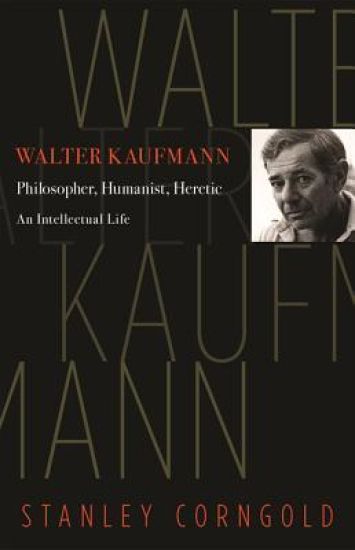
Walter Kaufmann

Walter Kaufmann

Stanley Corngold

Princeton University Press
2018
sidottu
The first complete account of the ideas and writings of a major figure in twentieth-century intellectual lifeWalter Kaufmann (1921–1980) was a charismatic philosopher, critic, translator, and poet who fled Nazi Germany at the age of eighteen, emigrating alone to the United States. He was astonishingly prolific until his untimely death at age fifty-nine, writing some dozen major books, all marked by breathtaking erudition and a provocative essayistic style. He single-handedly rehabilitated Nietzsche’s reputation after World War II and was enormously influential in introducing postwar American readers to existentialism. Until now, no book has examined his intellectual legacy.Stanley Corngold provides the first in-depth study of Kaufmann’s thought, covering all his major works. He shows how Kaufmann speaks to many issues that concern us today, such as the good of philosophy, the effects of religion, the persistence of tragedy, and the crisis of the humanities in an age of technology. Few scholars in modern times can match Kaufmann’s range of interests, from philosophy and literature to intellectual history and comparative religion, from psychology and photography to art and architecture. Corngold provides a heartfelt portrait of a man who, to an extraordinary extent, transfigured his personal experience in the pages of his books.This original study, both appreciative and critical, is the definitive intellectual life of one of the twentieth century’s most engaging yet neglected thinkers. It will introduce Kaufmann to a new generation of readers and serves as a fitting tribute to a scholar’s incomparable libido sciendi, or lust for knowledge.
Walter Kaufmann

Walter Kaufmann

Stanley Corngold

Princeton University Press
2020
pokkari
The first complete account of the ideas and writings of a major figure in twentieth-century intellectual lifeWalter Kaufmann (1921–1980) was a charismatic philosopher, critic, translator, and poet who fled Nazi Germany at the age of eighteen, emigrating alone to the United States. He single-handedly rehabilitated Nietzsche's reputation after World War II and was enormously influential in introducing postwar American readers to existentialism. Stanley Corngold provides the first in-depth study of Kaufmann's thought, showing how he speaks to many issues that concern us today. Kaufmann was astonishingly prolific until his untimely death at age fifty-nine, writing some dozen major books, all marked by breathtaking erudition and a provocative essayistic style. Corngold introduces Kaufmann to a new generation of readers, vividly portraying the intellectual life of one of the twentieth century's most engaging and neglected thinkers.
Walter and Miller's Textbook of Radiotherapy: Radiation Physics, Therapy and Oncology
Walter and Miller's Textbook of Radiotherapy is a key textbook for therapeutic radiography students as well as trainee clinical and medical oncologists, clinical physicists and technologists. The book is divided into 2 sections. The first section covers physics and provides a comprehensive review of radiotherapy physics. This section is designed to be non-physicist friendly, to simply and clearly explain the physical principles upon which radiotherapy and its technology are based. The second section is a systematic review by tumour site giving an up to date summary of radiotherapy practice. The title also covers the place of chemotherapy, surgery and non-radiotherapy treatments as well as the principles of cancer patient treatment including supportive care and palliative treatments. It is a comprehensive must-have resource for anyone studying therapeutic radiotherapy. Highly illustrated in full colour including 350 photographs. Clearly and simply explains the fundamental physics for clinicians Gives an up to date summary of radiotherapy practice organised by tumour site making it very easy to navigate. Describes the wide range of devices and clearly explains the principles behind their operation. Comprehensively explains the calculation models of dose predictions for treatment preparation. Heavy emphasis on how clinical trials have influenced current practice. Shows how radiobiological knowledge has influenced current practice such as the fractionation regimens for breast and prostate cancer Proton therapy; machines, dose measurement, covering the clinical advantages and pitfalls of this treatment modality. New radiotherapy modalities such as stereotactic radiotherapy, types of intensity modulated radiotherapy and imaged guided radiotherapy are comprehensively covered as are recent advances in chemotherapy and molecular targeted therapy. In depth coverage of dose measurement and new devices.
Walter The Wonder Snail

Walter The Wonder Snail

Neil Clark

Quarto Publishing Plc
2023
nidottu
Walter is a snail who is really, really bored of leaves. Surely there's more to life than leaves? His fellow snails are happy just slowly munching away... but not Walter! He wants to try something new. Walter's never seen beyond the large, looming leaves and tall towering flowers of his simple, small world. He sets out on an incredible journey full of challenges, unlikely friends and remarkable sights! The brave, curious snail meets heart warming animal characters, like Lottie the squirrel and Kendrick the frog, who inspire him to continue on a big adventure, particularly for such a tiny creature.Comical scenarios, rich artwork and a stunning colour palette makes this a lovable read. Walter the snail will encourage readers to think big and not to be afraid of change!
Walter Pater: an Imaginative Sense of Fact
First Published in 1981. Pater is certainly the least widely read and understood of any of the Victorian critics and creative writers, though there are signs of a coming revival of interest in him. Each of the discussions included in this issue devoted to Pater touches, in some significant way, on his "imaginative sense of fact," on his struggle with the objective ‘givens’ of experience (ideas or individuals), and on his efforts to co-opt or turn that Other into a reordered reflection of his own image.
Walter Benjamin

Walter Benjamin

Esther Leslie

Pluto Press
2000
pokkari
Esther Leslie's path-breaking study of Walter Benjamin is unlike any other book presently available in English on Benjamin, in seeking to make a case for a more politicised reading of Benjamin's oeuvre. In looking at the entirety of Benjamin's work - rather than the four or five essays available in English which tend to form the Benjamin 'canon' - Leslie offers powerful new insights into a key twentieth-century political thinker, correcting the post-structuralist bias that has characterised so much Benjamin scholarship, and repositioning Benjamin's work in its historical and political context. In her examination of Benjamin's commentary on the politics and aesthetics of technology - from Benjamin's work on nineteenth-century industrial culture to his analyses of the Nazi deployment of the bomber - Esther Leslie re-contextualises Benjamin's writings in a lucid and cogently argued new study.
Walter Benjamin: Overpowering Conformism

Walter Benjamin: Overpowering Conformism

Esther Leslie

Pluto Press (UK)
2000
sidottu
Esther Leslie's path-breaking study of Walter Benjamin is unlike any other book presently available in English on Benjamin, in seeking to make a case for a more politicised reading of Benjamin's oeuvre. In looking at the entirety of Benjamin's work - rather than the four or five essays available in English which tend to form the Benjamin 'canon' - Leslie offers powerful new insights into a key twentieth-century political thinker, correcting the post-structuralist bias that has characterised so much Benjamin scholarship, and repositioning Benjamin's work in its historical and political context. In her examination of Benjamin's commentary on the politics and aesthetics of technology - from Benjamin's work on nineteenth-century industrial culture to his analyses of the Nazi deployment of the bomber - Esther Leslie recontextualises Benjamin's writings in a lucid and cogently argued new study.
Walter Benjamin

Walter Benjamin

Graeme Gilloch

Polity Press
2001
sidottu
The works of Walter Benjamin (1892-1940) are widely acclaimed as being among the most original and provocative writings of twentieth-century critical thought, and have become required reading for scholars and students in a range of academic disciplines. This book provides a lucid introduction to Benjamin's oeuvre through a close and sensitive reading not only of his major studies, but also of some of his less familiar essays and fragments. Gilloch offers an original interpretation of, and fresh insights into, the continuities between Benjamin's always demanding and seemingly disparate texts. Gilloch's book will be of particular interest to students and scholars in social theory, literary theory, cultural and media studies and urban studies who are seeking a sophisticated yet readable overview of Benjamin's work. It will also prove rewarding reading for those already well-versed in Benjaminian thought.
Walter Benjamin

Walter Benjamin

Graeme Gilloch

JOHN WILEY AND SONS LTD
2001
nidottu
The works of Walter Benjamin (1892-1940) are widely acclaimed as being among the most original and provocative writings of twentieth-century critical thought, and have become required reading for scholars and students in a range of academic disciplines. This book provides a lucid introduction to Benjamin's oeuvre through a close and sensitive reading not only of his major studies, but also of some of his less familiar essays and fragments. Gilloch offers an original interpretation of, and fresh insights into, the continuities between Benjamin's always demanding and seemingly disparate texts. Gilloch's book will be of particular interest to students and scholars in social theory, literary theory, cultural and media studies and urban studies who are seeking a sophisticated yet readable overview of Benjamin's work. It will also prove rewarding reading for those already well-versed in Benjaminian thought.
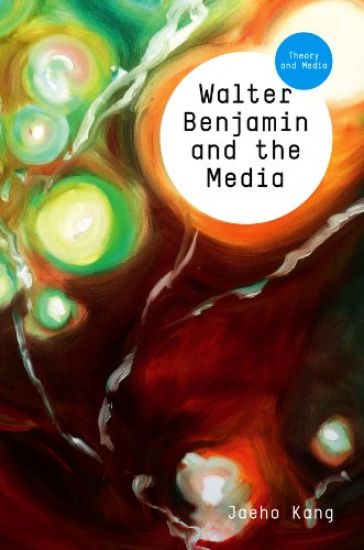
Walter Benjamin and the Media

Walter Benjamin and the Media

Jaeho Kang

Polity Press
2014
sidottu
Walter Benjamin (1892-1940), one of the most original and perceptive thinkers of the twentieth century, offered a unique insight into the profound impact of the media on modern society. Jaeho Kang’s book offers a lucid introduction to Benjamin’s theory of the media and its continuing relevance today. The book provides a systematic and close reading of Benjamin’s critical and provocative writings on the intersection between media - from print to electronic - and modern experience, with reference to the information industry, the urban spectacle, and the aesthetic politics. Bringing Benjamin’s thought into a critical constellation with contemporary media theorists such as Marshall McLuhan and Jean Baudrillard, the book helps students understand the implications of Benjamin’s work for media studies today and how they can apply his distinctive ideas to contemporary media culture. Kang’s book leads to a fresh appreciation of Benjamin’s work and new insight into critical theoretical approaches to media. The book will be of particular interest to students and researchers not only in media and communication studies but also in cultural studies, film studies and social theory, who are seeking a readable overview of Benjamin’s rich yet complex writings.