Kirjojen hintavertailu. Mukana 11 699 587 kirjaa ja 12 kauppaa.

Kirjahaku

Etsi kirjoja tekijän nimen, kirjan nimen tai ISBN:n perusteella.

427 tulosta hakusanalla "Tissue Engineering"

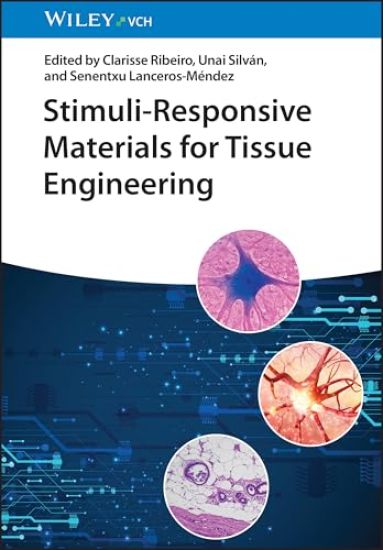
Stimuli-Responsive Materials for Tissue Engineering
Enables advanced tissue regeneration approaches via expertise from the fields of materials science and biology Stimuli-Responsive Materials for Tissue Engineering comprehensively reviews the use of stimuli-responsive materials in the context of advanced tissue engineering approaches, highlighting applications, challenges, and solutions and reporting on the current state of the art of smart and multifunctional materials being used for tissue engineering, focusing on material types and their properties. The progress that has already been achieved in the field is put into perspective by covering the remaining challenges in the research field of tissue engineering, and solutions are outlined to overcome those. By addressing challenges and ways to overcome them, Stimuli-Responsive Materials for Tissue Engineering is a highly practical resource on advanced tissue regeneration. Stimuli-Responsive Materials for Tissue Engineering contains information on: Smart and multifunctional materials for tissue engineering, covering electroactive and magnetoactive materialsShape memory, photo-responsive, and controlled degradation of stimuli-responsive materialsTissue regeneration strategies based on smart and active biomaterials, covering bone, heart, and neural tissue regenerationMain applications where these biomaterials can be applied, such as in bone, muscle, and skin regenerationOther potential areas where the covered biomaterials are expected to make a major impact in the next decade With comprehensive coverage of the subject, Stimuli-Responsive Materials for Tissue Engineering is an essential resource for materials scientists, bioengineers, engineering scientists, and biotechnologists seeking to understand advanced tissue regeneration approaches, current challenges, and potential solutions to advance progress in the field.
Biomaterials and Tissue Engineering

Biomaterials and Tissue Engineering

Springer-Verlag Berlin and Heidelberg GmbH Co. K
2004
sidottu
The current interest in developing novel materials has motivated an increasing need for biological and medical studies in a variety of dinical applications. Indeed, it is dear that to achieve the requisite mechanical, chemical and biomedical properties, especially for new bioactive materials, it is necessary to develop novel synthesis routes. The tremendous success of materials science in developing new biomaterials and fostering technological innovation arises from its focus on interdisciplinary research and collaboration between materials and medical sciences. Materials scientists seek to relate one natural phenomenon to the basic structures of the materials and to recognize the causes and effects of the phenomena. In this way, they have developed explanations for the changing of the properties, the reactions of the materials to the environment, the interface behaviors between the artificial materials and human tissue, the time effects on the materials, and many other natural occurrences. By the same means, medical scientists have also studied the biological and medical effects of these materials, and generated the knowledge needed to produce useful medical devices. The concept of biomaterials is one of the most important ideas ever generated by the application of materials science to the medical field. In traditional materials research, interest focuses primarilyon the synthesis , structure, and mechanical properties of materials commonly used for structural purposes in industry, for instance in mechanical parts of machinery.
Bioreactor Systems for Tissue Engineering

Bioreactor Systems for Tissue Engineering

Springer-Verlag Berlin and Heidelberg GmbH Co. K
2009
sidottu
The editors of this special volume would first like to thank all authors for their excellent contributions. We would also like to thank Prof. Dr. Thomas Scheper, Dr. Marion Hertel and Ulrike Kreusel for providing the opportunity to compose this volume and Springer for organizational and technical support. Tissue engineering represents one of the major emerging fields in modern b- technology; it combines different subjects ranging from biological and material sciences to engineering and clinical disciplines. The aim of tissue engineering is the development of therapeutic approaches to substitute diseased organs or tissues or improve their function. Therefore, three dimensional biocompatible materials are seeded with cells and cultivated in suitable systems to generate functional tissues. Many different aspects play a role in the formation of 3D tissue structures. In the first place the source of the used cells is of the utmost importance. To prevent tissue rejection or immune response, preferentially autologous cells are now used. In particular, stem cells from different sources are gaining exceptional importance as they can be differentiated into different tissues by using special media and supplements. In the field of biomaterials, numerous scaffold materials already exist but new composites are also being developed based on polymeric, natural or xenogenic sources. Moreover, a very important issue in tissue en- neering is the formation of tissues under well defined, controlled and reprod- ible conditions. Therefore, a substantial number of new bioreactors have been developed.
Biomaterials and Tissue Engineering

Biomaterials and Tissue Engineering

Springer-Verlag Berlin and Heidelberg GmbH Co. K
2010
nidottu
The current interest in developing novel materials has motivated an increasing need for biological and medical studies in a variety of dinical applications. Indeed, it is dear that to achieve the requisite mechanical, chemical and biomedical properties, especially for new bioactive materials, it is necessary to develop novel synthesis routes. The tremendous success of materials science in developing new biomaterials and fostering technological innovation arises from its focus on interdisciplinary research and collaboration between materials and medical sciences. Materials scientists seek to relate one natural phenomenon to the basic structures of the materials and to recognize the causes and effects of the phenomena. In this way, they have developed explanations for the changing of the properties, the reactions of the materials to the environment, the interface behaviors between the artificial materials and human tissue, the time effects on the materials, and many other natural occurrences. By the same means, medical scientists have also studied the biological and medical effects of these materials, and generated the knowledge needed to produce useful medical devices. The concept of biomaterials is one of the most important ideas ever generated by the application of materials science to the medical field. In traditional materials research, interest focuses primarilyon the synthesis , structure, and mechanical properties of materials commonly used for structural purposes in industry, for instance in mechanical parts of machinery.
Bioreactor Systems for Tissue Engineering

Bioreactor Systems for Tissue Engineering

Springer-Verlag Berlin and Heidelberg GmbH Co. K
2010
nidottu
The editors of this special volume would first like to thank all authors for their excellent contributions. We would also like to thank Prof. Dr. Thomas Scheper, Dr. Marion Hertel and Ulrike Kreusel for providing the opportunity to compose this volume and Springer for organizational and technical support. Tissue engineering represents one of the major emerging fields in modern b- technology; it combines different subjects ranging from biological and material sciences to engineering and clinical disciplines. The aim of tissue engineering is the development of therapeutic approaches to substitute diseased organs or tissues or improve their function. Therefore, three dimensional biocompatible materials are seeded with cells and cultivated in suitable systems to generate functional tissues. Many different aspects play a role in the formation of 3D tissue structures. In the first place the source of the used cells is of the utmost importance. To prevent tissue rejection or immune response, preferentially autologous cells are now used. In particular, stem cells from different sources are gaining exceptional importance as they can be differentiated into different tissues by using special media and supplements. In the field of biomaterials, numerous scaffold materials already exist but new composites are also being developed based on polymeric, natural or xenogenic sources. Moreover, a very important issue in tissue en- neering is the formation of tissues under well defined, controlled and reprod- ible conditions. Therefore, a substantial number of new bioreactors have been developed.
Bioreactor Systems for Tissue Engineering II

Bioreactor Systems for Tissue Engineering II

Springer-Verlag Berlin and Heidelberg GmbH Co. K
2010
sidottu
Alternative Sources of Adult Stem Cells: Human Amniotic Membrane, by S. Wolbank, M. van Griensven, R. Grillari-Voglauer, and A. Peterbauer-Scherb; *Mesenchymal Stromal Cells Derived from Human Umbilical Cord Tissues: Primitive Cells with Potential for Clinical and Tissue Engineering Applications, by P. Moretti, T. Hatlapatka, D. Marten, A. Lavrentieva, I. Majore, R. Hass and C. Kasper; *Isolation, Characterization, Differentiation, and Application of Adipose-Derived Stem Cells, by J. W. Kuhbier, B. Weyand, C. Radtke, P. M. Vogt, C. Kasper and K. Reimers; *Induced Pluripotent Stem Cells: Characteristics and Perspectives, by T. Cantz and U. Martin; *Induced Pluripotent Stem Cell Technology in Regenerative Medicine and Biology, by D. Pei, J. Xu, Q. Zhuang, H.-F. Tse and M. A. Esteban; *Production Process for Stem Cell Based Therapeutic Implants: Expansion of the Production Cell Line and Cultivation of Encapsulated Cells, by C. Weber, S. Pohl, R. Poertner, P. Pino-Grace, D. Freimark, C. Wallrapp, P. Geigle and P. Czermak;*Cartilage Engineering from Mesenchymal Stem Cells, by C. Goepfert, A. Slobodianski, A.F. Schilling, P. Adamietz and R. Poertner;*Outgrowth Endothelial Cells: Sources, Characteristics and Potential Applications in Tissue Engineering and Regenerative Medicine, by S. Fuchs, E. Dohle, M. Kolbe, C. J. Kirkpatrick;*Basic Science and Clinical Application of Stem Cells in Veterinary Medicine, by I. Ribitsch, J. Burk, U. Delling, C. Geißler, C. Gittel, H. Jülke, W. Brehm;*Bone Marrow Stem Cells in Clinical Application: Harnessing Paracrine Roles and Niche Mechanisms, by R. M. El Backly, R. Cancedda;*Clinical Application of Stem Cells in the Cardiovascular System, C. Stamm, K. Klose, Y.-H. Choi
Cell and Tissue Engineering

Cell and Tissue Engineering

Springer-Verlag Berlin and Heidelberg GmbH Co. K
2011
sidottu
“Cell and Tissue Engineering” introduces the principles and new approaches in cell and tissue engineering. It includes both the fundamentals and the current trends in cell and tissue engineering, in a way useful both to a novice and an expert in the field. The book is composed of 13 chapters all of which are written by the leading experts. It is organized to gradually assemble an insight in cell and tissue function starting form a molecular nano-level, extending to a cellular micro-level and finishing at the tissue macro-level. In specific, biological, physiological, biophysical, biochemical, medical, and engineering aspects are covered from the standpoint of the development of functional substitutes of biological tissues for potential clinical use. Topics in the area of cell engineering include cell membrane biophysics, structure and function of the cytoskeleton, cell-extracellular matrix interactions, and mechanotransduction. In the area of tissue engineering the focus is on thein vitro cultivation of functional tissue equivalents based on the integrated use of isolated cells, biomaterials, and bioreactors. The book also reviews novel techniques for cell and tissue imaging and characterization, some of which are described in detail such as atomic force microscopy. Finally, mathematical modeling methods are presented as valuable and indispensable tools in cell and tissue engineering. Numerous illustrations enhance the quality and ease of use of the presented material.
Bioreactor Systems for Tissue Engineering II

Bioreactor Systems for Tissue Engineering II

Springer-Verlag Berlin and Heidelberg GmbH Co. K
2012
nidottu
Alternative Sources of Adult Stem Cells: Human Amniotic Membrane, by S. Wolbank, M. van Griensven, R. Grillari-Voglauer, and A. Peterbauer-Scherb; *Mesenchymal Stromal Cells Derived from Human Umbilical Cord Tissues: Primitive Cells with Potential for Clinical and Tissue Engineering Applications, by P. Moretti, T. Hatlapatka, D. Marten, A. Lavrentieva, I. Majore, R. Hass and C. Kasper; *Isolation, Characterization, Differentiation, and Application of Adipose-Derived Stem Cells, by J. W. Kuhbier, B. Weyand, C. Radtke, P. M. Vogt, C. Kasper and K. Reimers; *Induced Pluripotent Stem Cells: Characteristics and Perspectives, by T. Cantz and U. Martin; *Induced Pluripotent Stem Cell Technology in Regenerative Medicine and Biology, by D. Pei, J. Xu, Q. Zhuang, H.-F. Tse and M. A. Esteban; *Production Process for Stem Cell Based Therapeutic Implants: Expansion of the Production Cell Line and Cultivation of Encapsulated Cells, by C. Weber, S. Pohl, R. Poertner, P. Pino-Grace, D. Freimark, C. Wallrapp, P. Geigle and P. Czermak;*Cartilage Engineering from Mesenchymal Stem Cells, by C. Goepfert, A. Slobodianski, A.F. Schilling, P. Adamietz and R. Poertner;*Outgrowth Endothelial Cells: Sources, Characteristics and Potential Applications in Tissue Engineering and Regenerative Medicine, by S. Fuchs, E. Dohle, M. Kolbe, C. J. Kirkpatrick;*Basic Science and Clinical Application of Stem Cells in Veterinary Medicine, by I. Ribitsch, J. Burk, U. Delling, C. Geißler, C. Gittel, H. Jülke, W. Brehm;*Bone Marrow Stem Cells in Clinical Application: Harnessing Paracrine Roles and Niche Mechanisms, by R. M. El Backly, R. Cancedda;*Clinical Application of Stem Cells in the Cardiovascular System, C. Stamm, K. Klose, Y.-H. Choi
Computational Modeling in Tissue Engineering

Computational Modeling in Tissue Engineering

Springer-Verlag Berlin and Heidelberg GmbH Co. K
2012
sidottu
One of the major challenges in tissue engineering is the translation of biological knowledge on complex cell and tissue behavior into a predictive and robust engineering process. Mastering this complexity is an essential step towards clinical applications of tissue engineering. This volume discusses computational modeling tools that allow studying the biological complexity in a more quantitative way. More specifically, computational tools can help in: (i) quantifying and optimizing the tissue engineering product, e.g. by adapting scaffold design to optimize micro-environmental signals or by adapting selection criteria to improve homogeneity of the selected cell population; (ii) quantifying and optimizing the tissue engineering process, e.g. by adapting bioreactor design to improve quality and quantity of the final product; and (iii) assessing the influence of the in vivo environment on the behavior of the tissue engineering product, e.g. by investigating vascular ingrowth. The book presents examples of each of the above mentioned areas of computational modeling. The underlying tissue engineering applications will vary from blood vessels over trachea to cartilage and bone. For the chapters describing examples of the first two areas, the main focus is on (the optimization of) mechanical signals, mass transport and fluid flow encountered by the cells in scaffolds and bioreactors as well as on the optimization of the cell population itself. In the chapters describing modeling contributions in the third area, the focus will shift towards the biology, the complex interactions between biology and the micro-environmental signals and the ways in which modeling might be able to assist in investigating and mastering this complexity. The chapters cover issues related to (multiscale/multiphysics) model building, training and validation, but also discuss recent advances in scientific computing techniques that are needed to implement these models as well as new tools that can be used to experimentally validate the computational results.
Computational Modeling in Tissue Engineering

Computational Modeling in Tissue Engineering

Springer-Verlag Berlin and Heidelberg GmbH Co. K
2014
nidottu
One of the major challenges in tissue engineering is the translation of biological knowledge on complex cell and tissue behavior into a predictive and robust engineering process. Mastering this complexity is an essential step towards clinical applications of tissue engineering. This volume discusses computational modeling tools that allow studying the biological complexity in a more quantitative way. More specifically, computational tools can help in: (i) quantifying and optimizing the tissue engineering product, e.g. by adapting scaffold design to optimize micro-environmental signals or by adapting selection criteria to improve homogeneity of the selected cell population; (ii) quantifying and optimizing the tissue engineering process, e.g. by adapting bioreactor design to improve quality and quantity of the final product; and (iii) assessing the influence of the in vivo environment on the behavior of the tissue engineering product, e.g. by investigating vascular ingrowth. The book presents examples of each of the above mentioned areas of computational modeling. The underlying tissue engineering applications will vary from blood vessels over trachea to cartilage and bone. For the chapters describing examples of the first two areas, the main focus is on (the optimization of) mechanical signals, mass transport and fluid flow encountered by the cells in scaffolds and bioreactors as well as on the optimization of the cell population itself. In the chapters describing modeling contributions in the third area, the focus will shift towards the biology, the complex interactions between biology and the micro-environmental signals and the ways in which modeling might be able to assist in investigating and mastering this complexity. The chapters cover issues related to (multiscale/multiphysics) model building, training and validation, but also discuss recent advances in scientific computing techniques that are needed to implement these models as well as new tools that can be used to experimentally validate the computational results.
Stem Cell Transplantation and Tissue Engineering

Stem Cell Transplantation and Tissue Engineering

Springer-Verlag Berlin and Heidelberg GmbH Co. K
2012
nidottu
As dogmas in stem cell research are losing their impact and recent findings regarding the use and cultivation of stem cells and tissue transplantation have opened up new therapeutic avenues, this Ernst Schering Research Foundation Workshop was initiated to highlight current and future approaches in this field. The only stem cells that have been used clinically for a long time is the hematopoietic stem cell as a source for bone marrow transplantation. Recent findings now indicate that hematopoietic stem cells, under certain conditions, are able to differentiate into endothelial, neural or muscle cells, providing exciting new therapeutic possibilities. They represent a future source for tissue engineering replacing defective cells or tissues and allowing diseased organs to regain their functions. Both reconstitution techniques are paving the way for the development of new therapeutic strategies, giving hope of being able to cure and not only treat patients.
Fundamentals of Tissue Engineering and Regenerative Medicine

Fundamentals of Tissue Engineering and Regenerative Medicine

Springer-Verlag Berlin and Heidelberg GmbH Co. K
2016
nidottu
"Fundamentals of Tissue Engineering and Regenerative Medicine" provides a complete overview of the state of the art in tissue engineering and regenerative medicine. Tissue engineering has grown tremendously during the past decade. Advances in genetic medicine and stem cell technology have significantly improved the potential to influence cell and tissue performance, and have recently expanded the field towards regenerative medicine. In recent years a number of approaches have been used routinely in daily clinical practice, others have been introduced in clinical studies, and multitudes are in the preclinical testing phase. Because of these developments, there is a need to provide comprehensive and detailed information for researchers and clinicians on this rapidly expanding field. This book offers, in a single volume, the prerequisites of a comprehensive understanding of tissue engineering and regenerative medicine. The book is conceptualized according to a didactic approach (general aspects: social, economic, and ethical considerations; basic biological aspects of regenerative medicine: stem cell medicine, biomolecules, genetic engineering; classic methods of tissue engineering: cell, tissue, organ culture; biotechnological issues: scaffolds; bioreactors, laboratory work; and an extended medical discipline oriented approach: review of clinical use in the various medical specialties). The content of the book, written in 68 chapters by the world’s leading research and clinical specialists in their discipline, represents therefore the recent intellect, experience, and state of this bio-medical field.
Cell and Tissue Engineering

Cell and Tissue Engineering

Springer-Verlag Berlin and Heidelberg GmbH Co. K
2018
nidottu
“Cell and Tissue Engineering” introduces the principles and new approaches in cell and tissue engineering. It includes both the fundamentals and the current trends in cell and tissue engineering, in a way useful both to a novice and an expert in the field. The book is composed of 13 chapters all of which are written by the leading experts. It is organized to gradually assemble an insight in cell and tissue function starting form a molecular nano-level, extending to a cellular micro-level and finishing at the tissue macro-level. In specific, biological, physiological, biophysical, biochemical, medical, and engineering aspects are covered from the standpoint of the development of functional substitutes of biological tissues for potential clinical use. Topics in the area of cell engineering include cell membrane biophysics, structure and function of the cytoskeleton, cell-extracellular matrix interactions, and mechanotransduction. In the area of tissue engineering the focus is on thein vitro cultivation of functional tissue equivalents based on the integrated use of isolated cells, biomaterials, and bioreactors. The book also reviews novel techniques for cell and tissue imaging and characterization, some of which are described in detail such as atomic force microscopy. Finally, mathematical modeling methods are presented as valuable and indispensable tools in cell and tissue engineering. Numerous illustrations enhance the quality and ease of use of the presented material.
Nanotechnology Characterization Tools for Tissue Engineering and Medical Therapy
Ninth volume of a 40 volume series on nanoscience and nanotechnology, edited by the renowned scientist Challa S.S.R. Kumar. This handbook gives a comprehensive overview about Nanotechnology Characterization Tools for Tissue Engineering and Medical Therapy. Modern applications and state-of-the-art techniques are covered and make this volume an essential reading for research scientists in academia and industry.
Nanotechnology Characterization Tools for Tissue Engineering and Medical Therapy
Ninth volume of a 40 volume series on nanoscience and nanotechnology, edited by the renowned scientist Challa S.S.R. Kumar. This handbook gives a comprehensive overview about Nanotechnology Characterization Tools for Tissue Engineering and Medical Therapy. Modern applications and state-of-the-art techniques are covered and make this volume an essential reading for research scientists in academia and industry.