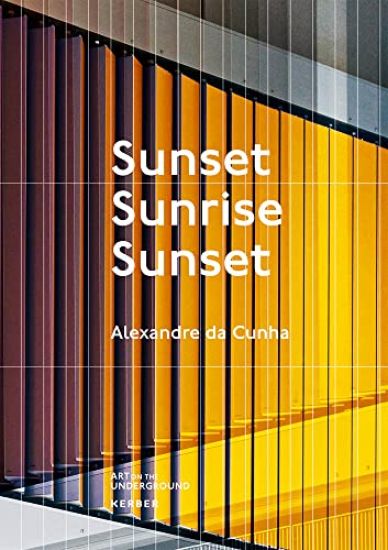
To mark one year from opening the new station, Art on the Underground launch a new publication on the work of Alexandre da Cunha at Battersea Power Station in London. Sunset, Sunrise, Sunset is a monumental kinetic sculpture for the Underground station. Stretching 95m and 60m in length, the artwork incorporates two friezes that face each other along the length of the ticket hall. The artwork was inspired by the former control room at Battersea Power Station and its system of vertical bars that regulated the production and output of electricity into the city. Combining this with resonances of the daily flow of dawn to dusk, Sunset, Sunrise, Sunset refers to cycles, routine, the everyday and eternity. Designed by Fraser Muggeridge Studio, the book features essays from art historian Dr Lisa Blackmore exploring the artist’s practice, a geographical and social history of the local area from architecture and design writer Gillian Darley, an essay on commissioning the work by Eleanor Pinfield and a creative prose work from experimental writer Rebecca Watson.
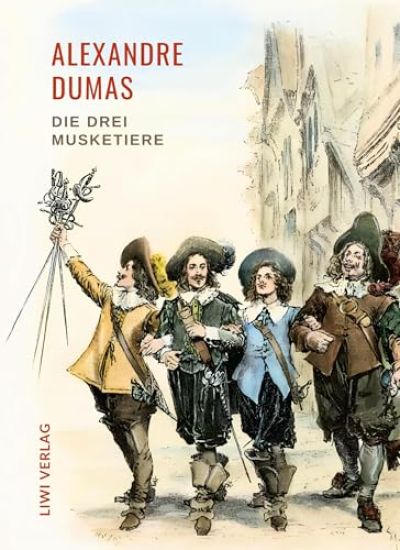
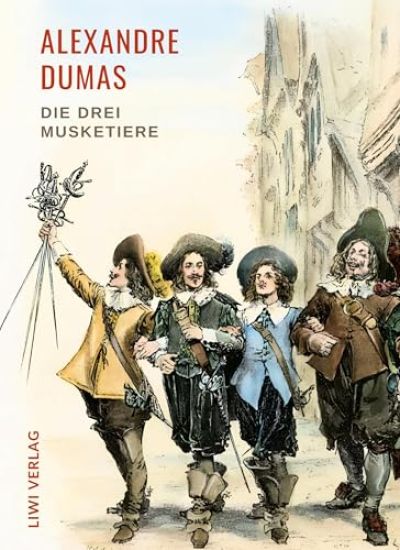
"Die drei Musketiere" von Alexandre Dumas, erstmals 1844 ver ffentlicht, erz hlt die Geschichte des jungen D'Artagnan, der nach Paris kommt, um ein Musketier zu werden. Er trifft Athos, Porthos und Aramis, drei Musketiere, mit denen er bald unzertrennliche Bande der Freundschaft und Loyalit t kn pft. Die lebendigen Charaktere und die spannenden Wendungen machen das Buch zu einem Meisterwerk der Abenteuerliteratur, das durch seine lebhafte Schilderung des historischen Frankreichs bis heute fasziniert. Erstmals erschienen 1844. Hier in der vielgelesenen, gek rzten bersetzung von Georg Carl Lehmann. Frisch aufgelegt in gut lesbarer Schriftgr e. Alexandre Dumas. Die drei Musketiere. bersetzt, bearbeitet und gek rzt durch Georg Carl Lehmann. Erstdruck des Originals: Les Trois Mousquetaires, 1844. Durchgesehener Neusatz, der Text dieser Ausgabe folgt: Zenith-Verlag Erich Stolpe, Leipzig 1928. Neuausgabe, G ttingen 2024. LIWI Literatur- und Wissenschaftsverlag
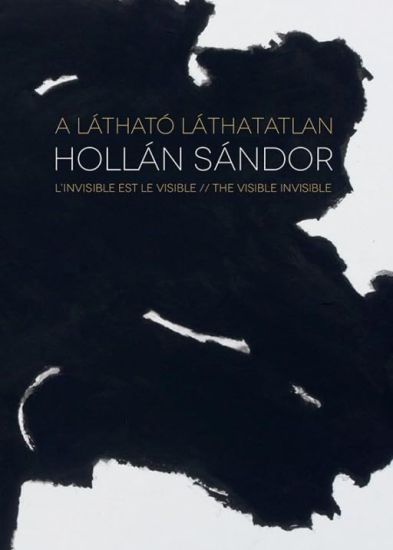
S ndor Holl n's relationship with the Museum of Fine Arts is several decades old. Since 2001, the painter has donated works of art to our museum on several occasions. In 2017, he offered a very significant donation, including more than a hundred of his compositions, which today enriches the Collection after 1800 and the Graphic Collection, and forms a significant unit in the collection of works from 20th-century emigrant Hungarian artists. Holl n's creative method is very specific in contemporary painting: when creating his works, he renounces the display of self-reflective gestures in order to make the object itself visible. Experimenting at the limits of visibility, he connects to the sight with a strong intuition, calling out the hidden abilities of the gaze. In addition to the ancient vessels in his still lifes, his main "models" are trees. These living creatures, which have been growing close to humans for thousands of years and are often interpreted as cultic iconographic symbols, have become the most important elements of Holl n's painting, in his words: his "masters". Getting to know his art offers a broadening of our relationship with the visible. quoting the title of a common picture, his works are impressions of the subtle but decisive experience of "the movement of life". This volume is a list of works donated to the Museum of Fine Arts by S ndor Holl n between 2001 and 2017, as well as The visible and invisible. Accompanying publication of the exhibition "A selection of works donated to the Museum of Fine Arts by S ndor Holl n". Museum of Fine Arts - Hungarian National Gallery, Budapest, November 4, 2021 - February 13, 2022.
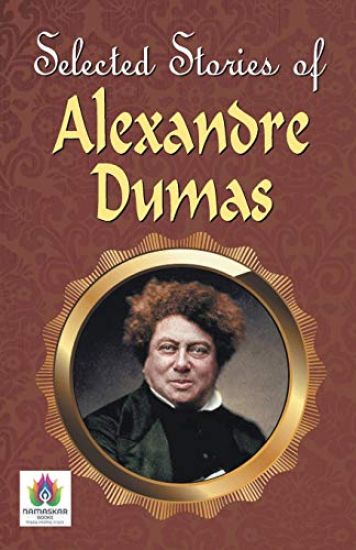
Alexandre Dumas (1802-1870) was the son of Napoleon's famous general Dumas. His works have been translated into many languages, and he is one of the most widely read French authors. Many of his historical novels of high adventure were originally published as serials, including The Count of Monte Cristo, The Three Musketeers, Twenty Years After, and The Vicomte of Bragelonne: Ten Years Later.