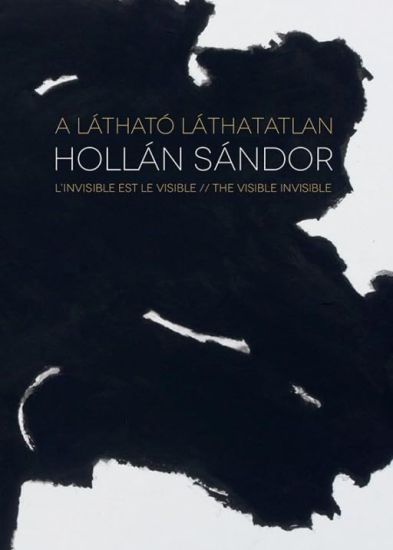
S ndor Holl n's relationship with the Museum of Fine Arts is several decades old. Since 2001, the painter has donated works of art to our museum on several occasions. In 2017, he offered a very significant donation, including more than a hundred of his compositions, which today enriches the Collection after 1800 and the Graphic Collection, and forms a significant unit in the collection of works from 20th-century emigrant Hungarian artists. Holl n's creative method is very specific in contemporary painting: when creating his works, he renounces the display of self-reflective gestures in order to make the object itself visible. Experimenting at the limits of visibility, he connects to the sight with a strong intuition, calling out the hidden abilities of the gaze. In addition to the ancient vessels in his still lifes, his main "models" are trees. These living creatures, which have been growing close to humans for thousands of years and are often interpreted as cultic iconographic symbols, have become the most important elements of Holl n's painting, in his words: his "masters". Getting to know his art offers a broadening of our relationship with the visible. quoting the title of a common picture, his works are impressions of the subtle but decisive experience of "the movement of life". This volume is a list of works donated to the Museum of Fine Arts by S ndor Holl n between 2001 and 2017, as well as The visible and invisible. Accompanying publication of the exhibition "A selection of works donated to the Museum of Fine Arts by S ndor Holl n". Museum of Fine Arts - Hungarian National Gallery, Budapest, November 4, 2021 - February 13, 2022.
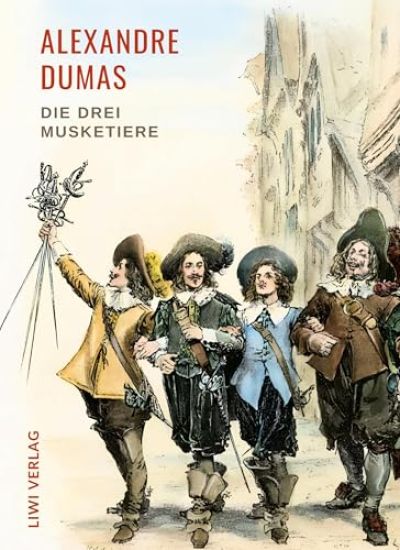
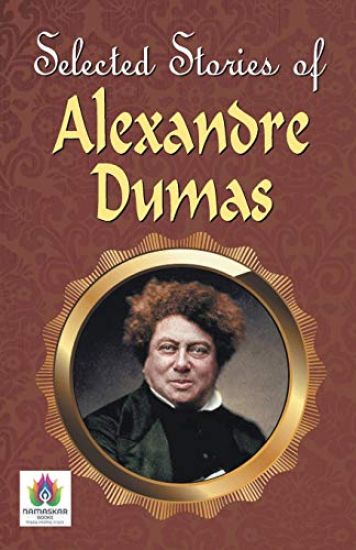
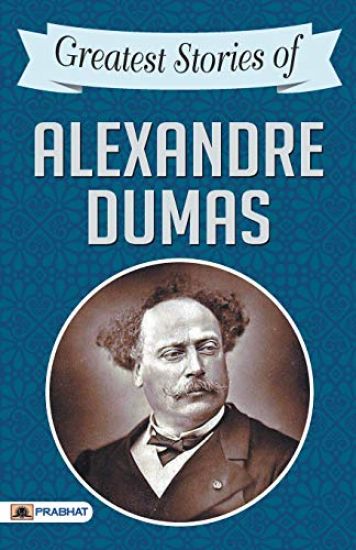
Alexandre Dumas (1802-1870) was the son of Napoleon's famous general Dumas. His works have been translated into many languages, and he is one of the most widely read French authors. Many of his historical novels of high adventure were originally published as serials, including The Count of Monte Cristo, The Three Musketeers, Twenty Years After, and The Vicomte of Bragelonne: Ten Years Later.
The black and white shot photographs (2016-2019), part of de Mortemart’s Quest project, portray humans deluged in daily routine, lost in the anonymity of large cities, facing the unknown in search of themselves. The characters are seeking solutions and perhaps answers to the reason for their existence - lost in the universe, without any understanding but with a desire to find a solution with a sentiment of solitude and anxiety in a rapidly changing world. With the belief that we are entering an era of increasing uncertainty where people are losing faith and lacking the answers to dealing with a fractured world, the men and women appearing in Quest are not capable of telling who they are, nor where they come from in a world they hardly understand any longer.
In 1878 Alexandre Ribot assumed his place at the left-center of the French Chamber of Deputies. From here he began a lifelong effort to establish a moderate republic based upon his conception of liberal political values. The time seemed propitious to instill lofty purpose into French political life, for his entry into the Chamber coincided with the consolidation of the republican regime following the crisis of 16 May. But the first wave of republican anti-clericalism revealed the fragility of Ribot's hopes. During the next forty years, successive dramatic phases in republican history - Boulangism, the Dreyfus Affair, separa tion of church and state, the emergence of socialism, and ultimately, the demands of wartime leadership - would test Ribot's system of political values. Adaptive and resilient, he refined his definition of liberalism in response to political change and the charge that his plea for liberty and toleration had become instead sanctuary for a privileged class in French society.
This book has been considered by academicians and scholars of great significance and value to literature. This forms a part of the knowledge base for future generations. So that the book is never forgotten we have represented this book in a print format as the same form as it was originally first published. Hence any marks or annotations seen are left intentionally to preserve its true nature.
This book has been considered important throughout the human history, and so that this work is never forgotten we have made efforts in its preservation by republishing this book in a modern format for present and future generations. This whole book has been reformatted, retyped and designed. These books are not made of scanned copies and hence the text is clear and readable.
Lettres portugaises; Publi es sur l' dition originale avec une notice pr liminaire par Alexandre Piedagnel, a t reconnu comme une oeuvre majeure dans toute l'histoire humaine, et nous avons pris des pr cautions pour assurer sa pr servation en r ditant ce livre de mani re moderne pour les g n rations pr sentes et futures. Ce livre a t enti rement retap , r vis et reformat . Le texte est lisible et clair car ces livres ne sont pas cr s partir de copies num ris es.
One of the best-loved adventures of all time.When young D'Artagnan comes to Paris to seek his fortune, he is challenged to a duel with not one, but three of the king's Musketeers. But Athos, Porthos and Aramis become his trusted friends as he tries to prove himself worthy of becoming a fourth Musketeer.
Alexandre Dumas (1802-1870) was the son of Napoleon's famous general Dumas. His works have been translated into many languages, and he is one of the most widely read French authors. Many of his historical novels of high adventure were originally published as serials, including The Count of Monte Cristo, The Three Musketeers, Twenty Years After, and The Vicomte of Bragelonne: Ten Years Later.
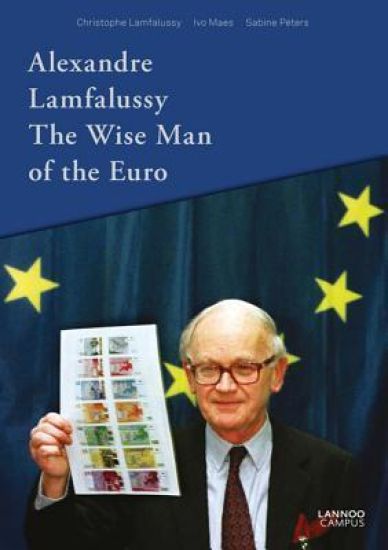
In 1949 a young Hungarian immigrant arrived in Belgium, with just a few dollars in his pocket. Fleeing from communist repression in his own country, Alexandre Lamfalussy had come to Leuven to study economics. From these modest beginnings, he succeeded in working his way up to become not only chairman of the board of directors of the Bank of Brussels, but also one of the fathers of the euro and an internationally respected economist. In this book, the Belgian baron tells his life story in a series of interviews never previously published. His testimony covers the history of many different countries, from Belgium to Hungary, and is the tale of one of the truly great Europeans, who strove to reunite the continent following the tragedy of the Second World War.
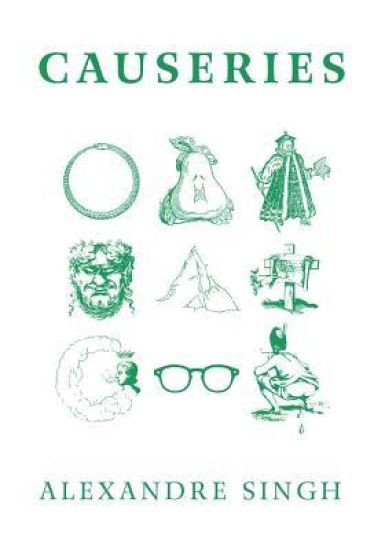
Its title derived from the French word causer, meaning to chat or talk informally, Alexandre Singh: Causeries details a series of encounters between artist Alexandre Singh (born 1980) and various academics, writers, scientists and philosophers. In preparation for his ambitious play The Humans at Witte de With, Singh set up a public discussion series exploring the key themes and concerns of his developing play, such as dance, drama and religion (to name just a few).Aiming at an alternative form of public conversation, more relaxed than what is allowed at a symposium or conference, Singh engaged the invited speakers in deliberately informal conversations on such wide-ranging topics as Woody Allen, Hindu cosmogony, Aristophanes, South Park and scatology. This volume contains an edited selection of 29 of the public conversations conducted by Singh as part of the Causeries series.
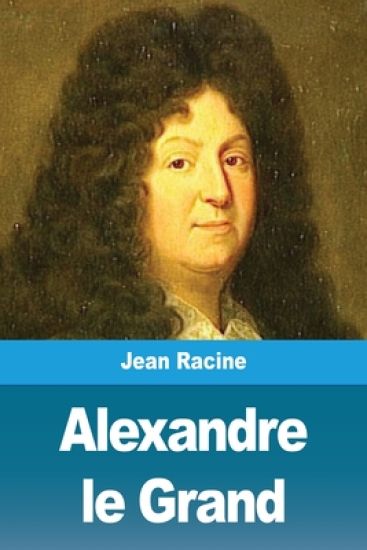
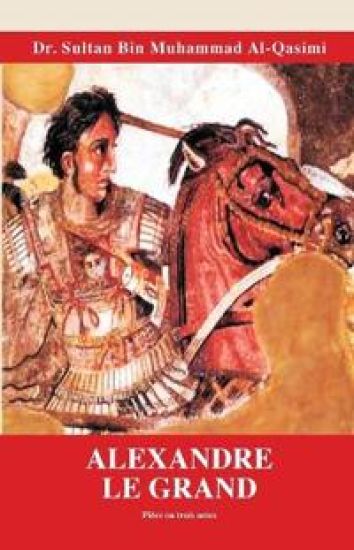
Un v ritable r cit historique de la vie d'Alexandre le Grand avec des projections sur la r alit .C'est une image vivante de la lutte de pouvoir, pass e et pr sente partout, car elle illumine la vie pr sente et contemporaine dans la r gion avec ses guerres, ses douleurs et ses ambitions.