Kirjojen hintavertailu. Mukana 11 228 534 kirjaa ja 12 kauppaa.

Kirjahaku

Etsi kirjoja tekijän nimen, kirjan nimen tai ISBN:n perusteella.

1000 tulosta hakusanalla Alvarez Salas-R

Baja de Peso Exitosamente con la Manga Gastrica
Conforme pasan los a os, las cirug as de obesidad son m s comunes. Despu s de intentos fallidos, altas y bajas en el peso, pacientes buscan respuestas definitivas a su problema de obesidad. Nuevos procedimientos, nuevas t cnicas quir rgicas y nuevos cirujanos entran al mbito de la cirug a de obesidad cada a o. En este libro, el Dr. Alvarez te presentara la manga g strica y descubrir s por qu es el unico procedimiento quir rgico que l realiza, los riesgos asociados con la cirug a y lo que el paciente necesita saber sobre dicha cirug a. "He sido m dico por 25 a os. Me he realizado la cirug a de manga g strica con el Dr. lvarez hace 12 meses y he perdido 88 kilos. Cambio mi vida dr sticamente. Ya no tomo medicamentos y mi calidad de vida es incre ble." Dr. Robert Gomez "He perdido 48 kilos en 10 meses. Ahora ya no tengo diabetes, presion arterial alta, colesterol ni depresi n m dica. Ahora tengo m s de mi vida para estar con mi hija. La manga g strica ha salvado mi vida" Pam Polland "Perd 41 kilos y me siento genial. Me siento con mayor confianza Puedo vestir lo que sea sin sentirme insegura" Bethany Couchen "Perd 61 kilos con mi manga g strica realizada por el Dr. lvarez. Estaba nervioso por viajar a M xico pero todo estuv fant stico. Ha sido lo m s asombroso que he hecho en mi vida" Christi McMahan El Dr. lvarez se especializa en la la Gastrectom a Vertical en Manga Laparosc pica (Comunmente llamada "Manga G strica). Es el nica cirug a que el realiza y cuenta con el reconocimiento internacional como uno de los 11 cirujanos bariatricos en todo el mundo con la designaci n de "Cirujano de Excelencia" otorgado por Surgical Review Corporation. Habiendo realizado m s de 10,500 cirug as de manga g strica, ha redactado en Newsweek como "l der en el cuidado de la salud", destacado en ABC News, y m s de 1 mill n de vistas en sus videos de YouTube sobre la manga g strica.
Discovering Agreement: Contracts That Turn Conflict Into Creativity
Imagine a contract that --stimulates and supports rapid return to alignment and productivity in the face of unexpected change --inspires side-by-side problem-solving rather than adversarial confrontation when parties disagree --learns with the business as it navigates the ever-changing, digital-speed, modern marketplace. Discovering Agreement is an innovative approach to generating legally enforceable documents that embed responsive, resilient operating systems into contractual relationships. This practical, easily implemented process empowers parties to build sustainable business relationships, replacing the old-style foundation of distrust and adversarial posturing with one of alignment and affinity - without sacrificing either party's power or credibility. Using the Discovering Agreement model, parties create documents that support and sustain agile, adaptable business relationships aligned with the core vision and values of the parties. This model provides a safer, more stable and trustworthy foundation for framing and conducting business relationships, enabling parties to create stronger, more sustainable and enjoyable ventures that can endure and prosper in the midst of disagreement or crisis. With engaging prose, personal stories, real-life examples, and practical guides for conducting negotiations and drafting agreements, Discovering Agreement empowers readers to generate immediate, positive change in their legal interactions and in how the legal system impacts their business relationships. When put into practice, Discovering Agreement has the added potential of catalyzing long-term, systemic change in the legal system itself.
Philip II of Spain and the Power of Money

Philip II of Spain and the Power of Money

Carlos Álvarez-Nogal; Christophe Chamley

Cambridge University Press
2026
sidottu
This is a study of the financial system that sustained the sixteenth-century empire of Philip II of Spain. Detailing the links between royal revenue sources, trade fairs, credit market, long-term debt, and contracts with Genoese bankers, it reveals how Philip's financial and military strategy complemented each other. Central to the narrative is Philip's struggle with the Cortes, which, under Castile's implicit constitution, imposed limits on public debt, forcing repeated renegotiations as military expenses and debt escalated. In this first analytical study of Philip's financial policies, Carlos Álvarez-Nogal and Christophe Chamley draw on extensive archival research and secondary sources to show that Philip's main challenge was not the bankers but the Cortes. He used temporary payment suspensions and financial crises as tools to pressure the Cortes for additional taxation. The book highlights the interplay between debt, political power, and state formation in early modern Europe.
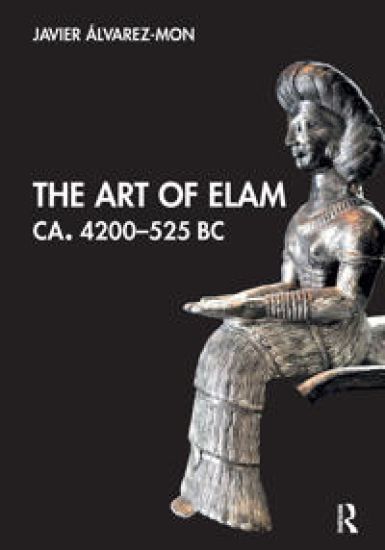
The Art of Elam CA. 4200–525 BC

The Art of Elam CA. 4200–525 BC

Javier Álvarez-Mon

TAYLOR FRANCIS LTD
2024
nidottu
The Art of Elam CA. 4200–525 BC offers a view of, and a critical reflection on, the art history of one of the world’s first and least-known civilizations, illuminating a significant chapter of our human past. Not unlike a gallery of historical paintings, this comprehensive treatment of the rich heritage of ancient Iran showcases a visual trail of the evolution of human society, with all its leaps and turns, from its origins in the earliest villages of southwest Iran at around 4200 BC to the rise of the Achaemenid Persian empire in CA. 525 BC. Richly illustrated with 1,450 photographs, 190 line drawings, and digital reconstructions of hundreds of artefacts—some of which have never before been published—The Art of Elam goes beyond formal and thematic boundaries to emphasize the religious, political, and social contexts in which art was created and functioned.Such a magisterial study of Elamite art has never been written, making The Art of Elam CA. 4200-525 BC a ground-breaking publication essential to all students of ancient art and to our current understanding of the civilizations of the ancient Near East.
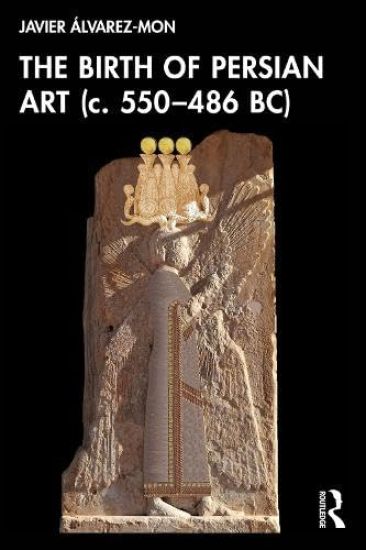
The Birth of Persian Art (c. 550–486 BC)

The Birth of Persian Art (c. 550–486 BC)

Javier Álvarez-Mon

TAYLOR FRANCIS LTD
2026
sidottu
The Birth of Persian Art (c. 550–486 BC) offers a bold reappraisal of one of the most formative periods in ancient art history, revealing how artistic innovation helped forge one of antiquity’s most influential empires. This volume shows how Persian art evolved from local traditions into a sophisticated imperial visual language, highlighting the revolutionary developments at Pasargadae, the influence of broader cultural landscapes, and the impact of Elamite heritage. Richly illustrated, it foregrounds the often-overlooked value of the artistic record as a historical source, providing insights into the role of visual culture not merely as a reflection of imperial ideology but as an active medium through which cultural integration, negotiation, and innovation took place. From Persian mountain valleys to remote Egyptian desert oases, and to Greek-culture infused western Anatolian cities, The Birth of Persian Art (c. 550-486 BC) revolutionizes perceptions and understandings of Persian art and the Persian people like never before, offering a fresh lens through which to view the formative period of the Persian empire. Written for scholars and students of ancient art history, archaeology, and Near Eastern studies, it will also appeal to museum curators and art historians focusing on ancient Iran, Mesopotamia, and the broader Mediterranean.
The Birth of Persian Art (c. 550–486 BC)

The Birth of Persian Art (c. 550–486 BC)

Javier Álvarez-Mon

TAYLOR FRANCIS LTD
2026
nidottu
The Birth of Persian Art (c. 550–486 BC) offers a bold reappraisal of one of the most formative periods in ancient art history, revealing how artistic innovation helped forge one of antiquity’s most influential empires. This volume shows how Persian art evolved from local traditions into a sophisticated imperial visual language, highlighting the revolutionary developments at Pasargadae, the influence of broader cultural landscapes, and the impact of Elamite heritage. Richly illustrated, it foregrounds the often-overlooked value of the artistic record as a historical source, providing insights into the role of visual culture not merely as a reflection of imperial ideology but as an active medium through which cultural integration, negotiation, and innovation took place. From Persian mountain valleys to remote Egyptian desert oases, and to Greek-culture infused western Anatolian cities, The Birth of Persian Art (c. 550-486 BC) revolutionizes perceptions and understandings of Persian art and the Persian people like never before, offering a fresh lens through which to view the formative period of the Persian empire. Written for scholars and students of ancient art history, archaeology, and Near Eastern studies, it will also appeal to museum curators and art historians focusing on ancient Iran, Mesopotamia, and the broader Mediterranean.
Musicoterapia para Cuerpo y Alma: Sonidos que Sanan, Sonidos que Curan
Los sonidos son vibraciones, las vibraciones son energ a. La Musicoterapia es el arte de equilibrar las energ as del ser humano y del medio ambiente con las energ as de los sonidos.Teniendo en cuenta que la ra z de toda enfermedad f sica es energ tica, tratando las energ as del ser humano tratamos la ra z de la enfermedad, as como su manifestaci n f sica.La Musicoterapia no solo sana, sino que tambi n tiene cualidades terap uticas, o sea, que cura.En toda las culturas, rituales, religiones, siempre ha estado presente la m sica para inducir estados elevados de conciencia, crear energ a positiva, aportar paz y bienestar, fortaleza espiritual y f sica, proteger y curar: Cantos gregorianos, cuencos tibetanos, campanadas, toques de tambor, entonaci n de mantras, y un largo etc tera.Est muy claro que el "que canta su mal espanta", y est totalmente demostrado que los sonidos afectan, no solo a nuestras energ as sino tambi n a nuestros rganos vitales y a nuestro estado mental, emocional y sentimental. As mismo, los ruidos afectan de forma negativa a nuestro cuerpo y alma. S , los ruidos producen energ a negativa que nos puede enfermar.La mejor Musicoterapia que existe es la "m sica de la naturaleza" El sonido del viento en la arboleda, el canto de los p jaros y de los delfines, la "m sica" de un arrollo, las embriagadoras olas del mar, y hasta los sonidos humanos suaves y cargados de amor como los susurros o el sonido de los suspiros (descubierto por Dami n Alvarez).Demostrado tambi n que los sonidos nos afectan hasta antes de haber nacido.La m sica anima al deprimido, vitaliza al desganado, calma al enfurecido, ...y nos acerca a Dios: "al principio fue el Verbo (Energ a/Sonido en Movimiento), y el Verbo se hizo materia..."
El Arte de Sanar tus Relaciones: Relaciones que Enferman, Relaciones que Sanan
Nuestras relaciones pueden ser con una persona, con una pareja o con un grupo. Aunque siempre que se habla sobre el tema "relaciones" se abordan tan solo las relaciones entre humanos, a veces, nicamente las relaciones en pareja, pero tenemos otras relaciones de las que no solemos ser conscientes. La mayor a de "expertos" en el mbito suelen olvidar las relaciones m s importantes que un ser humano puede tener, que ser an su relaci n con Dios, con sigo mismo y con los dem s seres de la creaci n, o sea, con el medio ambiente (animales, minerales y plantas). Adem s existen relaciones entre humanos y otros seres espirituales, as sean seres positivos o seres negativos. Las relaciones humanas positivas son aquellas basadas en el amor, la confianza, la sinceridad, el apoyo mutuo, etc. Estas relaciones son saludables ya que en ellas nos podemos desarrollar como personas, podemos expresar nuestra creatividad y personalidad sin miedos, prejuicios, tab es, etc., nos sentimos suficientemente libres para ser nosotros mismos y realizarnos como seres humanos. Las relaciones humanas negativas (llamadas ltimamente "t xicas"), en cambio, son las basadas en el miedo (lo contrario al amor), y sus aspectos varios como pudieran ser la necesidad, la soledad, el inter s, etc. Las relaciones negativas suelen estar marcadas por la manipulaci n, la irresponsabilidad, el inter s, la intimidaci n, la utilizaci n, el control de los dem s o hacia los dem s. Con respecto a las relaciones que trascienden las cl sicas, que trascienden arquetipos sociales, que trascienden al ser humano como raza, tambi n hablaremos a lo largo y ancho de este libro, aprendiendo a convertirlas en positivas, o a crearlas si no las tuvi ramos.