Kirjojen hintavertailu. Mukana 12 016 292 kirjaa ja 12 kauppaa.

Kirjahaku

Etsi kirjoja tekijän nimen, kirjan nimen tai ISBN:n perusteella.

1000 tulosta hakusanalla Arvind Kumar

Abordagem de computação suave para conceber um equalizador de canal adaptável

Abordagem de computação suave para conceber um equalizador de canal adaptável

Rashmi Sinha; Santosh Kumar Mahto; Arvind Choubey

Edicoes Nosso Conhecimento
2023
pokkari
O equalizador de canal adaptativo permite uma comunica o eficiente, robusta, fi vel e bem sucedida de dados ou mensagens atrav s de canais imperfeitos, o que constitui um dos maiores triunfos da tecnologia de engenharia. A principal vantagem da abordagem de computa o suave para conceber o equalizador de canais e para a tarefa de identifica o de sistemas a facilidade de implementa o, tanto em termos de codifica o como de sele o de par metros. Este livro apresenta os contributos de v rias publica es de refer ncia sobre filtros adaptativos baseados em computa o r gida e em computa o flex vel, especialmente para a tarefa de equaliza o e identifica o de canais. O livro cont m um levantamento detalhado da literatura sobre a utiliza o de algoritmos de computa o suave estoc stica estruturada que s o capazes de adaptar r pida e eficazmente os coeficientes de uma grande variedade de estruturas FIR e n o lineares, em compara o com os algoritmos adaptativos cl ssicos. No entanto, nenhum algoritmo suficiente para resolver todos os tipos de problemas de otimiza o. A adequa o de um determinado algoritmo depende de uma aplica o espec fica.
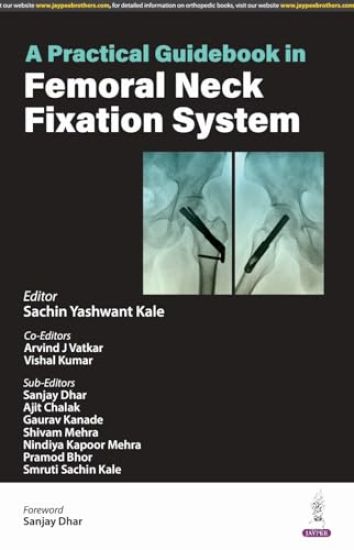
A Practical Guidebook in Femoral Neck Fixation System

A Practical Guidebook in Femoral Neck Fixation System

Sachin Yashwant Kale; Arvind J Vatkar; Vishal Kumar

JAYPEE BROTHERS MEDICAL PUBLISHERS
2024
nidottu
The femur, or thigh bone, is the only bone in the thigh and is the longest bone in the body. It acts as the site of origin and attachment for many muscles and ligaments, and the head forms a ball and socket joint with the hip. The femoral neck connects the femoral shaft with the femoral head. Femoral neck fractures are a type of intracapsular hip fracture – the junctional location makes the neck prone to fracture. The Femoral Neck System (FNS) addresses clinical challenges associated with the fixation of femoral neck fractures. Authored by a team of highly experienced trauma surgeons and orthopaedic specialists, this book provides a comprehensive overview of the FNS, detailing its design, biomechanical principles, clinical applications, and rehabilitation protocols. The book begins with a detailed examination of femoral neck fractures, including definitions, classifications, epidemiology, and incidence rates, as well as comparative analysis of various fixation methods. The next chapter covers design and components of implants, including screws, plates, and locking mechanisms. The following sections provide step-by-step surgical procedures for femoral neck fracture fixation, explaining positioning, intraoperative considerations, tips for optimal implant placement, and postoperative care and rehabilitation. The book concludes with discussion on common complications and their management, clinical outcomes and studies, and future perspectives and innovations. Compiling the latest data, research and expert opinions, chapters feature anecdotal notes for the fixation system, pearls, charts, figures, and diagrams, to provide an invaluable resource for specialists involved in the management of femoral neck fractures.
Spectrum of Branding Strategy: Marketing Management: Part - Branding

Spectrum of Branding Strategy: Marketing Management: Part - Branding

Aravind Kumar Chaturvedi

Createspace Independent Publishing Platform
2017
nidottu
The book is dedicated to branding strategies, which are classified into macro and micro types.Macro type of branding strategies are those, which are broader way of creating a brand like individual branding, multiple branding, mix branding and co-branding etc. These strategies are decided basically at corporate level under broader business perspectives. But often there are micro factors pertaining to product, demand, market, technology and consumer, which are also important in branding strategy.The strategies, which are decided based on these micro level factors are classified into micro branding strategies. Branding strategies based on geographical reach, income group, quality of product, age of consumer, gender of consumer, traditional and ancient knowledge, social value, technology involved and green cause etc. are classified into micro branding strategies. There strategies are based on keen insight of product, market, demand, consumer, technology and issues related to planet. The book unearth phenomena of value based branding, which encourage organizations to associate themselves with a social value. Thre is discussion on novel idea of country(province) branding, which may result in bringing a country(province) on top of globe in any particular business activity, in which it has strength. A perception of technology branding and green branding is also conceptualised in the book, which is understood to be latest practice in industry with a consortium behind its advocacy. The concept of technology branding and green branding leads one to various possible levels at which a branding can be done and various possible brand architecture. Lastly, it explains a matrix analysis based methodology to find strength and presence of a brand and untouched niche areas. All the sections in the book use suitable examples and illustrations, whereever possible. It is expected that book will be interesting reading for academicians and industry practishneres of management sciences and marketing management, both.
Nanopartikel in Der Endodontie

Nanopartikel in Der Endodontie

Aravind Kumar Duraivel; Sai Sree Sarath

Verlag Unser Wissen
2024
pokkari
Die Nanotechnologie hat sich zu einem transformativen Bereich mit tiefgreifenden Auswirkungen auf verschiedene Sektoren, einschlie lich der Medizin, entwickelt. Diese Einf hrung in die Nanotechnologie zeichnet ihre Entwicklung von Richard P. Feynmans bahnbrechendem Konzept des "viel Platz am Boden" in den 1950er Jahren bis zur Pr gung des Begriffs "Nanotechnologie" durch K. Eric Drexler in den 1980er Jahren nach. Definiert als die Manipulation von Materialien auf atomarer und molekularer Ebene, hat die Nanotechnologie ein bemerkenswertes Wachstum erlebt, insbesondere im Bereich der biomedizinischen Anwendungen. Der Einfluss der Nanotechnologie auf die Medizin ist multidimensional und umfasst die Regeneration von Gewebe, die Verabreichung von Medikamenten, Biosensoren, Gentransfektion und Bildgebung. Dieser Einfluss wird in erster Linie auf die besonderen Eigenschaften von Nanomaterialien zur ckgef hrt, die sich durch ein besseres Verh ltnis von Oberfl che zu Volumen auszeichnen als ihre makroskopischen Gegenst cke. Auf der Nanoskala weisen Materialien einzigartige Verhaltensweisen auf, die sie f r eine Vielzahl biomedizinischer Anwendungen geeignet machen. Im zahnmedizinischen Bereich nutzt das aufkeimende Feld der Nanodentistry die Nanotechnologie, um eine neue ra der umfassenden Mundgesundheitsversorgung einzuleiten. bersetzt mit DeepL.com (kostenlose Version)
Les Nanoparticules En Endodontie

Les Nanoparticules En Endodontie

Aravind Kumar Duraivel; Sai Sree Sarath

Editions Notre Savoir
2024
pokkari
Les nanotechnologies sont devenues un domaine de transformation qui a de profondes implications pour divers secteurs, y compris la m decine. Cette introduction aux nanotechnologies retrace leur volution depuis le concept fondateur de Richard P. Feynman de beaucoup de place au fond dans les ann es 1950 jusqu' l'invention du terme nanotechnologie par K. Eric Drexler dans les ann es 1980. D finie comme la manipulation de mat riaux aux niveaux atomique et mol culaire, la nanotechnologie a connu une croissance remarquable, en particulier dans le domaine des applications biom dicales. L'impact de la nanotechnologie sur la m decine est multidimensionnel, englobant la r g n ration des tissus, l'administration de m dicaments, les biocapteurs, la transfection de g nes et l'imagerie. Cette influence est principalement attribu e aux propri t s distinctives des nanomat riaux, caract ris s par un rapport surface/volume sup rieur celui de leurs homologues macroscopiques. l' chelle nanom trique, les mat riaux pr sentent des comportements uniques, ce qui les rend adapt s une myriade d'applications biom dicales. Dans le domaine dentaire, le domaine en plein essor de la nanodentisterie tire parti de la nanotechnologie pour ouvrir une nouvelle re de soins de sant bucco-dentaire complets.
Nanoparticelle in Endodonzia

Nanoparticelle in Endodonzia

Aravind Kumar Duraivel; Sai Sree Sarath

Edizioni Sapienza
2024
pokkari
Le nanotecnologie sono emerse come un campo di trasformazione con profonde implicazioni per vari settori, tra cui la medicina. Questa introduzione alle nanotecnologie ne traccia l'evoluzione dal concetto fondamentale di Richard P. Feynman di "abbondanza di spazio in basso" negli anni Cinquanta al termine "nanotecnologia" coniato da K. Eric Drexler negli anni Ottanta. Definita come la manipolazione dei materiali a livello atomico e molecolare, la nanotecnologia ha registrato una crescita notevole, soprattutto nel campo delle applicazioni biomediche. L'impatto della nanotecnologia sulla medicina multidimensionale e comprende la rigenerazione dei tessuti, la somministrazione di farmaci, i biosensori, la trasfezione genica e l'imaging. Questa influenza attribuita principalmente alle propriet distintive dei nanomateriali, caratterizzati da un rapporto superficie/volume maggiore rispetto alle loro controparti macro. In campo odontoiatrico, il settore fiorente della nanodentistry sfrutta la nanotecnologia per inaugurare una nuova era di cura completa della salute orale.
Nanopartículas Em Endodontia

Nanopartículas Em Endodontia

Aravind Kumar Duraivel; Sai Sree Sarath

Edicoes Nosso Conhecimento
2024
pokkari
A nanotecnologia surgiu como um dom nio transformador com profundas implica es em v rios sectores, incluindo a medicina. Esta introdu o nanotecnologia tra a a sua evolu o desde o conceito seminal de Richard P. Feynman de "muito espa o no fundo" na d cada de 1950 at cria o do termo "nanotecnologia" por K. Eric Drexler na d cada de 1980. O impacto da nanotecnologia na medicina multidimensional, abrangendo a regenera o de tecidos, a administra o de medicamentos, os biossensores, a transfec o de genes e a imagiologia. Esta influ ncia atribu da principalmente s propriedades distintivas dos nanomateriais, caracterizadas por uma rela o superf cie/volume melhorada em compara o com os seus hom logos macro. escala nanom trica, os materiais apresentam comportamentos nicos, o que os torna adequados para uma mir ade de aplica es biom dicas. No dom nio dent rio, o campo florescente da nanodent stica tira partido da nanotecnologia para inaugurar uma nova era de cuidados de sa de oral abrangentes
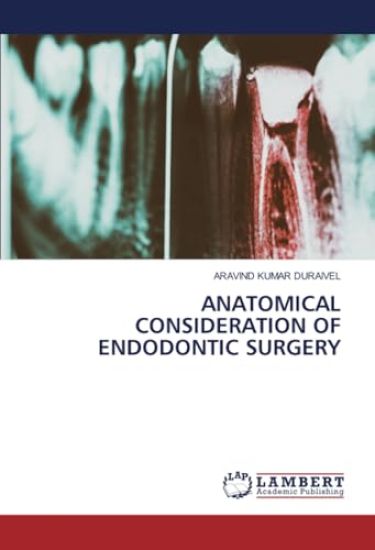
Anatomical Consideration of Endodontic Surgery

Anatomical Consideration of Endodontic Surgery

Aravind Kumar Duraivel

Lap Lambert Academic Publishing
2024
pokkari
Endodontic surgery involves the treatment of the root and surrounding structures of a tooth, often when conventional root canal therapy isn't sufficient. Anatomical considerations are crucial for successful outcomes and include: Root Anatomy: Understanding the complex root canal systems, including variations in number and shape of roots and canals, is essential for effective cleaning, shaping, and sealing.Surrounding Structures: Knowledge of nearby anatomical landmarks like the maxillary sinus, mandibular canal, and adjacent teeth is important to avoid damaging these areas during surgery.Bone Density and Structure: Variations in bone density and structure can affect the surgical approach and the placement of any necessary bone grafts or materials.Vascular and Nerve Structures: Awareness of the blood vessels and nerves in the surgical area helps in avoiding complications and managing pain.Accurate preoperative imaging and detailed planning are vital to navigate these anatomical features effectively.
Considerações anatômicas da cirurgia endodôntica

Considerações anatômicas da cirurgia endodôntica

Aravind Kumar Duraivel

Edicoes Nosso Conhecimento
2024
pokkari
A cirurgia endod ntica envolve o tratamento da raiz e das estruturas circundantes de um dente, frequentemente quando a terapia convencional do canal radicular n o suficiente. As considera es anat micas s o cruciais para resultados bem sucedidos e incluem: Anatomia da raiz: Compreender os complexos sistemas de canais radiculares, incluindo varia es no n mero e na forma das ra zes e dos canais, essencial para uma limpeza, modela o e selagem eficazes: O conhecimento dos pontos de refer ncia anat micos pr ximos, como o seio maxilar, o canal mandibular e os dentes adjacentes, importante para evitar danificar estas reas durante a cirurgia.Densidade e estrutura ssea: As varia es na densidade e estrutura sseas podem afetar a abordagem cir rgica e a coloca o de quaisquer enxertos ou materiais sseos necess rios.Estruturas vasculares e nervosas: O conhecimento dos vasos sangu neos e dos nervos na rea cir rgica ajuda a evitar complica es e a gerir a dor.A obten o de imagens pr -operat rias precisas e o planeamento detalhado s o vitais para navegar eficazmente por estas carater sticas anat micas.
Anatomische Betrachtung der endodontischen Chirurgie

Anatomische Betrachtung der endodontischen Chirurgie

Aravind Kumar Duraivel

Verlag Unser Wissen
2024
pokkari
Bei der endodontischen Chirurgie werden die Wurzel und die umliegenden Strukturen eines Zahns behandelt, oft wenn eine konventionelle Wurzelkanalbehandlung nicht ausreicht. Anatomische berlegungen sind f r ein erfolgreiches Ergebnis entscheidend und umfassen: Wurzelanatomie: Das Verst ndnis der komplexen Wurzelkanalsysteme, einschlie lich der unterschiedlichen Anzahl und Form von Wurzeln und Kan len, ist f r eine wirksame Reinigung, Formung und Versiegelung von entscheidender Bedeutung.Umgebende Strukturen: Die Kenntnis der nahe gelegenen anatomischen Orientierungspunkte wie der Kieferh hle, des Unterkieferkanals und der benachbarten Z hne ist wichtig, um eine Besch digung dieser Bereiche w hrend des Eingriffs zu vermeiden.Knochendichte und -struktur: Schwankungen in der Knochendichte und -struktur k nnen sich auf den chirurgischen Ansatz und die Platzierung der erforderlichen Knochentransplantate oder -materialien auswirken.Gef - und Nervenstrukturen: Die Kenntnis der Blutgef e und Nerven im Operationsgebiet hilft bei der Vermeidung von Komplikationen und der Schmerzbehandlung.Eine genaue pr operative Bildgebung und eine detaillierte Planung sind unerl sslich, um diese anatomischen Merkmale effektiv zu steuern.
Considération anatomique de la chirurgie endodontique

Considération anatomique de la chirurgie endodontique

Aravind Kumar Duraivel

Editions Notre Savoir
2024
pokkari
La chirurgie endodontique consiste traiter la racine et les structures environnantes d'une dent, souvent lorsque le traitement conventionnel du canal radiculaire n'est pas suffisant. Les consid rations anatomiques sont cruciales pour obtenir de bons r sultats: Anatomie de la racine: La compr hension des syst mes complexes de canaux radiculaires, y compris les variations du nombre et de la forme des racines et des canaux, est essentielle pour un nettoyage, une mise en forme et un scellement efficaces.Structures environnantes: La connaissance des rep res anatomiques proches, comme le sinus maxillaire, le canal mandibulaire et les dents adjacentes, est importante pour viter d'endommager ces zones pendant l'intervention.Densit et structure osseuses: Les variations de la densit et de la structure osseuses peuvent affecter l'approche chirurgicale et la mise en place des greffes osseuses ou des mat riaux n cessaires.Structures vasculaires et nerveuses: La connaissance des vaisseaux sanguins et des nerfs dans la zone chirurgicale permet d' viter les complications et de g rer la douleur.Une imagerie pr op ratoire pr cise et une planification d taill e sont essentielles pour naviguer efficacement dans ces caract ristiques anatomiques.
Considerazioni anatomiche della chirurgia endodontica

Considerazioni anatomiche della chirurgia endodontica

Aravind Kumar Duraivel

Edizioni Sapienza
2024
pokkari
La chirurgia endodontica prevede il trattamento della radice e delle strutture circostanti di un dente, spesso quando la terapia canalare convenzionale non sufficiente. Le considerazioni anatomiche sono fondamentali per ottenere risultati positivi e comprendono: Anatomia della radice: La comprensione dei complessi sistemi canalari, comprese le variazioni di numero e forma delle radici e dei canali, essenziale per una pulizia, una sagomatura e una sigillatura efficaci.Strutture circostanti: La conoscenza dei punti di riferimento anatomici vicini, come il seno mascellare, il canale mandibolare e i denti adiacenti, importante per evitare di danneggiare queste aree durante l'intervento.Densit e struttura ossea: Le variazioni della densit e della struttura ossea possono influenzare l'approccio chirurgico e il posizionamento di eventuali innesti o materiali ossei necessari.Strutture vascolari e nervose: La conoscenza dei vasi sanguigni e dei nervi dell'area chirurgica aiuta a evitare complicazioni e a gestire il dolore.Un'accurata diagnostica per immagini preoperatoria e una pianificazione dettagliata sono fondamentali per orientarsi efficacemente tra queste caratteristiche anatomiche.
Thesamma

Thesamma

Aravind Kumar

Kalachuvadu Publications Pvt Ltd
2019
pokkari
A collection of stories written by Aravind Kumar. The author has spent his life in many parts of the state, with a wide variety of people. These stories talk about what people are curious about, what they search for, wherever they are. They are filled with characters who are loyal to the truths they find. Our relationships are never exclusively with those who share love, but they are often exchanges of vulgarities as well. Aravind has managed to capture the essence of such exchanges in his stories.
Nanoparticles in Endodontics

Nanoparticles in Endodontics

Aravind Kumar Duraivel; Sai Sree Sarath

Lap Lambert Academic Publishing
2024
pokkari
Nanotechnology has emerged as a transformative field with profound implications for various sectors, including medicine. This introduction to nanotechnology traces its evolution from Richard P. Feynman's seminal concept of "plenty of room at the bottom" in the 1950s to K. Eric Drexler's coining of the term "nanotechnology" in the 1980s. Defined as the manipulation of materials at the atomic and molecular level, nanotechnology has witnessed remarkable growth, especially in the realm of biomedical applications.Nanotechnology's impact on medicine is multidimensional, encompassing tissue regeneration, drug delivery, biosensors, gene transfection, and imaging. This influence is primarily attributed to the distinctive properties of nanomaterials, characterized by an enhanced surface-to-volume ratio compared to their macro counterparts. At the nanoscale, materials exhibit unique behaviours, rendering them suitable for a myriad of biomedical applications.In the dental field, the burgeoning field of nanodentistry leverages nanotechnology to usher in a new era of comprehensive oral health care.