Relatable stories, complex concepts broken down into bite-sized pieces, and an overall optimistic tone makes The Real Estate Journey an easy, enjoyable read for those who have an interest in real estate or business ownership. Dr. Brian P. Simon provides a guide for those who want to get started on working towards their dreams and goals, as well as detailed steps for buying a first home and what it takes to become a successful real estate agent or investor. The Real Estate Journey includes a step-by-step guide to managing finances while on an entrepreneurial journey to make building a business or entering into the world of real estate a feasible reality. For those struggling with believing that real estate is a viable option for building wealth, Dr. Simon offers reassurance that once people connect with their ambition, unpacking their dream and claiming their piece of the pie is simple with the guided principles he supplies. With authentic leadership, Dr. Simon shares a realistic outlook for entrepreneurs by sharing his own failures and successes and invites real estate agents, every day investors, and entrepreneurial spirits alike to spread their entrepreneurial wings and fly.
The example books published as part of the Numerical Recipes second edition series contain source programs that exercise and demonstrate all of the Numerical Recipes subroutines. Each example program contains comments and is prefaced by a short description of what it does. The books contain all of the old material from the original edition as well as new material from the second edition. They will be valuable for readers who wish to incorporate procedures and subroutines into their own source programs. They are available in both FORTRAN and C. This book was first published in 1993.
America's 754 million acres of forest constitute more than a major geographical feature. They are intricately woven into the national economy and culture-providing a fifth of the nation's industrial raw material, protecting and regulating its watersheds, providing grazing range for a sizeable portion of livestock, producing most of its game and much of its nonsport wildlife, and attracting millions of tourists annually. The Southern Forest: Geography, Ecology, and Silviculture examines in-depth the forests of the South, providing a comprehensive description of the region from which most of the nation's wood for housing and paper will be grown and harvested in the future. Closing the old-growth forests of the Northwest and reduction of harvests in the tropics necessitate the U.S. South intensifying tree growth to accommodate society's requirements. This book provides the information for practicing foresters, researchers, and students to increase forest growth dramatically for the many forest types and in the various subregions without detrimentally affecting soil, species diversity, or long-term aesthetics. The four factors of site-edaphic, biotic, climatic, and physiographic-are given special attention. Over 200 photographs; an extensive listing of literature citations; and appendixes of tree, insect, and disease agents are included. With files of field notes and photographs, Walker and Oswald revisit-and take the reader along to grasp-the South's rich forests. A land manager will need no other reference to the soils, biotic components, climate or physiology of the region.
An essential guide to assessing and treating people with dementia syndromes As the number of older adults with dementia continues to skyrocket, every health care professional needs accurate, up-to-date knowledge of these conditions, their prevention, and possible treatments. This compact, evidence-based book discusses essential aspects of the diagnosis, assessment, and interventions of Alzheimer's disease and the syndromes of dementia and mild cognitive impairment. It reviews the diagnostic criteria from the National Institute on Aging, Alzheimer's Association, and the DSM-5 and provides a broad range of treatment options, including psychosocial, educational, and lifestyle interventions. Practitioners will especially appreciate the current overview of caregiver interventions. Practitioners and students alike will find the clear information, the tools for assessment, and other resources provided in this volume extremely useful for helping patients and their families cope with dementia
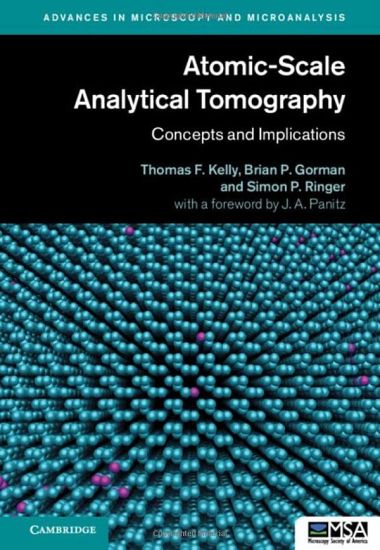
A comprehensive guide on Atomic-Scale Analytical Tomography (ASAT) that discusses basic concepts and implications of the technique in areas such as material sciences, microscopy, engineering sciences and several interdisciplinary avenues. The title interrogates how to successfully achieve ASAT at the intersection of transmission electron microscopy and atom probe microscopy. This novel concept is capable of identifying individual atoms in large volumes as well as in 3D, with high spatial resolution. Written by leading experts from academia and industry, this book serves as a guide with real-world applications on cutting-edge research problems. An essential reading for researchers, engineers and practitioners interested in nanoscale characterisation, this book introduces the reader to a new direction for atomic-scale microscopy.
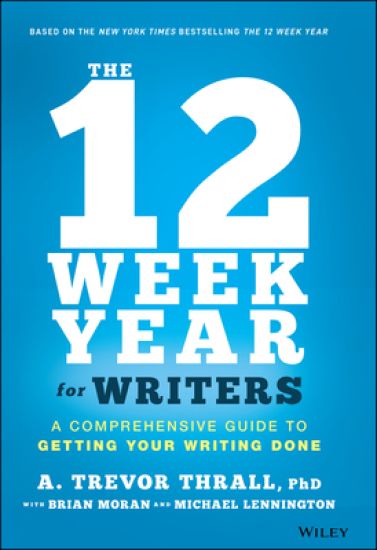
Get more words on the page with this proven and popular system The 12 Week Year for Writers: A Comprehensive Guide to Getting Your Writing Done is an easy-to-implement and practical framework for writers to get more work done in less time. You’ll answer big picture questions—What is my vision for the future? What are my writing goals?—while enacting a comprehensive system to plan and execute your writing. You’ll create a 12 Week Plan and a Model Week, collaborate with a weekly writing group, keep score, and learn to stick to a weekly execution routine. The book will also show you how to: Manage multiple writing projects at the same timeDevelop a prolific writer’s mindset and increase your output with the 12 Week Year systemDeal with actionable specifics, like when and where to write Ideal for writers in all genres and fields, The 12 Week Year for Writers is the perfect hands-on guide for academic and business writers, authors, students, columnists, bloggers, and copy and content writers who seek to increase their productivity and get more quality words on the page.
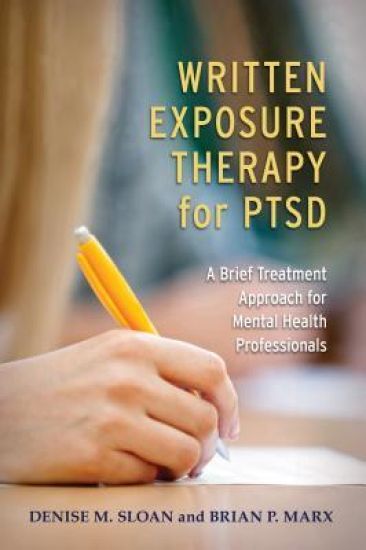
This treatment manual provides mental health professionals with instructions for conducting written exposure therapy (WET) with clients who have posttraumatic stress disorder. Authors Denise Sloan and Brian Marx developed WET in response to a growing demand for an effective PTSD treatment that is easier to implement, more affordable, and has lower dropout rates than other trauma interventions. In their unique approach, the client writes about a single traumatic event, and the therapist focuses on the client amp rsquo s experiences in writing about the trauma, rather than the event itself. Written Exposure Therapy for PTSD contains a scripted protocol for WET along with detailed clinical guidance for conducting each session. Sloan and Marx answer frequently asked questions from clinicians and review real-life case examples that demonstrate solutions to common issues and challenges that can occur during WET sessions. They also explain how to assess the client before treatment to determine the appropriateness of WET and during treatment to monitor the client amp rsquo s progress. Key background information about PTSD symptoms and WET amp rsquo s theoretical underpinnings are also reviewed.
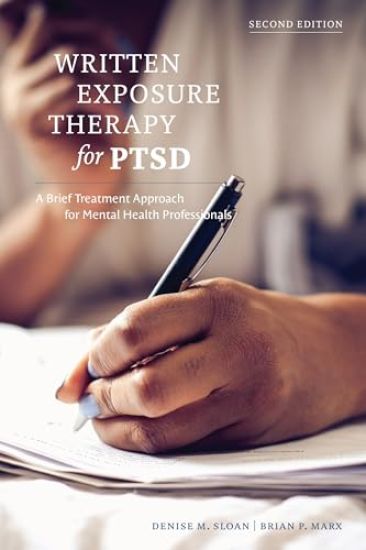
This second edition provides readers with valuable tools and strategies to use in their clinical practice with trauma survivors with PTSD. Written exposure therapy (WET) is an effective, evidence-based treatment for PTSD that is easy to implement, affordable, and has lower dropout rates than other trauma interventions. In Denise Sloan and Brian Marx's unique approach, the client writes about a single traumatic event, and the therapist focuses on the client's experiences while writing about the trauma, rather than the event itself. This comprehensive manual provides step-by-step instructions for conducting WET with clients who suffer from PTSD. It contains a scripted protocol for WET, along with detailed guidance for conducting each session. Since publication of the first edition, the authors have modified several important aspects of their protocol based on updated research and evidence. In this edition, the authors describe how to deliver WET over telehealth, in a group format, in primary care settings that typically only permit 3 -minute sessions, and when using a language translator. New content shows how providers can manage difficult situations that sometimes arise when delivering WET, with valuable case examples that demonstrate key principles and potential outcomes of the WET protocol. This is an essential resource for trauma care providers, as well as graduate students in clinical psychology, counseling, and social work.
??Non-parametric methods are widely used for studying populations that take on a ranked order (such as movie reviews receiving one to four stars). The use of non-parametric methods may be necessary when data have a ranking but no clear numerical interpretation, such as when assessing preferences. In terms of levels of measurement, non-parametric methods result in "ordinal" data. As non-parametric methods make fewer assumptions, their applicability is much wider than the corresponding parametric methods. In particular, they may be applied in situations where less is known about the application in question. Also, due to the reliance on fewer assumptions, non-parametric methods are more robust. Non-parametric methods have many popular applications, and are widely used in research in the fields of the behavioral sciences and biomedicine. This is a textbook on non-parametric statistics for applied research. The authors propose to use a realistic yet mostly fictional situation and series of dialogues to illustrate in detail the statistical processes required to complete data analysis. This book draws on a readers existing elementary knowledge of statistical analyses to broaden his/her research capabilities. The material within the book is covered in such a way that someone with a very limited knowledge of statistics would be able to read and understand the concepts detailed in the text.The “real world” scenario to be presented involves a multidisciplinary team of behavioral, medical, crime analysis, and policy analysis professionals work together to answer specific empirical questions regarding real-world applied problems. The reader is introduced to the team and the data set, and through the course of the text follows the team as they progress through the decision making process of narrowing the data and the research questions to answer the applied problem. In this way, abstract statistical concepts are translated into concreteand specific language.This text uses one data set from which all examples are taken. This is radically different from other statistics books which provide a varied array of examples and data sets. Using only one data set facilitates reader-directed teaching and learning by providing multiple research questions which are integrated rather than using disparate examples and completely unrelated research questions and data.
??Non-parametric methods are widely used for studying populations that take on a ranked order (such as movie reviews receiving one to four stars). The use of non-parametric methods may be necessary when data have a ranking but no clear numerical interpretation, such as when assessing preferences. In terms of levels of measurement, non-parametric methods result in "ordinal" data. As non-parametric methods make fewer assumptions, their applicability is much wider than the corresponding parametric methods. In particular, they may be applied in situations where less is known about the application in question. Also, due to the reliance on fewer assumptions, non-parametric methods are more robust. Non-parametric methods have many popular applications, and are widely used in research in the fields of the behavioral sciences and biomedicine. This is a textbook on non-parametric statistics for applied research. The authors propose to use a realistic yet mostly fictional situation and series of dialogues to illustrate in detail the statistical processes required to complete data analysis. This book draws on a readers existing elementary knowledge of statistical analyses to broaden his/her research capabilities. The material within the book is covered in such a way that someone with a very limited knowledge of statistics would be able to read and understand the concepts detailed in the text.The “real world” scenario to be presented involves a multidisciplinary team of behavioral, medical, crime analysis, and policy analysis professionals work together to answer specific empirical questions regarding real-world applied problems. The reader is introduced to the team and the data set, and through the course of the text follows the team as they progress through the decision making process of narrowing the data and the research questions to answer the applied problem. In this way, abstract statistical concepts are translated into concreteand specific language.This text uses one data set from which all examples are taken. This is radically different from other statistics books which provide a varied array of examples and data sets. Using only one data set facilitates reader-directed teaching and learning by providing multiple research questions which are integrated rather than using disparate examples and completely unrelated research questions and data.
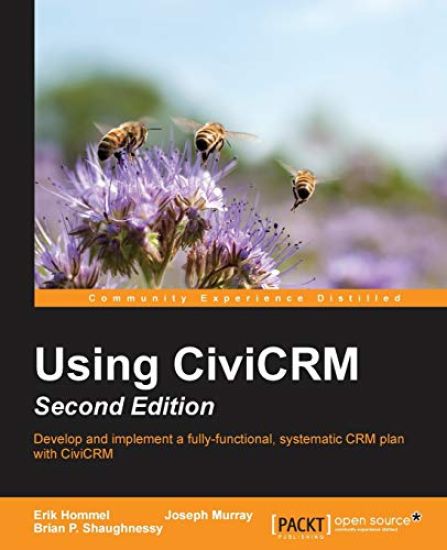
Develop and implement a fully-functional, systematic CRM plan with CiviCRM About This Book • Develop an integrated online system that manages contacts, donations, event registrations, memberships, bulk e-mail, campaigns, case management, and other functions such as activity tracking, grant distribution, and reporting. • Plan a constituency relationship management strategy with ladders of engagement that will improve how your organization realizes its mission. • Use case studies and step-by-step examples to put the raw concepts into real-life terminology and build your solutions. Who This Book Is For The book is primarily for administrators tasked with implementing, configuring, maintaining, and updating CiviCRM, and staff users who are looking to better understand the tools available in order to become power users. CiviCRM is software that may be used by advocacy groups, non-profit, and non-governmental organizations, elected officials, professional and trade associations, government entities, political campaigns and parties, and other similar organizations, and this book will prove useful to all such users. What You Will Learn • Install and configure your CiviCRM • Analyze your current workflows and processes to translate them effectively into the CiviCRM model • Build an integrated system to solicit, retain, and manage your donors and members through robust management and reporting tools for administrators • Raise more money with CiviCRM with effective solicitation campaigns • Market events effectively and track registrations and payments • Improve communications with constituents using targeted broadcast e-mail campaigns • Track ongoing communications with constituents including from Outlook and Gmail using activities and case management tools • Take advantage of the many CiviCRM tools to generate both simple and complex event structures and manage registrants through every phase of the project In Detail CiviCRM provides a powerful toolbox of resources to help organizations manage relationships with constituents. It is free, open source, web-based, and geared specifically to meet the constituent relationship management needs of the not-for-profit sector. Beginning with broader questions about how your organization is structured, which existing workflows are critical to your operations, and the overarching purpose of a centralized CRM, the book proceeds step by step through configuring CiviCRM, understanding the choices when setting up the system, importing data, and exploring the breadth of tools available throughout the system. You will see how to best use this software to handle event registrations, accept and track contributions, manage paid and free memberships and subscriptions, segment contacts, send bulk e-mails with open and click-through tracking, manage outreach campaigns, and set up case management workflows that match your organization's roles and rules. With specific emphasis on helping implementers ask the right questions, consider key principals when setting up the system, and understand usage through case studies and examples, the book comprehensively reviews the functionality of CiviCRM and the opportunities it provides. With this book, you can help your organization better achieve its mission as a charity, industry association, professional society, political advocacy group, community group, government agency, or other similar organization and position yourself to become a power user who efficiently and effectively navigates the system. Style and approach This guide is packed with step-by-step tutorials and real-life examples interspersed with practical advice and best practices on how to use CiviCRM strategically. You will be able to quickly grasp and implement the basic elements of CiviCRM before moving on to more advanced tools.
This accessible book examines American law enforcement cybercrime investigations. Through semi-structured interviews with forty-seven cybercrime law enforcement investigators, it explores the characteristics of investigators, the development of cybercrime units and task force programs in the US, the processes involved in these investigations, and the culture of American cybercrime investigations. This includes how cybercrime investigators relate to police occupational culture, their perceptions of offenders and victims, and use of humor. It also considers the technological, economic, political, and cultural contexts that shape and structure cybercrime investigations, units, and task forces. It adopts a sociological approach to the study of cybercrime policing by tracing connections between the individual and organizational levels of analysis to the macro-structural. In other words, it situates cybercrime policing in the “big picture” of technological change, the political economic of internet platforms, the transformation of “force” in the internet age, and related matters. Finally, this book builds from this comprehensive analysis of American policing to discuss pathways forward by curating institutional and organizational policy suggestions to promote both effective and just cybercrime policing.
This study explores the current state of knowledge with respect to the effects of wet weather flows from urban areas on the physical character of aquatic habitat. It identifies knowledge gaps with respect to our ability to define the cause-effect relationships, examines the comprehensiveness of the data used in support of the published literature in the subject area, and makes a qualitative determination of the usefulness of those data for further analysis to increase our knowledge in the subject area. Finally, it recommends further research studies that will increase our knowledge in the subject area, with emphasis on pilot-scale projects that can be used to develop practical protocols for preventing or mitigating the effects.Major findings and conclusions are: 1) we lack a solid conceptual framework for predicting the impact of large-scale watershed modifications and wet weather flows on ecological processes that influence stream communities; 2) there is a need for longer-term monitoring; 3) there is no widely accepted system for quantifying geomorphic instability and degradation of physical habitat; 4) there is a need for process-based stream classification; 5) specific links between urbanization characteristics and stream degradation are lacking; 6) there is a need for urban best management practice (BMP) assessment standards; and 7) developing a multi-scale understanding of habitat potential in human-dominated watersheds is needed. The report recommends a research program that first and foremost, includes comprehensive, long-term monitoring augmented with mathematical modeling of the linkages between development style/drainage system design, flow regime, and multi-scale changes in physical habitat and biotic response. Improved diagnosis and predictive understanding of future change require multifaceted, multiscale, and multidisciplinary studies based on a firm understanding of the history and processes operating in a drainage basin. Detailed long-term analyses of the influence of hydrologic regime and channel morphology on differences between communities in recruitment, immigration/emigration, mortality, and age structure are also needed. Finally, future research should directly examine tradeoffs between: 1) flood mitigation versus channel roughness, habitat heterogeneity, debris inputs, and riparian protection; 2) chemical water quality improvement through extended detention versus geomorphically-based flow regime controls; and, 3) rehabilitation of aquatic habitat using static features versus allowing the potential for dynamic adjustments in channel form and habitat structure. It is extremely important that the research be pragmatic, and focus on developing pilot/demonstration studies that will lead to design guidance that municipalities can use to design new systems, or improve existing systems, that will protect not only the safety and welfare of the citizenry that it serves, but also the aquatic ecosystems in the streams that receive the wet weather discharges from these urbanized sites.
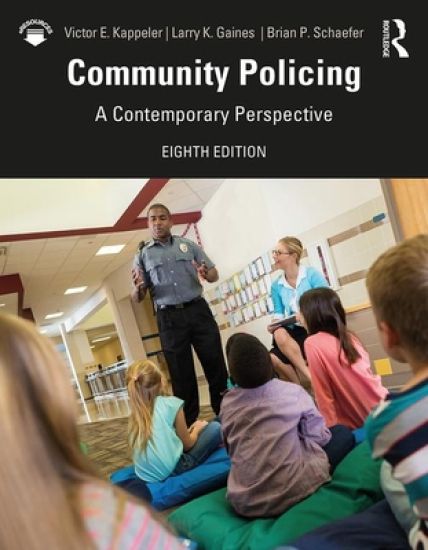
Community Policing: A Contemporary Perspective, 8th Edition, provides comprehensive coverage of the philosophy and organizational strategy that expands the traditional police mandate of fighting crime to include forming partnerships with citizenry that endorse mutual support and participation. The first textbook of its kind, Community Policing delineates this progressive approach, combining the accrued wisdom and experience of its established authors with the latest research-based insights to help students apply what is on the page to the world beyond. The book extends the road map presented by Robert Trojanowicz, the father of community policing, and brings it into contemporary focus. The text has been revised throughout to include the most current developments in the field, including discussions of the President’s Task Force on 21st Century Policing and "Spotlight on Community Policing Practice" features that focus on real-life community policing programs in various cities as well as problem-solving case studies. Also assisting the reader in understanding the material are Learning Objectives, Key Terms, and Discussion Questions, in addition to numerous links to resources outside the text. A glossary and an appendix, "The Ten Principles of Community Policing," further enhance learning of the material.An excellent resource for any undergraduate Policing curriculum, this textbook is also suitable for introducing graduate students to the principles of community policing.
Community Policing: A Contemporary Perspective, 8th Edition, provides comprehensive coverage of the philosophy and organizational strategy that expands the traditional police mandate of fighting crime to include forming partnerships with citizenry that endorse mutual support and participation. The first textbook of its kind, Community Policing delineates this progressive approach, combining the accrued wisdom and experience of its established authors with the latest research-based insights to help students apply what is on the page to the world beyond. The book extends the road map presented by Robert Trojanowicz, the father of community policing, and brings it into contemporary focus. The text has been revised throughout to include the most current developments in the field, including discussions of the President’s Task Force on 21st Century Policing and "Spotlight on Community Policing Practice" features that focus on real-life community policing programs in various cities as well as problem-solving case studies. Also assisting the reader in understanding the material are Learning Objectives, Key Terms, and Discussion Questions, in addition to numerous links to resources outside the text. A glossary and an appendix, "The Ten Principles of Community Policing," further enhance learning of the material.An excellent resource for any undergraduate Policing curriculum, this textbook is also suitable for introducing graduate students to the principles of community policing.