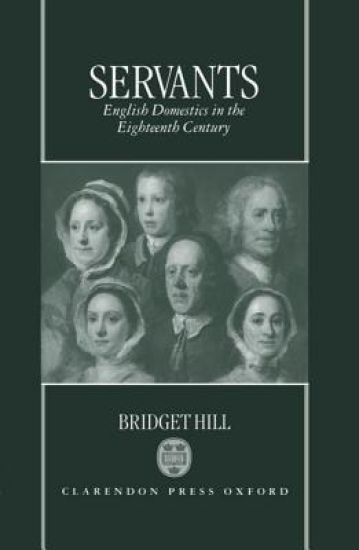
The importance of domestic service in the eighteenth century has long been recognized by historians but apart from a number of recent controversial articles, this IS the first detailed study of the subject since J. Jean Hecht's book of 1956. Bridget Hill's essays question the stereotype of the domestic servant - usually male and most often in large households employing many servants where a strict hierarchy prevailed - that has dominated all discussion hitherto. Using eighteenth-century diaries, journals and memoirs as well as the press and literature of the period, she examines the lives of the majority of domestic servants, who were employed in more modest establishments, or in single or two-servant households. The book looks at the life of the pauper apprentices to service, paid little or nothing for their efforts, and at the frequency with which both near and distant kin were employed as unpaid, or badly-paid, domestic servants. It also examines the vulnerability of female domestic servants to sexual harassment and discusses the sexuality of servants. Bridget Hill's fascinating and detailed essays provide a new perspective on an important facet of English domestic life in the eighteenth century.
Regulation touches upon areas of vital importance to our lives and the economy, but it is still very much a 'grey area' of criminal law and social control, subject to very little academic scrutiny. This book combines an analysis of the broader structural factors which influence regulation and its definition at the everyday level with a discussion of empirical data, to reach a thorough understanding of the subject. The empirical data focuses on the regulation of economic activities in the areas of occupational health and safety and the environment in England and Wales in the 1980s.
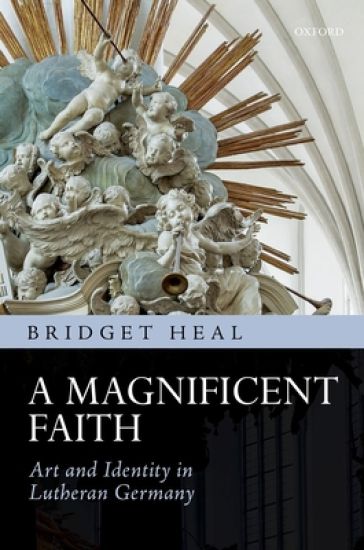
A Magnificent Faith explains how and why Lutheranism - a confession that derived its significance from the promulgation of God's Word - became a visually magnificent faith, a faith whose adherents sought to captivate Christians' hearts and minds through seeing as well as through hearing. Although Protestantism is no longer understood as an exclusively word-based religion, the paradigm of evangelical ambivalence towards images retains its power. This is the first study to offer an account of the Reformation origins and subsequent flourishing of the Lutheran baroque, of the rich visual culture that developed in parts of the Holy Roman Empire during the later seventeenth and early eighteenth centuries. The volume opens with a discussion of the legacy of the Wittenberg Reformation. Three sections then focus on the confessional, devotional, and magnificent image, exploring turning points in Lutherans' attitudes towards religious art. Drawing on a wide variety of archival, printed, and visual sources from two of the Empire's most important Protestant territories - Saxony, the heartland of the Reformation, and Brandenburg - A Magnificent Faith shows the extent to which Lutheran culture was shaped by territorial divisions. It traces the development of a theologically-grounded aesthetic, and argues that images became prominent vehicles for the articulation of Lutheran identity not only amongst theologians but also amongst laymen and women. By examining the role of images in the Lutheran tradition as it developed over the course of two centuries, A Magnificent Faith offers a new understanding of the relationship between Protestantism and the visual arts.
Us and Them? explores the distinction between migrant and citizen through using the concept of 'the community of value'. The community of value is comprised of Good Citizens and is defined from outside by the Non-Citizen and from the inside by the Failed Citizen, that is figures like the benefit scrounger, the criminal, the teenage mother etc. While Failed Citizens and Non-Citizens are often strongly differentiated, the book argues that it is analytically and politically productive to to consider them together. Judgments about who counts as skilled, what is a good marriage, who is suitable for citizenship, and what sort of enforcement is acceptable against 'illegals', affect citizens as well as migrants. Rather than simple competitors for the privileges of membership, citizens and migrants define each other through sets of relations that shift and are not straightforward binaries. The first two chapters on vagrancy and on Empire historicise migration management by linking it to attempts to control the mobility of the poor. The following three chapters map and interrogate the concept of the 'national labour market' and UK immigration and citizenship policies examining how they work within public debate to produce 'us and them'. Chapters 6 and 7 go on to discuss the challenges posed by enforcement and deportation, and the attempt to make this compatible with liberalism through anti-trafficking policies. It ends with a case study of domestic labour as exemplifying the ways in which all the issues outlined above come together in the lives of migrants and their employers.
How do poems communicate moral ideas? Can they express concepts in ways that are unique and impossible to replicate in other forms of writing? This book explores these questions by turning to two of the late twentieth century's most important poets: Seamus Heaney and Geoffrey Hill. Their work shows that a poem can act as an example of a moral concept, rather than simply a description or discussion of it. Exploring these two poets via their shared preoccupation with poetry's moral exemplarity opens up new perspectives on their work. The concept of exemplarity is shown to play an important role in these poets' most significant preoccupations, from moral complicity to the nature of lyric speech to literary influence to memorialisation, responsibility, and aesthetic autonomy. Through this new analysis of poetry, critical prose, drama, and archival materials, this book offers a major new study of ethics in the later period of these two writers--including recent underexplored posthumous works. In turn, the book also makes an important intervention in larger debates about literature and morality, and about the field of ethical criticism itself: this is the first book-length study to expand ethical criticism beyond its customary narrative focus. The ethical criticism of fiction is often an exercise in methodological advocacy, urging the use of more literary examples in moral philosophy. As this book shows, including poetry among these examples introduces new, lyric-inflected caveats about the use of literature as a form of moral example: caveats which remain invisible in narrative-centred ethical criticism.
Regulating the risks associated with economic activities is a feature of modern societies and one in which the state increasingly seeks to co-opt the regulatory powers of corporations. This book examines the impact of a system of enforced self-regulation on the corporate life of British Railways. It uses this case study of occupational health and safety regulation to focus on broader theoretical and empirical discussions of regulation, risk, and corporate activities. A central organizing perspective of this book is that regulation is a form of risk management. It examines how workplace risks in modern societies are managed by businesses and the individuals within them and considers what influence the law has in this. The tensions between the constitutive and controlling aspects of regulatory law are analysed with reference to in-depth empirical data about corporate and individual compliance and non-compliance. Related concerns about the social control of organizational and economic life are explored and their policy and theoretical implications examined. These issues are especially significant following the privatization of Britain's rail network and the introduction of regulatory systems which are highly reliant on industry self-regulation. More generally, their significance is highlighted by the increasing popularity of risk-based approaches to corporate governance. The book argues that if regulation is to be an effective way of managing risk we need to pay more attention to the assumptions we make about corporate life and be more prepared to use the full range of regulatory sources and tools available to us.
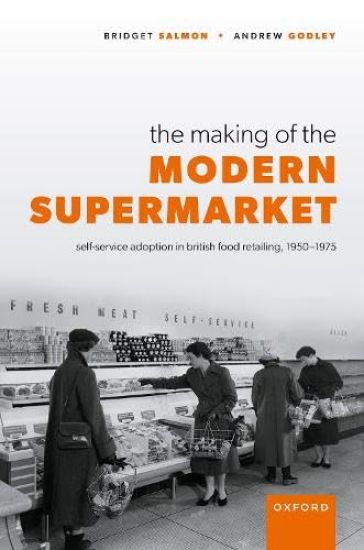
The Making of the Modern Supermarket describes the emergence and growth of the modern supermarket format in Britain, showing how the original American innovation of self-service was adapted to the different postwar British context in a number of ways. During the early 1960s various retailers began to experiment with larger formats, which became known as supermarkets. Sainsbury's was a late mover into self-service, but began to develop a different supermarket model, emphasising fresh foods and perishable goods. This led it to pursue a more expensive path of development as it invested in self-service, creating its novel supermarket format by the end of the 1960s. The book explores in detail how this Sainsbury's format evolved. It was driven by the company's historic commitment to selling fresh meat and other perishable goods, which demanded a much greater commitment to refrigeration in Sainsbury's self-service format than was the case for its peers. Because most consumers were suspicious of buying fresh meat and perishables through self-service outlets in the early 1960s, Sainsbury's also had to retain high levels of staffing to support their self-service offering. During the 1960s as they extended their product range, they facilitated the development of one-stop shopping in the UK, where customers were able to buy all their food requirements in one shop, rather than shopping around. This became the most popular version of the supermarket format, and it was the template that others copied as they tried to follow Sainsbury's example.
Us and Them? explores the distinction between migrant and citizen through using the concept of 'the community of value'. The community of value is comprised of Good Citizens and is defined from outside by the Non-Citizen and from the inside by the Failed Citizen, that is figures like the benefit scrounger, the criminal, the teenage mother etc. While Failed Citizens and Non-Citizens are often strongly differentiated, the book argues that it is analytically and politically productive to consider them together. Judgments about who counts as skilled, what is a good marriage, who is suitable for citizenship, and what sort of enforcement is acceptable against 'illegals', affect citizens as well as migrants. Rather than simple competitors for the privileges of membership, citizens and migrants define each other through sets of relations that shift and are not straightforward binaries. The first two chapters on vagrancy and on Empire historicise migration management by linking it to attempts to control the mobility of the poor. The following three chapters map and interrogate the concept of the 'national labour market' and UK immigration and citizenship policies examining how they work within public debate to produce 'us and them'. Chapters 6 and 7 go on to discuss the challenges posed by enforcement and deportation, and the attempt to make this compatible with liberalism through anti-trafficking policies. It ends with a case study of domestic labour as exemplifying the ways in which all the issues outlined above come together in the lives of migrants and their employers.
Phonological Architecture bridges linguistic theory and the biological sciences, presenting a comprehensive view of phonology from a biological perspective. Its back-to-basics approach breaks phonology into primitive operations and representations and investigates their possible origins in cognitive abilities found throughout the animal kingdom. Bridget Samuels opens the discussion by considering the general properties of the externalisation system in a theory-neutral manner, using animal cognition studies to identify which components of phonology may not be unique to humans and/or to language. She demonstrates, on the basis of behavioural and physiological studies on primates, songbirds, and a wide variety of other species, that the cognitive abilities underlying human phonological representations and operations are present in creatures other than Homo sapiens (even if not to the same degree) and in domains other than phonology or, indeed, language proper. The second, more linguistically technical half of the book explores what is necessarily unique about phonology. The author discusses the properties of the phonological module which are dictated by the interface requirements of the syntactic module of Universal Grammar as well as different components of the human sensory-motor system (ie audition, vision, and motor control). She proposes a repertoire of phonological representations and operations which are consistent with Universal Grammar and human cognitive evolution. She illustrates the application of these operations with analyses of representative phonological data such as vowel harmony, reduplication, and tone spreading patterns. Finally, the author addresses the issue of cross-linguistic and inter-speaker variation.
Phonological Architecture bridges linguistic theory and the biological sciences, presenting a comprehensive view of phonology from a biological perspective. Its back-to-basics approach breaks phonology into primitive operations and representations and investigates their possible origins in cognitive abilities found throughout the animal kingdom. Bridget Samuels opens the discussion by considering the general properties of the externalisation system in a theory-neutral manner, using animal cognition studies to identify which components of phonology may not be unique to humans and/or to language. She demonstrates, on the basis of behavioural and physiological studies on primates, songbirds, and a wide variety of other species, that the cognitive abilities underlying human phonological representations and operations are present in creatures other than Homo sapiens (even if not to the same degree) and in domains other than phonology or, indeed, language proper. The second, more linguistically technical half of the book explores what is necessarily unique about phonology. The author discusses the properties of the phonological module which are dictated by the interface requirements of the syntactic module of Universal Grammar as well as different components of the human sensory-motor system (ie audition, vision, and motor control). She proposes a repertoire of phonological representations and operations which are consistent with Universal Grammar and human cognitive evolution. She illustrates the application of these operations with analyses of representative phonological data such as vowel harmony, reduplication, and tone spreading patterns. Finally, the author addresses the issue of cross-linguistic and inter-speaker variation.
The one-stop guide to studying Psychology at degree level. This book provides a thorough introduction to psychology as a discipline and offers guidance on what to expect from the course. An ideal study tool, the Companion includes advice on study skills, research methods, career pathways and helpful Psychology organisations.
When Christina wakes after a crash, she finds she has her brother's body. She struggles to come to terms with being six foot two and male but delights in the sudden freedom from the responsibilities of being a wife and mother - until things start to go wrong. This book will make you wonder what it means to be male or female and what it means to be a wife. This story will make a good book club book as it invites discussion and debate. You will love it or hate it.
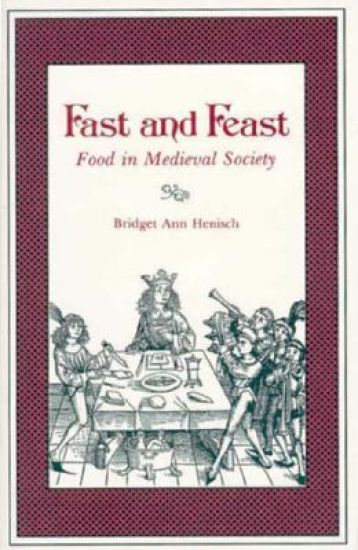
Engagingly written and fully illustrated, Fast and Feast explores the medieval approach to food, its preparation, and its presentation. Since attitudes toward food were shaped by the religious and social ideas of the period, the medieval perspective is clearly developed for the modern reader and, in turn, sheds light on the character of life in the Middle Ages. The subject is examined from the varied points of view of all concerned: host, guest, cook, and servant.Bridget Ann Henisch draws her material from a wide range of primary sources: devotional literature, sermons, courtesy books, recipe collections, household accounts, chronicles, and romances. Most of these works were written in England during the thirteenth, fourteenth, and fifteenth centuries, but Henisch also makes reference to texts from other periods and countries. Readers with an interest in food will find her important study both informative and entertaining.
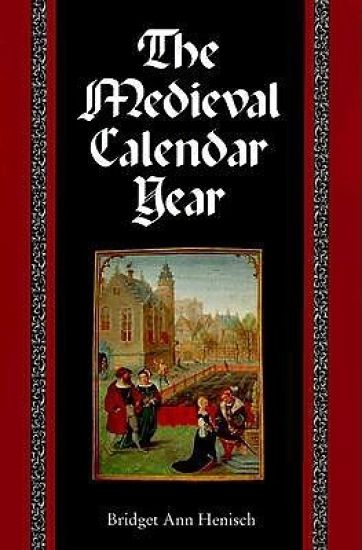
The Medieval Calendar Year celebrates the pictorial convention known as "The Labors of the Months" and the ways it was used in the Middle Ages. Richly illustrated and elegantly presented, it provides valuable insights into prevailing social attitudes and values and will fascinate all readers who are interested in the history and culture of medieval Europe.The "Labors" cycle was most popular during the High Middle Ages (ca. 1200–1500). The traditional cycle depicts the year as a round of seasonal activities on the land. Each month has its allotted task, and each of these represents one stage in the never-ending process of providing food for society. The small scenes that made up the cycle were well-known and used widely throughout Europe. They were chosen to decorate both public and private spaces: churches and houses, town fountains, baptismal fonts, as well as books of devotion intended both for priests and for the laity. The cycle was sculpted in stone, carved in wood, painted on glass and on manuscript pages. Examples from such media are described, but most of the illustrations have been taken from manuscripts, primarily Books of Hours.The author has spent the past fifteen years studying calendar after calendar, and one of her great strengths is her ability to see the social reality that lies hidden, even masked, behind the stylized presentation. In the chapter on winter, she shows how the image of this season, dreaded in the Middle Ages, was softened and sweetened by calendar artists to bring it more into harmony with the characteristic mood of the cycle as a whole. For autumn, she reveals how depictions of the harvest of grain, grapes, and livestock hint at a sophisticated market economy. Thematic chapters on children, women, and the hardship of work brilliantly cut through idealized conventions and assumptions to unveil the underlying complexities of life. The "Labors" cycle and its social context have not hitherto been examined in depth and with the care they deserve. The Medieval Calendar Year is a book worthy of the beautiful and beguiling tradition it describes.