Kirjojen hintavertailu. Mukana 11 342 296 kirjaa ja 12 kauppaa.

Kirjahaku

Etsi kirjoja tekijän nimen, kirjan nimen tai ISBN:n perusteella.

1000 tulosta hakusanalla Carla D. Chaney-Rhodes

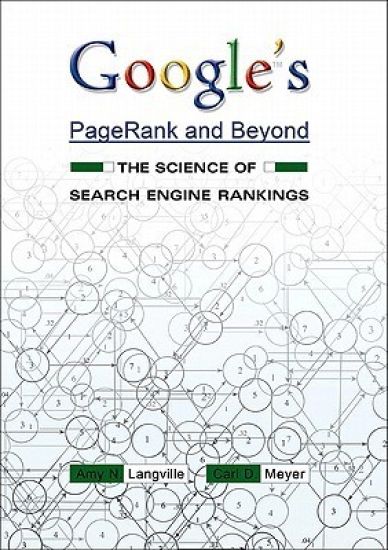
Google's PageRank and Beyond

Google's PageRank and Beyond

Amy N. Langville; Carl D. Meyer

Princeton University Press
2012
pokkari
Why doesn't your home page appear on the first page of search results, even when you query your own name? How do other web pages always appear at the top? What creates these powerful rankings? And how? The first book ever about the science of web page rankings, Google's PageRank and Beyond supplies the answers to these and other questions and more. The book serves two very different audiences: the curious science reader and the technical computational reader. The chapters build in mathematical sophistication, so that the first five are accessible to the general academic reader. While other chapters are much more mathematical in nature, each one contains something for both audiences. For example, the authors include entertaining asides such as how search engines make money and how the Great Firewall of China influences research. The book includes an extensive background chapter designed to help readers learn more about the mathematics of search engines, and it contains several MATLAB codes and links to sample web data sets. The philosophy throughout is to encourage readers to experiment with the ideas and algorithms in the text. Any business seriously interested in improving its rankings in the major search engines can benefit from the clear examples, sample code, and list of resources provided. * Many illustrative examples and entertaining asides * MATLAB code * Accessible and informal style * Complete and self-contained section for mathematics review
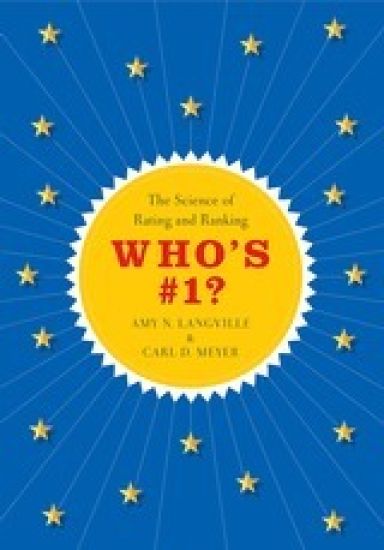
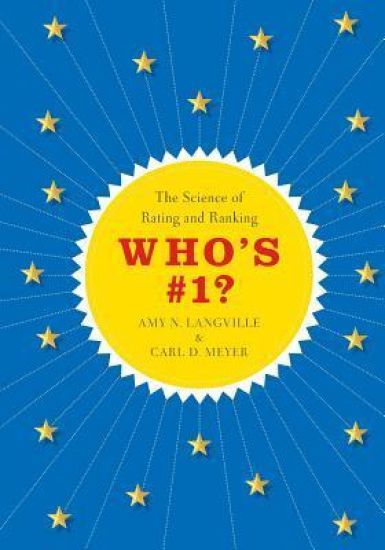
Who's #1?

Who's #1?

Amy N. Langville; Carl D. Meyer

Princeton University Press
2012
sidottu
A website's ranking on Google can spell the difference between success and failure for a new business. NCAA football ratings determine which schools get to play for the big money in postseason bowl games. Product ratings influence everything from the clothes we wear to the movies we select on Netflix. Ratings and rankings are everywhere, but how exactly do they work? Who's #1? offers an engaging and accessible account of how scientific rating and ranking methods are created and applied to a variety of uses. Amy Langville and Carl Meyer provide the first comprehensive overview of the mathematical algorithms and methods used to rate and rank sports teams, political candidates, products, Web pages, and more. In a series of interesting asides, Langville and Meyer provide fascinating insights into the ingenious contributions of many of the field's pioneers. They survey and compare the different methods employed today, showing why their strengths and weaknesses depend on the underlying goal, and explaining why and when a given method should be considered. Langville and Meyer also describe what can and can't be expected from the most widely used systems. The science of rating and ranking touches virtually every facet of our lives, and now you don't need to be an expert to understand how it really works. Who's #1? is the definitive introduction to the subject. It features easy-to-understand examples and interesting trivia and historical facts, and much of the required mathematics is included.
Who's #1?

Who's #1?

Amy N. Langville; Carl D. Meyer

Princeton University Press
2013
pokkari
A website's ranking on Google can spell the difference between success and failure for a new business. NCAA football ratings determine which schools get to play for the big money in postseason bowl games. Product ratings influence everything from the clothes we wear to the movies we select on Netflix. Ratings and rankings are everywhere, but how exactly do they work? Who's #1? offers an engaging and accessible account of how scientific rating and ranking methods are created and applied to a variety of uses. Amy Langville and Carl Meyer provide the first comprehensive overview of the mathematical algorithms and methods used to rate and rank sports teams, political candidates, products, Web pages, and more. In a series of interesting asides, Langville and Meyer provide fascinating insights into the ingenious contributions of many of the field's pioneers. They survey and compare the different methods employed today, showing why their strengths and weaknesses depend on the underlying goal, and explaining why and when a given method should be considered. Langville and Meyer also describe what can and can't be expected from the most widely used systems. The science of rating and ranking touches virtually every facet of our lives, and now you don't need to be an expert to understand how it really works. Who's #1? is the definitive introduction to the subject. It features easy-to-understand examples and interesting trivia and historical facts, and much of the required mathematics is included.
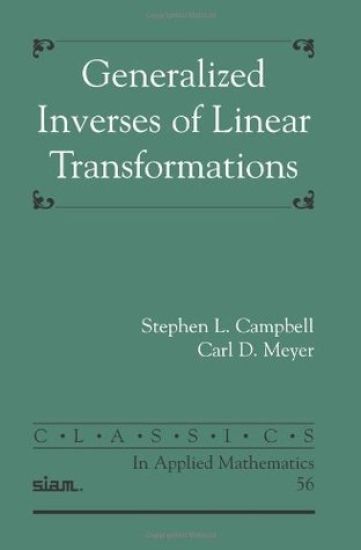
Generalized Inverses of Linear Transformations

Generalized Inverses of Linear Transformations

Stephen A. Campbell; Carl D. Meyer

Society for Industrial Applied Mathematics,U.S.
2009
pokkari
Generalized (or pseudo-) inverse concepts routinely appear throughout applied mathematics and engineering, in both research literature and textbooks. Although the basic properties are readily available, some of the more subtle aspects and difficult details of the subject are not well documented or understood. This book is an excellent reference for researchers and students who need or want more than just the most basic elements. First published in 1979, the book remains up-to-date and readable; it includes chapters on Markov Chains and the Drazin inverse methods that have become significant to many problems in applied mathematics. Generalized Inverses of Linear Transformations provides comprehensive coverage of the mathematical theory of generalized inverses coupled with a wide range of important and practical applications that includes topics in electrical and computer engineering, control and optimization, computing and numerical analysis, statistical estimation, and stochastic processes.
Vitreoretinal Disease

Vitreoretinal Disease

Ingrid U. Scott; Carl D. Regillo; Jr. Flynn; Gary C. Brown

Thieme Medical Publishers Inc
2018
sidottu
The management of major vitreoretinal diseases has changed dramatically since publication of the first edition in 1999. The field continues to evolve rapidly and is becoming an increasingly complex, multifaceted practice of medicine and surgery. As such, retinal specialists are faced with increasingly sophisticated diagnostic and therapeutic modalities to learn and master. Contributors to this completely updated reference are renowned experts in retinal disease and vitreous disorders. Divided into four essential sections, the book starts with a basic overview of posterior segment anatomy and physiology. The second section reviews the spectrum of diagnostic tools used in the field from relatively low technology such as the indirect ophthalmoscope to the latest, state-of-the-art optical coherence tomography test. The third and most comprehensive section covers disease states, subdivided into eight categories: retinovascular conditions, macular diseases, inherited vitreoretinal conditions, inflammatory conditions, intraocular tumors, vitreous and retinal detachments, trauma and toxicity, and fundus conditions. The text concludes with specific vitreoretinal procedures. Key Features New technologies including spectral domain optical coherence tomography (OCT), intravitreal injections, and microincisional vitrectomyThe utilization of multifocal electroretinography, scanning laser ophthalmoscopy, and fundus autofluorescenceAdvances in treatment of macular edema and age-related macular degeneration with anti-VEGF therapySummaries of the latest and most important clinical trialsRichly illustrated with more than 700 color state-of-the art retinal images and surgical procedure drawingsClinical pearls, controversies, and special considerations highlighted in color boxes in every chapterThis up-to-date, clinically-oriented resource will greatly benefit ophthalmology residents and ophthalmologists with comprehensive practices.
Blackhawk: Volume 1

Blackhawk: Volume 1

David M. Brown; Carl D. Smith

Independently Published
2019
nidottu
Welcome to Blackhawk, Colorado. Blackhawk has always been strange. Natural disasters. Disappearances. Murders. High strangeness is a part of daily life. We can't hope to explain it, but we can chronicle its past. Learn from it. Fear it. Blackhawk is an experimental fiction series set in a shared universe, written by a variety of talented authors. It is the brainchild of David M Brown (Plague Doctor, Modern Animals) and Carl D Smith (Moleb the Giant, Darkness Out of Carthage). Each story will contribute to an organic, evolving mythology as diverse as the voices behind its tales. For fans of True Detective, Lost Highway, Twilight Zone, and The Terror. This is Volume One of the series, and contains these three stories; Gravity, To Kill a Fire, and Charon. NOTE: For fans of Lake Lord Publishing's prior horror titles, be warned that Blackhawk will contain content that is perhaps more disturbing.
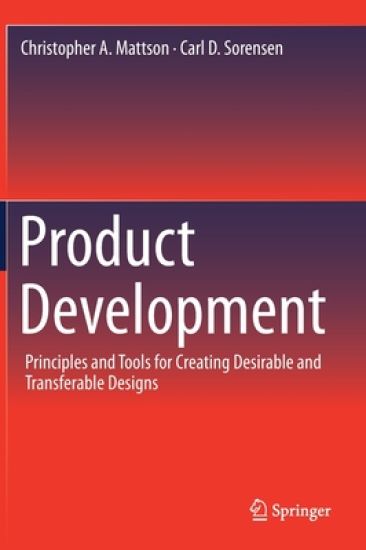
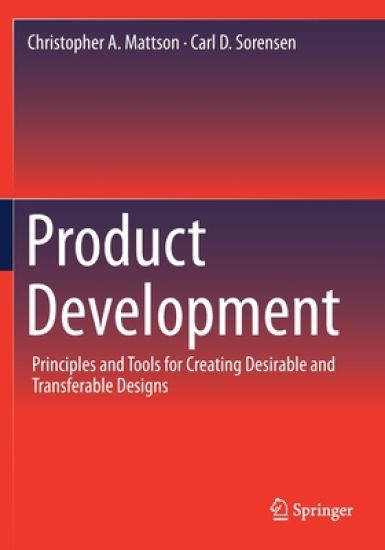
Product Development

Product Development

Christopher A. Mattson; Carl D. Sorensen

Springer Nature Switzerland AG
2019
sidottu
This book explores the evolution of products from the beginning idea through mass-production. Rather than prescribing a one-size-fits-all process, the authors explain the theory behind product development and challenge readers to develop their own customized development process uniquely suited for their individual situation. In addition to theory, the book provides development case studies, exercises and self-evaluation criteria at the end of each chapter, and a product development reference that introduces a wide variety of design tools and methods. Class-tested for three consecutive years by hundreds of students in four different courses, the book is an ideal text for senior design classes in mechanical engineering and related disciplines as well as a reference for practicing engineers/product designers.
Product Development

Product Development

Christopher A. Mattson; Carl D. Sorensen

Springer Nature Switzerland AG
2020
nidottu
This book explores the evolution of products from the beginning idea through mass-production. Rather than prescribing a one-size-fits-all process, the authors explain the theory behind product development and challenge readers to develop their own customized development process uniquely suited for their individual situation. In addition to theory, the book provides development case studies, exercises and self-evaluation criteria at the end of each chapter, and a product development reference that introduces a wide variety of design tools and methods. Class-tested for three consecutive years by hundreds of students in four different courses, the book is an ideal text for senior design classes in mechanical engineering and related disciplines as well as a reference for practicing engineers/product designers.
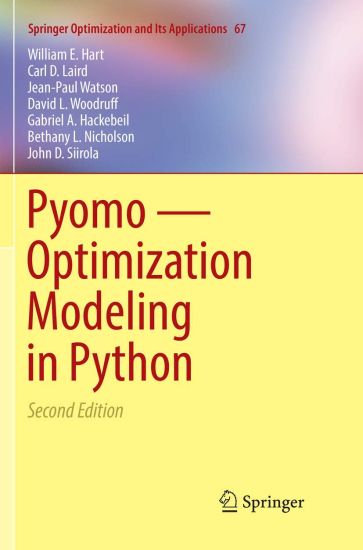
Pyomo — Optimization Modeling in Python

Pyomo — Optimization Modeling in Python

William E. Hart; Carl D. Laird; Jean-Paul Watson; David L. Woodruff; Gabriel A. Hackebeil; Bethany L. Nicholson; John D. Siirola

Springer International Publishing AG
2018
nidottu
?This book provides a complete and comprehensive guide to Pyomo (Python Optimization Modeling Objects) for beginning and advanced modelers, including students at the undergraduate and graduate levels, academic researchers, and practitioners. Using many examples to illustrate the different techniques useful for formulating models, this text beautifully elucidates the breadth of modeling capabilities that are supported by Pyomo and its handling of complex real-world applications. This second edition provides an expanded presentation of Pyomo’s modeling capabilities, providing a broader description of the software that will enable the user to develop and optimize models. Introductory chapters have been revised to extend tutorials; chapters that discuss advanced features now include the new functionalities added to Pyomo since the first edition including generalized disjunctive programming, mathematical programming with equilibrium constraints, and bilevel programming.Pyomois an open source software package for formulating and solving large-scale optimization problems. The software extends the modeling approach supported by modern AML (Algebraic Modeling Language) tools. Pyomo is a flexible, extensible, and portable AML that is embedded in Python, a full-featured scripting language. Python is a powerful and dynamic programming language that has a very clear, readable syntax and intuitive object orientation. Pyomo includes Python classes for defining sparse sets, parameters, and variables, which can be used to formulate algebraic expressions that define objectives and constraints. Moreover, Pyomo can be used from a command-line interface and within Python's interactive command environment, which makes it easy to create Pyomo models, apply a variety of optimizers, and examine solutions.
Behavioral Ecology of the Eastern Red-backed Salamander

Behavioral Ecology of the Eastern Red-backed Salamander

Robert G. Jaeger; Birgit Gollmann; Caitlin R. Gabor; Nancy R. Kohn; Carl D. Anthony

Oxford University Press Inc
2016
sidottu
The small, terrestrial eastern red-backed salamander is abundant on many forest floors of northeastern North America. Dr. Robert Jaeger and many of his graduate students spent over 50 years studying this species in New York and Virginia, using ecological techniques in forests and behavioral experiments in laboratory chambers in an attempt to understand how this species interacts with other species in the forest and the components of its intra- and intersexual social behaviors. The competitive and social behaviors of this species are unusually complex for an amphibian. This species is highly aggressive towards other similar-size species where they cohabit in forests, often leading to very little geographic overlap between the species. The authors examine the fascinating behavioral traits of this species including social monogamy, mutual mate guarding, sexual coercion, inter-species communication, and conflict resolution.
A Guide to Renewing Your School

A Guide to Renewing Your School

Lew Allen; Dale Rogers; Frances Hensley; Maude Glanton; Martha Livingston; Carl D. Glickman

Jossey-Bass Inc.,U.S.
1999
nidottu
Sponsored by the League of Professional Schools"Understanding school reform is a daunting task. A Guide to Renewing Your School goes a long way in communicating essential information about reform in a clear-cut manner."--Childhood Education In Renewing America's Schools, Carl D. Glickman--founder of the League of Professional Schools--made the case for basing school improvement efforts on democratic values and principles. He proposed a three-part framework for reform that would enable schools and communities to create successful change in their schools and discussed how states and districts could support their efforts. In this companion volume, the authors provide detailed instructions on how Glickman's framework can be implemented at the school level.A Guide to Renewing Your School is based on years of practical experience, numerous case examples, and empirical studies from the League of Professional Schools, a reform network based in Georgia. This hands-on book guides school practitioners through the essential steps of a reform process: (1) designing a covenant to guide teaching and learning, (2) creating a shared governance process to promote democratic leadership and decision making, and (3) implementing action research to assess the reform process. The authors also address the challenges of change, such as how to create a school climate that will foster implementation of the framework and how to determine the type of facilitation and staff development needed to sustain this work. Filled with sample covenants, charters, mission statements, worksheets, forms, and other tools, A Guide to Renewing Your School presents not only a coherent framework, but useful strategies for promoting school-wide renewal and improvement.
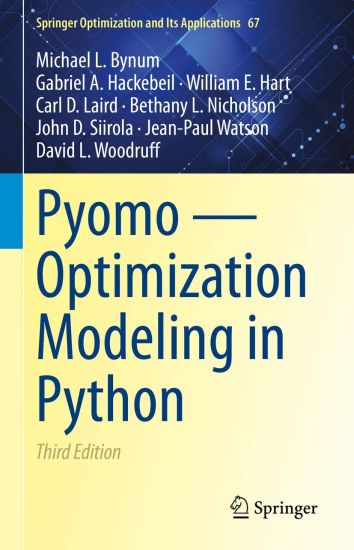
Pyomo — Optimization Modeling in Python

Pyomo — Optimization Modeling in Python

Michael L. Bynum; Gabriel A. Hackebeil; William E. Hart; Carl D. Laird; Bethany L. Nicholson; John D. Siirola; Jean-Paul Watson; David L. Woodruff

Springer Nature Switzerland AG
2021
sidottu
This book provides a complete and comprehensive guide to Pyomo (Python Optimization Modeling Objects) for beginning and advanced modelers, including students at the undergraduate and graduate levels, academic researchers, and practitioners. Using many examples to illustrate the different techniques useful for formulating models, this text beautifully elucidates the breadth of modeling capabilities that are supported by Pyomo and its handling of complex real-world applications. In the third edition, much of the material has been reorganized, new examples have been added, and a new chapter has been added describing how modelers can improve the performance of their models. The authors have also modified their recommended method for importing Pyomo. A big change in this edition is the emphasis of concrete models, which provide fewer restrictions on the specification and use of Pyomo models. Pyomo is an open source software package for formulating and solving large-scale optimization problems. The software extends the modeling approach supported by modern AML (Algebraic Modeling Language) tools. Pyomo is a flexible, extensible, and portable AML that is embedded in Python, a full-featured scripting language. Python is a powerful and dynamic programming language that has a very clear, readable syntax and intuitive object orientation. Pyomo includes Python classes for defining sparse sets, parameters, and variables, which can be used to formulate algebraic expressions that define objectives and constraints. Moreover, Pyomo can be used from a command-line interface and within Python's interactive command environment, which makes it easy to create Pyomo models, apply a variety of optimizers, and examine solutions.
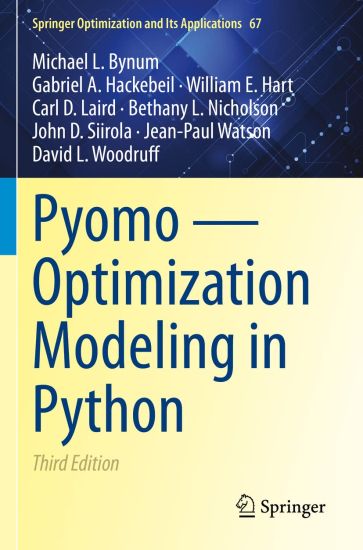
Pyomo — Optimization Modeling in Python

Pyomo — Optimization Modeling in Python

Michael L. Bynum; Gabriel A. Hackebeil; William E. Hart; Carl D. Laird; Bethany L. Nicholson; John D. Siirola; Jean-Paul Watson; David L. Woodruff

Springer Nature Switzerland AG
2022
nidottu
This book provides a complete and comprehensive guide to Pyomo (Python Optimization Modeling Objects) for beginning and advanced modelers, including students at the undergraduate and graduate levels, academic researchers, and practitioners. Using many examples to illustrate the different techniques useful for formulating models, this text beautifully elucidates the breadth of modeling capabilities that are supported by Pyomo and its handling of complex real-world applications. In the third edition, much of the material has been reorganized, new examples have been added, and a new chapter has been added describing how modelers can improve the performance of their models. The authors have also modified their recommended method for importing Pyomo. A big change in this edition is the emphasis of concrete models, which provide fewer restrictions on the specification and use of Pyomo models. Pyomo is an open source software package for formulating and solving large-scale optimization problems. The software extends the modeling approach supported by modern AML (Algebraic Modeling Language) tools. Pyomo is a flexible, extensible, and portable AML that is embedded in Python, a full-featured scripting language. Python is a powerful and dynamic programming language that has a very clear, readable syntax and intuitive object orientation. Pyomo includes Python classes for defining sparse sets, parameters, and variables, which can be used to formulate algebraic expressions that define objectives and constraints. Moreover, Pyomo can be used from a command-line interface and within Python's interactive command environment, which makes it easy to create Pyomo models, apply a variety of optimizers, and examine solutions.