Kirjojen hintavertailu. Mukana 12 016 292 kirjaa ja 12 kauppaa.

Kirjahaku

Etsi kirjoja tekijän nimen, kirjan nimen tai ISBN:n perusteella.

1000 tulosta hakusanalla Cary Carson

Rare Coins, Medals, Tokens, Paper Money, Curios, Relics, Gems, Etc. ... the Cary, McGill, Heaton, Havemeyer, Kinports, Craddock, Little, Morris, Halle
This work has been selected by scholars as being culturally important and is part of the knowledge base of civilization as we know it.This work is in the public domain in the United States of America, and possibly other nations. Within the United States, you may freely copy and distribute this work, as no entity (individual or corporate) has a copyright on the body of the work.Scholars believe, and we concur, that this work is important enough to be preserved, reproduced, and made generally available to the public. To ensure a quality reading experience, this work has been proofread and republished using a format that seamlessly blends the original graphical elements with text in an easy-to-read typeface.We appreciate your support of the preservation process, and thank you for being an important part of keeping this knowledge alive and relevant.
A Discourse of Bath, and the hot Waters There. Also, Some Enquiries Into the Nature of the Water of St. Vincent's Rock, Near Bristol, and That of Castle-Cary. The Second Edition
The 18th century was a wealth of knowledge, exploration and rapidly growing technology and expanding record-keeping made possible by advances in the printing press. In its determination to preserve the century of revolution, Gale initiated a revolution of its own: digitization of epic proportions to preserve these invaluable works in the largest archive of its kind. Now for the first time these high-quality digital copies of original 18th century manuscripts are available in print, making them highly accessible to libraries, undergraduate students, and independent scholars.Medical theory and practice of the 1700s developed rapidly, as is evidenced by the extensive collection, which includes descriptions of diseases, their conditions, and treatments. Books on science and technology, agriculture, military technology, natural philosophy, even cookbooks, are all contained here.++++The below data was compiled from various identification fields in the bibliographic record of this title. This data is provided as an additional tool in helping to insure edition identification: ++++Cambridge University LibraryT182879First published in 1676 as 'A discourse of Bathe, and the hot waters there. .. By Tho. Guidott, ..' (Wing G2192).London: printed in the year, 1725. 28],430p., plates; 12
Pocahontas, alias Matoaka, and her descendants through her marriage at Jamestown, Virginia, in April, 1614, with John Rolfe, gentleman; including the names of Alfriend, Archer, Bentley, Bernard, Bland, Boling, Branch, Cabell, Catlett, Cary, Dandridge, Dixo
This book has been considered by academicians and scholars of great significance and value to literature. This forms a part of the knowledge base for future generations. So that the book is never forgotten we have represented this book in a print format as the same form as it was originally first published. Hence any marks or annotations seen are left intentionally to preserve its true nature.
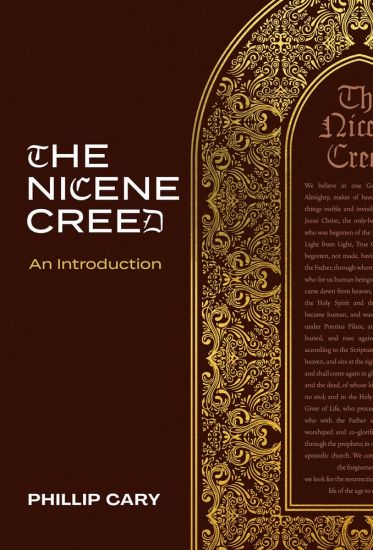
The Nicene Creed – An Introduction

The Nicene Creed – An Introduction

Cary

Faithlife Corporation
2023
nidottu
Understand and celebrate what we believe For centuries, the Nicene Creed has been central to the church's confession. The Nicene Creed: An Introduction by Phillip Cary explores the Creed's riches with simplicity and clarity. Cary explains the history of the Creed and walks through its meaning line by line. Far from being abstract or irrelevant, the words of the Creed carefully express what God has done in Christ and through the Spirit. The Nicene Creed gives us the gospel. It gives biblical Christians the words for what we already believe. And when we profess the Creed, we join the global church throughout history in declaring the name and work of the one God--Father, Son, and Spirit. Gain a fresh appreciation for the ancient confession with Phillip Cary's help.
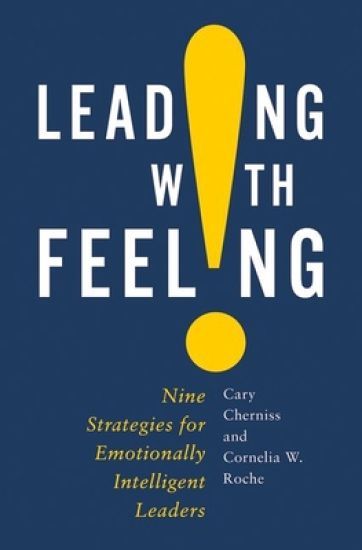
Leading with Feeling

Leading with Feeling

Cary Cherniss; Cornelia Roche

Oxford University Press Inc
2020
sidottu
For many decades, the conventional wisdom was that emotion has no place in the work world, and the ideal leader is one who approaches problems rationally and unemotionally. However, the reality is that emotion is inevitable when a group of people come together for an extended period of time to work on challenging tasks, and if used effectively, a leader's moods and emotions can be a plus rather than a minus. This book describes how 25 outstanding leaders used emotional intelligence to deal with critical challenges and opportunities. Featuring commentary from the leaders themselves describing how they handled each situation, it helps managers better understand not just what emotional intelligence is, or how to measure it, or how it is linked to bottom-line results: it also shows how real leaders used their emotional intelligence to deal with real situations. The book distills the leaders' experiences into nine strategies that can help any leader or potential leader to be more effective. Each chapter concludes with activities that help readers to apply immediately each of those strategies.
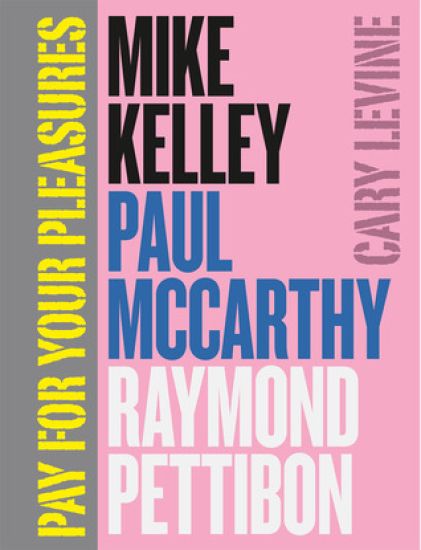
Pay for Your Pleasures

Pay for Your Pleasures

Cary Levine

University of Chicago Press
2013
sidottu
Mike Kelley, Paul McCarthy, and Raymond Pettibon - these Southern California artists formed a "bad boy" trifecta. Early purveyors of abject art, the trio produced work ranging from sculptures of feces to copulating stuffed animals, and gained notoriety from being perverse. Showing how their work rethinks transgressive art practices in the wake of the 1960s, "Pay for Your Pleasures" argues that their collaborations as well as their individual enterprises make them among the most compelling artists in the Los Angeles area in recent years. Cary Levine focuses on Kelley's, McCarthy's, and Pettibon's work from the 1970s through the 1990s, plotting the circuitous routes they took in their artistic development. Drawing on extensive interviews with each artist, he identifies the diverse forces that had a crucial bearing on their development - such as McCarthy's experiences at the University of Utah, Kelley's interest in the Detroit-based White Panther movement, Pettibon's study of economics, and how all three participated in burgeoning subcultural music scenes. Levine discovers a common political strategy underlying their art that critiques both nostalgia for the 1960s counterculture and Reagan-era conservatism. He shows how this strategy led each artist to create strange and unseemly images that test the limits of not only art but also gender roles, sex, acceptable behavior, poor taste, and even the gag reflex that separates pleasure from disgust. As a result, their work places viewers in uncomfortable situations that challenge them to reassess their own values. The first substantial analysis of Kelley, McCarthy, and Pettibon, "Pay for Your Pleasures" shines new light on three artists whose work continues to resonate in the world of art and politics.
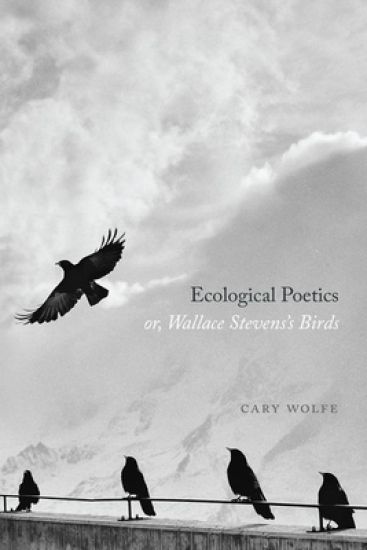
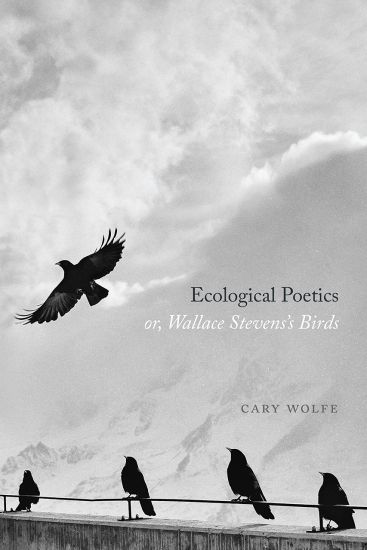
Ecological Poetics; Or, Wallace Stevens's Birds

Ecological Poetics; Or, Wallace Stevens's Birds

Cary Wolfe

University of Chicago Press
2020
sidottu
The poems of Wallace Stevens teem with birds: grackles, warblers, doves, swans, nightingales, owls, peacocks, and one famous blackbird who summons thirteen ways of looking. What do Stevens’s evocations of birds, and his poems more generally, tell us about the relationship between human and nonhuman? In this book, the noted theorist of posthumanism Cary Wolfe argues for a philosophical and theoretical reinvention of ecological poetics, using Stevens as a test case. Stevens, Wolfe argues, is an ecological poet in the sense that his places, worlds, and environments are co-created by the life forms that inhabit them. Wolfe argues for a “nonrepresentational” conception of ecopoetics, showing how Stevens’s poems reward study alongside theories of system, environment, and observation derived from a multitude of sources, from Ralph Waldo Emerson and Niklas Luhmann to Jacques Derrida and Stuart Kauffman. Ecological Poetics is an ambitious interdisciplinary undertaking involving literary criticism, contemporary philosophy, and theoretical biology.
Ecological Poetics; Or, Wallace Stevens's Birds

Ecological Poetics; Or, Wallace Stevens's Birds

Cary Wolfe

University of Chicago Press
2020
nidottu
The poems of Wallace Stevens teem with birds: grackles, warblers, doves, swans, nightingales, owls, peacocks, and one famous blackbird who summons thirteen ways of looking. What do Stevens’s evocations of birds, and his poems more generally, tell us about the relationship between human and nonhuman? In this book, the noted theorist of posthumanism Cary Wolfe argues for a philosophical and theoretical reinvention of ecological poetics, using Stevens as a test case. Stevens, Wolfe argues, is an ecological poet in the sense that his places, worlds, and environments are co-created by the life forms that inhabit them. Wolfe argues for a “nonrepresentational” conception of ecopoetics, showing how Stevens’s poems reward study alongside theories of system, environment, and observation derived from a multitude of sources, from Ralph Waldo Emerson and Niklas Luhmann to Jacques Derrida and Stuart Kauffman. Ecological Poetics is an ambitious interdisciplinary undertaking involving literary criticism, contemporary philosophy, and theoretical biology.
Animal Rites

Animal Rites

Cary Wolfe; W. J. T. Mitchell

University of Chicago Press
2003
sidottu
Now that supposedly distinguishing marks of humanity, from reasoning to tool use, have been found in other species, how can we justify discriminating against nonhuman animals solely on the basis of their species? And how must cultural studies and critical practices change to do justice to "others" who are not human? In "Animal Rites", Cary Wolfe examines contemporary notions of humanism, ethics and animals by reconstructing a little known but crucial underground tradition of theorizing the animal from Wittgenstein, Cavell and Lyotard to Levinas, Derrida, Zizek, Maturana and Varela. Through detailed readings of how discourses of race, sexuality, colonialism and animality interact in 20th-century American culture - Hemingway's fiction, the film "The Silence of the Lambs", Michael Crichton's novel "Congo" - Wolfe explores what it would mean, in theory and critical practice, to take seriously "the question of the animal". A pathbreaking contribution to discussions of posthumanism, "Animal Rites" should interest readers in a wide range of fields, from science and literature to philsosophy and ethics, from animal rights and ecology to literary theory and criticism.
Animal Rites

Animal Rites

Cary Wolfe; W. J. T. Mitchell

University of Chicago Press
2003
nidottu
Now that supposedly distinguishing marks of humanity, from reasoning to tool use, have been found in other species, how can we justify discriminating against nonhuman animals solely on the basis of their species? And how must cultural studies and critical practices change to do justice to "others" who are not human? In "Animal Rites", Cary Wolfe examines contemporary notions of humanism, ethics and animals by reconstructing a little known but crucial underground tradition of theorizing the animal from Wittgenstein, Cavell and Lyotard to Levinas, Derrida, Zizek, Maturana and Varela. Through detailed readings of how discourses of race, sexuality, colonialism and animality interact in 20th-century American culture - Hemingway's fiction, the film "The Silence of the Lambs", Michael Crichton's novel "Congo" - Wolfe explores what it would mean, in theory and critical practice, to take seriously "the question of the animal". A pathbreaking contribution to discussions of posthumanism, "Animal Rites" should interest readers in a wide range of fields, from science and literature to philsosophy and ethics, from animal rights and ecology to literary theory and criticism.
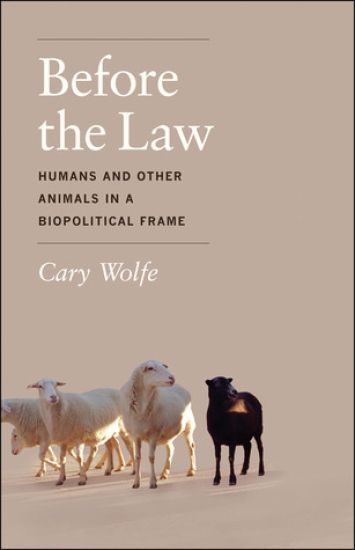
Before the Law

Before the Law

Cary Wolfe

University of Chicago Press
2012
sidottu
Animal studies and biopolitics are two of the most dynamic areas of interdisciplinary scholarship, but until now, they have had little to say to each other. Bringing these two emergent areas of thought into direct conversation in "Before the Law", Cary Wolfe fosters a new discussion about the status of nonhuman animals and the shared plight of humans and animals under biopolitics. Wolfe argues that the human-animal distinction must be supplemented with the central distinction of biopolitics: the difference between those animals that are members of a community and those that are deemed killable but not murderable. From this understanding, we can begin to make sense of the fact that this distinction prevails within both the human and animal domains and address such difficult issues as why we afford some animals unprecedented levels of care and recognition while subjecting others to unparalleled forms of brutality and exploitation. Engaging with many major figures in biopolitical thought - from Heidegger, Arendt, and Foucault to Agamben, Roberto Esposito, and Derrida - Wolfe explores how biopolitics can help us understand both the ethical and political dimensions of the current questions surrounding the rights of animals.
Before the Law

Before the Law

Cary Wolfe

University of Chicago Press
2012
nidottu
Animal studies and biopolitics are two of the most dynamic areas of interdisciplinary scholarship, but until now, they have had little to say to each other. Bringing these two emergent areas of thought into direct conversation in "Before the Law", Cary Wolfe fosters a new discussion about the status of nonhuman animals and the shared plight of humans and animals under biopolitics. Wolfe argues that the human-animal distinction must be supplemented with the central distinction of biopolitics: the difference between those animals that are members of a community and those that are deemed killable but not murderable. From this understanding, we can begin to make sense of the fact that this distinction prevails within both the human and animal domains and address such difficult issues as why we afford some animals unprecedented levels of care and recognition while subjecting others to unparalleled forms of brutality and exploitation. Engaging with many major figures in biopolitical thought - from Heidegger, Arendt, and Foucault to Agamben, Roberto Esposito, and Derrida - Wolfe explores how biopolitics can help us understand both the ethical and political dimensions of the current questions surrounding the rights of animals.
Extinction Studies

Extinction Studies

Cary Wolfe

Columbia University Press
2017
sidottu
Extinction Studies focuses on the entangled ecological and social dimensions of extinction, exploring the ways in which extinction catastrophically interrupts life-giving processes of time, death, and generations. The volume opens up important philosophical questions about our place in, and obligations to, a more-than-human world. Drawing on fieldwork, philosophy, literature, history, and a range of other perspectives, each of the chapters in this book tells a unique extinction story that explores what extinction is, what it means, why it matters-and to whom.
Extinction Studies

Extinction Studies

Cary Wolfe

Columbia University Press
2017
pokkari
Extinction Studies focuses on the entangled ecological and social dimensions of extinction, exploring the ways in which extinction catastrophically interrupts life-giving processes of time, death, and generations. The volume opens up important philosophical questions about our place in, and obligations to, a more-than-human world. Drawing on fieldwork, philosophy, literature, history, and a range of other perspectives, each of the chapters in this book tells a unique extinction story that explores what extinction is, what it means, why it matters-and to whom.