
Kirjahaku
Etsi kirjoja tekijän nimen, kirjan nimen tai ISBN:n perusteella.
1000 tulosta hakusanalla Cecelia Ahern

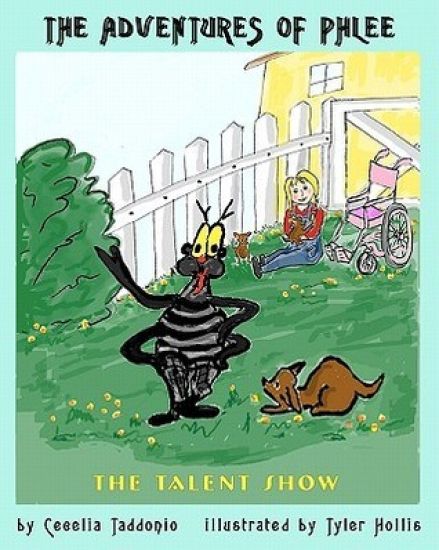
The Adventures of Phlee: The Talent Show
Cecelia Taddonio
Createspace Independent Publishing Platform
2010
nidottu

Been There Done That Wrote the Book
Cecelia Deborah Adams
Createspace Independent Publishing Platform
2011
nidottu

Mysteries of Reincarnation: Defining your Purpose
Cecelia Vauldine Kendall
Createspace Independent Publishing Platform
2012
nidottu


Jack London (1876-1916) found fame with his wolf-dog tales and sagas of the frozen North, but Cecelia Tichi challenges the long-standing view of London as merely a mass-market producer of potboilers. A onetime child laborer, London led a life of poverty in the Gilded Age before rising to worldwide acclaim for stories, novels, and essays designed to hasten the social, economic, and political advance of America. In this major reinterpretation of London's career, Tichi examines how the beloved writer leveraged his written words as a force for the future.Tracing the arc of London's work from the late 1800s through the 1910s, Tichi profiles the writer's allies and adversaries in the cities, on the factory floor, inside prison walls, and in the farmlands. Thoroughly exploring London's importance as an artist and as a political and public figure, Tichi brings to life a man who merits recognition as one of America's foremost public intellectuals.

A delightful romp through America's Golden Age of Cocktails The decades following the American Civil War burst with invention—they saw the dawn of the telephone, the motor car, electric lights, the airplane—but no innovation was more welcome than the beverage heralded as the "cocktail." The Gilded Age, as it came to be known, was the Golden Age of Cocktails, giving birth to the classic Manhattan and martini that can be ordered at any bar to this day. Scores of whiskey drinks, cooled with ice chips or cubes that chimed against the glass, proved doubly pleasing when mixed, shaken, or stirred with special flavorings, juices, and fruits. The dazzling new drinks flourished coast to coast at sporting events, luncheons, and balls, on ocean liners and yachts, in barrooms, summer resorts, hotels, railroad train club cars, and private homes. From New York to San Francisco, celebrity bartenders rose to fame, inventing drinks for exclusive universities and exotic locales. Bartenders poured their liquid secrets for dancing girls and such industry tycoons as the newspaper mogul William Randolph Hearst and the railroad king "Commodore" Cornelius Vanderbilt. Cecelia Tichi offers a tour of the cocktail hours of the Gilded Age, in which industry, innovation, and progress all take a break to enjoy the signature beverage of the age. Gilded Age Cocktails reveals the fascinating history behind each drink as well as bartenders' formerly secret recipes. Though the Gilded Age cocktail went "underground" during the Prohibition era, it launched the first of many generations whose palates thrilled to a panoply of artistically mixed drinks.
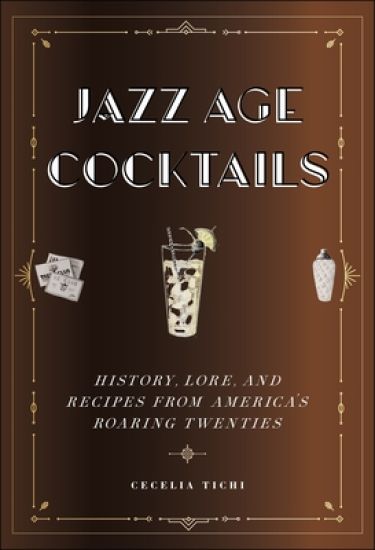
How the Prohibition law of 1920 made alcohol, savored in secret, all the more delectable when the cocktail shaker was forced to go "underground" "Roaring Twenties" America boasted famous firsts: women's right to vote, jazz music, talking motion pictures, flapper fashions, and wondrous new devices like the safety razor and the electric vacuum cleaner. The privations of the Great War were over, and Wall Street boomed. The decade opened, nonetheless, with a shock when Prohibition became the law of the land on Friday, January 16, 1920, when the Eighteenth Amendment banned "intoxicating liquors." Decades-long campaigns to demonize alcoholic beverages finally became law, and America officially went "dry." American ingenuity promptly rose to its newest challenge. The law, riddled with loopholes, let the 1920s write a new chapter in the nation's saga of spirits. Men and women spoke knowingly of the speakeasy, the bootlegger, rum-running, black ships, blind pigs, gin mills, and gallon stills. Passwords ("Oscar sent me") gave entrée to night spots and supper clubs where cocktails abounded, and bartenders became alchemists of timely new drinks like the Making Whoopee, the Petting Party, the Dance the Charleston. A new social event—the cocktail party staged in a private home—smashed the gender barrier that had long forbidden "ladies" from entering into the gentlemen-only barrooms and cafés. From the author of Gilded Age Cocktails, this book takes a delightful new romp through the cocktail creations of the early twentieth century, transporting readers into the glitz and (illicit) glamour of the 1920s. Spirited and richly illustrated, Jazz Age Cocktails dazzles with tales of temptation and temperance, and features charming cocktail recipes from the time to be recreated and enjoyed.
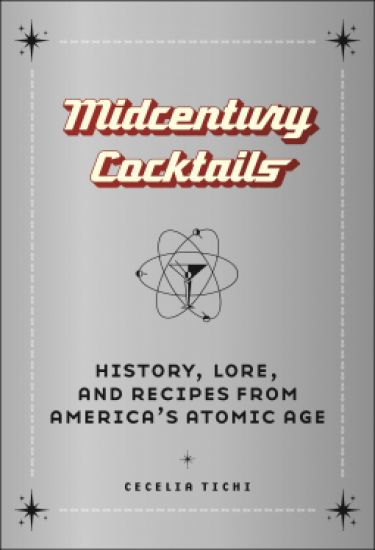
A delightful history of cocktails from the era of new interstate highways, sprouting suburbs, and atomic engineering America at midcentury was a nation on the move, taking to wings and wheels along the new interstate highways and in passenger jets that soared to thirty thousand feet. Anxieties rippled, but this new Atomic Age promised cheap power and future wonders, while the hallmark of the era was the pleasure of an evening imbibing cocktails in mixed company, a middle-class idea of sophisticated leisure. This new age, stretching from the post–World War II baby boom years through the presidency of General Dwight Eisenhower into the increasingly volatile mid-1960s, promised affordable homes for those who had never dreamed of owning property and an array of gleaming appliances to fill them. For many, this was America at its best—innovation, style, and the freedom to enjoy oneself—and the spirit of this time is reflected in the whimsical cocktails that rose to prominence: tiki drinks, Moscow mules, Sea Breezes, Pina Coladas, Pink Squirrels, and Sloe Gin Fizzes. Of course, not everyone was invited to the party. Though the drinks were getting sweeter, the racial divide was getting more bitter—Black Americans in search of a drink, entertainment, or a hotel room had to depend on the Green Book for advice on places where they would be welcome and safe. And the Cold War and Space Race proceeded ominously throughout this period, as technological advances alternately thrilled and terrified. The third installment in Cecelia Tichi's tour of the cocktails enjoyed in various historical eras, Midcentury Cocktails brings a time of limitless possibilities to life though the cocktails created, named, and consumed.
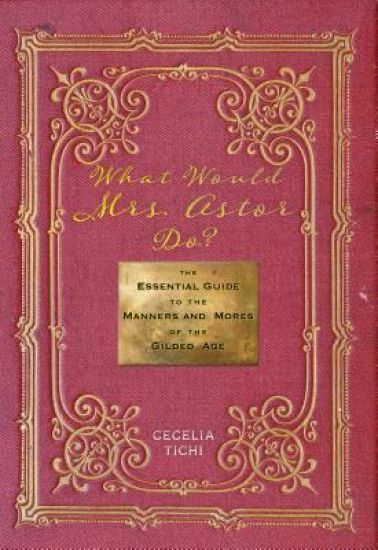
A richly illustrated romp with America's Gilded Age leisure class—and those angling to join it Mark Twain called it the Gilded Age. Between 1870 and 1900, the United States' population doubled, accompanied by an unparalleled industrial expansion, and an explosion of wealth unlike any the world had ever seen. America was the foremost nation of the world, and New York City was its beating heart. There, the richest and most influential—Thomas Edison, J. P. Morgan, Edith Wharton, the Vanderbilts, Andrew Carnegie, and more—became icons, whose comings and goings were breathlessly reported in the papers of Joseph Pulitzer and William Randolph Hearst. It was a time of abundance, but also bitter rivalries, in work and play. The Old Money titans found themselves besieged by a vanguard of New Money interlopers eager to gain entrée into their world of formal balls, debutante parties, opera boxes, sailing regattas, and summer gatherings at Newport. Into this morass of money and desire stepped Caroline Astor. Mrs. Astor, an Old Money heiress of the first order, became convinced that she was uniquely qualified to uphold the manners and mores of Gilded Age America. Wherever she went, Mrs. Astor made her judgments, dictating proper behavior and demeanor, men's and women's codes of dress, acceptable patterns of speech and movements of the body, and what and when to eat and drink. The ladies and gentlemen of high society took note. "What would Mrs. Astor do?" became the question every social climber sought to answer. And an invitation to her annual ball was a golden ticket into the ranks of New York's upper crust. This work serves as a guide to manners as well as an insight to Mrs. Astor's personal diary and address book, showing everything from the perfect table setting to the array of outfits the elite wore at the time. Channeling the queen of the Gilded Age herself, Cecelia Tichi paints a portrait of New York's social elite, from the schools to which they sent their children, to their lavish mansions and even their reactions to the political and personal scandals of the day. Ceceilia Tichi invites us on a beautifully illustrated tour of the Gilded Age, transporting readers to New York at its most fashionable. A colorful tapestry of fun facts and true tales, What Would Mrs. Astor Do? presents a vivid portrait of this remarkable time of social metamorphosis, starring Caroline Astor, the ultimate gatekeeper.

Santa and his elves have been very busy preparing the presents to be delivered to all the good girls and boys. After Santa promises his head elf that he will do his best to not stay too long at his first stop, he boards his sleigh and takes off into the sky with his eight reindeer leading the way. When Santa arrives at his first stop-a small town in the Middle East-he enters a cave. Inside are a man, his wife, and a newborn babe. As he cradles the baby in his arms, Santa thanks Him for being born so he can have the best job in the world-making children happy. Santa's First Stop unites the scriptural Christmas story with the magic and wonder embodied by Santa to remind children of the true meaning of this special holiday.