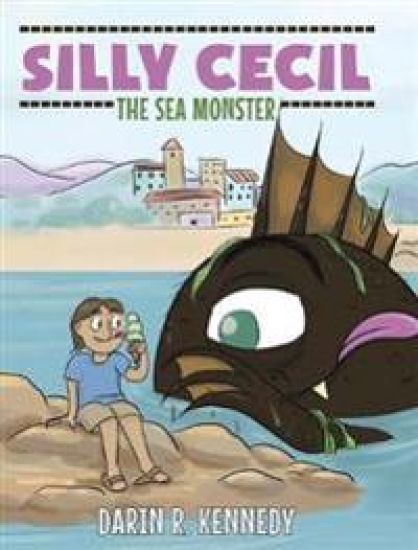
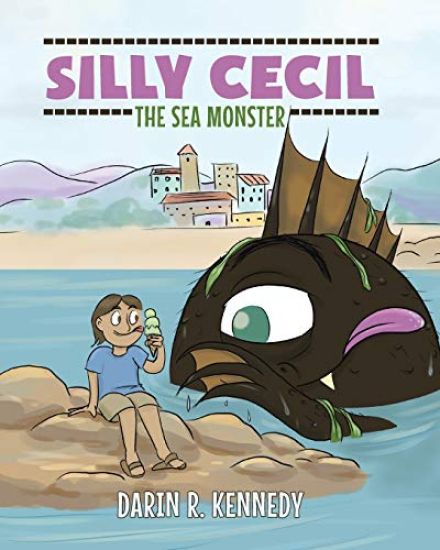
This story is about a Greek boy who lives on a small island and befriends a giant sea monster. The village where the boy lives is famous for making ice cream out of the seaweed they harvest from the sea around their island. When the boy becomes friends with the giant sea monster by sharing his ice cream with him, the chaos begins. The sea monster enjoys the ice cream so much that he tramples into the village to seek out more of it. This scares the villagers living peacefully in the village and prompts them to protect their property from the beast that accidentally destroys it. When the boy catches wind of the plot to protect the village from the sea monster, he becomes concerned. The leader of the village askes the boy if he can help create a plan of attack to ensure the safety of all involved, especially his new sea-monster friend. He designs a plan that makes both the village safe and the giant beast very happy. A friendly relationship between the entire village evolves, and the sea monster becomes an integral part in the harvesting of the seaweed for the villagers to continue making their famous ice cream for all to enjoy, especially their new friend, the sea monster.
Harold Cecil Edey (1913–2007) and his colleagues David Solomons (1912–1995) and William T. Baxter (1907–2006) at the London School of Economics and Political Science (LSE) were instrumental in the development of British accounting thought in the mid-1900s. These three influential scholars influenced a generation of students who came to populate the British accounting profession and academia to the point where, in the early 1970s, half of all full-time accounting professors in the United Kingdom were LSE alumni. Edey’s role in these developments, however, remains relatively underappreciated. This edited volume contains 13 of Edey’s unpublished manuscripts written during the heyday of the LSE Triumvirate. These manuscripts address issues of accounting education, measurements, and theory, and they are accompanied by editorial comments that put the material in its historical context. The volume also contains an aide-mémoire of Edey’s professional activities and a complete bibliography of his published work. The material offers new insight into Edey’s contribution to the British accounting profession, and developments at the LSE, during a critical period of academic expansion and struggle to address the problem of accounting for rising inflation. The material is of value to anyone interested in the development of accounting thought.
Harry Leon Wilson (May 1, 1867 - June 28, 1939) was an American novelist and dramatist best known for his novels Ruggles of Red Gap and Merton of the Movies. His novel Bunker Bean helped popularize the term flapper Harry Leon Wilson was born in Oregon, Illinois, the son of Samuel and Adeline (n e Kidder).Samuel was a newspaper publisher, and Harry learned to set type at an early age. He began work as a stenographer after leaving home at sixteen. He worked his way west through Topeka, Omaha, Denver, and eventually to California. He was a contributor to the histories of Hubert Howe Bancroft, and became the private secretary to Virgil Bogue. In December 1886, Wilson's story The Elusive Dollar Bill was accepted by Puck magazine. He continued to contribute to Puck and became assistant editor in 1892. Henry Cuyler Bunner died in 1896 and Wilson replaced him as editor. The publication of The Spenders allowed Wilson to quit Puck in 1902 and devote himself full-time to writing
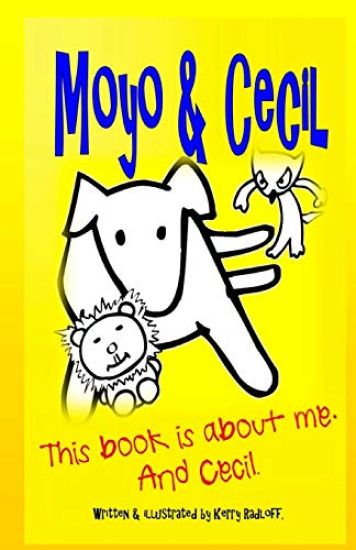
There is Moyo. And there is Cecil...several Cecil's, actually. And they are inseparable. A rather portly black Labrador, Moyo lives a charmed life with her "Mom" and "Dad" and a collection of other animals - HairyButt, Jones and the Donkeys.(which are really fish but no-one can ever remember to call them that )When Moyo arrived she was teeny tiny and a little nervous in her new home so her Mom gave her a fluffy toy to cuddle - and Cecil was born. Cecil is as necessary to Moyo as are mealtimes. He has come in several forms over the three years of her young life, but remains a constant companion.It has got that visitors now bring a Cecil as a gift when visiting. Gone are the chocolates and wine that Mom used to get. Now it's Moyo who is gifted. She even gets Cecils sent to her in the post from overseas, the arrivals of which cause major excitement.Moyo (and Cecil) and the cats living in the house are excellent friends and can often be found playing together around the home and garden. Another companion is HairyButt; the very old, very smelly dog who resembles a toilet-brush-on-legs. Somewhat grumpy and prone to spontaneous licking of inanimate objects (and the cats), HairyButt features prominently in Moyo's daily stories.Sometimes Moyo and friends drive Mom (and Dad) mad with their antics and things can get a little heated at times. By the way? Moyo insisted that Mom clean her act up in a Kids version of her diary. So despite Mom's protestations that kids probably also like swear words and talk about bums and so on, she gave in and made a sanitised version of Moyo & Cecil. This is it )Moyo and Mom have discussions about life and the happenings in it. Being kind and rather clever, Moyo has an approach to our existence that we could all use a little more of.Read on to view the world through the eyes of Moyo&Cecil.
Beautifully illustrated catalogue on the life and work of 20th century British abstract artist, John Cecil Stephenson, which accompanies an exhibition at Burgh House, UK.
Remains Of The Rev. Richard Cecil To Which Is Prefixed, A View Of His Character has been considered by academicians and scholars of great significance and value to literature. This forms a part of the knowledge base for future generations. So that the book is never forgotten we have represented this book in a print format as the same form as it was originally first published. Hence any marks or annotations seen are left intentionally to preserve its true nature.
Observera att förlaget som ger ut denna produkt baserar innehållet i sina produkter på fria källor som Wikipedia. Boken är med stor sannolikhet endast ett utdrag ur dessa informationskällor, alltså inte en vanlig bok i den bemärkelsen.
Observera att förlaget som ger ut denna produkt baserar innehållet i sina produkter på fria källor som Wikipedia. Boken är med stor sannolikhet endast ett utdrag ur dessa informationskällor, alltså inte en vanlig bok i den bemärkelsen.
Observera att förlaget som ger ut denna produkt baserar innehållet i sina produkter på fria källor som Wikipedia. Boken är med stor sannolikhet endast ett utdrag ur dessa informationskällor, alltså inte en vanlig bok i den bemärkelsen.