Kirjojen hintavertailu. Mukana 12 390 323 kirjaa ja 12 kauppaa.

Kirjahaku

Etsi kirjoja tekijän nimen, kirjan nimen tai ISBN:n perusteella.

1000 tulosta hakusanalla Charles Jenkinson

Charles Ludlam Lives!

Charles Ludlam Lives!

Sean Edgecomb

The University of Michigan Press
2017
sidottu
Playwright, actor and director Charles Ludlam (1943–1987) helped to galvanize the Ridiculous style of theater in New York City starting in the 1960s. Decades after his death, his place in the chronicle of American theater has remained constant, but his influence has changed. Although his Ridiculous Theatrical Company shut its doors, the Ludlamesque Ridiculous has continued to thrive and remain a groundbreaking genre, maintaining its relevance and potency by metamorphosing along with changes in the LGBTQ community. Author Sean F. Edgecomb focuses on the neo-Ridiculous artists Charles Busch, Bradford Louryk, and Taylor Mac to trace the connections between Ludlam’s legacy and their performances, using alternative queer models such as kinetic kinship, lateral historiography, and a new approach to camp. Charles Ludlam Lives! demonstrates that the queer legacy of Ludlam is one of distinct transformation—one where artists can reject faithful interpretations in order to move in new interpretive directions.
The Complete Books of Charles Fort: the Book of the Damned , Lo! , Wild Talents, New Lands
This scholarly exploration of the borderlands between science and fantasy features four complete works by the redoubtable Charle Fort (1874-1932): The Book of the Damned, Lo!, Wild Talents, and New Lands. All concern the bizarre phenomena unexplained by traditional science: flying saucers, telekinesis, sudden showers of fish from the sky, stigmata, poltergeists, and spontaneous combustion.
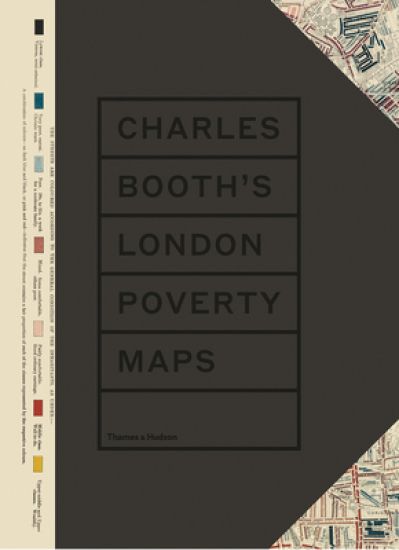
Charles Booth’s London Poverty Maps

Charles Booth’s London Poverty Maps

Mary S. Morgan; Iain Sinclair; London School of Economics

Thames Hudson Ltd
2019
sidottu
A splendid – and necessary – publication…a great resource Iain SinclairCharles Booth’s landmark survey of life in late-19th-century London, published for the first time in one volume. In the late nineteenth century, Charles Booth's landmark social and economic survey found that 35 percent of Londoners were living in abject poverty. Booth's team of social investigators interviewed Londoners from all walks of life, recording their comments, together with their own unrestrained remarks and statistical information, in 450 notebooks. Their findings formed the basis of Booth's colour-coded social mapping (from vicious and semi-criminal to wealthy) and his seventeen-volume survey Inquiry into the Life and Labour of the People of London, 1886-1903.Organized into six geographical sections, Charles Booth's London Poverty Maps presents the hand-colored preparatory and printed social mapping of London. Accompanying the maps are reproductions of pages from the original notebooks, containing anecdotes and observations too judgmental for Booth to include in his final published survey. An introduction by professor Mary S. Morgan clarifies the aims and methodology of Booth's survey and six themed essays contextualize the the survey's findings, accompanied by evocative period photographs. Providing insights into the minutia of everyday life viewed through the lens of inhabitants of every trade, class, creed, and nationality, Charles Booth's London Poverty Maps brings to life the diversity and dynamism of late nineteenth-century London.
Charles Rennie Mackintosh

Charles Rennie Mackintosh

Alan Crawford

Thames Hudson Ltd
1995
nidottu
Charles Rennie Mackintosh's finest work dates from about a dozen intensely creative years around 1900. His buildings in Glasgow, and especially his craggy masterpiece the Glasgow School of Art, are more complex and playful than any other work in Britain at that time. His interiors, many of them designed in collaboration with his wife, Margaret Macdonald, are both spare and sensuous; a world of heightened aesthetic sensibility inside the Willow Tea Rooms or The Hill House. And his inventive imagination, which played constantly with the shape of curves and squares, produced designs for furniture which transformed ordinary chairs into pieces of abstract sculpture. Finally, in the 1920s he painted a series of watercolours which are as original as anything he had done before. Since his death, Mackintosh has been both lauded as a pioneer of the Modern Movement and as a master of Art Nouveau.
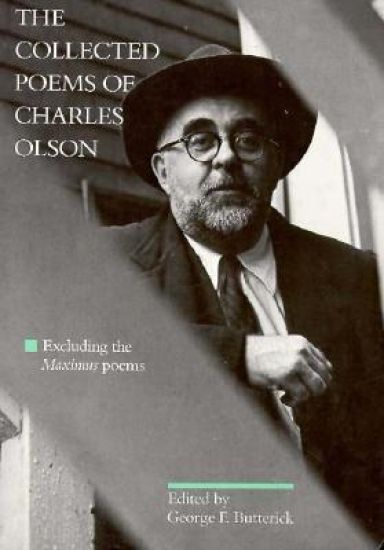
The Collected Poems of Charles Olson

The Collected Poems of Charles Olson

Charles Olson

University of California Press
1997
pokkari
A seminal figure in post-World War II literature, Charles Olson (1910-1970) has helped define the postmodern sensibility. His poetry is marked by an almost limitless range of interest and extraordinary depth of feeling. Olson's themes are among the largest conceivable: empowering love, political responsibility, historical discovery and cultural reckoning, the wisdom of dreams and the transformation of consciousness - all carried in a voice both intimate and grand, American and timeless, impassioned and coolly demanding. Until recently, Olson's reputation as a major figure in American literature has rested primarily on his theoretical writings and his epic work, the "Maximus Poems". With "The Collected Poems" an even more impressive Olson emerges. This volume brings together all of Olson's work and extends the poetic accomplishment that influenced a generation. Charles Olson was praised by his contemporaries and emulated by his successors. He was declared by William Carlos Williams to be 'a major poet with a sweep of understanding of the world, a feeling for other men that staggers me.' His indispensable essays, "Projective Verse" and "Human Universe," and his study of "Melville, Call Me Ishmael", remain as fresh today as when they were written.
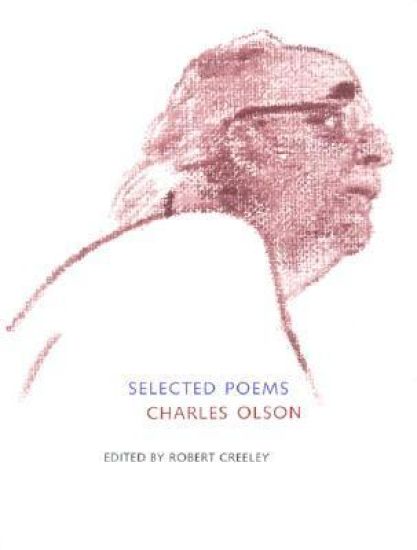
Selected Poems of Charles Olson

Selected Poems of Charles Olson

Charles Olson

University of California Press
1997
pokkari
"I have assumed a great deal in the selection of the poems from such a large and various number, making them a discourse unavoidably my own as well as any Olson himself might have chosen to offer. I had finally no advice but the long held habit of our using one another, during his life, to act as a measure, a bearing, an unabashed response to what either might write or say". (Robert Creeley). A seminal figure in post-World War II literature, Charles Olson has helped define the postmodern sensibility. His poetry embraces themes of empowering love, political responsibility, the wisdom of dreams, the intellect as a unit of energy, the restoration of the archaic, and the transformation of consciousness - all carried in a voice both intimate and grand, American and timeless, impassioned and coolly demanding. In this selection of some 70 poems, Robert Creeley has sought to present a personal reading of Charles Olson's decisive and inimitable work - 'unequivocal instances of his genius' - over the many years of their friendship.
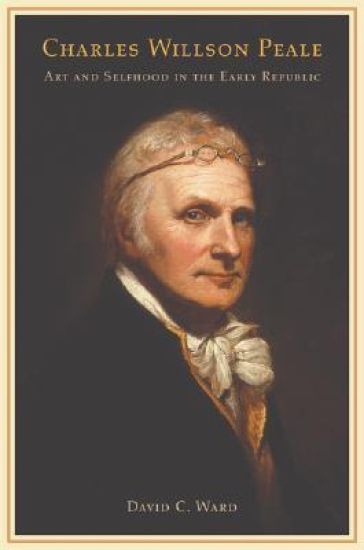
Charles Willson Peale

Charles Willson Peale

David C. Ward

University of California Press
2004
sidottu
Son of a convicted felon whose early death left the family impoverished, Charles Willson Peale (1741-1827) went on to lead a staggeringly full and successful life. A portrait painter who produced an unparalleled body of work, including the iconic "The Artist in His Museum", Peale was also a revolutionary soldier, a radical activist, an impresario of moving pictures, a natural historian, an inventor, and the proprietor of one of the first modern museums. His many other interests included a lifelong preoccupation with writing; in fact, his autobiography is one of the first examples of the genre in the United States. David C. Ward's engaging book, richly textured with references to the history and culture of the time, is the first full critical biography of Peale. It links the artist's autobiography to his painting, illuminating the man, his art, and his times. Peale emerges for the first time as that particularly American phenomenon: the self-made man. Before Peale's time, autobiographies had been written mainly as religious and confessional documents. Peale, however, produced his secular work to describe, not how God made him, but how he worked to make himself. This compelling study, drawing extensively from Peale's extraordinary autobiography, shows how Peale's life itself documents the development of American independence and individualism. Ultimately Ward addresses Hector St. John de Crevecoeur's great question, 'What then is the American, this new man?' as he sheds light on one of these new men and on the formative years in which he lived.
Selected Correspondence of Charles Ives

Selected Correspondence of Charles Ives

Charles Ives

University of California Press
2007
sidottu
This authoritative volume of 453 letters written by and to composer Charles Ives (1874-1954) provides unparalleled insight into one of the most extraordinary and paradoxical careers in American music history. The most comprehensive collection of Ives's correspondence in print, this book opens a direct window on Ives's complex personality and his creative process. Though Ives spent much of his career out of the mainstream of professional music-making, he corresponded with a surprisingly large group of musicians and critics, including John J. Becker, Henry Bellamann, Leonard Bernstein, John Cage, Aaron Copland, Henry Cowell, Ingolf Dahl, Walter Damrosch, Lehman Engel, Clifton J. Furness, Lou Harrison, Bernard Herrmann, John Kirkpatrick, Serge Koussevitzky, John Lomax, Francesco Malipiero, Radiana Pazmor, Paul Rosenfeld, Carl Ruggles, E. Robert Schmitz, Nicolas Slonimsky, and Peter Yates.
Charles Burnett

Charles Burnett

James Naremore

University of California Press
2017
sidottu
In the first book devoted to Charles Burnett, a crucial figure in the history of American cinema often regarded as the most influential member of the LA Rebellion group of African American filmmakers, James Naremore provides a close critical study of all Burnett's major pictures for movies and television, including Killer of Sheep, To Sleep with Anger, The Glass Shield, Nightjohn, The Wedding, Nat Turner: A Troublesome Property, and Warming by the Devil's Fire. Having accessed new information and rarely seen material, Naremore shows that Burnett's career has developed against the odds and that his artistry, social criticism, humor, and commitment to what he calls "symbolic knowledge" have given his work enduring value for American culture.
Charles Burnett

Charles Burnett

James Naremore

University of California Press
2017
pokkari
In the first book devoted to Charles Burnett, a crucial figure in the history of American cinema often regarded as the most influential member of the LA Rebellion group of African American filmmakers, James Naremore provides a close critical study of all Burnett's major pictures for movies and television, including Killer of Sheep, To Sleep with Anger, The Glass Shield, Nightjohn, The Wedding, Nat Turner: A Troublesome Property, and Warming by the Devil's Fire. Having accessed new information and rarely seen material, Naremore shows that Burnett's career has developed against the odds and that his artistry, social criticism, humor, and commitment to what he calls "symbolic knowledge" have given his work enduring value for American culture.
Charles Fourier

Charles Fourier

Jonathan Beecher

University of California Press
2022
pokkari
This is a full-scale intellectual biography of the French utopian socialist thinker, Chales Fourier (1772 - 1837), one of the great social critics of the nineteenth century. It is certain to become an invaluable resource for all students of modern European intellectual history. This title is part of UC Press's Voices Revived program, which commemorates University of California Press's mission to seek out and cultivate the brightest minds and give them voice, reach, and impact. Drawing on a backlist dating to 1893, Voices Revived makes high-quality, peer-reviewed scholarship accessible once again using print-on-demand technology. This title was originally published in 1986.
Charles II's Escape from Worcester

Charles II's Escape from Worcester

University of California Press
2022
pokkari
Step into the captivating history of royal escape and survival with Charles II's Escape from Worcester: A Collection of Narratives Assembled by Samuel Pepys. This volume chronicles the dramatic six-week flight of Charles II following his defeat at the Battle of Worcester in 1651. Guided by Samuel Pepys's meticulous documentation and supplemented by firsthand accounts from the King's allies, the narratives weave together a tale of courage, wit, and resilience against overwhelming odds. From harrowing close calls with pursuers to ingenious disguises and daring escapes, the collection vividly brings to life one of the most romantic episodes in English history. At the heart of this book is Pepys's unparalleled skill as both historian and storyteller, capturing Charles II’s perilous journey through a combination of the King's dictated accounts and the testimonies of loyal supporters. Enriched with Pepys's precision and flair for narrative, the stories highlight the ingenuity and loyalty of those who sheltered the King and his remarkable ability to adapt and survive. A masterpiece of historical storytelling, this collection offers readers a window into the trials and triumphs of a monarch in exile and the enduring spirit of those who risked everything to aid him. This title is part of UC Press's Voices Revived program, which commemorates University of California Press’s mission to seek out and cultivate the brightest minds and give them voice, reach, and impact. Drawing on a backlist dating to 1893, Voices Revived makes high-quality, peer-reviewed scholarship accessible once again using print-on-demand technology. This title was originally published in 1966.
Charles Fourier

Charles Fourier

Jonathan Beecher

University of California Press
2022
sidottu
This is a full-scale intellectual biography of the French utopian socialist thinker, Chales Fourier (1772 - 1837), one of the great social critics of the nineteenth century. It is certain to become an invaluable resource for all students of modern European intellectual history. This title is part of UC Press's Voices Revived program, which commemorates University of California Press's mission to seek out and cultivate the brightest minds and give them voice, reach, and impact. Drawing on a backlist dating to 1893, Voices Revived makes high-quality, peer-reviewed scholarship accessible once again using print-on-demand technology. This title was originally published in 1986.
Charles II's Escape from Worcester

Charles II's Escape from Worcester

University of California Press
2022
sidottu
Step into the captivating history of royal escape and survival with Charles II's Escape from Worcester: A Collection of Narratives Assembled by Samuel Pepys. This volume chronicles the dramatic six-week flight of Charles II following his defeat at the Battle of Worcester in 1651. Guided by Samuel Pepys's meticulous documentation and supplemented by firsthand accounts from the King's allies, the narratives weave together a tale of courage, wit, and resilience against overwhelming odds. From harrowing close calls with pursuers to ingenious disguises and daring escapes, the collection vividly brings to life one of the most romantic episodes in English history. At the heart of this book is Pepys's unparalleled skill as both historian and storyteller, capturing Charles II’s perilous journey through a combination of the King's dictated accounts and the testimonies of loyal supporters. Enriched with Pepys's precision and flair for narrative, the stories highlight the ingenuity and loyalty of those who sheltered the King and his remarkable ability to adapt and survive. A masterpiece of historical storytelling, this collection offers readers a window into the trials and triumphs of a monarch in exile and the enduring spirit of those who risked everything to aid him. This title is part of UC Press's Voices Revived program, which commemorates University of California Press’s mission to seek out and cultivate the brightest minds and give them voice, reach, and impact. Drawing on a backlist dating to 1893, Voices Revived makes high-quality, peer-reviewed scholarship accessible once again using print-on-demand technology. This title was originally published in 1966.
Charles Darwin's Beagle Diary

Charles Darwin's Beagle Diary

Charles Darwin

Cambridge University Press
2001
pokkari
On 27th December 1831, HMS Beagle set out from Plymouth under the command of Captain Robert Fitzroy on a voyage that lasted nearly 5 years. The purpose of the trip was to complete a survey of the southern coasts of South America, and afterwards to circumnavigate the globe. The ship's geologist and naturalist was Charles Darwin. Darwin kept a diary throughout the voyage in which he recorded his daily activities, not only on board the ship but also during the several long journeys that he made on horseback in Patagonia and Chile. His entries tell the story of one of the most important scientific journeys ever made with matchless immediacy and vivid descriptiveness.
Charles XI and Swedish Absolutism, 1660–1697

Charles XI and Swedish Absolutism, 1660–1697

A. F. Upton

Cambridge University Press
2006
pokkari
The reading public outside Sweden knows little of that country's history, beyond the dramatic and short-lived era in the seventeenth century when Sweden under Gustavus Adolphus became a major European power by her intervention in the Thirty Years War. In the last decades of the seventeenth century another Swedish king, Charles XI, launched a less dramatic but remarkable bid to stabilize and secure Sweden's position as a major power in northern Europe and as master of the Baltic Sea. This project, which is almost unknown to students of history outside Sweden, involved a comprehensive overhaul of the government and institutions of the kingdom, on the basis of establishing Sweden as a model of absolute monarchy. This 1998 book gives an account of what was achieved under the absolutist direction of a distinctly unglamorous, but pious and conscientious ruler.
Charles Darwin's Notebooks, 1836–1844
Darwin's notebooks provide an invaluable record of his scientific thinking and most importantly, the development of his theory of natural selection. This edition of the notebooks, prepared to the highest standard of textual editing, thus affords a unified view of Darwin's professional interests. The Red Notebook, used on the voyage of H. M. S. Beagle and afterwards in England, contains Darwin's first evolutionary statements. In July of 1837, Darwin began his 'Transmutation Notebooks' (B - E) devoted to the solution of the species problem and in the third notebook of this series he first formulated the theory of natural selection. This volume also contains Notebook A and the glen Roy Notebook on geology, Notebooks M and N on man and behaviour and a notebook labelled Questions and Experiments. Fresh transcriptions have been done for all previously published manuscripts, with readings made directly from Notebooks B, C, D and E, presenting them with previously excised pages and restored to their original sequence.
Charles Blacker Vignoles: Romantic Engineer

Charles Blacker Vignoles: Romantic Engineer

K. H. Vignoles

Cambridge University Press
2010
pokkari
Charles Blacker Vignoles (1793–1875) has been somewhat overshadowed by his contemporaries, the Stephensons, Brunel and Locke. Yet from 1825 to 1870, he was continually involved in the field of civil engineering in the UK, Ireland and overseas. Among his achievements were the Tudela and Bilbao Railway in northern Spain, and the suspension bridge spanning the River Dnieper at Kiev, Russia, which at the time of its completion was one of the largest bridges of its kind in the world. This account, originally published in 1982, is based on a close study of original records, including a large volume of correspondence as well as Vignoles' extensive diaries in the British Library. The aim of the book is to put his engineering achievements into perspective in comparison with those of his contemporaries, and by drawing on his own account of himself to illuminate the personal background of one of the great pioneers of the Victorian age of civil engineering.
Charles Darwin and Victorian Visual Culture

Charles Darwin and Victorian Visual Culture

Jonathan Smith

Cambridge University Press
2009
pokkari
Although The Origin of Species contained just a single visual illustration, Charles Darwin's other books, from his monograph on barnacles in the early 1850s to his volume on earthworms in 1881, were copiously illustrated by well-known artists and engravers. In this 2006 book, Jonathan Smith explains how Darwin managed to illustrate the unillustratable - his theories of natural selection - by manipulating and modifying the visual conventions of natural history, using images to support the claims made in his texts. Moreover, Smith looks outward to analyse the relationships between Darwin's illustrations and Victorian visual culture, especially the late-Victorian debates about aesthetics, and shows how Darwin's evolutionary explanation of beauty, based on his observations of colour and the visual in nature, were a direct challenge to the aesthetics of John Ruskin. The many illustrations reproduced here enhance this fascinating study of a little known aspect of Darwin's lasting influence on literature, art and culture.
The Correspondence of John Ruskin and Charles Eliot Norton

The Correspondence of John Ruskin and Charles Eliot Norton

Charles Eliot Norton; John Ruskin

Cambridge University Press
2011
pokkari
John Ruskin first met Charles Eliot Norton in 1855. Norton was the American counterpart of a man of letters. With a common distaste for the industrial and scientific directions of modern civilisation, the two men became intimate correspondents and the letters they exchanged until shortly before Ruskin's death in 1900 reflect and express, often more vividly than his own public prose, the spiritual, amatory, artistic, and cultural preoccupations of Ruskin's life. The revelations were so candid that Norton, as one of Ruskin's literary executors, burned many of the letters, altered a number of others in his Letters of John Ruskin to Charles Eliot Norton of 1904, and sought to efface his side of the correspondence almost entirely. In this 1987 volume, Dr Ousby and Dr Bradley present a far more complete and accurate record of the exchanges, which comprise 333 from Ruskin to Norton and 63 in return.