Kirjojen hintavertailu. Mukana 11 424 334 kirjaa ja 12 kauppaa.

Kirjahaku

Etsi kirjoja tekijän nimen, kirjan nimen tai ISBN:n perusteella.

747 tulosta hakusanalla Cherokee Hatcher

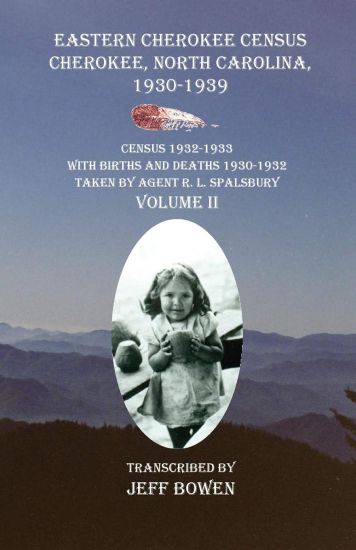
Eastern Cherokee Census, Cherokee, North Carolina 1930-1939 Census 1932-1933 with Births and Deaths 1930-1932 Taken by Agent R. L. Spalsbury Volume II
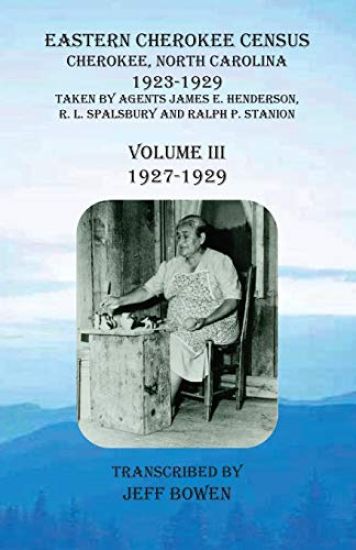
This volume covers 1930 thru 1933 with many different categories, not just census, birth and death records. You will find at the end of different census years divisions of births and deaths mentioned and then, afterward, there will be an official birth roll and then an official death roll with a cause of death. Additionally you will find record headings such as Additions, Subtractions, Supplemental Rolls, Deduction Rolls, Deaths Unreported, Marriages, Supplemental Census, Live Births, Transfer or Adjustment Roll and Correction in Name Due to Marriage. These censuses were taken by different government agents during a difficult time in our country's history, the Great Depression (1929-1938). Each agent's name will be given with the volume he covered. The records transcribed in this series are from the National Archives film collection M-595, Rolls 25 & 26.​ Approximately 1,100 North Carolina Cherokees who had managed to avoid removal from what is known as the Qualla Boundary or Cherokee Reservation in Western North Carolina. The people within these pages are a direct line of those that hid in the mountains during that dark time in our history (The Cherokee Trail of Tears 1838-1839).
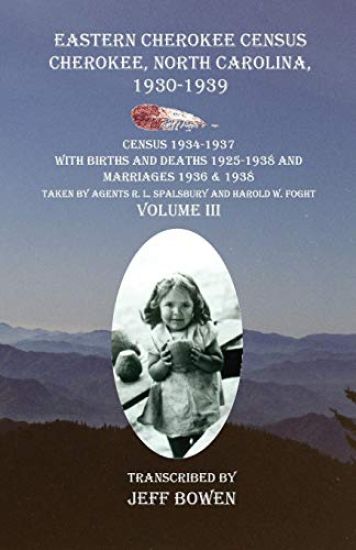
Eastern Cherokee Census Cherokee, North Carolina 1930-1939 Census 1934-1937 with Births and Deaths 1925-1938 and Marriages 1936 & 1938 Taken by Agents R. L. Spalsbury And Harold W. Foght Volume III
Volume III covers Census 1934-1937 with Births and Deaths 1925-1938 and Marriages 1936 & 1938 with many different categories, not just census, birth and death records. You will find at the end of different census years divisions of births and deaths mentioned and then, afterward, there will be an official birth roll and then an official death roll with a cause of death. Additionally you will find record headings such as Additions, Subtractions, Supplemental Rolls, Deduction Rolls, Deaths Unreported, Marriages, Supplemental Census, Live Births, Transfer or Adjustment Roll and Correction in Name Due to Marriage. These censuses were taken by different government agents during a difficult time in our country's history, the Great Depression (1929-1938). Each agent's name will be given with the volume he covered. The records transcribed in this series are from the National Archives film collection M-595, Rolls 25 & 26.​ Approximately 1,100 North Carolina Cherokees who had managed to avoid removal from what is known as the Qualla Boundary or Cherokee Reservation in Western North Carolina. The people within these pages are a direct line of those that hid in the mountains during that dark time in our history (The Cherokee Trail of Tears 1838-1839).
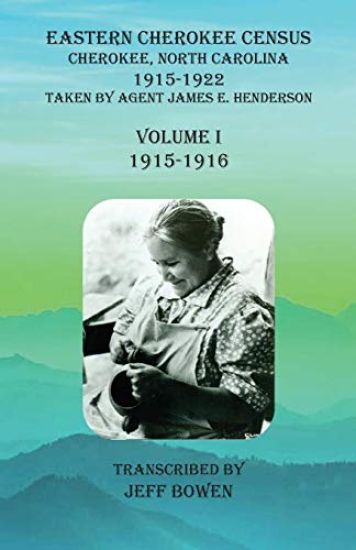
Eastern Cherokee Census Cherokee, North Carolina 1930-1939 Census 1930-1931
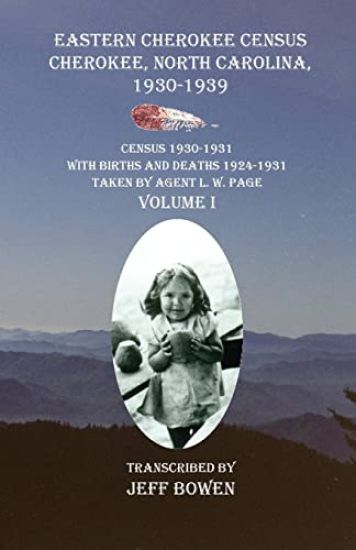
Volume I will cover from 1930 thru 1939 with Census 1930-1931 and the different categories covering birth and death records 1924-1931. These censuses were taken by Agent L. W. Page during a difficult time in our country's history, the Great Depression (1929-1938). The records transcribed in this series are from the National Archives film collection M-595, Rolls 25 & 26. Approximately 1,100 North Carolina Cherokees who had managed to avoid removal from what is known as the Qualla Boundary or Cherokee Reservation in Western North Carolina. The people within these pages are a direct line of those that hid in the mountains during that dark time in our history (The Cherokee Trail of Tears 1838-1839). There is a Limited Index due to the names being in alphabetical order.
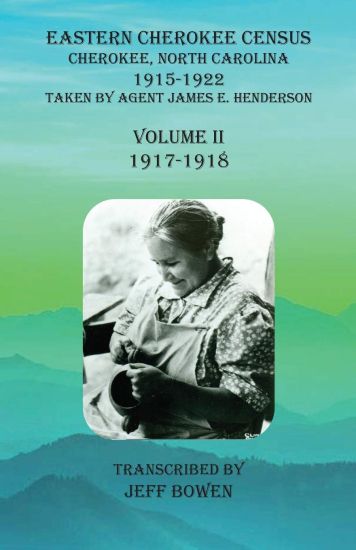
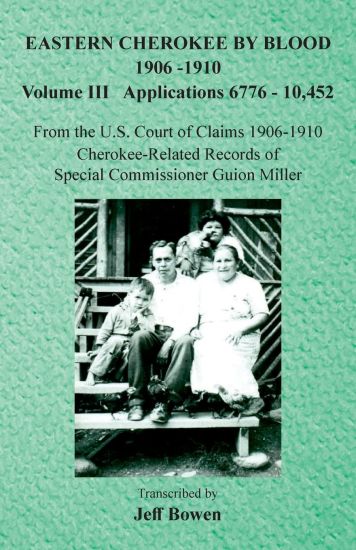
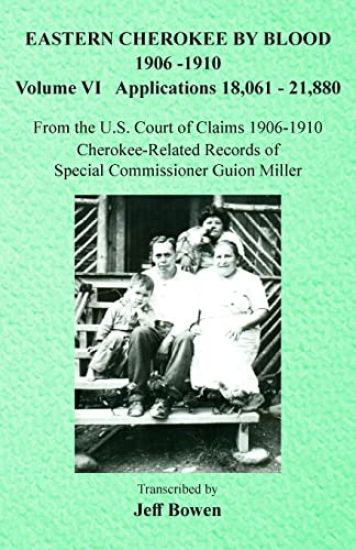
Eastern Cherokee By Blood, 1906-1910
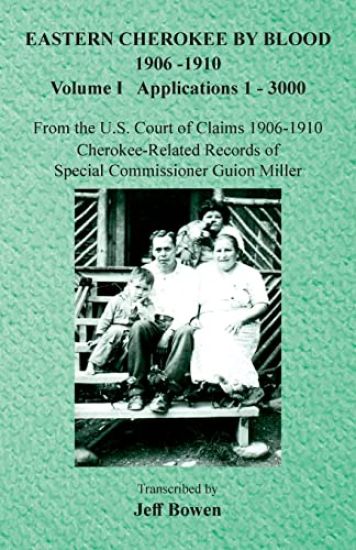
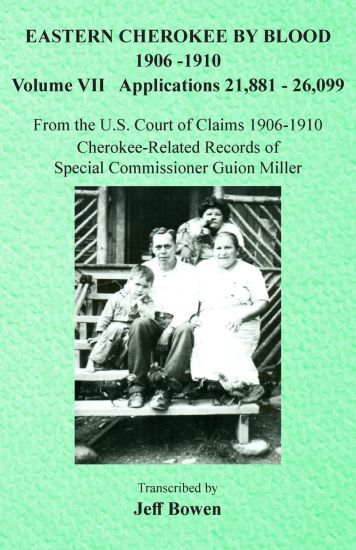
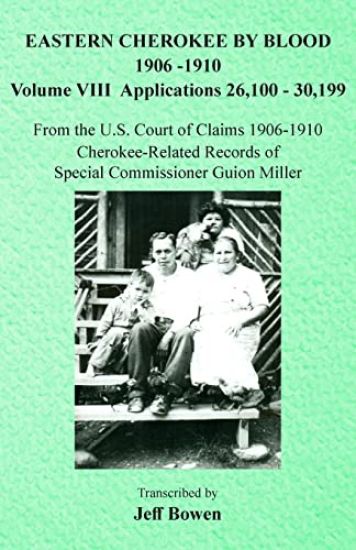
The Eastern Cherokee by Blood series Volumes I - XIII is the most complete series in pure transcribed form (from National Archival film, M-1104) of the Cherokee abstracts available and beyond, nothing added, nothing taken away. From the first application to the last (45,857) representing approximately 90,000 individuals and then in Volume XIII The Exceptions Filed to Guion Miller's Report of May 28, 1909, and submitted on January 5, 1910. The complete record of application decisions gives both those accepted and rejected. There are thousands of names and families involved in this finished series. Let it be known that if there are rejections it may not mean the applicant is not Cherokee, only due to the fact that they may not have been related to an Emigrant Cherokee during the time of removal. Their ancestor could have belonged to a different tribe or have been an Old Settler Cherokee, a Western-born Cherokee, or possibly even a Texas-born Cherokee that had family that left the east as early as 1818-1820.The Miller Application numbers are totally different than a regular roll number, which contains an index of names that may lead to a person's family tribal enrollment card through that number. The enrollment card also has vital information such as name, family relations, age, sex, blood quantum, etc. But the Miller Applications can lead you to generations of family information and history along with, in many cases, testimony not just from family but neighbors, tribal members and acquaintances. The books not only can lead you to Cherokee blood as a descendant of an Emigrant Cherokee but also to thousands of other Cherokee bloodlines as well as possibly relations to other tribes during testimony. So these materials are a researcher's dream come true.
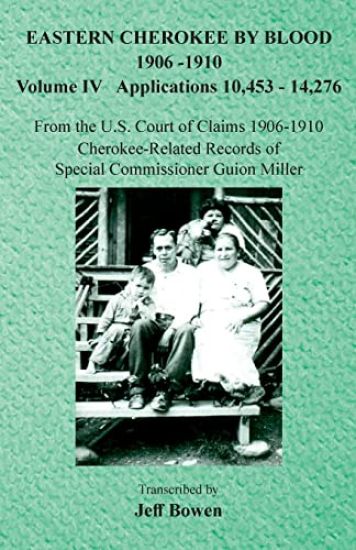
Eastern Cherokee By Blood, 1906-1910
The Eastern Cherokee by Blood series Volumes I - XIII is the most complete series in pure transcribed form (from National Archival film, M-1104) of the Cherokee abstracts available and beyond, nothing added, nothing taken away. From the first application to the last (45,857) representing approximately 90,000 individuals and then in Volume XIII The Exceptions Filed to Guion Miller's Report of May 28, 1909, and submitted on January 5, 1910. The complete record of application decisions gives both those accepted and rejected. There are thousands of names and families involved in this finished series. Let it be known that if there are rejections it may not mean the applicant is not Cherokee, only due to the fact that they may not have been related to an Emigrant Cherokee during the time of removal. Their ancestor could have belonged to a different tribe or have been an Old Settler Cherokee, a Western-born Cherokee, or possibly even a Texas-born Cherokee that had family that left the east as early as 1818-1820.The Miller Application numbers are totally different than a regular roll number, which contains an index of names that may lead to a person's family tribal enrollment card through that number. The enrollment card also has vital information such as name, family relations, age, sex, blood quantum, etc. But the Miller Applications can lead you to generations of family information and history along with, in many cases, testimony not just from family but neighbors, tribal members and acquaintances. The books not only can lead you to Cherokee blood as a descendant of an Emigrant Cherokee but also to thousands of other Cherokee bloodlines as well as possibly relations to other tribes during testimony. So these materials are a researcher's dream come true.
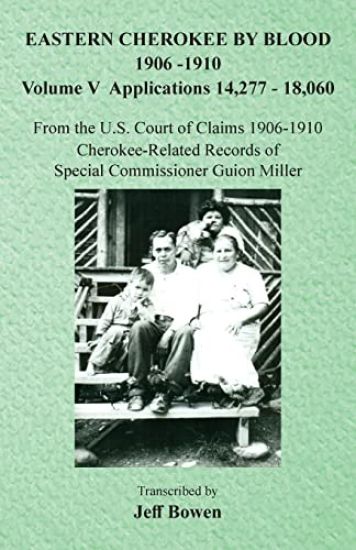
Eastern Cherokee By Blood, 1906-1910
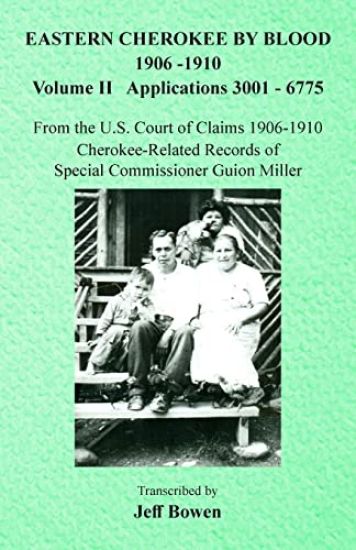
The Eastern Cherokee by Blood series Volumes I - XIII is the most complete series in pure transcribed form (from National Archival film, M-1104) of the Cherokee abstracts available and beyond, nothing added, nothing taken away. From the first application to the last (45,857) representing approximately 90,000 individuals and then in Volume XIII The Exceptions Filed to Guion Miller's Report of May 28, 1909, and submitted on January 5, 1910. The complete record of application decisions gives both those accepted and rejected. There are thousands of names and families involved in this finished series. Let it be known that if there are rejections it may not mean the applicant is not Cherokee, only due to the fact that they may not have been related to an Emigrant Cherokee during the time of removal. Their ancestor could have been an Old Settler Cherokee, a Western born Cherokee, or possibly even a Texas born Cherokee that had family that left the east as early as 1818-1820. The Miller Application numbers are totally different than a regular roll number, which contains an index of names that may lead to a person's family tribal enrollment card through that number. The enrollment card also has vital information such as name, family relations, age, sex, blood quantum, etc. But the Miller Applications can lead you to generations of family information and history along with, in many cases, testimony not just from family but neighbors, tribal members and acquaintances. The books not only can lead you to Cherokee blood as a descendant of an Emigrant Cherokee but also to thousands of other Cherokee bloodlines as well as possibly relations to other tribes during testimony. So these materials are a researcher's dream come true.