
Kirjahaku
Etsi kirjoja tekijän nimen, kirjan nimen tai ISBN:n perusteella.
1000 tulosta hakusanalla Corey Wolff

Winner of the Outstanding Publication Award, Section on Aging and the Life Course, American Sociological AssociationSenior citizens from all walks of life face a gauntlet of physical, psychological, and social hurdles. But do the disadvantages some people accumulate over the course of their lives make their final years especially difficult? Or does the quality of life among poor and affluent seniors converge at some point? The End Game investigates whether persistent socioeconomic, racial, and gender divisions in America create inequalities that structure the lives of the elderly.“Avoiding reductionist frameworks and showing the hugely varying lifestyles of Californian seniors, The End Game poses a profound question: how can provision of services for the elderly cater for individual circumstances and not merely treat the aged as one grey block? Abramson eloquently and comprehensively expounds this complex question.”—Michael Warren, LSE Review of Books“The author’s approach situates inequality experienced by older Americans in a real world context and links culture, social life, biological life, and structural disparities in ways that allow readers to understand the intersectionality of diversity imbued in the lives of older Americans…Abramson opens a window into the reality of old age, the importance of culture and the impact it has on shared/prior experiences, and the inequalities that structure them.”—A. L. Lewis, Choice
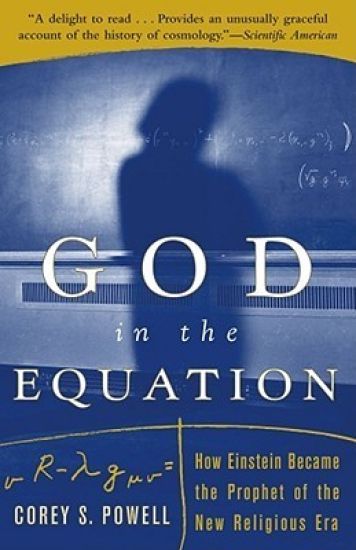
He wanted to know where our world comes from and where it was going. He wanted to understand how the remote stillness of the heavens relates to the erratic, ever-changing events here on earth. Above all, he wanted to know if the answers to these questions would bring him closer to a higher authority. So Einstein put "God in the Equation" "Everyone who is seriously involved in the pursuit of science," Albert Einstein once said, "becomes convinced that a spirit is manifest in the laws of the universe -- a spirit vastly superior to that of man." This mysterious component, which Einstein called a "cosmological constant," would eventually work its way into his world-shattering theory of relativity. In this way, explains acclaimed science writer Corey S. Powell, Einstein was creating a formula for a new kind of "sci/religion," one in which God was a factor, denoted by the Greek letter Lambda, and one that would pave the way for an entirely new gnostic era in the history of human spirituality.
When the Supreme Court in 2003 struck down a Texas law prohibiting homosexual sodomy, it cited the right to privacy based on the guarantee of "substantive due process" embodied by the Constitution. But did the court act undemocratically by overriding the rights of the majority of voters in Texas? Scholars often point to such cases as exposing a fundamental tension between the democratic principle of majority rule and the liberal concern to protect individual rights. Democratic Rights challenges this view by showing that, in fact, democracy demands many of these rights. Corey Brettschneider argues that ideal democracy is comprised of three core values--political autonomy, equality of interests, and reciprocity--with both procedural and substantive implications. These values entitle citizens not only to procedural rights of participation (e.g., electing representatives) but also to substantive rights that a "pure procedural" democracy might not protect. What are often seen as distinctly liberal substantive rights to privacy, property, and welfare can, then, be understood within what Brettschneider terms a "value theory of democracy." Drawing on the work of John Rawls and deliberative democrats such as Jurgen Habermas, he demonstrates that such rights are essential components of--rather than constraints on--an ideal democracy. Thus, while defenders of the democratic ideal rightly seek the power of all to participate, they should also demand the rights that are the substance of self-government.
When the State Speaks, What Should It Say?
Corey Brettschneider
Princeton University Press
2012
sidottu
How should a liberal democracy respond to hate groups and others that oppose the ideal of free and equal citizenship? The democratic state faces the hard choice of either protecting the rights of hate groups and allowing their views to spread, or banning their views and violating citizens' rights to freedoms of expression, association, and religion. Avoiding the familiar yet problematic responses to these issues, political theorist Corey Brettschneider proposes a new approach called value democracy. The theory of value democracy argues that the state should protect the right to express illiberal beliefs, but the state should also engage in democratic persuasion when it speaks through its various expressive capacities: publicly criticizing, and giving reasons to reject, hate-based or other discriminatory viewpoints. Distinguishing between two kinds of state action--expressive and coercive--Brettschneider contends that public criticism of viewpoints advocating discrimination based on race, gender, or sexual orientation should be pursued through the state's expressive capacities as speaker, educator, and spender. When the state uses its expressive capacities to promote the values of free and equal citizenship, it engages in democratic persuasion. By using democratic persuasion, the state can both respect rights and counter hateful or discriminatory viewpoints. Brettschneider extends this analysis from freedom of expression to the freedoms of religion and association, and he shows that value democracy can uphold the protection of these freedoms while promoting equality for all citizens.
When the Supreme Court in 2003 struck down a Texas law prohibiting homosexual sodomy, it cited the right to privacy based on the guarantee of "substantive due process" embodied by the Constitution. But did the court act undemocratically by overriding the rights of the majority of voters in Texas? Scholars often point to such cases as exposing a fundamental tension between the democratic principle of majority rule and the liberal concern to protect individual rights. Democratic Rights challenges this view by showing that, in fact, democracy demands many of these rights. Corey Brettschneider argues that ideal democracy is comprised of three core values--political autonomy, equality of interests, and reciprocity--with both procedural and substantive implications. These values entitle citizens not only to procedural rights of participation (e.g., electing representatives) but also to substantive rights that a "pure procedural" democracy might not protect. What are often seen as distinctly liberal substantive rights to privacy, property, and welfare can, then, be understood within what Brettschneider terms a "value theory of democracy." Drawing on the work of John Rawls and deliberative democrats such as Jurgen Habermas, he demonstrates that such rights are essential components of--rather than constraints on--an ideal democracy. Thus, while defenders of the democratic ideal rightly seek the power of all to participate, they should also demand the rights that are the substance of self-government.
When the State Speaks, What Should It Say?
Corey Brettschneider
Princeton University Press
2016
pokkari
How should a liberal democracy respond to hate groups and others that oppose the ideal of free and equal citizenship? The democratic state faces the hard choice of either protecting the rights of hate groups and allowing their views to spread, or banning their views and violating citizens' rights to freedoms of expression, association, and religion. Avoiding the familiar yet problematic responses to these issues, political theorist Corey Brettschneider proposes a new approach called value democracy. The theory of value democracy argues that the state should protect the right to express illiberal beliefs, but the state should also engage in democratic persuasion when it speaks through its various expressive capacities: publicly criticizing, and giving reasons to reject, hate-based or other discriminatory viewpoints. Distinguishing between two kinds of state action--expressive and coercive--Brettschneider contends that public criticism of viewpoints advocating discrimination based on race, gender, or sexual orientation should be pursued through the state's expressive capacities as speaker, educator, and spender. When the state uses its expressive capacities to promote the values of free and equal citizenship, it engages in democratic persuasion. By using democratic persuasion, the state can both respect rights and counter hateful or discriminatory viewpoints. Brettschneider extends this analysis from freedom of expression to the freedoms of religion and association, and he shows that value democracy can uphold the protection of these freedoms while promoting equality for all citizens.

A bold new account of European imperialism told through the history of waterIn the nineteenth and twentieth centuries, a handful of powerful European states controlled more than a third of the land surface of the planet. These sprawling empires encompassed not only rainforests, deserts, and savannahs but also some of the world’s most magnificent rivers, lakes, marshes, and seas. Liquid Empire tells the story of how the waters of the colonial world shaped the history of imperialism, and how this imperial past still haunts us today.Spanning the major European empires of the period, Corey Ross describes how new ideas, technologies, and institutions transformed human engagements with water and how the natural world was reshaped in the process. Water was a realm of imperial power whose control and distribution were closely bound up with colonial hierarchies and inequalities—but this vital natural resource could never be fully tamed. Ross vividly portrays the efforts of officials, engineers, fisherfolk, and farmers to exploit water, and highlights its crucial role in the making and unmaking of the colonial order.Revealing how the legacies of empire have persisted long after colonialism ebbed away, Liquid Empire provides needed historical perspective on the crises engulfing the world’s waters, particularly in the Global South, where billions of people are faced with mounting water shortages, rising flood risks, and the relentless depletion of sea life.

Join our epic heroes Survival Steph and her sidekick Not-Dead Chet, a friendly but accident-prone zombie, on their lighthearted adventure as they teach you the dos and don'ts of survival and preparedness. This coloring book explores survival/preparedness in a fun and interactive way so that children and their parents can learn these basic concepts in a safe, family environment. So sit down pull out the crayons, colored pencils or whatever you want to use and get ready to learn something that can make you laugh as well as save your life. Have fun, make a difference, and be prepared.
Are you tired? Do you feel defeated, unmotivated, discouraged? If so you should definitely check out Born to S.L.A.Y (Step out on Faith, Live life to the fullest, Accept the things you cannot change, Yield Success). This is a self-reflection, self-help workbook for people who need motivation, encouragement & inspiration. This collection of short stories provides hope for those who feel lost and want to give up. In this book, successful RN, MSN and Certified Health & Wellness Coach, Corey Roman, shares the good, the bad and the ugly parts of her life to help give the reader a different outlook on life. Built upon a lifetime of experience, from her background in nursing to a tragic car accident that left her unable to walk for months. Instead of accepting her fate, Corey picked herself up and developed her S.L.A.Y. principles. Most importantly, she shares the good news about how God will bring you through any situation By the end of Born to S.L.A.Y you will understand how your trials and tribulations can propel you to your destiny. You will see how the word No just means that you need to try a different approach. So sit back, be amazed and get inspired because you too are Born to S.L.A.Y
Society is looking in the wrong places to find what will really work to lower the recidivism rate in the United States. Ex-offenders want to move on, family members of ex-offenders want to keep their loved ones around, and social workers, community leaders and probation officers want to make a difference with their work. The Enlightened Ex-Offender is specially designed to help start the healing process inside the individual offender, as well as in other personally invested individuals, to produce results in the rest of the world. It helps people work through many difficult issues in a new universal tone of understanding and strength. Book, Eight Chapters, and Appendixes include: -Introduction, "Getting Your Mind Right", Guided Journal -"Getting Your Body Right", Guided Journal -"What's Missing", Guided Journal -"Figuring Out Addictions", Guided Journal -"The Short Term Plan", Guided Journal -"Breaking Free", Guided Journal -"The Long Term Plan", Guided Journal -"Changing the System", Guided Journal oClasses / Meetings using The Enlightened Ex- Offender oThe Enlightened Ex-Offender Completion Form

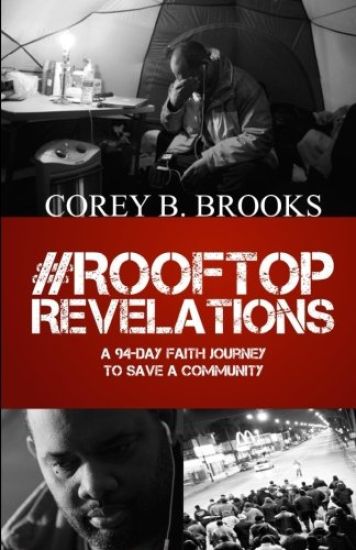
Rooftop Revelations: A 94-Day Faith Journey to Save a Community
Corey B. Brooks
Sermontobook.com
2015
nidottu

Hit Happens: Your Beginner's Q and A Guide to Nashville Songwriting
Corey Lee Barker
Three Kings Publishing
2015
nidottu
"HIT HAPPENS will not only guide you step by step on what it takes to be a successful songwriter, it will put a smile on your face while you're learning." -Anita Cox, Singer/Songwriter/Project Concept & Development Specialist, CEO Big South Productions, BobbyCyrusEntertainment.com. "-A must read for all songwriters," says Regina Boy Carter, President of Tri-Star Entertainment and Management Group. Hit Happens is a question and answer guide to songwriting by award winning songwriter Corey Lee Barker. He combines laugh-out-loud humorous answers to the creative and business questions he receives the most, and then follows up the humor with the kind of nitty-gritty, rubber-meets-the-road information and insight usually only gained through years of practical experience. "If you are (or think you want to be) a Songwriter, do yourself a favor: read it, mark in it, highlight it, keep it handy, and use it as a reference manual I highly recommend this book and its Author " --Kenny Angel, Executive Director of Tennessee Songwriter Association InternationalSome of the FAQ addressed include: What is the best way to begin a song?Is the range of my melody of any importance?What is modulation and is it really important?How important is the song's title?Do the same rules apply for writing pop hits as for country?How can I sell my song and how much should I ask for it?Do I really need to sign up at BMI, ASCAP, or SESAC? And if I do...which is better?What is a staff deal?When do I need to copyright my songs?How much can I make by writing a parody of a famous song?How do I figure out what percentage of the song is mine if I wrote most of it and someone else helped out slightly?When can I tell everyone about my cut?My song is ready to come to life. Who should I choose to demo it?Should I play my songs at writer's nights?How do I get my song in a TV show or movie?What does it mean if I get a song "on hold"?What is a single song contract?What is a work tape and how is it different form a demo?....and many more.
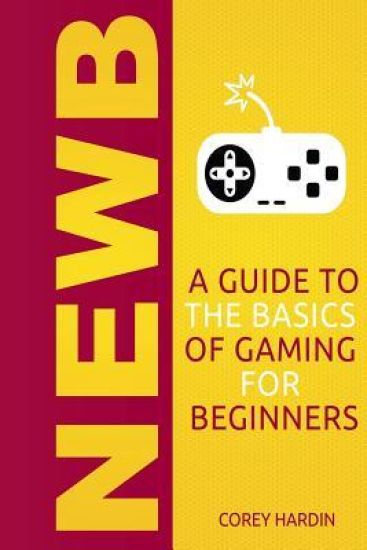
If you've ever wondered what is a guild and why you should join one what the difference is between console gaming and online gaming, or how you get started playing games online, "Newb: A Guide to the Basics of Gaming for Beginners," answers those questions and more. Newb, the new book from Corey Hardin, the author of "Vault Dweller's Secrets" takes you inside the world of gaming. Topics covered in the book include the different types of gaming (console, computer, mobile, online), basic accessories you'll need to get into gaming, the different types of games (first person shooter, role-playing, sim games, social) and more.This is a must-have resource for novices--those just getting into gaming-- and adults who want to understand what gaming is all about.

Caught in the hurricane of struggle and hardship, 14 year old Jarvis Cooper fell in love with a beautiful girl name Omirah. Afraid that his tacky appearance and poor living conditions would soon run her away, he decided to find a way to take care of himself sufficiently. With his mentor J.d. in his corner, he discovers a mentality within himself that inevitably brought forth leadership, power, millions of dollars, and death. Will he manage to uphold his relationship with the love of his life? Will the streets devour him in his attempt to become one of the most powerful drug lords of our time? Enjoy this captivating, heart wrenching, fast paced, action packed story of a young man's journey to become a Kingpin in one of the roughest neighborhoods in Cleveland Ohio..... ALL OR NOTHING

Explore a Full day with JUSTIN as he teaches readers through his actions how to be a SUPER good listener "He never has to be told anything twice " Written by Corey D. Williams