Kirjojen hintavertailu. Mukana 11 342 296 kirjaa ja 12 kauppaa.

Kirjahaku

Etsi kirjoja tekijän nimen, kirjan nimen tai ISBN:n perusteella.

1000 tulosta hakusanalla David DeLaney

David Hockney

David Hockney

Norman Rosenthal

THAMES HUDSON LTD
2025
sidottu
Published in association with the Fondation Louis Vuitton, Paris, this vivid and visually engaging large-format book offers a detailed journey through Hockney’s remarkable life and career. Playful, keen eyed, ever curious, David Hockney is one of our greatest contemporary artists. Published in association with the Fondation Louis Vuitton, Paris, and tied to its major 2025 exhibition, David Hockney charts an extraordinarily creative life through images and text in one large-format landscape book. The artworks chosen reflect Hockney’s key themes and preoccupations over the decades, from his early life in Bradford and London through the California era and his later years in Bridlington, Yorkshire, and Normandy, France. Several of the chapters are arranged thematically, ranging from still life and portraits to his much-loved landscapes and stunning designs for opera. A final chapter explores Hockney’s engagement with digital art, particularly on the iPad. Throughout, we see the endless inventiveness, curiosity and creativity that have characterized Hockney’s work over eight decades. To give context to Hockney’s art, this definitive survey features a selection of archival photographs and eye-catching artworks allied to expertly written text by pre-eminent curatorial experts, art historians and critics, including Sir Norman Rosenthal and Sir Simon Schama. Compiled with the full involvement of David Hockney and his studio, and with a large-scale landscape format with a selection of gatefolds that enables the reader to revel in the art, this is the most important book on Hockney’s entire career to date and will appeal to the many fans of the artist’s work across the globe.

David Gilmour — Luck and Strange — Studio/Live

David Gilmour — Luck and Strange — Studio/Live

Polly Samson; Alan Yentob

THAMES HUDSON LTD
2025
sidottu
This intimate photo chronicle by Polly Samson documents both the recording of David Gilmour's No. 1 album Luck and Strange and the acclaimed tour which saw the Pink Floyd legend playing sellout shows in Rome, London, LA and New York. Samson, who is Gilmour’s partner and creative collaborator, as well as an acclaimed novelist / photographer in her own right, captures the process as the album takes shape: from conception and recording, off-duty and studio immersion, to release and live performance; from candid behind-the-scenes shots, to theatrical stage moments. We see an artist at work, the collaborative process, the moments of light relief – and the focus as the work takes flight. The book features the unmistakable hand lettering of Anton Corbijn on the cover and throughout, plus an interview by rock photographer Jill Furmanovsky with Polly Samson that sheds light on a photographer’s craft, as well as providing insights into Samson's relationship with Gilmour. The foreword is written by the late Alan Yentob.
David Hockney

David Hockney

Marco Livingstone

Thames Hudson Ltd
2017
nidottu
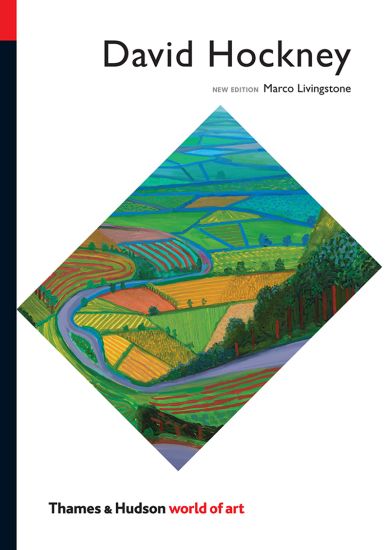
One of the most popular and influential British artists of our times, David Hockney has never ceased to change his style and ways of working, always re-energizing his art with new solutions, fresh ideas and technical mastery. Now excitedly embracing his ‘late period’, Hockney remains as engaged as ever with the questions he has always posed for himself – what to depict, how to depict it and how to persuade the spectator that he or she is an active participant rather than just a passive witness. Published to mark Hockney’s 80th birthday and in the wake of the most extensive Tate retrospective ever accorded to a living artist, this new edition includes a new preface, afterword and final chapter covering work of the past two decades. Tracing a line from the beginnings of Hockney’s career in the early 1960s, the portraits and images of Los Angeles swimming pools, his drawings and photocollages, to his highly acclaimed stage designs for the opera, video works, his iPad drawings and other novel forms of picturemaking, Marco Livingstone shows the continuing preoccupation with invention and artifice that has made this artist’s work at once popular and enduring.
David Hockney's Dog Days

David Hockney's Dog Days

David Hockney

Thames Hudson Ltd
2011
nidottu
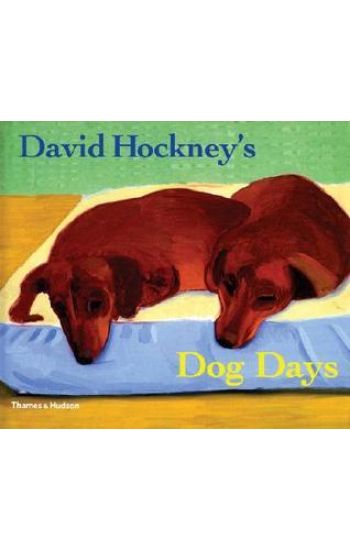
'A charming collection … an essential book for the dachshund or Hockney lover' Mail on Sunday 'Hockney's usual brilliant eye for colour is ever present' The Times 'Lovely … sure to delight both dog lovers and David Hockney fans. 10/10' Your Dog David Hockney introduces his two dachshunds, Stanley and Boodgie, in this delightful collection. The result of sharp observation and affection, these paintings and drawings are lyrical studies in form and design while the text by the artist gives a glimpse of how to work with models who don't necessarily want to sit still. From September 1993, I painted and drew my dogs. This took a certain amount of planning, since dogs are generally not interested in Art (I say generally only because I have now come across a singing dog. Food and love dominate their lives. I make no apologies for the apparent subject matter. These two dear little creatures are my friends. They are intelligent, loving, comical and often bored. They watch me work; I notice the warm shapes they make together, their sadness and their delights. And, being Hollywood dogs, they somehow seem to know that a picture is being made. - David Hockney
David Adjaye

David Adjaye

Thames Hudson Ltd
2017
sidottu
For many young architects, houses or domestic buildings are among the first projects they design. For David Adjaye, such early commissions were connected to a rising generation of creatives, with whom he shared a range of sensibilities. His artistry, clever use of space and inexpensive, unexpected materials resulted in many innovative and widely published houses, mainly built in London. After twenty years of practice and a raft of high-profile projects around the world – not least the National Museum of African American History and Culture in Washington, DC, which opened in the autumn of 2016 – houses represent a smaller portion of Adjaye’s work, but are more potent as a result. Selecting projects that are challenging for their sites, complexity or architectural possibility, Adjaye has both expanded and sharpened his domestic design, taking it in new directions. This monograph presents in vivid detail the nine finest and most recent examples, from Ghana to Brooklyn, from desolate farmlands to urban jungles. The results, presented through lucid texts alongside detailed and photographically rich visual documentation, testify to the importance of Adjaye’s growing inventiveness and provide powerful new design ideas for residential architecture.
David Park

David Park

Nancy Boas

University of California Press
2012
sidottu
David Park (1911-1960), transplanted Bostonian turned ground-breaking West Coast painter, led the way in creating what became known as Bay Area Figurative Art - a daring move during the post-World War II years when abstract expressionism held sway. In this beautifully illustrated biography, compiled from comprehensive and sweeping interviews, Nancy Boas traces Park's resolute search for a new kind of figuration, one that would penetrate abstract expressionism's thickly layered surfaces and infuse them with human presence. Boas changes our understanding of Park as a painter, highlighting his strong influence on Richard Diebenkorn, Elmer Bischoff, and other artists at the California School of Fine Arts and the University of California, Berkeley. She plunges us into the lively 1940s and 1950s Bay Area art scene, pointing to Park's work as a bold alternative to the abstractions of Clyfford Still. As the book deepens our admiration for Park's figurative paintings, it affirms his stature as a major figure in American art, one who spurred the figurative impulse across the United States and abroad.
David Brower

David Brower

Tom Turner

University of California Press
2015
sidottu
In this first comprehensive authorized biography of David Brower, a dynamic leader in the environmental movement over the last half of the twentieth century, Tom Turner explores Brower's impact on the movement from its beginnings until his death in 2000. Frequently compared to John Muir, David Brower was the first executive director of the Sierra Club, founded Friends of the Earth, and helped secure passage of the Wilderness Act, among other key achievements. Tapping his passion for wilderness and for the mountains he scaled in his youth, he was a central figure in the creation of the Point Reyes National Seashore and of the North Cascades and Redwood national parks. In addition, Brower worked tirelessly in successful efforts to keep dams from being built in Dinosaur National Monument and the Grand Canyon. Tom Turner began working with David Brower in 1968 and remained close to him until Brower's death. As an insider, Turner creates an intimate portrait of Brower the man and the decisive role he played in the development of the environmental movement. Culling material from Brower's diaries, notebooks, articles, books, and published interviews, and conducting his own interviews with many of Brower's admirers, opponents, and colleagues, Turner brings to life one of the movement's most controversial and complex figures.
David Smith in Two Dimensions

David Smith in Two Dimensions

Sarah Hamill

University of California Press
2015
sidottu
How does photography shape the way we see sculpture? In David Smith in Two Dimensions, Sarah Hamill broaches this question through an in-depth consideration of the photography of American sculptor David Smith (1906 1965). Smith was a modernist known for radically shifting the terms of sculpture, a medium traditionally defined by casting, modeling, and carving. He was the first to use industrial welding as a sustained technique for large-scale sculpture, influencing a generation of minimalists to come. What is less known about Smith is his use of the camera to document his own sculptures as well as everyday objects, spaces, and bodies. His photographs of his sculptures were published in countless exhibition catalogs, journals, and newspapers, often as anonymous illustrations. Far from being neutral images, these photographs direct a pictorial encounter with spatial form and structure the public display of his work. David Smith in Two Dimensions looks at the sculptor's adoption of unconventional backdrops, alternative vantage points, and unusual lighting effects and exposures to show how he used photography to dramatize and distance objects. This comprehensive and penetrating account also introduces Smith's expansive archive of copy prints, slides, and negatives, many of which are seen here for the first time. Hamill proposes a new understanding of Smith's sculpture through photography, exploring issues that are in turn vital to discourses of modern sculpture, sculptural aesthetics, and postwar art. In Smith's photography, we see an artist moving fluidly between media to define what a sculptural object was and how it would be encountered publicly.
David Lynch: The Unified Field

David Lynch: The Unified Field

Robert Cozzolino

University of California Press
2014
sidottu
David Lynch is internationally renowned as a filmmaker, but it is less known that he began his creative life as a visual artist and has maintained a devoted studio practice, developing an extensive body of painting, prints, photography, and drawing. Featuring work from all periods of Lynch's career, this book documents Lynch's first major museum exhibition in the United States, bringing together works held in American and European collections and from the artist's studio. Much like his movies, many of Lynch's artworks revolve around suggestions of violence, dark humor, and mystery, conveying an air of the uncanny. This is often conveyed through the addition of text, wildly distorted forms, and disturbances in the paint fields that surround or envelop his figures. While a few relate to his film projects, most are independent works of art that reveal a parallel trajectory. Organized in close collaboration with the artist, David Lynch: The Unified Field brings together ninety-five paintings, drawings, and prints from 1965 to the present, often unified by the recurring motif of the home as a site of violence, memories, and passion. Other works explore the odd, tender, and mincing aspects of relationships. Highlighting many works that have rarely been seen in public, including early work from his critical years in Philadelphia (1965 70), this catalog offers a substantial response to dealer Leo Castelli's comment when he enthusiastically viewed Lynch's work in 1987, I would like to know how he got to this point; he cannot be born out of the head of Zeus." Published in association with the Pennsylvania Academy of the Fine Arts.
David Smith

David Smith

David Smith

University of California Press
2018
pokkari
This comprehensive sourcebook is destined to become a lasting and definitive resource on the art and aesthetic philosophy of the American artist David Smith (1906-1965). A pioneer of twentieth-century modernism, Smith was renowned for the expansive formal and conceptual ambitions of his broadly diverse and inventive welded-steel abstractions. His groundbreaking achievements drew freely on cubism, surrealism, and constructivism, profoundly influencing later movements such as minimalism and environmental art. By radically challenging older conventions of monolithic figuration and refuting arbitrary distinctions between painters and sculptors, Smith asserted sculpture's equal role in advancing modern art. A compilation of Smith's poems, sketchbook notes, essays, lectures, letters to the editor, reviews, and interviews, these previously unpublished texts underscore the varied ways in which his writing functioned as a means to examine and articulate his private identity and to promote the social ideals that made him a key participant in contemporary discourses surrounding modernism, art and politics, and sculptural aesthetics. All the documents in David Smith: Collected Writings, Lectures, and Interviews have been newly corrected against the original manuscripts, typescripts, and audiotapes. Each text in this collection is annotated with historical and contextual information that reflects Smith's own process of continually reviewing and revising his writings in response to his evolving aspirations as a visual artist.
David Park: A Retrospective

David Park: A Retrospective

University of California Press
2019
sidottu
This generously illustrated volume is the first comprehensive publication devoted to the powerfully expressive work of David Park (1911–60). Best known as the founder of Bay Area Figurative art, Park moved from Boston to California at the age of seventeen and spent most of his adult life in and around San Francisco. In the immediate postwar years, like many avant-garde American artists, he engaged with Abstract Expressionism and painted non-objectively. In a moment of passion in 1949, he made the radical decision to abandon nearly all of his abstract canvases at the Berkeley city dump and return to the human figure, in so doing marking the beginning of the Bay Area Figurative movement. The astonishingly powerful paintings he made in the decade that followed brought together his long-held interest in classic subjects such as portraiture, domestic interiors, musicians, rowers, and bathers with lush, gestural paint handling and an extraordinary sense of color. In 1958–59 Park reached his expressive peak, reveling in the sensuous qualities of paint to create intensely physical, psychologically charged, and deeply felt canvases. This fertile period cut short by illness in 1960, Park transferred his creative energy to other mediums when he could no longer work on canvas. In the last months of his life, bedridden, he produced an extraordinary thirty-foot-long felt-tip-pen scroll and a poignant series of gouaches. Published to accompany the first major museum exhibition of Park’s work in more than thirty years, David Park: A Retrospective traces the full arc of the artist’s career, from his early social realist and cubist-inspired efforts of the 1930s to his mature figurative paintings of the 1950s and his astounding final works on paper. An overview of Park’s full body of work by Janet Bishop, SFMOMA’s Thomas Weisel Family Curator of Painting and Sculpture, will be joined by approximately ninety full-color plates of paintings and works on paper; an essay by Tara McDowell on the figure drawing sessions held by Park, Richard Diebenkorn, Elmer Bischoff, Frank Lobdell, and others in their studios starting in 1953; short essays on Park’s scroll, his gouaches, and the portraits that Imogen Cunningham and Park made of each other; and an illustrated chronology. Published in association with the San Francisco Museum of Modern Art. Exhibition schedule: Modern Art Museum of Fort Worth: June 2–September 8, 2019 Kalamazoo Institute of Arts: December 21, 2019–March 15, 2020 San Francisco Museum of Modern Art: October 4, 2020–January 18, 2021
David Ricardo

David Ricardo

Cambridge University Press
2009
pokkari
This book is a companion volume to the Royal Economic Society edition of The Works and Correspondence of David Ricardo, edited by Piero Sraffa with the collaboration of Maurice Dobb. It completes the record on Ricardian value theory by showing Ricardo's reaction to Malthus's pamphlet The Measure of Value Stated and Illustrated of 1823. Ricardo's Notes are, in Sraffa's words, 'the only considerable item' not appearing in the Royal Economic Society edition of his works. In addition, the recent publication by Cambridge of the variorum edition of Malthus's Principles of Political Economy, edited by J. M. Pullen, makes it possible to understand Malthus's pamphlet as an intermediate step between the 1820 and 1836 editions of the Principles. In his introduction Pier Luigi Porta highlights the place of these Notes in the development of Ricardo's thinking. When taken with Ricardo's paper on 'Absolute Value and Exchangeable Value', these Notes provide the essentials of Ricardian value theory.
David Levy's Guide to Eclipses, Transits, and Occultations

David Levy's Guide to Eclipses, Transits, and Occultations

David H. Levy

Cambridge University Press
2010
pokkari
In this simple guide, David Levy inspires readers to experience the wonder of eclipses and other transient astronomical events for themselves. Covering both solar and lunar eclipses, he gives step-by-step instructions on how to observe and photograph eclipses. As well as explaining the science behind eclipses, the book also gives their historical background, discussing how they were observed in the past and what we have learned from them. This personal account contains examples from the 77 eclipses the author has witnessed himself. The guide also includes chapters on occultations of stars and planets by the Moon and of asteroids by stars, and the transits of Mercury and Venus. Tables of future eclipses make this invaluable for anyone, from beginners to practised observers, wanting to learn more about these fascinating events.
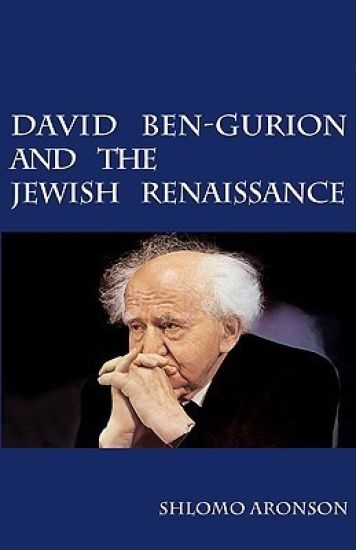
David Ben-Gurion and the Jewish Renaissance

David Ben-Gurion and the Jewish Renaissance

Shlomo Aronson

Cambridge University Press
2010
sidottu
This book offers a reappraisal of David Ben-Gurion's role in Jewish-Israeli history from the perspective of the twenty-first century, in the larger context of the Zionist 'renaissance', of which he was a major and unique exponent. Some have described Ben-Gurion's Zionism as a dream that has gone sour, or a utopia doomed to be unfulfilled. Now - after the dust surrounding Israel's founding father has settled, archives have been opened, and perspective has been gained since Ben-Gurion's downfall - this book presents a fresh look at this statesman-intellectual and his success and tragic failures during a unique period of time that he and his peers described as the 'Jewish renaissance'. The resulting reappraisal offers a new analysis of Ben-Gurion's actual role as a major player in Israeli, Middle Eastern, and global politics.
David Ricardo

David Ricardo

Cambridge University Press
1992
sidottu
This book is a companion volume to the Royal Economic Society edition of The Works and Correspondence of David Ricardo, edited by Piero Sraffa with the collaboration of Maurice Dobb. It completes the record on Ricardian value theory by showing Ricardo's reaction to Malthus's pamphlet The Measure of Value Stated and Illustrated of 1823. Ricardo's Notes are, in Sraffa's words, 'the only considerable item' not appearing in the Royal Economic Society edition of his works. In addition, the recent publication by Cambridge of the variorum edition of Malthus's Principles of Political Economy, edited by J. M. Pullen, makes it possible to understand Malthus's pamphlet as an intermediate step between the 1820 and 1836 editions of the Principles. In his introduction Pier Luigi Porta highlights the place of these Notes in the development of Ricardo's thinking. When taken with Ricardo's paper on 'Absolute Value and Exchangeable Value', these Notes provide the essentials of Ricardian value theory.
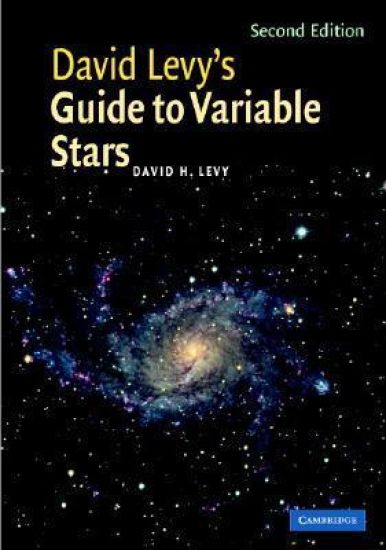
David Levy's Guide to Variable Stars

David Levy's Guide to Variable Stars

Levy David H.

Cambridge University Press
2005
pokkari
Variable stars are fascinating objects to observe; found all over the sky, they change in brightness over time and can be seen with even the most basic of equipment. Variable star astronomy is one field in which amateur astronomers can still make significant contributions to science and in this highly accessible book David Levy teaches the reader how variable stars work, and how to observe them. Using simple, non-technical terms he explains how to get started with electronic (or CCD) observing, as well as how to observe variable stars through a small telescope or binoculars. Including a section on Southern hemisphere stars, the book covers various types of object that can be observed by amateur astronomers, including more exotic phenomena like gamma ray bursts, blazars, and polars. This book will serve to motivate anyone with even a basic interest in astronomy to begin observing these fascinating objects.
David Mamet and American Macho

David Mamet and American Macho

Arthur Holmberg

Cambridge University Press
2012
sidottu
Why did Americans reject the British gentleman as their dominant model of masculinity? Why is a boy's relationship to his mother a crucial factor in shaping his masculinity? What and how do boys learn about what it means to be a man? Holmberg demonstrates how David Mamet's plays provide insights into these questions, and into the masculine malaise. Through the gangsters, businessmen, soldiers, sailors, athletes, frontiersmen and thugs he created, Mamet celebrates and criticizes American macho. The book provides close readings of Mamet's well-known plays as well as plays which have not previously received the critical attention they deserve, and includes discussions of recent films and unpublished film scripts that shed light on Mamet's attitudes to American macho. Holmberg also presents detailed analysis of Mamet as director of his own plays, which gives fascinating insights into the playwright's intentions through his instructions to actors on how to play a part.
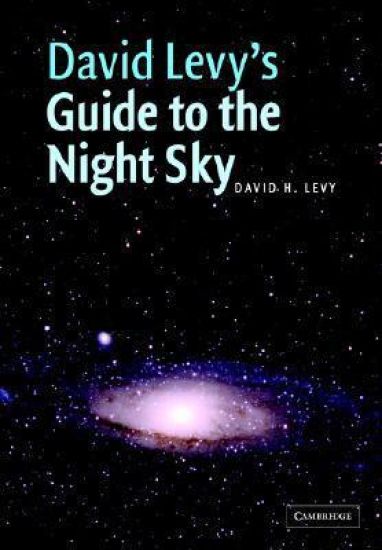
David Levy's Guide to the Night Sky

David Levy's Guide to the Night Sky

David H. Levy

Cambridge University Press
2001
pokkari
The perfect introduction for the novice astronomer, this book stirs the imagination and puts observation in a framework of social activity and personal adventure. Written by an award-winning astronomer, it is a technical guide to the sky, full of helpful practical hints. The author's lively style engages, entertains, and informs. Newcomers will learn how to enjoy the Moon, planets, comets, meteors, and distant galaxies observable through a small telescope. Levy describes the features of the Moon from night to night; how to observe constellations; how best to view the stars, nebulae, and galaxies; how to follow the planets on their annual trek among the constellations; how to map the sky; how to find a new comet; how to buy or even make a telescope; what to see in a month of lunar observations or a year of stellar observation; and much more.