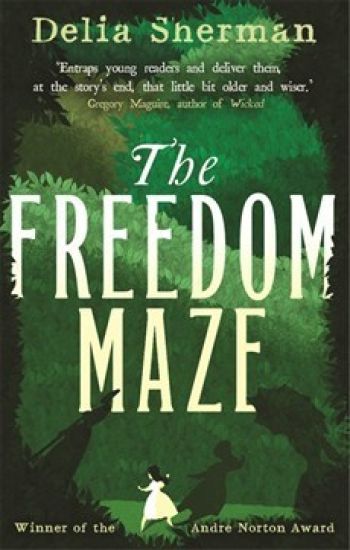
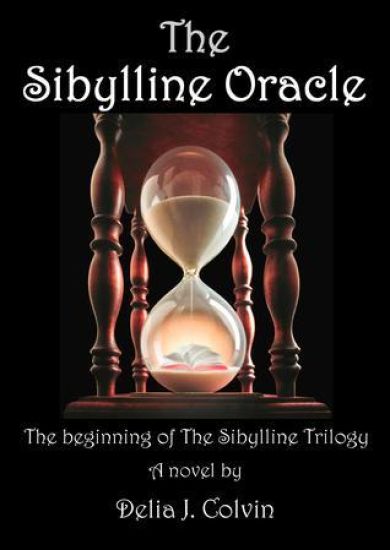
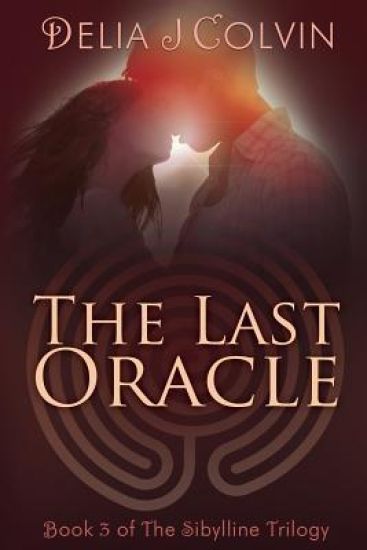
WINNER OF THE ANDRE NORTON AWARD. When Sophie enters her grandmother's maze one sweltering Louisiana summer in 1960, she does not expect to emerge 100 years in the past, on to her ancestors' sugar plantation, mistaken for a slave. Sophie is about to learn a historical lesson she'll never forget.
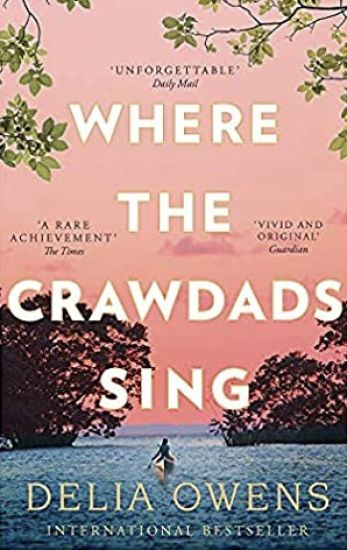
Perfect for fans of Barbara Kingsolver and Celeste Ng, Where the Crawdads Sing is at once an exquisite ode to the natural world, a heartbreaking coming-of-age story, and a surprising tale of possible murder.
Perfect for fans of Barbara Kingsolver and Celeste Ng, Where the Crawdads Sing is at once an exquisite ode to the natural world, a heartbreaking coming-of-age story, and a surprising tale of possible murder.
The incredible memoir by international bestselling author of Where The Crawdads Sing, Delia Owens and her then partner Mark Owens', charting their time researching wildlife in the Kalahari Desert. Reissued and in full colour, for the first time since its original publication. In the early 1970s, carrying little more than a change of clothes and a pair of binoculars, Mark and Delia Owens caught a plane to Africa, bought a third-hand Land Rover, and drove deep into the Kalahari Desert. There they lived for seven years, in an unexplored area with no roads, no people, and no source of water for thousands of square miles. In this vast wilderness the Owenses began their zoology research, working alongside lions, brown hyenas, jackals, giraffes, and the many other creatures they came to know.Cry of the Kalahari is a gripping account of how two young Americans survived the dangers of living in one of the last pristine areas on Earth. Reissued for the first time since its original publication in 1984, this beautiful new edition contains never-seen-before, colour photographs of Mark and Delia on their adventure of a lifetime.'A remarkable story beautifully told . . . Among such classics as Goodall's In the Shadow of Man and Fossey's Gorillas in the Mist' Chicago Tribune'For anyone interested in animals or in real life adventure, this book is a must' Jane Goodall'Extraordinary . . . How the couple overcome the hazards of the desert and came to appreciate its living richness makes fascinating reading . . . Read their remarkable book to be delighted, moved, and awed'People Magazine
'A remarkable story beautifully told... Among such classics as Goodall's In the Shadow of Man and Fossey's Gorillas in the Mist' Chicago Tribune Carrying little more than a change of clothes and a pair of binoculars, two young Americans, Mark and Delia Owens, caught a plane to Africa, bought a thirdhand Land Rover, and drove deep into the Kalahari Desert. There they lived for seven years, in an unexplored area with no roads, no people, and no source of water for thousands of square miles. In this vast wilderness the Owenses began their zoology research, working along animals that had never before been exposed to humans. An international bestseller on original release, Cry of the Kalahari is the story of the Owenses's life with lions, brown hyenas, jackals, giraffes, and the many other creatures they came to know. It is also a gripping account of how they survived the dangers of living in one of the last and largest pristine areas on Earth.
'Painfully beautiful' The New York Times Book Review'Heart-wrenching... a compelling love story' Entertainment Weekly'Astonishing' PeopleFor years, rumours of the 'Marsh Girl' have haunted Barkley Cove, a quiet town on the North Carolina coast. So in late 1969, when handsome Chase Andrews is found dead, the locals immediately suspect Kya Clark, the so-called Marsh Girl. But Kya is not what they say. Sensitive and intelligent, she has survived for years alone in the marsh that she calls home, finding friends in the gulls and lessons in the sand. Then the time comes when she yearns to be touched and loved. When two young men from town become intrigued by her wild beauty, Kya opens herself to a new life - until the unthinkable happens.
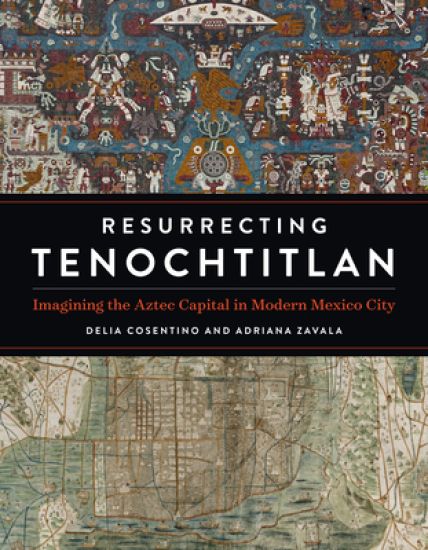
Honorable Mention, ALAA-Arvey Foundation Book Award, Association of Latin American Art Finalist, 2024 Charles Rufus Morey Book Award, College Art AssociationHow Mexican artists and intellectuals created a new identity for modern Mexico City through its ties to Aztec Tenochtitlan. After archaeologists rediscovered a corner of the Templo Mayor in 1914, artists, intellectuals, and government officials attempted to revive Tenochtitlan as an instrument for reassessing Mexican national identity in the wake of the Revolution of 1910. What followed was a conceptual excavation of the original Mexica capital in relation to the transforming urban landscape of modern Mexico City. Revolutionary-era scholars took a renewed interest in sixteenth century maps as they recognized an intersection between Tenochtitlan and the foundation of a Spanish colonial settlement directly over it. Meanwhile, Mexico City developed with modern roads and expanded civic areas as agents of nationalism promoted concepts like indigenismo, the embrace of Indigenous cultural expressions. The promotion of artworks and new architectural projects such as Diego Rivera’s Anahuacalli Museum helped to make real the notion of a modern Tenochtitlan. Employing archival materials, newspaper reports, and art criticism from 1914 to 1964, Resurrecting Tenochtitlan connects art history with urban studies to reveal the construction of a complex physical and cultural layout for Mexico’s modern capital.
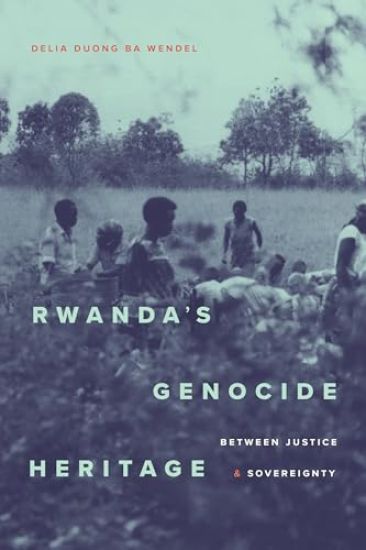
In Rwanda's Genocide Heritage, Delia Duong Ba Wendel contends with the forms of justice and sovereignty enacted through sites of violent memory. Drawing from oral histories and a newly available visual archive of memory work after the 1994 genocide in Rwanda, she explores the human rights and government priorities that preserved killing sites and victims' remains for public display. Rwanda's genocide memorials exemplify a global phenomenon that Wendel terms "trauma heritage," wherein hidden or unrecognized violence is spatialized--made visible in public space--to demand justice and recognition. She argues that trauma heritage innovates on the form histories take by "writing" them into landscapes, constituting a reparative historiography from the Global South. Among those sites, Rwanda's genocide heritage comprises exceptionally visceral sites of truth-telling that highlight the politics of a past made present. Wendel demonstrates that such sites of memory require reckoning with the ethical and political dilemmas that arise from viewing violence as forms of repair and control.
In Rwanda's Genocide Heritage, Delia Duong Ba Wendel contends with the forms of justice and sovereignty enacted through sites of violent memory. Drawing from oral histories and a newly available visual archive of memory work after the 1994 genocide in Rwanda, she explores the human rights and government priorities that preserved killing sites and victims' remains for public display. Rwanda's genocide memorials exemplify a global phenomenon that Wendel terms "trauma heritage," wherein hidden or unrecognized violence is spatialized--made visible in public space--to demand justice and recognition. She argues that trauma heritage innovates on the form histories take by "writing" them into landscapes, constituting a reparative historiography from the Global South. Among those sites, Rwanda's genocide heritage comprises exceptionally visceral sites of truth-telling that highlight the politics of a past made present. Wendel demonstrates that such sites of memory require reckoning with the ethical and political dilemmas that arise from viewing violence as forms of repair and control.
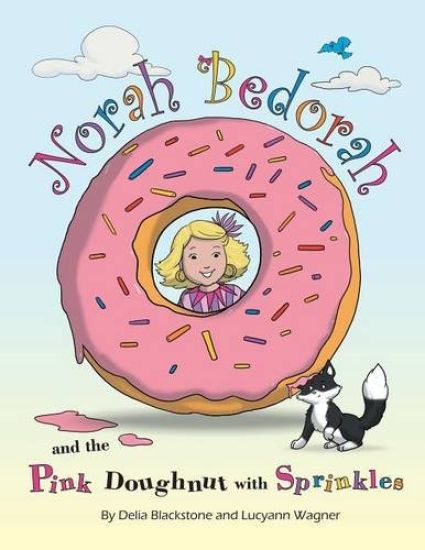
Meet Norah Bedorah! She's a spunky little girl who always likes to get her own way. And she wants LOTS of pink doughnuts with sprinkles for breakfast at her Groovy Grandmas' house. She tries to persuade them to give her what she wants. See who wins the battle of the doughnuts!
The amount and range of information available to today’s students—and indeed to all learners—is unprecedented. Phrases like “the information revolution”, “the information (or knowledge) society”, and “the knowledge economy” underscore the truism that our society has been transformed by virtually instantaneous access to virtually unlimited information. Thomas Friedman tells us that “The World Is Flat” and that we must devise new political and economic understandings based on the ceaseless communication of information from all corners of the world. The Bush administration tells us that information relating to the “war on terrorism” is so critical that we must allow new kinds of surveillance to keep society safe. Teenage subscribers to social-computing networks not only access information but enter text and video images and publish them widely—becoming the first adolescents in history to be creators as well as consumers of vast quantities of information. If the characteristics of “the information age” demand new conceptions of commerce, national security, and publishing—among other things—it is logical to assume that they carry implications for education as well. In fact, a good deal has been written over the last several decades about how education as a whole must transform its structure and curriculum to accommodate the possibilities offered by new technologies. Far less has been written, however, about how the specific affordances of these technologies—and the kinds of information they allow students to access and create—relate to the central purpose of education: learning. What does “learning” mean in an information-rich environment? What are its characteristics? What kinds of tasks should it involve? What concepts, strategies, attitudes, and skills do educators and students need to master if they are to learn effectively and efficiently in such an environment? How can researchers, theorists, and practitioners foster the well-founded and widespread development of such key elements of the learning process? This book explores these questions and suggests some tentative answers. Drawing from research and theory in three distinct but related fields—learning theory, instructional systems design, and information studies—it presents a way to think about learning that responds directly to the actualities of a world brimming with information. The book is grounded in the work of such key figures in learning theory as Bransford and Anderson & Krathwohl. It draws on such theorists of instructional design as Gagne, Mayer, and Merrill. From information studies, it uses ideas from Buckland, Marchionini, and Wilson (who is known for his pioneering work in “information behavior”—that is, the full range of information seeking and use). The book breaks new ground in bringing together ideas that have run in parallel for years but whose relationship has not been fully explored.
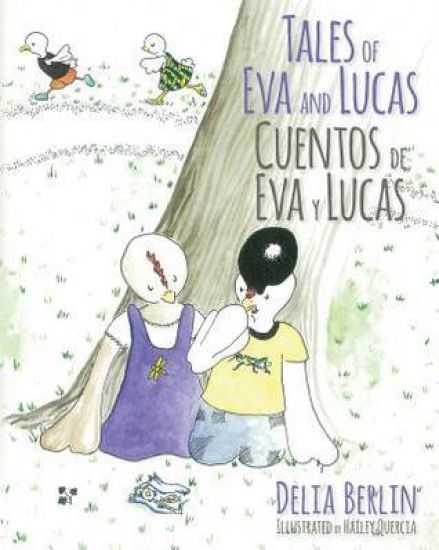
Eva and Lucas are best friends and neighbors. They are also thoughtful and endearing chickens. In this bilingual (Spanish) chapter book, they encounter problems and develop solutions using their insights about sharing, caring and empathy. Quercia's whimsical animals lend expression to Berlin's charming characters. Eva and Lucas will delight both preschoolers and early readers.Eva y Lucas son mejores amigos y vecinos. Tambi n son pollitos amables y simp ticos. En este libro biling e en cap tulos para leer o ser le do, ellos confrontan problemas y desarrollan soluciones usando sus descubrimientos sobre generosidad, apoyo mutuo y empat a. Los animales imaginarios de Quercia agregan expresi n a los encantadores personajes de Berlin. Eva y Lucas deleitar n igualmente a pre-escolares y nuevos lectores.
In Sister Mother Husband Dog, Delia Ephron brings her trademark wit and effervescent prose to a series of autobiographical essays about life, love, writing, movies, and family. In "Sister," she deftly captures the rivalry, mutual respect, and intimacy that made up her relationship with her older sister and frequent writing companion, Nora. "Blame It on the Movies" is Ephron's wry and romantic essay about becoming a writer and finding a storybook ending to her twenties, though it was just the beginning of a lifetime of taking notes. "Bakeries" is both a lighthearted tour through her favorite downtown patisseries and a thoughtful, deeply felt reflection on the dilemma of "having it all." From keen observations on modern living, the joy of girlfriends, and best-friendship, to a consideration of the magical madness and miracle of dogs, to haunting recollections of life with her famed screenwriter mother and growing up the child of alcoholics, Ephron's eloquent style and voice illuminate every moment of this superb and singular work.
La pol tica, para ser exitosa, ha de ser entretenida, ya que los pol ticos aburridos, tristes y tediosos no pueden salir victoriosos bajo sistemas electorales sustentados en la gesti n del afecto de los votantes y la construcci n libre de lealtades electorales, como es lo caracter stico bajo sistema de cu o democr tico. Este principio, cobra especial validez y significado bajo un contexto conocido como la "era del entretenimiento," en la que los ciudadanos m s que mostrar un inter s en la pol tica y los asuntos propios de la organizaci n, renovaci n y estructuraci n del poder p blico y los asuntos del Estado, parecen estr s m s interesados en aspectos relacionados con el entretenimiento, la diversi n, el esparcimiento y el espect culo. Esta realidad de la pol tica no es nueva, pero si se ha observado una pronunciada tendencia hedonista de los ciudadanos en los ltimos a os en la que lo importante es el humor, la diversi n y el espect culo que genera la vida y la propia pol tica y que, finalmente, produce placer, entretiene y agrada a la gente. Esta tendencia, no hubiera sido posible, en la magnitud que ha cobrado en los ltimos a os, sin la participaci n, por un lado, de los medios masivos de comunicaci n, principalmente los electr nicos, quienes se han convertido en los canales privilegiados para entretener y divertir a los ciudadanos y, por el otro, sin la existencia de grandes masas de electores vidas y deseosas de vivir momentos de placer y entretenimiento. Esta nueva realidad, ha est generando cambios sustanciales en la forma como se realizan las campa as y en el perfil de los candidatos que finalmente logran salir victoriosos de los procesos electorales. De esta forma, se ha observado una tendencia global en la que campa as electorales festivas, entretenidas, coloridas y, sobre todo, l dicas, son las que logran ser exitosas. De la misma forma, candidatos entretenidos, con buen sentido del humor y, sobre todo, alegres y competentes en gestionar el afecto de los votantes, resultan ganadores de los procesos electorales. Contrariamente, campa as aburridas, deslucidas, insaboras e incoloras, que postulan a candidatos aburridos, tristes y tediosos generalmente son campa as fracasadas. En este sentido, el presente trabajo re ne cuatro ensayos independientes, mismos que pueden leerse por separado, sobre las campa as electorales l dicas, habla de sus caracter sticas, su importancia, su articulaci n estrat gica y, sobre todo, muestra casos exitosos de este tipo de campa as que se han presentado en los ltimos a os, tanto en M xico como en otros pa ses. En lo particular, sobre las campa as l dicas se aborda el estudio de casos exitosos en M xico en los a os 2006 y 2009. Sobre el uso de la m sica como estrategia persuasiva de car cter l dico en las campa as electorales, se estudia la elecci n presidencial de los Estados Unidos de Norteam rica en el 2008 y sobre el uso del color como estrategia persuasiva en la pol tica electoral, se aborda el caso de los partidos pol ticos nacionales de M xico. En otro cap tulo, se analiza el uso del humor como estrategia de persuasi n en las campa as electorales y en la pol tica y el liderazgo, en lo general. Finalmente, se presenta a manera de colof n, una revisi n de lo que han sido las campa as electorales en el pasado y lo que, se estima, pueden ser en el futuro. Como anexos se presenta, en primer lugar, el trabajo intitulado " Qu mueve a los votantes? Un an lisis sobre las razones del comportamiento pol tico del elector," donde se habla de las m s diversas e ins litas motivaciones de los electores y, en segundo lugar, el documento denominado "El arte de construir el lema de la campa a."