Kirjojen hintavertailu. Mukana 12 016 292 kirjaa ja 12 kauppaa.

Kirjahaku

Etsi kirjoja tekijän nimen, kirjan nimen tai ISBN:n perusteella.

1000 tulosta hakusanalla Doris Stokes

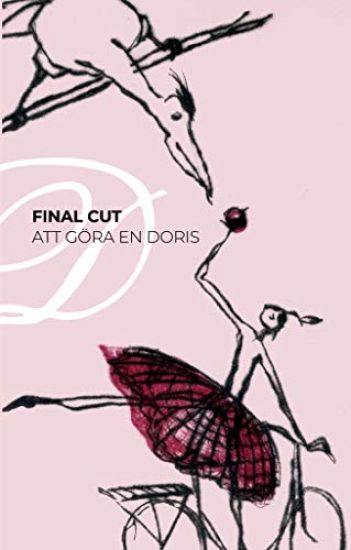
Final cut : att göra en Doris

Final cut : att göra en Doris

Lisa Lindén; Agneta Slonawski; Gunnar Bergdahl

Bokförlaget Korpen
2021
nidottu
Dorismanifestet är världens första feministiska filmmanifest. Ett manifest som kräver jämställdhet, både framför och bakom kameran. Att göra en Doris är att sätta igång och hålla ut. Att våga ifrågasätta, agera och genomföra aktioner. Det är vad Doris Film har gjort de senaste tjugo åren i Sverige, men även på Island, i Ryssland och i många andra länder. Boken Final Cut vänder sig till dig som vill veta mer om kvinnors organisering och om hur Doris Film startade. Boken speglar en lustfylld och lärorik resa som började i Göteborg. Ett arbete som har varit en viktig del i att göra den svenska filmbranschen mer jämställd. Medverkar gör Astrid Askberger, Gunnar Bergdahl, Jenny Brusk, Gunilla Burstedt, Catti Edfeldt, Elena Emelianova, Anna Eriksson, Annika Hellström, Silva Hildbrand, Aase Högfeldt, Susann Jonsson, Lisa Lindén, Dögg Mósesdottír, Anne Otto, Lis Svensson Brandberg samt Gertrud Åström.
A Life Made with Artists: Doris Littrell and the Oklahoma Indian Art Scene
Some are born to paint. Others, to admire. And a few are born with the eye to spot great artistic talent and the passion to bring it to the world. Doris Littrell was always one of the latter. Whether tromping through mud to track down a promising canvas or whispering the needed word of encouragement in a struggling painter's ear, she made her life with Native American artists. And in doing so, this longtime Oklahoma gallery owner helped make possible the contemporary Oklahoma Indian Art Movement. This is her true story--told in her own words, in the words of the artists she championed, and those of the collectors who admired them both--graced by 32 pages of the art that Littrell loved so much.
Virtue Revisited in the Novels of Doris Lessing
The ethical approaches to literature have come into prominence in the twentieth century, calling for a ‘turn to ethics’ in the studies of humanities, in general, and literary studies, in particular. By leading the ethical turn in literature, many theorists proposed a moral-oriented approach to literature, which is still a significant part of literary criticism. The ethical turn in literature has changed the spirit of literary criticism in the direction of virtue and value-based approaches. In this respect, this study scrutinises Doris Lessing’s novels in light of virtue ethics in general and ‘virtue politics,’ ‘care ethics,’ and ‘Sufi virtue ethics’ in particular. Lessing’s connection to virtue ethics, which is implicitly or explicitly reflected in her novels, is examined by giving the panorama of ethical movements whose common point is virtues. This study asserts that Lessing implements an ethical concern in her novels, which is based on her own understanding of virtue ethics.
Reading Women's Worlds from Christine de Pizan to Doris Lessing
In this work, Jansen explores a recurring theme in writing by women: the dream of finding or creating a private and secluded retreat from the world of men. These imagined "women's worlds" may be very small, a single room, for example, but many women writers are much more ambitious, fantasizing about cities, even entire countries, created for and inhabited exclusively by women.
Theatre-Fiction in Britain from Henry James to Doris Lessing
This volume posits and explores an intermedial genre called theatre-fiction, understood in its broadest sense as referring to novels and stories that engage in concrete and sustained ways with theatre. Though theatre has made star appearances in dozens of literary fictions, including many by modern history’s most influential authors, no full-length study has dedicated itself specifically to theatre-fiction—in fact there has not even been a recognized name for the phenomenon. Focusing on Britain, where most of the world’s theatre-novels have been produced, and commencing in the late-nineteenth century, when theatre increasingly took on major roles in novels, Theatre-Fiction in Britain argues for the benefits of considering these works in relation to each other, to a history of development, and to the theatre of their time. New modes of intermedial analysis are modelled through close studies of Henry James, Somerset Maugham, Virginia Woolf, J. B. Priestley, Ngaio Marsh, Angela Carter, and Doris Lessing, all of whom were deeply involved in the theatre-world as playwrights, directors, reviewers, and theorists. Drawing as much on theatre scholarship as on literary theory, Theatre-Fiction in Britain presents theatre-fiction as one of the past century’s most vital means of exploring, reconsidering, and bringing forth theatre’s potentials.
Narrative Authority and Homeostasis in the Novels of Doris Lessing and Carmen Martín Gaite
This study, originally published in 1990, assesses a shift in the presentation of self-consciousness in two pairs of novels by Doris Lessing and Carmen Martín Gaite: 1) Lessing’s The Summer Before the Dark (1973) and Martín Gaite’s Retahílas (1974) and 2) Lessing’s The Memoirs of a Survivor (1974) and Martín Gaite’s The Back Room (1978). Three major structural divisions facilitate examining implications of the novels for 1) feminism 2) literary narrative and 3) the lives of people-at-large.
Narrative Authority and Homeostasis in the Novels of Doris Lessing and Carmen Martín Gaite
This study, originally published in 1990, assesses a shift in the presentation of self-consciousness in two pairs of novels by Doris Lessing and Carmen Martín Gaite: 1) Lessing’s The Summer Before the Dark (1973) and Martín Gaite’s Retahílas (1974) and 2) Lessing’s The Memoirs of a Survivor (1974) and Martín Gaite’s The Back Room (1978). Three major structural divisions facilitate examining implications of the novels for 1) feminism 2) literary narrative and 3) the lives of people-at-large.
Theatre-Fiction in Britain from Henry James to Doris Lessing
This volume posits and explores an intermedial genre called theatre-fiction, understood in its broadest sense as referring to novels and stories that engage in concrete and sustained ways with theatre. Though theatre has made star appearances in dozens of literary fictions, including many by modern history’s most influential authors, no full-length study has dedicated itself specifically to theatre-fiction—in fact there has not even been a recognized name for the phenomenon. Focusing on Britain, where most of the world’s theatre-novels have been produced, and commencing in the late-nineteenth century, when theatre increasingly took on major roles in novels, Theatre-Fiction in Britain argues for the benefits of considering these works in relation to each other, to a history of development, and to the theatre of their time. New modes of intermedial analysis are modelled through close studies of Henry James, Somerset Maugham, Virginia Woolf, J. B. Priestley, Ngaio Marsh, Angela Carter, and Doris Lessing, all of whom were deeply involved in the theatre-world as playwrights, directors, reviewers, and theorists. Drawing as much on theatre scholarship as on literary theory, Theatre-Fiction in Britain presents theatre-fiction as one of the past century’s most vital means of exploring, reconsidering, and bringing forth theatre’s potentials.
Reading Women's Worlds from Christine de Pizan to Doris Lessing
In this work, Jansen explores a recurring theme in writing by women: the dream of finding or creating a private and secluded retreat from the world of men. These imagined "women's worlds" may be very small, a single room, for example, but many women writers are much more ambitious, fantasizing about cities, even entire countries, created for and inhabited exclusively by women.
Reading Women's Worlds from Christine de Pizan to Doris Lessing
In this work, Jansen explores a recurring theme in writing by women: the dream of finding or creating a private and secluded retreat from the world of men. These imagined "women's worlds" may be very small, a single room, for example, but many women writers are much more ambitious, fantasizing about cities, even entire countries, created for and inhabited exclusively by women.
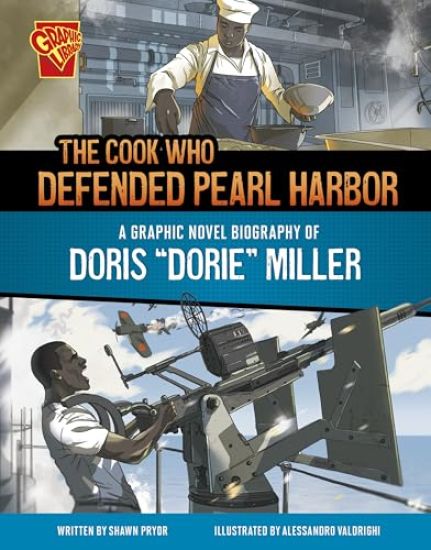
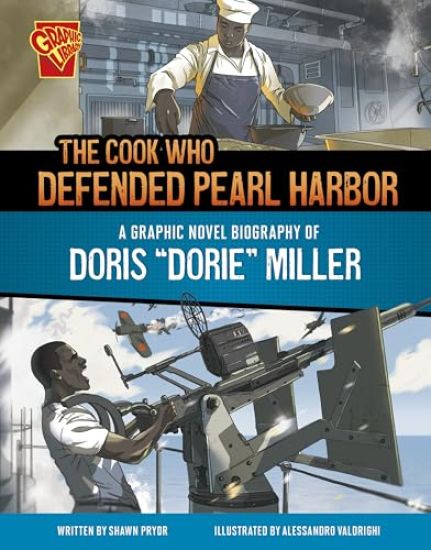
The Cook Who Defended Pearl Harbor: A Graphic Novel Biography of Doris Dorie Miller
On December 7, 1941, Dorie Miller, a cook aboard the USS West Virginia battleship, became an unlikely hero during the infamous attack on Pearl Harbor, Hawaii. Without any formal training, Miller took control of an antiaircraft gun, shooting down enemy planes and saving countless lives. In this action-packed graphic novel, relive the brave actions that earned Miller the Navy Cross, making him the first African American to receive this honor. With fast-paced text and full-color illustrations, this must-read nonfiction graphic novel showcases one of history's greatest barrier breakers.
The Cook Who Defended Pearl Harbor: A Graphic Novel Biography of Doris Dorie Miller
On December 7, 1941, Dorie Miller, a cook aboard the USS West Virginia battleship, became an unlikely hero during the infamous attack on Pearl Harbor, Hawaii. Without any formal training, Miller took control of an antiaircraft gun, shooting down enemy planes and saving countless lives. In this action-packed graphic novel, relive the brave actions that earned Miller the Navy Cross, making him the first African American to receive this honor. With fast-paced text and full-color illustrations, this must-read nonfiction graphic novel showcases one of history's greatest barrier breakers.
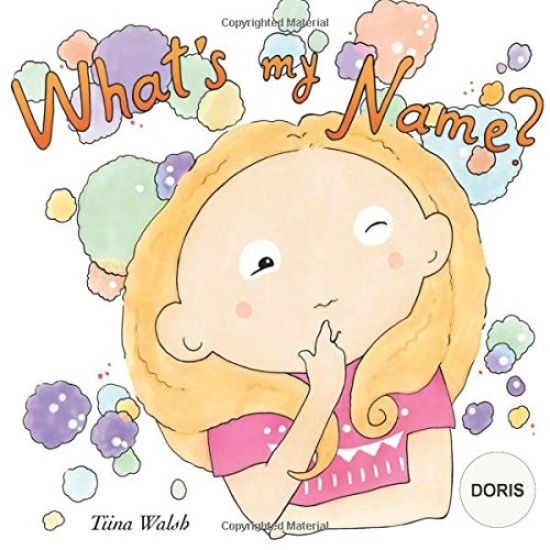
What's my name? DORIS

What's my name? DORIS

Tiina Walsh

Createspace Independent Publishing Platform
2018
nidottu
A personalised storybook for girls called DORIS. The story is based on the letters of the child's own name. All books are different from one another. The girl wakes up but can't remember her name. Magic Mouse knows how to solve the problem. They go on a wonderful adventure in the Magic Bus Translated and adapted by the author from the top-selling Finnish language children's namebook series "Tytt /Poika, joka unohti nimens ". The beautiful hand-drawn pictures will delight both the young and the young-at-heart Looking for a namebook "What's my name?" but couldn't find a book for the name you are looking for? Please don't hesitate to contact me with your name request -Tiina Walsh Author fb.me/whatsmynamestorybooks for more details about the storybooks