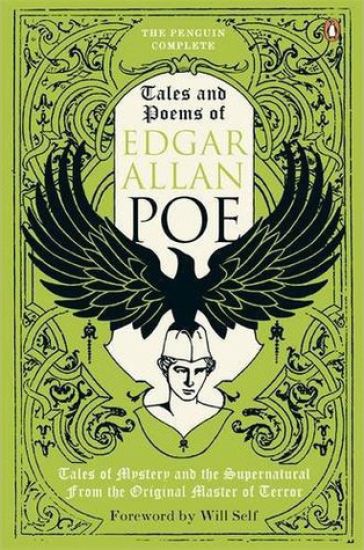
The Fall of the House of Usher, The Murders in the Rue Morgue, The Pit and the Pendulum, The Gold-Bug - some of the most famous tales of terror and the most macabre detective stories ever written. Acknowledged master of suspense, Poe was also a poet and - as his stories of mesmerism and time travel prove - a pioneer of science fiction. In this collection, probing to the depths of the human psyche, Poe's haunted genius will chill and enthral you.
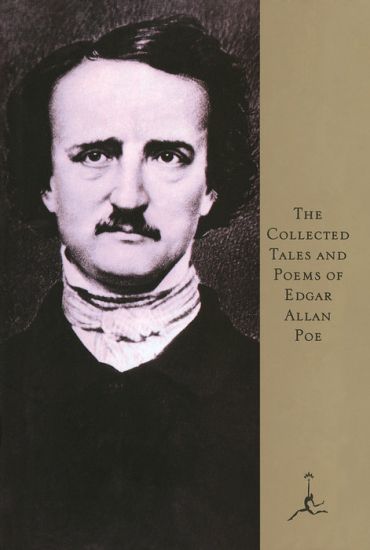
Edgar Allan Poe was one of the most original writers in the history of American letters, a genius who was tragically misunderstood in his lifetime. He was a seminal figure in the development of science fiction and the detective story, and exerted a great influence on Dostoyevsky, Arthur Conan Doyle, Jules Verne, and Charles Baudelaire, who championed him long before Poe was appreciated in his own country. Baudelaire's enthusiasm brought Poe a wide audience in Europe, and his writing came to have enormous importance for modern French literature. This edition includes his most well-known works--"The Raven," "The Pit and the Pendulum," "Annabel Lee," "The Fall of the House of Usher," "The Murders in the Rue Morgue"--as well as less-familiar stories, poems, and essays.
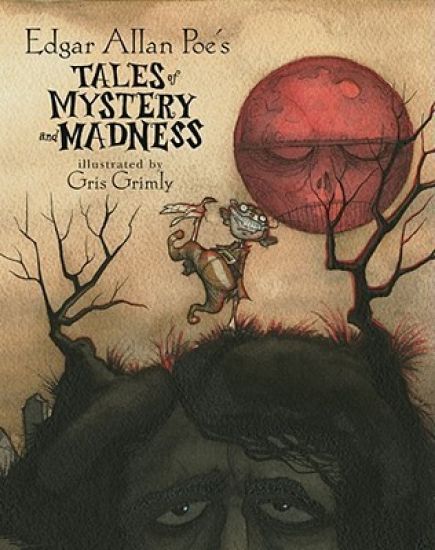
A sweet little cat drives a man to insanity and murder.... The grim death known as the plague roams a masquerade ball dressed in red.... A dwarf seeks his final revenge on his captors.... A sister calls to her beloved twin from beyond the grave.... Prepare yourself. You are about to enter a world where you will be shocked, terrified, and, though you'll be too scared to admit it at first, secretly thrilled. Here are four tales -- The Black Cat, The Masque of the Red Death, Hop-Frog, and The Fall of the House of Usher -- by the master of the macabre, Edgar Allan Poe. The original tales have been ever so slightly dismembered -- but, of course, Poe understood dismemberment very well. And he would shriek in ghoulish delight at Gris Grimly's gruesomely delectable illustrations that adorn every page. So prepare yourself. And keep the lights on.
As an artist, Edgar Degas (1834-1917) defies easy description. Allied with the French impressionists through his commitment to portraying modern life, he also took an independent course, preferring line over color and the visible brushstroke, and working in a studio instead of out-of-doors. He is perhaps best known as a painter, but his most widely known work is a sculpture, Little Dancer Aged Fourteen. Executed in wax, near life-sized, dressed in a ballerina's tutu, with real ballet slippers and real hair, the sculpture caused a sensation when it was exhibited in 1881. It is the only sculpture Degas ever showed publicly, though more than one hundred--of dancers, horses, and bathers--were found in his studio after he died, all dusty, some fallen apart. For almost forty years after his death, these works were known only through the bronzes his heirs had cast from the originals.Then, in 1955, the waxes themselves appeared on the art market. Thanks to the discernment and generosity of Paul Mellon, the majority are now preserved at the National Gallery of Art, Washington, most on permanent display. This groundbreaking volume honors this extraordinary gift by linking art and science. It brings together the insights of a distinguished art historian of nineteenth-century painting and sculpture and the specialized knowledge of National Gallery conservators and scientists who have published pioneering technical studies. Including essays on Degas' life and work, his sculptural technique and materials, and the story of the sculptures after his death, it features art-historical and technical discussions of every work in the collection as well as indispensable concordances and bibliography. The richly illustrated text is intended for both art lover and specialist. Was Degas the sculptor technically inept or unusually inventive? How do we understand his sculpture in light of his paintings, prints, and photographs? These questions and many others are explored with originality and depth, adding immeasurably to our understanding of the artistic avant-garde in the late nineteenth century and to our appreciation of this controversial artist.
By attempting to suspend moral, ideological, or psychological assumptions, a phenomenological interpretation of literature hopes to reach "the things themselves," the essential phenomena of being, space, and time, as they are constituted, by consciousness, in words. Although there has been a tradition of phenomenological criticism in Europe for the last twenty years, David Halliburton is the first to write a general study of an American author from this particular point of view. The book begins with a methodological chapter that sets out the assumptions and procedures of the approach. This is followed by analyses of Poe's major works, exploring such special problems as Poe's treatment of the material world, including technology; the interrelation of body and consciousness; poetic voice; attitudes toward women; and the will to affirmation, plenitude, and unity. The center of interest is neither Poe's biography nor environment but always the meaning of Poe's words. Because these works are shaped by a single imagination and because they are experienced in time, as a process, each work has its own "way of going." The aim of the interpretation is to find this way and go along with it; to live each work dynamically, as it "happens," while tracing its interaction with other works. Originally published in 1973. The Princeton Legacy Library uses the latest print-on-demand technology to again make available previously out-of-print books from the distinguished backlist of Princeton University Press. These editions preserve the original texts of these important books while presenting them in durable paperback and hardcover editions. The goal of the Princeton Legacy Library is to vastly increase access to the rich scholarly heritage found in the thousands of books published by Princeton University Press since its founding in 1905.
By attempting to suspend moral, ideological, or psychological assumptions, a phenomenological interpretation of literature hopes to reach "the things themselves," the essential phenomena of being, space, and time, as they are constituted, by consciousness, in words. Although there has been a tradition of phenomenological criticism in Europe for the last twenty years, David Halliburton is the first to write a general study of an American author from this particular point of view. The book begins with a methodological chapter that sets out the assumptions and procedures of the approach. This is followed by analyses of Poe's major works, exploring such special problems as Poe's treatment of the material world, including technology; the interrelation of body and consciousness; poetic voice; attitudes toward women; and the will to affirmation, plenitude, and unity. The center of interest is neither Poe's biography nor environment but always the meaning of Poe's words. Because these works are shaped by a single imagination and because they are experienced in time, as a process, each work has its own "way of going." The aim of the interpretation is to find this way and go along with it; to live each work dynamically, as it "happens," while tracing its interaction with other works. Originally published in 1973. The Princeton Legacy Library uses the latest print-on-demand technology to again make available previously out-of-print books from the distinguished backlist of Princeton University Press. These editions preserve the original texts of these important books while presenting them in durable paperback and hardcover editions. The goal of the Princeton Legacy Library is to vastly increase access to the rich scholarly heritage found in the thousands of books published by Princeton University Press since its founding in 1905.
Fall in love with Edgar, a giant, friendly dragon with an enormous appetite for fun. With his ornery nature and adventuresome attitude, Edgar creates a day Dominic and Nan will never forget.
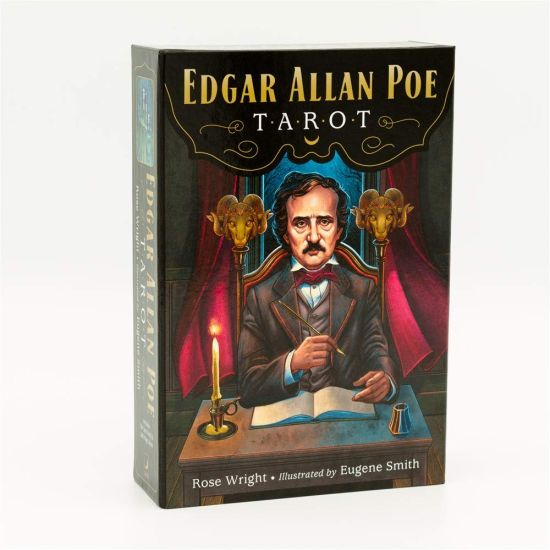
Blending the divinatory power of the Rider-Waite-Smith tarot with the visionary writings of Edgar Allan Poe, this deck provides deep spiritual insights into who you are and what you might become. Stunning illustrations based on Poe s tales of the mysterious and the macabre illuminate the imagination and open the soul to fantastical realms of spirit.
Edgar G. Ulmer: Detour on Poverty Row illuminates the work of this under-appreciated film auteur through 21 new essays penned by a range of scholars from around the globe. Ulmer, an immigrant to Hollywood who fell from grace in Tinseltown after only one studio film, became one of the reigning directors of Poverty Row B-movies. Structured in four sections, Part I examines various contexts important to Ulmer's career, such as his work at the Producers Releasing Corporation (PRC), and his work in exploitation films and ethnic cinema. Part II analyzes Ulmer's film noirs, featuring an emphasis on Detour (1945) and Murder Is My Beat (1955). Part III covers a variety of Ulmer's individual films, ranging from Bluebeard (1944) and Carnegie Hall (1947) to The Man from Planet X (1951) and Daughter of Dr. Jekyll (1957). Part IV concludes the volume with a case study of The Black Cat (1934), offering three different analyses of Ulmer's landmark horror film.
Edgar G. Ulmer: Detour on Poverty Row illuminates the work of this under-appreciated film auteur through 21 new essays penned by a range of scholars from around the globe. Ulmer, an immigrant to Hollywood who fell from grace in Tinseltown after only one studio film, became one of the reigning directors of Poverty Row B-movies. Structured in four sections, Part I examines various contexts important to Ulmer's career, such as his work at the Producers Releasing Corporation (PRC), and his work in exploitation films and ethnic cinema. Part II analyzes Ulmer's film noirs, featuring an emphasis on Detour (1945) and Murder Is My Beat (1955). Part III covers a variety of Ulmer's individual films, ranging from Bluebeard (1944) and Carnegie Hall (1947) to The Man from Planet X (1951) and Daughter of Dr. Jekyll (1957). Part IV concludes the volume with a case study of The Black Cat (1934), offering three different analyses of Ulmer's landmark horror film.
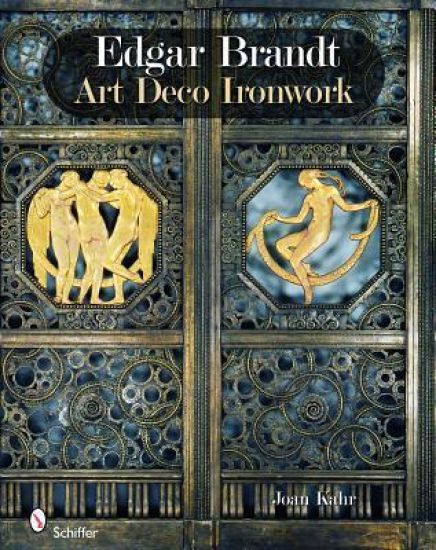
The life and Art Deco iron furnishings and architecture work of French metalsmith Edgar Brandt, through over 300 color and rare period photographs. A premier metalsmith in the early 20th century in France, Edgar Brandt (1880-1960) designed and fabricated some of the most beautiful architectural and decorative ironwork of his age. This elegant book recounts his life and work with scholarly text and photographs. Lyrical gates, doors, and tables, including his most famous screen, L'Oasis, appeared at the seminal 1925 Exposition des Arts Décoratifs, in Paris, which gave the name Art Deco to the new style of designs. Combining motifs from ancient Egypt and classical Greek sources, floral and animals forms, and machine-inspired geometric designs, Brandt created items that became synonymous with the most lavish designs of the time. His workshop and showroom in Paris, along with a gallery that featured works by other contemporary artist-craftsmen, produced luxury goods and private commissions. Grilles, fire screens, doors, tables, andirons, vessels and lighting devices were exquisitely executed, and appear here to be studied and compared. Historians and art collectors interested in this fascinating period will find this book an invaluable reference.
Released in conjunction with the traveling exhibition organized by the Pasadena Museum of California Art, Edgar Payne: The Scenic Journey presents more than 125 reproductions of Payne's paintings, drawings, and decorative arts, as well as rarely seen photographs from the artist's travels and selections from his personal collection of compositional studies.
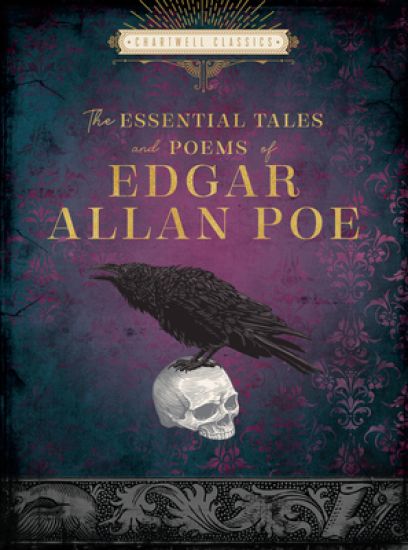
Revel in the sumptuous language of Edgar Allan Poe’s best works.The Essential Tales and Poems of Edgar Allan Poe features key works, spanning from 1827 to his death in 1849, from the famous Gothic American writer, especially Poe’s spine-chilling short stories and melodious poems. Included in this indispensable edition, with an introduction by renowned author Daniel Stashower, are 21 short stories, including “The Tell-Tale Heart,” “The Pit and the Pendulum,” and “The Murders in the Rue Morgue,” as well as 10 classic poems, including “The Raven,” “Annabel Lee,” and “The Bells.” Essential volumes for the shelves of every classic literature lover, the Chartwell Classics series includes beautifully presented works and collections from some of the most important authors in literary history. Chartwell Classics are the editions of choice for the most discerning literature buffs. Other titles in the Chartwell Classics Series include: Complete Fiction of H.P. Lovecraft; Complete Grimm’s Fairy Tales; Complete Novels of Jane Austen; Complete Sherlock Holme; Complete Tales & Poems of Edgar Allen Poe; Complete Works of William Shakespeare; Divine Comedy; Alice's Adventures in Wonderland and Other Tales; The Essential Tales of H.P. Lovecraft; The Federalist Papers; The Inferno; The Call of the Wild and White Fang; Moby Dick; The Odyssey; Pride and Prejudice; The Essential Grimm’s Fairy Tales; Emma; The Great Gatsby; The Secret Garden; Anne of Green Gables; The Phantom of the Opera; The Communist Manifesto and Das Kapital; Republic; Frankenstein; Twenty Thousand Leagues Under the Sea; The Picture of Dorian Gray; Meditations; Wuthering Heights; Alice’s Adventures in Wonderland and Through the Looking-Glass; A Tales of Two Cities; Beowulf; The Strange Case of Dr. Jekyll and Mr. Hyde and Other Stories; Adventures of Huckleberry Finn; Little Women