Kirjojen hintavertailu. Mukana 11 474 175 kirjaa ja 12 kauppaa.

Kirjahaku

Etsi kirjoja tekijän nimen, kirjan nimen tai ISBN:n perusteella.

1000 tulosta hakusanalla Edmundo LLAMAS ALBA

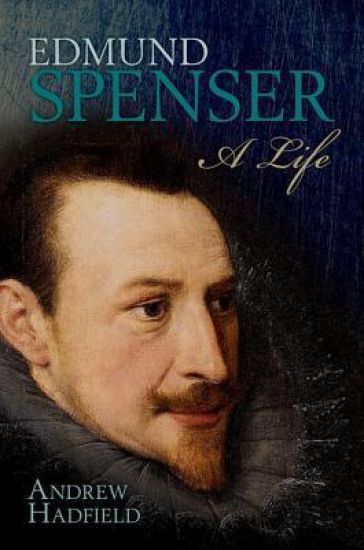
Edmund Spenser

Edmund Spenser

Andrew Hadfield

Oxford University Press
2014
nidottu
Edmund Spenser's innovative poetic works have a central place in the canon of English literature. Yet he is remembered as a morally flawed, self-interested sycophant; complicit in England's ruthless colonisation of Ireland; in Karl Marx's words, 'Elizabeth's arse-kissing poet'-- a man on the make who aspired to be at court and who was prepared to exploit the Irish to get what he wanted. In his vibrant and vivid book, the first biography of the poet for 60 years, Andrew Hadfield finds a more complex and subtle Spenser. How did a man who seemed destined to become a priest or a don become embroiled in politics? If he was intent on social climbing, why was he so astonishingly rude to the good and the great - Lord Burghley, the earl of Leicester, Sir Walter Ralegh, Elizabeth I and James VI? Why was he more at home with 'the middling sort' -- writers, publishers and printers, bureaucrats, soldiers, academics, secretaries, and clergymen -- than with the mighty and the powerful? How did the appalling slaughter he witnessed in Ireland impact on his imaginative powers? How did his marriage and family life shape his work? Spenser's brilliant writing has always challenged our preconceptions. So too, Hadfield shows, does the contradictory relationship between his between life and his art.
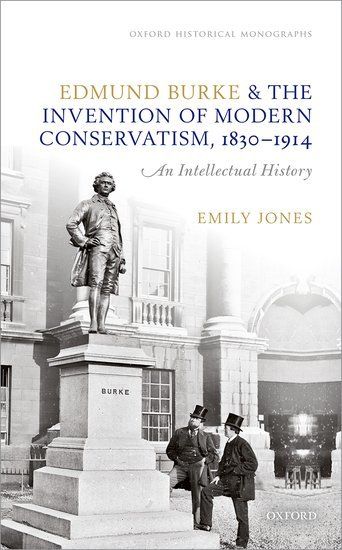
Edmund Burke and the Invention of Modern Conservatism, 1830-1914
Between 1830 and 1914 in Britain a dramatic modification of the reputation of Edmund Burke (1730-1797) occurred. Burke, an Irishman and Whig politician, is now most commonly known as the 'founder of modern conservatism' - an intellectual tradition which is also deeply connected to the identity of the British Conservative Party. The idea of 'Burkean conservatism' - a political philosophy which upholds 'the authority of tradition', the organic, historic conception of society, and the necessity of order, religion, and property - has been incredibly influential both in international academic analysis and in the wider political world. This is a highly significant intellectual construct, but its origins have not yet been understood. This volume demonstrates, for the first time, that the transformation of Burke into the 'founder of conservatism' was in fact part of wider developments in British political, intellectual, and cultural history in the nineteenth and early twentieth centuries. Drawing from a wide range of sources, including political texts, parliamentary speeches, histories, biographies, and educational curricula, Edmund Burke and the Invention of Modern Conservatism shows how and why Burke's reputation was transformed over a formative period of British history. In doing so, it bridges the significant gap between the history of political thought as conventionally understood and the history of the making of political traditions. The result is to demonstrate that, by 1914, Burke had been firmly established as a 'conservative' political philosopher and was admired and utilized by political Conservatives in Britain who identified themselves as his intellectual heirs. This was one essential component of a conscious re-working of C/conservatism which is still at work today.
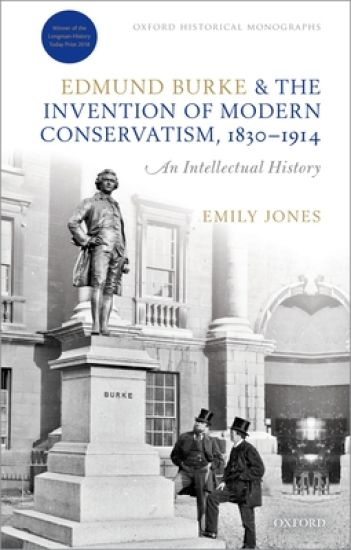
Edmund Burke and the Invention of Modern Conservatism, 1830-1914
Between 1830 and 1914 in Britain a dramatic modification of the reputation of Edmund Burke (1730-1797) occurred. Burke, an Irishman and Whig politician, is now most commonly known as the 'founder of modern conservatism' - an intellectual tradition which is also deeply connected to the identity of the British Conservative Party. The idea of 'Burkean conservatism' - a political philosophy which upholds 'the authority of tradition', the organic, historic conception of society, and the necessity of order, religion, and property - has been incredibly influential both in international academic analysis and in the wider political world. This is a highly significant intellectual construct, but its origins have not yet been understood. Emily Jones demonstrates, for the first time, that the transformation of Burke into the 'founder of conservatism' was in fact part of wider developments in British political, intellectual, and cultural history in the nineteenth and early twentieth centuries. Drawing from a wide range of sources, including political texts, parliamentary speeches, histories, biographies, and educational curricula, Edmund Burke and the Invention of Modern Conservatism shows how and why Burke's reputation was transformed over a formative period of British history. In doing so, it bridges the significant gap between the history of political thought as conventionally understood and the history of the making of political traditions. The result is to demonstrate that, by 1914, Burke had been firmly established as a 'conservative' political philosopher and was admired and utilized by political Conservatives in Britain who identified themselves as his intellectual heirs. This was one essential component of a conscious re-working of C/conservatism which is still at work today.
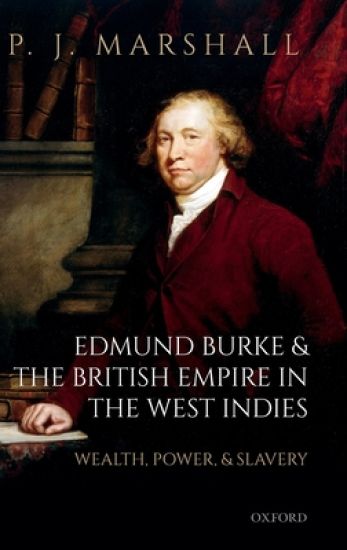
Edmund Burke and the British Empire in the West Indies

Edmund Burke and the British Empire in the West Indies

P. J. Marshall

Oxford University Press
2019
sidottu
Edmund Burke was both a political thinker of the utmost importance and an active participant in the day-to-day business of politics. It is the latter role that is the concern of this book, showing Burke engaging with issues concerning the West Indies, which featured so largely in British concerns in the later eighteenth century. Initially, Burke saw the islands as a means by which his close connections might make their fortunes, later he was concerned with them as a great asset to be managed in the national interest, and, finally, he became a participant in debates about the slave trade. This volume adds a new dimension to assessments of Burke's views on empire, hitherto largely confined to Ireland, India, and America, and explores the complexities of his response to slavery. The system outraged his abundantly attested concern for the suffering caused by abuses of British power overseas, but one which he also recognised to be fundamental for sustaining the wealth generated by the West Indies, which he deemed essential to Britain's national power. He therefore sought compromises in the gradual reform of the system rather than immediate abolition of the trade or emancipation of the slaves.
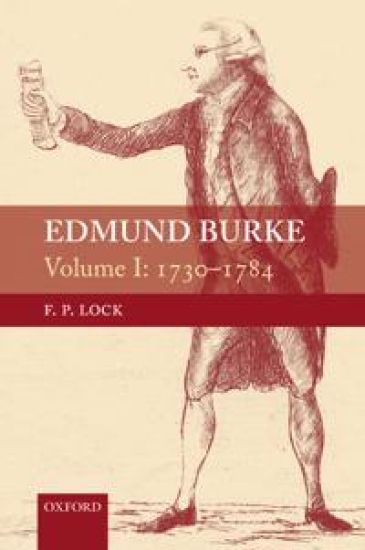
Edmund Burke, Volume I

Edmund Burke, Volume I

F.P. Lock

Oxford University Press
2008
nidottu
Edmund Burke (1730-1797) was one of the most profound, versatile, and accomplished thinkers of the eighteenth century. Born and educated in Dublin, he moved to London to study law, but remained to make a career in English politics, completing A Philosophical Enquiry into the Origin of Our Ideas of the Sublime and Beautiful (1757) before entering the political arena. A Member of Parliament for nearly thirty years, his speeches are still read and studied as classics of political thought, and through his best-known work, Reflections on the Revolution in France (1790) he has continued to exercise a posthumous influence as `the father of conservatism'. In this, the first of two volumes, F.P. Lock covers the years between 1730-1784, and describes Burke's Irish upbringing and education, early writing, and his parliamentary career throughout the momentous years of the American War of Independence. Lavishly illustrated, the book provides an authoritative account of the complexity and breadth of Burke's philosophical and political writing and examines its origins in his personal experiences and the political world of his day.
Edmund Curll, Bookseller

Edmund Curll, Bookseller

Paul Baines; Pat Rogers

Oxford University Press
2007
sidottu
Edmund Curll was a notorious figure among the publishers of the early eighteenth century: for his boldness, his lack of scruple, his publication of work without author's consent, and his taste for erotic and scandalous publications. He was in legal trouble on several occasions for piracy and copyright infringement, unauthorised publication of the works of peers, and for seditious, blasphemous, and obscene publications. He stood in the pillory in 1728 for seditious libel. Above all, he was the constant target of the greatest poet and satirist of his age, Alexander Pope, whose work he pirated whenever he could and who responded with direct physical revenge (an emetic slipped into a drink) and persistent malign caricature. The war between Pope and Curll typifies some of the main cultural battles being waged between creativity and business. The story has normally been told from the poet's point of view, though more recently Curll has been celebrated as a kind of literary freedom-fighter; this book, the first full biography of Curll since Ralph Straus's The Unspeakable Curll (1927), seeks to give a balanced and thoroughly-researched account of Curll's career in publishing between 1706 and 1747, untangling the mistakes and misrepresentations that have accrued over the years and restoring a clear sense of perspective to Curll's dealings in the literary marketplace. It examines the full range of Curll's output, including his notable antiquarian series, and uses extensive archive material to detail Curll's legal and other troubles. For the first time, what is known about this strange, interesting, and awkward figure is authoritatively told.
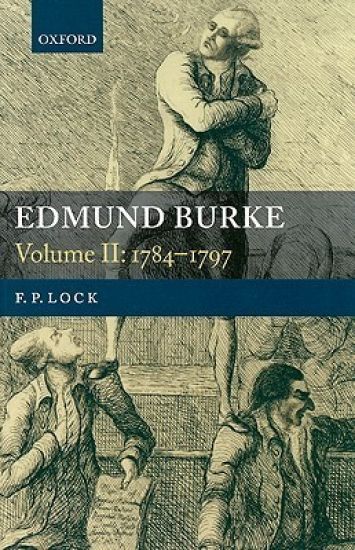
Edmund Burke, Volume II

Edmund Burke, Volume II

F. P. Lock

Oxford University Press
2009
nidottu
This is the second and concluding volume of a biography of Edmund Burke (1730-97), a key figure in eighteenth-century British and Irish politics and intellectual life. Covering the most interesting years of his life (1784-97), its leading themes are India and the French Revolution. Burke was largely responsible for the impeachment of Warren Hastings, former Governor-General of Bengal. The lengthy (145-day) trial of Hastings (which lasted from 1788 to 1795) is recognized as a landmark episode in the history of Britain's relationship with India. Lock provides the first day-by-day account of the entire trial, highlighting some of the many disputes about evidence as well as the great set speeches by Burke and others. In 1790, Burke published Reflections on the Revolution in France , the earliest sustained attack on the principles of the Revolution. Continuously in print ever since, the Reflections remains the most widely read and quoted book about the Revolution. The Reflections was followed by a series of anti-revolutionary writings, as Burke maintained his crusade against the Revolution to the end of his life. In addition to these leading themes, the biography examines many other topics in its coverage of Burke's busy and varied life: his parliamentary career; his family, friendships, and philanthropy; and his often difficult and obsessive personality. There are more than thirty illustrations, including many contemporary caricatures that convey how Burke was perceived by an often hostile and uncomprehending public. Controversial in his time, Burke is now regarded as one of the greatest of orators in the English language, as well as one of the most influential political philosophers in the Western tradition.
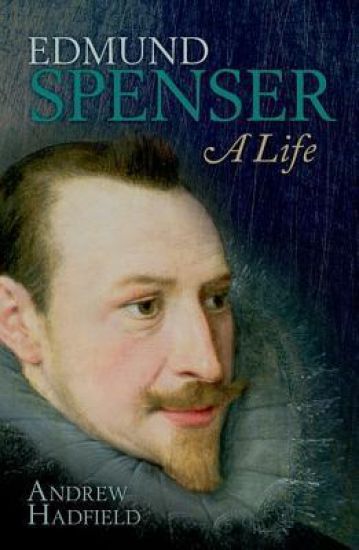
Edmund Spenser

Edmund Spenser

Andrew Hadfield

Oxford University Press
2012
sidottu
Edmund Spenser's innovative poetic works have a central place in the canon of English literature. Yet he is remembered as a morally flawed, self-interested sycophant; complicit in England's ruthless colonisation of Ireland; in Karl Marx's words, 'Elizabeth's arse-kissing poet'-- a man on the make who aspired to be at court and who was prepared to exploit the Irish to get what he wanted. In his vibrant and vivid book, the first biography of the poet for 60 years, Andrew Hadfield finds a more complex and subtle Spenser. How did a man who seemed destined to become a priest or a don become embroiled in politics? If he was intent on social climbing, why was he so astonishingly rude to the good and the great - Lord Burghley, the earl of Leicester, Sir Walter Ralegh, Elizabeth I and James VI? Why was he more at home with 'the middling sort' -- writers, publishers and printers, bureaucrats, soldiers, academics, secretaries, and clergymen -- than with the mighty and the powerful? How did the appalling slaughter he witnessed in Ireland impact on his imaginative powers? How did his marriage and family life shape his work? Spenser's brilliant writing has always challenged our preconceptions. So too, Hadfield shows, does the contradictory relationship between his between life and his art.
Edmund Spenser's War on Lord Burghley

Edmund Spenser's War on Lord Burghley

B. Danner

Palgrave Macmillan
2011
sidottu
Edmund Spenser's censored attacks on Lord Burghley (Elizabeth I's powerful first minister) serve as the basis for a reassessment of the poet's mid-career, challenging the dates of canonical texts, the social and personal contexts for scandalous topical allegories, and the new historicist portrait of Spenser's 'worship' of power and state ideology.
Edmund J. James and the Making of the Modern University of Illinois, 1904-1920

Edmund J. James and the Making of the Modern University of Illinois, 1904-1920

Winton U Solberg; J. David Hoeveler

UNIVERSITY OF ILLINOIS PRESS
2024
sidottu
In 1904, Edmund J. James inherited the leadership of an educational institution in search of an identity. His sixteen-year tenure transformed the University of Illinois from an industrial college to a major state university that fulfilled his vision of a center for scientific investigation. Winton U. Solberg and J. David Hoeveler provide an account of a pivotal time in the university’s evolution. A gifted intellectual and dedicated academic reformer, James began his tenure facing budget battles and antagonists on the Board of Trustees. But as time passed, he successfully campaigned to address the problems faced by women students, expand graduate programs, solidify finances, create a university press, reshape the library and faculty, and unify the colleges of liberal arts and sciences. Combining narrative force with exhaustive research, the authors illuminate the political milieu and personalities around James to draw a vivid portrait of his life and times. The authoritative conclusion to a four-part history, Edmund J. James and the Making of the Modern University of Illinois, 1904–1920 tells the story of one man’s mission to create a university worthy of the state of Illinois.
Edmund Husserl's Phenomenology

Edmund Husserl's Phenomenology

James M. Edie

Indiana University Press
1987
pokkari
All of the major themes of Edmund Husserl's phenomenology, from the Logical Investigations to The Crisis of the European Sciences, are investigated from a critical point of view by James M. Edie. The philosophy of logic is considered insofar as it relates to the phenomenological and transcendental foundation of logic itself. Transcendental logic is studied with reference to both the formal logic of Aristotle and Leibniz and the dialectical logic of Hegel. Edie considers Husserl's theories of meaning and reference, intentionality, the distinction between perceptual and eidetic intuition, the notion of the ideality of meaning, the laws of objectivity in general, and formal and material ontology, as well as Husserl's reinterpretation of the apriori.
Edmund Burke

Edmund Burke

Edmund Burke

University of Notre Dame Press
1993
nidottu
In his Enquiry—which has been described as "certainly one of the most important aesthetic documents that eighteenth -century England produced"—the young Burke provided a systematic analysis of the 'sublime' and the 'beautiful,' together with a distinctive terminology which served to express certain facets of the changing sensibility of his time. The introduction traces the main sources of Burke's ideas and establishes the nature of his originality. The largest section of the editor's introduction, however, examines the influence of the Enquiry. Major writers like Johnson, Wordsworth and Thomas Hardy, painters such as Fuseli and Mortimer, and critics such as Diderot, Lessing and Kant, as well as many other minor figures, recognized Burke's new insights, and in varying degrees assimilated them. The second edition, revised by Burke himself, provides the copy-text, including changes between the first and second editions.
Edmund Burke

Edmund Burke

Edmund Burke

University of Notre Dame Press
1968
sidottu
In his Enquiry—which has been described as "certainly one of the most important aesthetic documents that eighteenth -century England produced"—the young Burke provided a systematic analysis of the 'sublime' and the 'beautiful,' together with a distinctive terminology which served to express certain facets of the changing sensibility of his time. The introduction traces the main sources of Burke's ideas and establishes the nature of his originality. The largest section of the editor's introduction, however, examines the influence of the Enquiry. Major writers like Johnson, Wordsworth and Thomas Hardy, painters such as Fuseli and Mortimer, and critics such as Diderot, Lessing and Kant, as well as many other minor figures, recognized Burke's new insights, and in varying degrees assimilated them. The second edition, revised by Burke himself, provides the copy-text, including changes between the first and second editions.
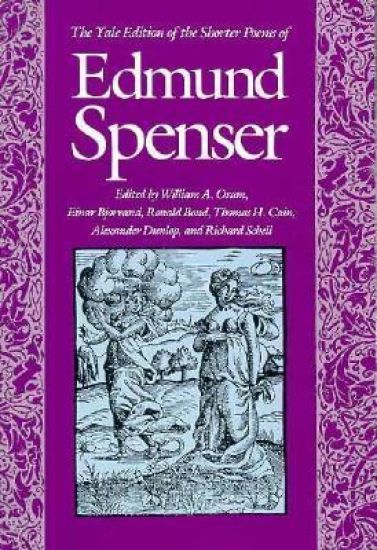
The Yale Edition of the Shorter Poems of Edmund Spenser
This is the first comprehensive edition of Spenser’s shorter poems since the Variorum Minor Poems published in the 1940s. In the interval our understanding of Renaissance culture of Spenser’s work has changed greatly. The new Shorter Poems has a double purpose: to provide a modern edition responding to the changes in our knowledge of Spenser over the past four decades and to create a text that can be used in graduate and undergraduate courses.In this edition, substantial introductions to each of the poems discuss their generic and historical backgrounds, responding to the concerns raised by recent scholarship. The newly edited texts of the poems generally retain original spelling and punctuation. Extensive notes gloss archaic and obscure words and include up-to-date information on historical, mythological, and iconographic material. The book includes a chronology of Spenser’s life and a list of critical works for further reading.William Oram is associate professor of English at Smith College. Einar Bjorvand is lecturer at the Institute of English Studies, University of Oslo. Ronald Bond is professor of English at the University of Calgary. Thomas Cain is professor of English at MacMaster University. Alexander Dunlop is assistant professor of English at Auburn University. Richard Schell is associate professor of English at Laurentian University.
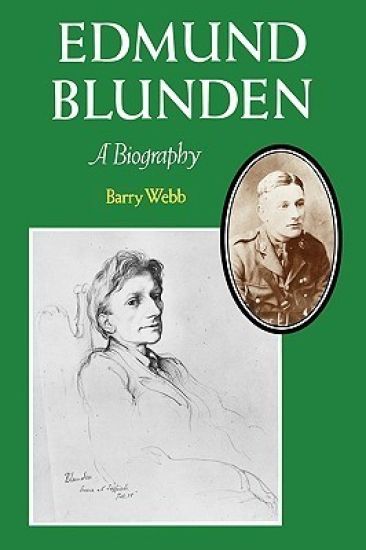
Edmund Blunden

Edmund Blunden

Barry Webb

Yale University Press
1990
sidottu
Edmund Blunden (1896-1974) ranks among the most prodigious literary talents of Britain in the twentieth century. As a poet, he was best known for Undertones of War, a moving account of the First World War by one of its youngest soldier poets. But he was also a biographer, an edition, a scholar, teacher, and professor in Hong Kong, Japan, and Oxford. This book—the first biography of Blunden and written with the cooperation of his family—captures the man, his full career, and the literary environment in which he lived. Drawing from many thousands of Blunden's letters, diaries, and other personal papers round the world, as well as from interviews with friends and colleagues, Barry Webb traces the writer's boyhood in Kent, his two years in the trenches of the Somme and Passchendaele, and the career that extended from journalism in postwar London to the chair of poetry at Oxford in 1966. Blunden was the author of over a thousand poems, more than three thousand articles and reviews, and biographies of Shelley and Leigh Hunt, and he was the first major editor of John Clare and Wilfred Owen. Webb describes this active literary life and provides an account of Blunden's many influential friendships (with Siegfried Sassoon, for example), of his three marriages and seven children, and of the intriguing relationship with his Japanese secretary. He reveals Blunden to be a man of many contradictions: usually pictured as most at home on an English village green, he spent half his working life in the Far East; essentially a pacifist, he was the proud owner of the Military Cross; known for his generous mildness, he was accused of Nazi sympathies in 1939; at heart a private man, he was constantly in demand as a leader. Webb sees these tensions as providing the stimulus for the work and writing of a highly respected figure in twentieth-century literature, a man who had a profound effect on contemporaries in both the East and the West.
The Essential Edmund Leach

The Essential Edmund Leach

Edmund Leach

Yale University Press
2001
sidottu
The aim of these two volumes is to bring together a representative selection of the writings of Edmund Leach (1910–1989), a brilliant and prolific anthropologist known not only in his field but to the educated public at large. Leach perceived anthropology as a vital and broadly based study of the human condition, encompassing methods and ideas from the natural sciences, the social sciences, and the humanities. His writings reflect the conviction that anthropology is of direct and practical importance to social policy and political debate. These two volumes present more than fifty items—many difficult to obtain and several never before published—displaying the considerable range of Leach’s anthropological interests, the debates he provoked, and the issues he championed.Volume 2Culture and Human Nature reflects the changing focus of Leach’s academic interests, away from a concern with politics, kinship, and social structure toward a structuralist analysis of myth and symbolism and an interest in Freudian psychology. These cogent and provocative pieces shed light on less well-known subjects of Leach’s interest: material culture, art, and cross-cultural aesthetics; the body and the senses; race, ethnocentrism, and the origins of conflict and violence. Alongside such celebrated pieces as “Magical Hair,” the volume also offers a group of Leach’s popular writings and lectures, showing how he applied ideas developed in academic argument to wider public debate—about controversial court cases, current events, and issues ranging from children’s fiction and education to urban planning. Whether addressing an issue as topical as the death of Winston Churchill or as theoretical as the philosophy of Lévi-Strauss, Leach unfailingly leads the reader on a thought-provoking journey.
Edmund Husserl's Freiburg Years

Edmund Husserl's Freiburg Years

J. N. Mohanty

Yale University Press
2011
sidottu
In his award-winning book The Philosophy of Edmund Husserl: A Historical Development, J. N. Mohanty charted Husserl's philosophical development from the young man's earliest studies—informed by his work as a mathematician—to the publication of his Ideas in 1913. In this welcome new volume, the author takes up the final decades of Husserl's life, addressing the work of his Freiburg period, from 1916 until his death in 1938. As in his earlier work, Mohanty here offers close readings of Husserl's main texts accompanied by accurate summaries, informative commentaries, and original analyses. This book, along with its companion volume, completes the most up-to-date, well-informed, and comprehensive account ever written on Husserl's phenomenological philosophy and its development.
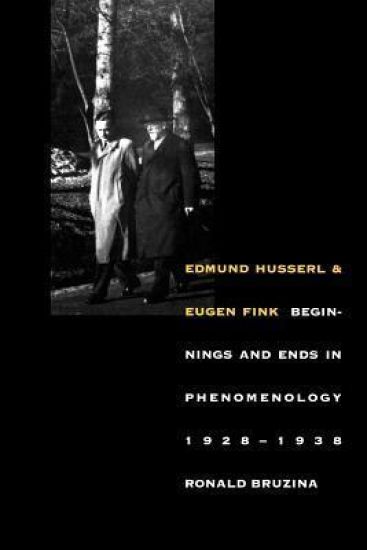
Edmund Husserl and Eugen Fink

Edmund Husserl and Eugen Fink

Ronald Bruzina

Yale University Press
2011
pokkari
Eugen Fink was Edmund Husserl’s research assistant during the last decade of the renowned phenomenologist’s life, a period in which Husserl’s philosophical ideas were radically recast. In this landmark book, Ronald Bruzina shows that Fink was actually a collaborator with Husserl, contributing indispensable elements to their common enterprise.Drawing on hundreds of hitherto unknown notes and drafts by Fink, Bruzina highlights the scope and depth of his theories and critiques. He places these philosophical formulations in their historical setting, organizes them around such key themes as the world, time, life, and the concept and methodological place of the “meontic,” and demonstrates that they were a pivotal impetus for the renewing of “regress to the origins” in transcendental-constitutive phenomenology.
Edmund Spenser

Edmund Spenser

Gary Waller

Palgrave Macmillan
1994
sidottu
Gary Waller surveys Spenser's career in terms of the material conditions of its production - the often overlooked material factors of race, gender, class, agency - and the resonant 'places' which influenced his career - court, church, nation, colony. The book includes an original account of the gender politics of Spenser's work and his difficult position between Ireland and England, the 'homes' about which he held ambivalent feelings. Waller also discusses the 'place' the biographer occupies in writing a literary life.