Down by the River is a newly reissued novel from Edna O'Brien, the author of Girl--"one of the most celebrated writers in the English language" (NPR's Weekend Edition). Set in the author's native Ireland, a powerful and passionate novel about a young girl who becomes pregnant by her father--a situation made worse when it becomes fodder for the gossip mill of church, state, and the town square.
Winner of the Los Angeles Times Book Prize for Fiction "Superb... Lantern Slides] continues the quest for origin and explanation that has preoccupied O'Brien...Her stories unearth the primeval feelings buried just below the surface of nostalgia, using memories to illuminate both what is ridiculous and what is heroic about passion." --David Leavitt, The New York Times Book Review "Her stories are brilliantly realized and often very funny...O'Brien is quite simply one of the finest short story writers of our time." --Joyce Carol Oates A newly reissued collection of stories from the author of Girl, "one of the most celebrated writers in the English language" (NPR's Weekend Edition) In twelve stories peopled with deeply etched characters, whom we come to know instantly and intimately, Lantern Slides reveals the wit and passion of a master of the short fiction form. Rich and humorous, full of struggle and boldness, these stories are a singular reflection of Edna O'Brien's artistry.
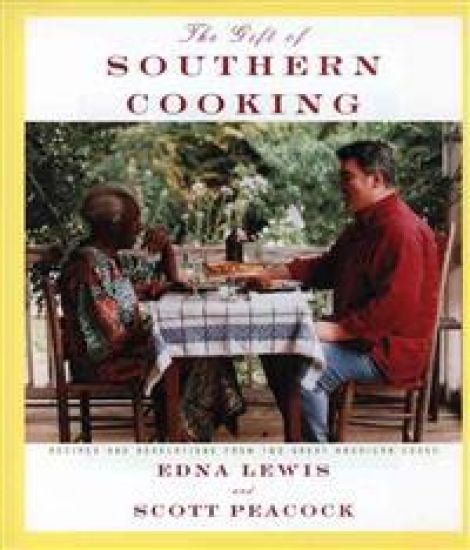
Edna Lewis — author of the American classic The Taste of Country Cooking — and Alabama-born chef Scott Peacock join forces in this remarkable collection of 225 recipes and reflections on Southern food. What makes The Gift of Southern Cooking unique is that it represents the blending of different styles of Southern cooking.
The best-selling author's adaptation of one of Euripides' great tragedies In time of war unspeakable unthinkable things are done...Edna O'Brien's critically acclaimed adaptation of the Euripides play dramatises the sacrifice of Agamemnon's daughter to the cause of his campaign to win back Helen of Troy."O'Brien gives force and clarity to a notoriously corrupt text; what impresses is the swift narrative drive of this seventy-five minute version and the vigour and irony of O'Brien's language" Guardian"Edna O'Brien's silky new version of Euripides" Daily Mail "O'Brien's adaptation is loyal and respectful" Sunday Times "Eloquent and compelling" Sunday Telegraph
Russian Translation: Theory and Practice is a comprehensive practical course in translation for advanced undergraduate and postgraduate students of Russian. The course aims to provide intensive exposure with a view to mastering translation from Russian into English while carefully analyzing the specific problems that arise in the translation process. Offering over 75 practical translation exercises and texts analyzed in detail to illustrate the stage-by-stage presentation of the method, Russian Translation addresses translation issues such as cultural differences, genre and translation goals. The book features material taken from a wide range of sources, including: journalistic medical scholarly legal economic popular culture – literature (prose and poetry), media, internet, humour, music.Central grammatical and lexical topics that will be addressed across the volume through the source texts and target texts include: declensional and agreement gender; case usage; impersonal constructions; verbal aspect; verbal government; word order; Russian word formation, especially prefixation and suffixation; collocations and proverbs; and abbreviations.Russian Translation: Theory and Practice is essential reading for all students seriously interested in improving their translation skills. A Tutor’s Handbook for this course, giving guidance on teaching methods and assessment, as well as specimen answers, is available in PDF format from our website at http://www.routledge.com/books/Russian-Translation-isbn9780415473477. Edna Andrews is Professor of Linguistics and Cultural Anthropology, Director of the Center for Slavic, Eurasian and East European Studies at Duke University, USA.Elena Maksimova is Associate Professor of the Practice in the Department of Slavic and Eurasian Studies at Duke University, USA.
Russian Translation: Theory and Practice is a comprehensive practical course in translation for advanced undergraduate and postgraduate students of Russian. The course aims to provide intensive exposure with a view to mastering translation from Russian into English while carefully analyzing the specific problems that arise in the translation process. Offering over 75 practical translation exercises and texts analyzed in detail to illustrate the stage-by-stage presentation of the method, Russian Translation addresses translation issues such as cultural differences, genre and translation goals. The book features material taken from a wide range of sources, including: journalistic medical scholarly legal economic popular culture – literature (prose and poetry), media, internet, humour, music.Central grammatical and lexical topics that will be addressed across the volume through the source texts and target texts include: declensional and agreement gender; case usage; impersonal constructions; verbal aspect; verbal government; word order; Russian word formation, especially prefixation and suffixation; collocations and proverbs; and abbreviations.Russian Translation: Theory and Practice is essential reading for all students seriously interested in improving their translation skills. A Tutor’s Handbook for this course, giving guidance on teaching methods and assessment, as well as specimen answers, is available in PDF format from our website at http://www.routledge.com/books/Russian-Translation-isbn9780415473477. Edna Andrews is Professor of Linguistics and Cultural Anthropology, Director of the Center for Slavic, Eurasian and East European Studies at Duke University, USA.Elena Maksimova is Associate Professor of the Practice in the Department of Slavic and Eurasian Studies at Duke University, USA.
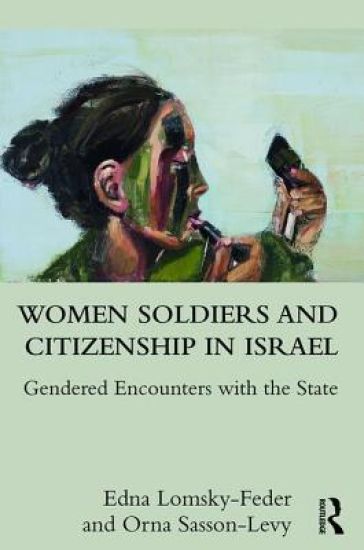
Women’s military service in Israel presents a compelling case study to explore the meaning of gendered citizenship. Lomsky-Feder and Sasson-Levy compellingly argue that women’s mandatory military service during an active ongoing violent conflict, occurring at a formative age, becomes an initiation process into gendered citizenship, where the women learn their marginal place in relation to the state. By analyzing the life stories and testimonies of young women from varied social backgrounds, the authors ask: How do young women soldiers manage their expectations vis-à-vis the hyper-masculine military institution? How do women experience their gendered citizenship as daily embodied and emotional practices in different military roles? How do women soldiers understand and cope with daily sexual harassment? And finally, how do women cope with the gendered silencing mechanisms of the violence of war and occupation, and what can women soldiers know about this violence when they choose to speak out?The book offers a new conceptualization of citizenship as gendered encounters with the state. These encounters can be analyzed through three interrelated concepts: Multi-level contracts; Contrasting gendered experiences; Dis/acknowledging the military’s (external and internal) violence. Applying these three thought-provoking concepts, the authors depict the intricate, non-deterministic relationships between citizenship, military service and multiple gendered experiences.
A straightforward guide to leveraging your company's intellectual capital by creating a knowledge management culture The Complete Guide to Knowledge Management offers managers the tools they need to create an organizational culture that improves knowledge sharing, reuse, learning, collaboration, and innovation to ensure mesurable growth. Written by internationally recognized knowledge management pioneers, it addresses all those topics in knowledge management that a manager needs to ensure organizational success. Provides plenty of real-life examples and case studiesIncludes interviews with prominent managers who have successfully implemented knowledge management structures within their organizationsOffers chapters composed of short theoretical explanations and practical methods that you can utilize, based primarily on hands-on author experience Taking an intellectual journey into knowledge management, beginning with an understanding of the concept of intellectual capital and how to establish an appropriate culture, this book looks at the human aspects of managing knowledge workers, promoting interactions for knowledge creation and sharing.
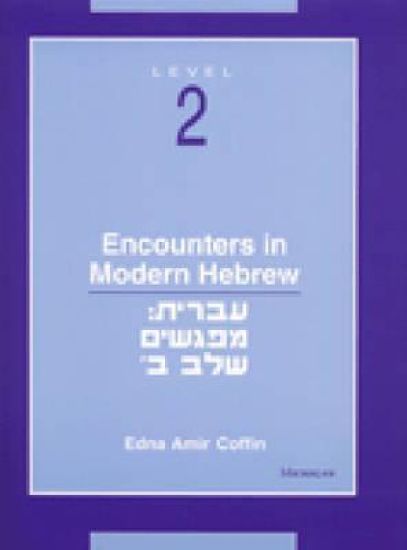
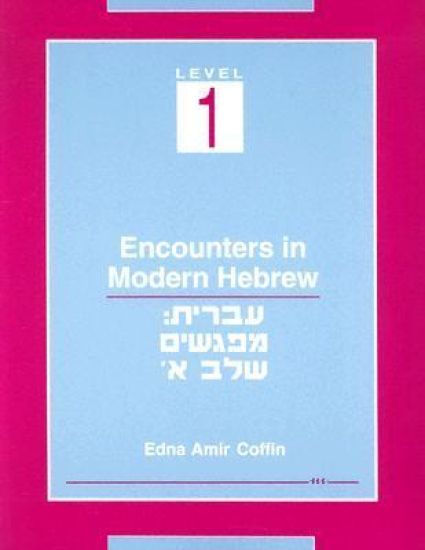
Encounters in Modern Hebrew is designed to fulfill the needs of English-speaking students who want to gain a basic knowledge of modern Hebrew. Extensively classroom-tested at the University of Michigan, the text provides a comprehensive introduction to the reading, writing, and pronunciation of modern Hebrew through an array of interesting exercises and activities reflecting up-to-the-minute language-learning theory.
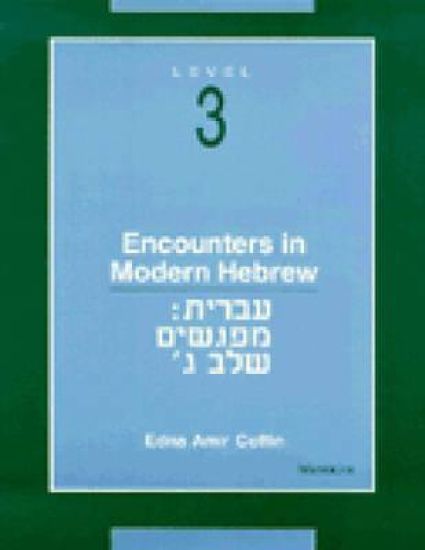
Encounters in Modern Hebrew is designed to fulfill the needs of English-speaking students of Hebrew who seek oral and written communication and reading comprehension. Extensively classroom-tested at the University of Michigan, the text provides the means to acquire a meaningful command of the Hebrew language with an emphasis on an expansive vocabulary and a variety of language domains. Employing interesting exercises and activities, Encounters in Modern Hebrew, Level 3 incorporates many current communicative and culturally-based approaches to mastering a foreign language. Encounters in Modern Hebrew, Level 3 presents a study environment conducive to the speaking, reading, and writing of free and authentic Hebrew. This volume shows students a wider range of Hebrew-speaking cultural activities in a larger human context, from materials about holidays, including a Jewish holiday celebrated only in North Africa, to discussions of the roles of women that raise the issue of gender equality. Other chapters examine ethnic jokes and their problematic qualities, geography, and the differences between popular and literary language registers. Encounters in Modern Hebrew, Level 3 ushers the Hebrew student through a wide domain of the human community. Edna Amir Coffin is Arthur F. Thurnau Professor of Modern Hebrew Language and Literature and Senior Research Scientist, Center for Learning and Teaching, University of Michigan.
Encounters in Modern Hebrew is designed to fulfill the needs of English-speaking students who want to gain a basic knowledge of modern Hebrew. Extensively classroom-tested at the University of Michigan, the text provides a comprehensive introduction to the reading, writing, and pronunciation of modern Hebrew through an array of interesting exercises and activities reflecting up-to-the-minute language-learning theory.
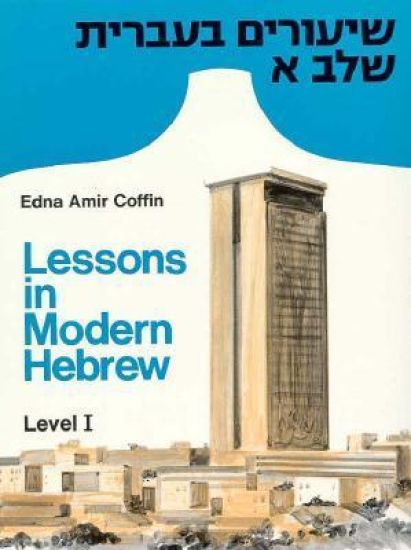
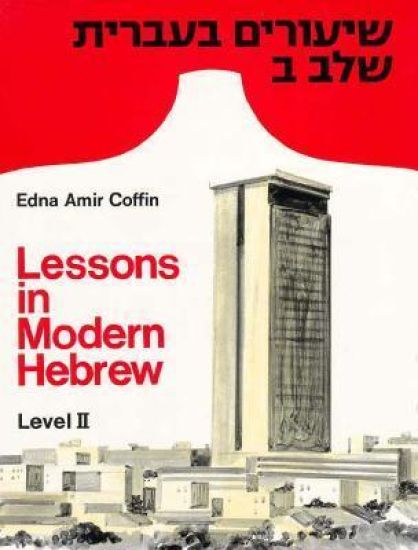
A comprehensive introduction to modern Israeli Hebrew, Lessons in Modern Hebrew: Level I and Level II provide English-speaking students and well-motivated individuals with all the basic classroom tools necessary for mastery of the language. The lessons introduce the student to the core vocabulary which is then included in reading passages, conversational text, and written communication. All grammatical features of modern Hebrew are thoroughly explained and reinforced by drills and exercises. The books have been classroom-tested at the University of Michigan. Both audio-lingual and cognitive approaches are used.
A comprehensive introduction to modern Israeli Hebrew, Lessons in Modern Hebrew: Level I and Level II provide English-speaking students and well-motivated individuals with all the basic classroom tools necessary for mastery of the language. The lessons introduce the student to the core vocabulary which is then included in reading passages, conversational text, and written communication. All grammatical features of modern Hebrew are thoroughly explained and reinforced by drills and exercises. The books have been classroom-tested at the University of Michigan. Both audio-lingual and cognitive approaches are used.Cassettes are available from the University of Michigan Language Resource Center: Phone: (734) 764-0424; Email: [email protected].
"It has the completeness, and finality, that grips and exalts and convinces. . . . So Big is a masterpiece."--Literary Review "A thoughtful book, clean and strong, dramatic at times, interesting always, clear-sighted, sympathetic, a novel to read and to remember."--New York Times "Recommended reading for our times."--Washington Post In this Pulitzer Prize-winning novel, Edna Ferber recounts the transformation of a gambler's daughter into a spirited teacher, hardworking farmer's wife, and devoted mother. Throughout her struggles to maintain her home and dignity, So Big's heroine prevails thanks to her resilience and her well-developed sense of aesthetics. Ferber faithfully captures middle-class life in the Midwest during the 1920s and '30s. Her observations of class struggles and gender inequality on the Illinois prairie are complemented by her lyrical explorations of timeless values: finding beauty in nature, remaining optimistic, and being true to yourself.
The Economic Basis of Ethnic Solidarity: Small Business in the Japanese American Community explores the intersection of ethnicity and class within the context of Japanese Americans, particularly focusing on the role of economic factors in fostering ethnic solidarity. The book challenges traditional views of ethnicity as a primordial bond rooted in common ancestry, emphasizing that ethnic affiliation is not a natural phenomenon, but a social construct that can be influenced by economic interests. It argues that ethnic groups, particularly middleman minorities like Japanese Americans, often mobilize around shared economic activities, such as small business ownership, to create solidarity. When ethnic groups fail to maintain a strong economic base, their ethnic ties tend to weaken. The book presents a theoretical framework for understanding the relationship between ethnicity and class, using Japanese Americans as a case study. It explores how, historically, the Japanese American community engaged in small businesses as a means of economic adaptation, which in turn helped to preserve a strong ethnic identity. The study shows that this economic model enabled Japanese Americans to develop a sense of community, despite facing racial discrimination and economic challenges. Additionally, the book highlights the differences between the experiences of Japanese Americans and other racial minorities, such as African Americans, emphasizing that the unique economic role of Japanese Americans led to different conflicts and outcomes. The work provides an important analysis of middleman minorities and contributes to broader discussions on ethnic and economic identity. This title is part of UC Press's Voices Revived program, which commemorates University of California Press’s mission to seek out and cultivate the brightest minds and give them voice, reach, and impact. Drawing on a backlist dating to 1893, Voices Revived makes high-quality, peer-reviewed scholarship accessible once again using print-on-demand technology. This title was originally published in 1980.
The Economic Basis of Ethnic Solidarity: Small Business in the Japanese American Community explores the intersection of ethnicity and class within the context of Japanese Americans, particularly focusing on the role of economic factors in fostering ethnic solidarity. The book challenges traditional views of ethnicity as a primordial bond rooted in common ancestry, emphasizing that ethnic affiliation is not a natural phenomenon, but a social construct that can be influenced by economic interests. It argues that ethnic groups, particularly middleman minorities like Japanese Americans, often mobilize around shared economic activities, such as small business ownership, to create solidarity. When ethnic groups fail to maintain a strong economic base, their ethnic ties tend to weaken. The book presents a theoretical framework for understanding the relationship between ethnicity and class, using Japanese Americans as a case study. It explores how, historically, the Japanese American community engaged in small businesses as a means of economic adaptation, which in turn helped to preserve a strong ethnic identity. The study shows that this economic model enabled Japanese Americans to develop a sense of community, despite facing racial discrimination and economic challenges. Additionally, the book highlights the differences between the experiences of Japanese Americans and other racial minorities, such as African Americans, emphasizing that the unique economic role of Japanese Americans led to different conflicts and outcomes. The work provides an important analysis of middleman minorities and contributes to broader discussions on ethnic and economic identity. This title is part of UC Press's Voices Revived program, which commemorates University of California Press’s mission to seek out and cultivate the brightest minds and give them voice, reach, and impact. Drawing on a backlist dating to 1893, Voices Revived makes high-quality, peer-reviewed scholarship accessible once again using print-on-demand technology. This title was originally published in 1980.
A Reference Grammar of Modern Hebrew provides a clearly-structured and accessible guide to all aspects of contemporary Hebrew grammar. Systematically organised, it presents the basic structures of the language, looking at grammatical categories, phrases, expressions, and the construction of clauses and sentences. Drawing on their extensive experience of teaching Hebrew to English-speaking students, the authors also provide a wide range of examples to illustrate each point, and introduce in a clear and accessible way the writing and pronunciation of the language, its punctuation rules, and its use in context. Wherever possible, equivalent Hebrew terminology is given to facilitate students’ use of Hebrew language textbooks. Specialised linguistic terminology is kept to a minimum, and verb and noun tables are provided as well as a comprehensive index of terms, making this both a useful teaching resource and an easy-to-use reference tool for those wishing to look up specific details of the language.
A Reference Grammar of Modern Hebrew provides a clearly-structured and accessible guide to all aspects of contemporary Hebrew grammar. Systematically organised, it presents the basic structures of the language, looking at grammatical categories, phrases, expressions, and the construction of clauses and sentences. Drawing on their extensive experience of teaching Hebrew to English-speaking students, the authors also provide a wide range of examples to illustrate each point, and introduce in a clear and accessible way the writing and pronunciation of the language, its punctuation rules, and its use in context. Wherever possible, equivalent Hebrew terminology is given to facilitate students’ use of Hebrew language textbooks. Specialised linguistic terminology is kept to a minimum, and verb and noun tables are provided as well as a comprehensive index of terms, making this both a useful teaching resource and an easy-to-use reference tool for those wishing to look up specific details of the language.