Meet Martin Luther King, Jr. and discover the story of his life and work in this engagingly illustrated biography - narrated by King himself. A series of illustrated books specifically designed for children in elementary education, narrating the stories of great historical figures who have left their mark on humanity. The little readers will be inspired by Martin Luther King, and the way he made history with his powerful speeches and peaceful protests. The book will help children to explore how Martin went from being a kid with a dream to an outstanding leader who made America a better place for everyone. At the end of each volume, the reader will find a timeline listing the main biographical events and some simple quizzes to further understand and test their knowledge. Ages: 6 plus
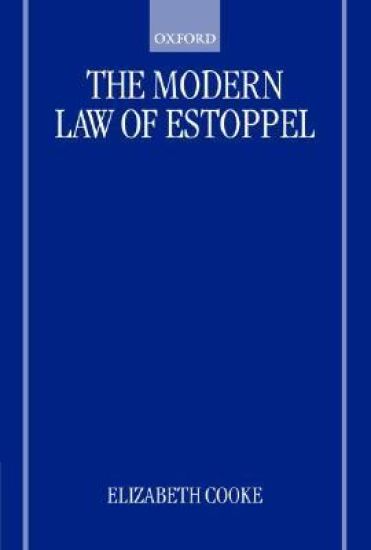
The law of estoppel by representation concerns those critical circumstances when the law will not allow a person to go back on what he has previously said. We might call it the law of consistency. It has developed, from very simple origins, into a complex of ideas, which have proved to be of great practical importance in areas as diverse as land law, contract, and family law. Development continues, as does the interaction with other areas; changes in recent years in the law's conception of contract, and in its approach to problems of family property, as well as the growth of the law of restitution, have all had their impact on estoppel. The Modern Law of Estoppel seeks to explore, explain, and criticize the law of estoppel; to present a logical structure for it; and in particular to analyse the concept of `unconscionability', which is now seen as a basis for the law.
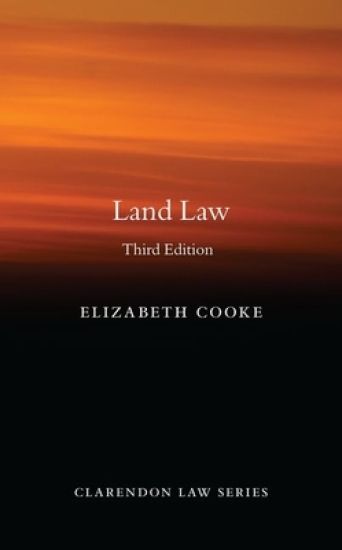
A clear and concise introduction to the land law of England and Wales written in the Clarendon style: as a letter to a friend, with a minimum of footnotes and statutory material. It explains the origins of land law in the feudal system, its transformation by the legislation of 1925, and the modern regime in which registration is the key to the validity and enforceability of interests in land. Elizabeth Cooke introduces the building blocks of land law, namely property rights in land, and explains how they have evolved by a mixture of design and accident. The book explores the unique role of the trust in English law, and the many complications that can arise where ownership of land is shared (whether concurrently or consecutively). Throughout the book the themes of management of complexity in land law, and the tension between dynamic and static security, are examined. The law of mortgages, leases, easements and covenants is explained. The third edition has been updated with important developments in land law, including recent decisions of the Court of Appeal and the Supreme Court, and reform proposals by the Law Commission. Written in an accessible style, this book is an essential read for all those coming to the subject for the first time.
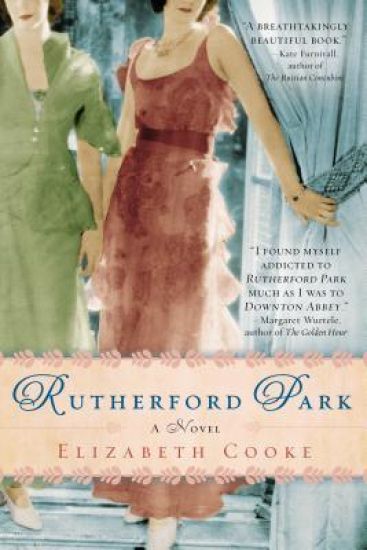
Snow had fallen in the night, and now the great house, standing at the head of the valley, seemed like a five-hundred-year old ship sailing in a white ocean... For the Cavendish family, Rutherford Park is much more than a place to call home. It is a way of life marked by rigid rules and lavish rewards, governed by unspoken desires... Lady of the house Octavia Cavendish lives like a bird in a gilded cage. With her family's fortune, her husband, William, has made significant additions to the estate, but he too feels bound--by the obligations of his title as well as his vows. Their son, Harry, is expected to follow in his footsteps, but the boy has dreams of his own, like pursuing the new adventure of aerial flight. Meanwhile, below stairs, a housemaid named Emily holds a secret that could undo the Cavendish name. On Christmas Eve 1913, Octavia catches a glimpse of her husband in an intimate moment with his beautiful and scandalous distant cousin. She then spies the housemaid Emily out in the snow, walking toward the river, about to make her own secret known to the world. As the clouds of war gather on the horizon, an epic tale of longing and betrayal is about to unfold at Rutherford Park...
"I found myself addicted to Rutherford Park, much as I was to Downton Abbey" (Margaret Wurtele on Rutherford Park). Now comes the new novel of Rutherford Park by the acclaimed Elizabeth Cooke... When May came that year in Rutherford, it was more beautiful than anyone could ever remember. More beautiful, and more terrible... From inside their sprawling estate of Rutherford Park, the Cavendish family had a privileged perspective of the world. On the first morning in May, 1915, with a splendid view that reached across the gardens to the Vale of York, nothing seemed lovelier or less threatening. And yet... At the risk of undoing the Cavendish name with scandal, William and Octavia Cavendish have been living a lie, maintaining a marriage out of duty rather than passion. But when their son Harry joins the Royal Flying Corps in France, the Cavendish family are forced to face the unavoidable truths about themselves, the society in which they thrive, and the secrets they can no longer bear. In the wake of a terrible war, the emotional shifts between a husband and a wife, a wife and her lover, and a mother and her children, will shake the very foundation of the Cavendish family, and change the uniquely vulnerable lives of all who reside at Rutherford Park.
Return to the statley environs of Rutherford Park and the embattled Cavendish family--from the author of The Wild Dark Flowers. The rain fell softly on the day that she was to be married...Sometimes the longing for the old untouched days at Rutherford would return to her; the innocence of it all, the feeling that England would never change... Charlotte Cavendish has been dreaming of her old home at Rutherford Park. It is April 1917; she is nineteen years old. And everywhere there is change. The war still rages on the Continent, where her brother fights for the Royal Flying Corps. Her parents' marriage is in jeopardy, with her mother falling for a charming American in London. But not all is grim. Charlotte is marrying Preston, the blinded soldier whom she nursed back to health. Her parents couldn't be happier about this. The young man hails from a well-established and wealthy family in Kent, and he's solid and respectable. They hope he's the one to tame their notoriously headstrong daughter. But as time passes, Charlotte slowly comes to the realization that she is not truly happy. And for a reason she is only just beginning to understand. A reason she dare not reveal to the family--or the world...
In this weighty edition of Elizabeth Cooke Hoby Russell’s works, based on extensive archival research, Patricia Phillippy brings together all known writings by her: letters, poems in English, Latin, and Greek, documents describing and planning christenings, weddings, and funerals, monumental inscriptions, entertainments, petitions, and Russell’s will. This ambitious and timely collection puts into practice recent critical arguments about the nature of women’s writings and the importance of occasional verse, familial poetry, letters, and petitions as characteristically women’s work. This collection also situates Russell, a woman, squarely and influentially in the humanist tradition, and explores her important place in English letters. This edition moves the field of early modern women’s studies into new territory, with its treatment of monumental verse as an integral part of Russell’s oeuvre.—Jane DonawerthProfessor of English and affiliate faculty in women’s studies University of Maryland
The philosophy of Charles Sanders Peirce (1839-1914) is very important at every stage of the history of modern American thought. It informs William James's evolutionary metaphysics, John Dewey's theory of logic, W.V.O. Quine's naturalism, and Richard Rorty's notion of the Linguistic Turn. Similarly, many Continental philosophers, like Jurgen Habermas, Karl-Otto Apel, Jacques Derrida, and Umberto Eco, have developed Peirce's semiotic logic as central to their own philosophical views. Yet until now there has been a yawning gap in the literature on what is arguably the most essential idea in the entire Peircean corpus, namely his "fallibilism." The basic idea of fallibilism is that all knowledge claims, including those metaphysical, methodological, introspective, and even mathematical claims - all of these remain uncertain, provisional, merely fallible conjectures. As Elizabeth Cooke explains in Peirce's Pragmatic Theory of Inquiry, one long-standing concern with the idea of fallibilism is that it might all too easily slide into "skepticism." And this would certainly undermine the overall project of making Peirce's fallibilism the linchpin for any realistic pragmatism. So, it is essential to show Peirce's philosophy does not require any claims to certitude, in order to keep his fallibilism from falling into skepticism or contextualism. Cooke's solution to this problem is to interpret Peirce as having reconceived knowledge - traditionally defined as "foundational" and even "static" - as a dynamic process of inquiry, one which evolves within a larger ontological process of evolution. Her book will be of great interest not only to Peirce and Pragmatism specialists but also to contemporary epistemologists more generally.