To get the engine out, and to assemble the firemen, he had to rouse the whole town; and to do this in the middle of the night was nothing less than to frighten the poor people of Sauveterre, who had heard the drums beating the alarm but too often during the war with the Germans, and then again during the reign of the Commune. Therefore M. Seneschal asked, - "Is it a serious fire?" "Serious " exclaimed the peasant. "How could it be otherwise with such a wind as this, -a wind that would blow off the horns of our oxen." "Hm " uttered the mayor again. "Hm, hm
"And you, my friends, how shall I ever express to you my gratitude? Ah if incomparable talents, and matchless zeal and ability, had sufficed, I know I should be free. But instead of that"-he pointed at the little door through which he was to pass, and said in a heartrending tone, - "Instead of that, there is the door to the galleys. Henceforth"- A sob cut short his words. His strength was exhausted; for if there are, so to say, no limits to the power of endurance of the spirit, the energy of the body has its bounds. Refusing the arm which the sergeant offered him, he rushed out of the room
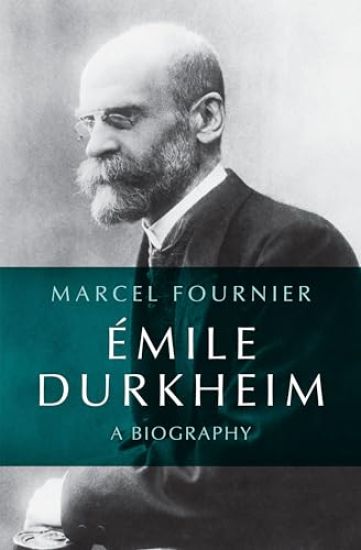
This book will become the standard work on the life and thought of Émile Durkheim, one of the great founding fathers of sociology. Durkheim remains one of the most widely read thinkers in the social sciences and every student of sociology, anthropology and related subjects must study his now-classic books. He brought about a revolution in the social sciences: the defence of the autonomy of sociology as a science, the systematic elaboration of rules and methods for studying the social, the condemnation of racial theories, the critique of Eurocentrism and the rehabilitation of the humanity of 'the primitive'. He defended the dignity of the individual, the freedom of the press, democratic institutions and the essential liberal values of tolerance and pluralism. At the same time he was critical of laisser-faire economics and he defended the values of solidarity and community life. In many ways, Durkheim's rich intellectual heritage has become part of the self-understanding of our time. Despite his enormous influence, the last major biography of Durkheim appeared more than 30 years ago. Since then, the opening up of archives and the discovery of manuscripts, correspondence with friends and close collaborators, administrative reports and notes taken by students have all provided a wealth of new material about his life and work. Meticulously documented, Marcel Fournier’s new biography sheds fresh light on Durkheim’s personality and character, his relationship with Judaism, his family life, his relations with friends and collaborators, his political and administrative responsibilities and his political views. This book will be indispensable to students and scholars throughout the social sciences and will appeal to a wide readership interested in knowing more about the life and work of one of the most original and influential thinkers of the twentieth century.
Ein Paar im Rentenalter beginnt ein neues Leben in der Provence, mietet ein altes Haus, legt einen Garten an. Sie treffen auf den "Unhold", die Katzenschlampe, einen dreibeinigen Rottweiler, die bibelfeste Madame Dijolle, mile und seine Tante lodie, den Legion r mit der Riesendogge, H rve, den Pizzab cker, den Kickboxer, die Grattler vom Portugiesenhof, korsische Separatisten, die haschumnebelte Isabelle und IHN. So vergehen die Tage im "Mas Roustan". Aber schnell steht fest Ruhiges Rentnerdasein sieht anders aus.
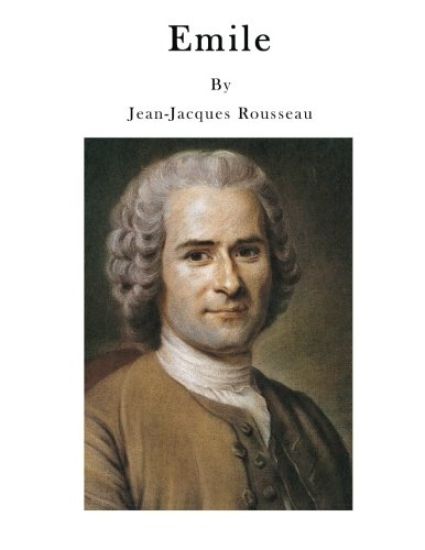
EmileTreatise on EducationByJean-Jacques RousseauTranslated by Barbara FoxleyEmile, or On Education or Emile, or Treatise on Education is a treatise on the nature of education and on the nature of man written by Jean-Jacques Rousseau, who considered it to be the "best and most important of all my writings." Due to a section of the book entitled "Profession of Faith of the Savoyard Vicar," Emile was banned in Paris and Geneva and was publicly burned in 1762, the year of its first publication. During the French Revolution, Emile served as the inspiration for what became a new national system of education.This collection of scattered thoughts and observations has little order or continuity; it was begun to give pleasure to a good mother who thinks for herself. My first idea was to write a tract a few pages long, but I was carried away by my subject, and before I knew what I was doing my tract had become a kind of book, too large indeed for the matter contained in it, but too small for the subject of which it treats. For a long time I hesitated whether to publish it or not, and I have often felt, when at work upon it, that it is one thing to publish a few pamphlets and another to write a book. After vain attempts to improve it, I have decided that it is my duty to publish it as it stands. I consider that public attention requires to be directed to this subject, and even if my own ideas are mistaken, my time will not have been wasted if I stir up others to form right ideas. A solitary who casts his writings before the public without any one to advertise them, without any party ready to defend them, one who does not even know what is thought and said about those writings, is at least free from one anxiety--if he is mistaken, no one will take his errors for gospel.I shall say very little about the value of a good education, nor shall I stop to prove that the customary method of education is bad; this has been done again and again, and I do not wish to fill my book with things which everyone knows. I will merely state that, go as far back as you will, you will find a continual outcry against the established method, but no attempt to suggest a better. The literature and science of our day tend rather to destroy than to build up. We find fault after the manner of a master; to suggest, we must adopt another style, a style less in accordance with the pride of the philosopher. In spite of all those books, whose only aim, so they say, is public utility, the most useful of all arts, the art of training men, is still neglected. Even after Locke's book was written the subject remained almost untouched, and I fear that my book will leave it pretty much as it found it.We know nothing of childhood; and with our mistaken notions the further we advance the further we go astray. The wisest writers devote themselves to what a man ought to know, without asking what a child is capable of learning. They are always looking for the man in the child, without considering what he is before he becomes a man. It is to this study that I have chiefly devoted myself, so that if my method is fanciful and unsound, my observations may still be of service. I may be greatly mistaken as to what ought to be done, but I think I have clearly perceived the material which is to be worked upon. Begin thus by making a more careful study of your scholars, for it is clear that you know nothing about them; yet if you read this book with that end in view, I think you will find that it is not entirely useless.