
Kirjahaku
Etsi kirjoja tekijän nimen, kirjan nimen tai ISBN:n perusteella.
1000 tulosta hakusanalla Emilio Castelar

This book tells the story of Enzo Piccinini, a brilliant surgeon and a truly inspirational figure. Enzo was one of the most resolute proponents of contemporary Catholicism and led many to embrace Catholicism wholeheartedly. His warm spirit and devotion to Christ will inspire you to lead a life of compassion.
A Pueblo Divided tells the story of the violent privatization of communal land in Papantla, a Mexican Indian village transformed by the fast growth of vanilla production and exports in the late nineteenth century. The demise of communal landholding, long identified as one of the leading causes of the Revolution of 1910, is one of the grand motifs of Mexico's modern history. It is also, surprisingly, one of the least researched. This is the first study of the process of village land privatization in Mexico. It describes how a complex interplay of commercial, political, demographic, fiscal, and legal pressures led to social strife, rebellion, and finally parcelization. Disproving long-held assumptions that indigenous villagers were passive participants in the process, the author shows that they actually played a crucial role in the subdivision of communal property. Papantla's story is at odds with prevailing stereotypes of pueblo history, and thus points to the need for a broad reexamination of the causes, process, and consequences of rural social change in pre-revolutionary Mexico.
A Pueblo Divided tells the story of the violent privatization of communal land in Papantla, a Mexican Indian village transformed by the fast growth of vanilla production and exports in the late nineteenth century. The demise of communal landholding, long identified as one of the leading causes of the Revolution of 1910, is one of the grand motifs of Mexico's modern history. It is also, surprisingly, one of the least researched. This is the first study of the process of village land privatization in Mexico. It describes how a complex interplay of commercial, political, demographic, fiscal, and legal pressures led to social strife, rebellion, and finally parcelization. Disproving long-held assumptions that indigenous villagers were passive participants in the process, the author shows that they actually played a crucial role in the subdivision of communal property. Papantla's story is at odds with prevailing stereotypes of pueblo history, and thus points to the need for a broad reexamination of the causes, process, and consequences of rural social change in pre-revolutionary Mexico.

In Queer Tidalectics, Emilio Amideo investigates how Anglophone writers James Baldwin, Jackie Kay, Thomas Glave, and Shani Mootoo employ the trope of fluidity to articulate a Black queer diasporic aesthetics. Water recurs as a figurative and material site to express the Black queer experience within the diaspora, a means to explore malleability and overflowing sexual, gender, and racial boundaries. Amideo triangulates language, the aquatic, and affect to delineate a Black queer aesthetics, one that uses an idiom of fluidity, slipperiness, and opacity to undermine and circumvent gender normativity and the racialized heteropatriarchy embedded in English. The result is an outline of an ever-expanding affective archive of experiential knowledge. Amideo engages and extends the work of Black queer studies, Oceanic studies, ecocriticism, phenomenology, and new materialism through the theorizations of Sara Ahmed, Omise’eke Natasha Tinsley, M. Jacqui Alexander, Édouard Glissant, JosÉ Esteban MuÑoz, and Edward Kamau Brathwaite, among others. Ambitious in scope and captivating to read, Queer Tidalectics brings Caribbean writers like Glissant and Brathwaite into queer literary analysis—a major scholarly contribution.

Memory of the Argentina Disappearances examines the history of the production, public circulation, and the interpretations and reinterpretations of the Nunca Más report issued by Argentina’s National Commission on the Disappearance of Persons (CONADEP). It was established in 1983 by constitutional president Raúl Alfonsín to investigate the fate of thousands of people who had been disappeared by the state during the seventies. Upon publication in 1984, Nunca Más became a bestseller, was translated into several languages and won greater public importance when the military juntas were brought to trial and the court accepted the report as key evidence. The report’s importance was further enhanced with the adoption of CONADEP and Nunca Más as models for truth commissions established in Latin America, and when it was postulated as a means for conveying an awareness of this past to Argentina’s younger generations. This book contributes to understanding the political processes that led to Nunca Más becoming the way in which Argentines remembered the disappearances and the country’s political violence, and how its meaning is modified by new interpretations. Given the canonical nature of Nunca Más, the book sheds light on the most substantial changes and the continuities in Argentina’s social memory of its recent past.
Napoleon's last campaign didn't end at Waterloo. After that fateful day on June 1815, hundreds if not thousands of veterans of Napoleon's army emigrated to America. Many went farther south and joined the rebels fighting for independence in the Spanish colonies, from Mexico to Buenos Aires. The Bonapartists roiled the Western World as they sought fortune, fame, and glory in the expanding United States and in the tumultuous Spanish Americas suffering from repression and civil disorder, and even in the states of Europe.Among them were Lord Thomas Cochrane, Sir Robert Wilson, Charles Lallemand, and Michel Brayer, some of the most interesting characters of the Napoleonic era. This is the first full-length examination of the Bonapartists who emigrated from France after Napoleon's defeat and exile, who formed a loose confederation with adventurers and romantics, and who contemplated a new empire in the Western Hemisphere. The scheme had the support and encouragement of the fallen emperor himself and his brother Joseph, former King of Spain. Emilio Ocampo has examined archives on three continents and sources in several languages to ferret out the evidence - a monumental task considering that conspirators tried to leave no evidence of their plans, and that a failed plot, like failure in general, leaves few claimants.Ocampo reinterprets Latin American independence as an international event that drew in all the states of the Atlantic basin. By illuminating the complex connections between the shattered France of the Bourbon restoration; new radicals in a Britain inspired by the French Revolution; Napoleon in exile at St. Helena; the United States, where home-grown adventurers and French emigres alike saw opportunity; and, the collapsing Spanish colonial empire, where revolutionaries were allying themselves with the veterans of Napoleon's Grande Armee, Ocampo brings together two bodies of scholarship: Napoleonic history and Latin American independence. ""The Emperor's Last Campaign"" is a fascinating story, well told, and peopled with all sorts of improbable individuals and schemes that perhaps just missed coming to full fruition.
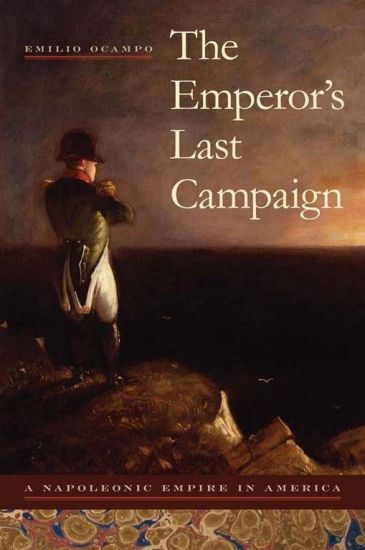
Winner of the 2009 Literary Award, sponsored by the International Napoleonic Society/La Societe Napoleonienne Internationale of Montreal, Quebec's Literary CommitteeNapoleon’s last campaign didn’t end at Waterloo. After that fateful day on June 1815, hundreds if not thousands of veterans of Napoleon’s army emigrated to America. Many went farther south and joined the rebels fighting for independence in the Spanish colonies, from Mexico to Buenos Aires. The Bonapartists roiled the Western World as they sought fortune, fame, and glory in the expanding United States and in the tumultuous Spanish Americas suffering from repression and civil disorder, and even in the states of Europe. They were joined by adventurers from other nations who shared their admiration for the fallen emperor. This is the first full-length examination of the Bonapartists who emigrated from France after Napoleon’s defeat and exile, who formed a loose confederation with adventurers and romantics, and who contemplated a new empire in the Western Hemisphere. The scheme had the support and encouragement of the fallen emperor himself and his brother Joseph, former King of Spain, who lived in exile in the United States. Emilio Ocampo has examined archives on three continents and sources in several languages to ferret out the evidence—a monumental task considering that conspirators tried to leave no evidence of their plans, and that a failed plot, like failure in general, leaves few claimants. Ocampo reinterprets Latin American independence as an international event that drew in all the major powers. By illuminating the complex connections between the shattered France of the Bourbon restoration; an England threatened by radical politician inspired by the French Revolution; Napoleon in exile at St. Helena; the United States, where home-grown adventurers and French ÉmigrÉs alike saw opportunity; and the collapsing Spanish colonial empire, where revolutionaries were allying themselves with the veterans of Napoleon’s Grande ArmÉe, Ocampo brings together two bodies of scholarship: Napoleonic history and Latin American independence. He does so by tracing the steps of four of the most fascinating characters of the era: two Britons disaffected with their own government—Lord Thomas Cochrane and Sir Robert Wilson—and two former generals of Napolean’s army named Charles Lallemand and Michel Brayer. The Emperor’s Last Campaign is a fascinating story, well told, and peopled with all sorts of improbable characters and schemes that perhaps just missed coming to full fruition but that in the process contributed to one of the most important events of the nineteenth century: the breakdown of the Spanish empire in America and the rise of the United States as a world power.

Althusser, the Infinite Farewell
Emilio de Ípola; Étienne Balibar
Duke University Press
2018
sidottu
In Althusser, The Infinite Farewell-originally published in Spanish and appearing here in English for the first time-Emilio de Ípola contends that Althusser’s oeuvre is divided between two fundamentally different and at times contradictory projects. The first is the familiar Althusser, that of For Marx and Reading Capital. Symptomatically reading these canonical texts alongside Althusser’s lesser-known writings, de Ípola reveals a second, subterranean current of thought that flows throughout Althusser’s classic formulations and which only gains explicit expression in his later works. This subterranean current leads Althusser to move toward an aleatory materialism, or a materialism of the encounter. By explicating this key aspect of Althusser’s theoretical practice, de Ípola revitalizes classic debates concerning major theoretico-political topics, including the relationship between Marxism, structuralism, and psychoanalysis; the difference between ideology, philosophy, and science; and the role of contingency and subjectivity in political encounters and social transformation. In so doing, he underscores Althusser’s continuing importance to political theory and Marxist and post-Marxist thought.

Althusser, the Infinite Farewell
Emilio de Ípola; Étienne Balibar
Duke University Press
2018
pokkari
In Althusser, The Infinite Farewell-originally published in Spanish and appearing here in English for the first time-Emilio de Ípola contends that Althusser’s oeuvre is divided between two fundamentally different and at times contradictory projects. The first is the familiar Althusser, that of For Marx and Reading Capital. Symptomatically reading these canonical texts alongside Althusser’s lesser-known writings, de Ípola reveals a second, subterranean current of thought that flows throughout Althusser’s classic formulations and which only gains explicit expression in his later works. This subterranean current leads Althusser to move toward an aleatory materialism, or a materialism of the encounter. By explicating this key aspect of Althusser’s theoretical practice, de Ípola revitalizes classic debates concerning major theoretico-political topics, including the relationship between Marxism, structuralism, and psychoanalysis; the difference between ideology, philosophy, and science; and the role of contingency and subjectivity in political encounters and social transformation. In so doing, he underscores Althusser’s continuing importance to political theory and Marxist and post-Marxist thought.

Taking its place alongside works by Ernst Junger, Robert Graves, and Erich Maria Remarque, Emilio Lussu's memoir is one of the most affecting accounts to come out of the First World War. A classic in Italy but virtually unknown in the English-speaking world, it reveals, in spare and detached prose, the almost farcical side of the war as seen by a Sardinian officer fighting the Austrian army on the Asiago plateau in northeastern Italy, the front so poignantly evoked by Ernest Hemingway in A Farewell to Arms. For Lussu, June 1916 to July 1917 was a year of continuous assaults on impregnable trenches, absurd missions concocted by commanders full of patriotic rhetoric and vanity but lacking in tactical skill, and episodes often tragic and sometimes grotesque, where the incompetence of his own side was as dangerous as the attacked waged by the enemy. A rare firsthand account of the Italian front, Lussu's memoir succeeds in staging a fierce indictment of the futility of war in a dry, often ironic style that sets his tale wholly apart from the Western Front of Remarque, and adds an astonishingly modern voice to the literature of the Great War.

Intrauterine development and birth constitute an uninterrupted sequence of events that have a molecular physiologic background. Perinatal Biochemistry presents a comprehensive review of this subject. Specific topics addressed include maternal metabolism during pregnancy, maternal insulin resistance, embryonic and fetal metabolism and fuel consumption, the fetal pancreas, growth factors, brain metabolism, and biochemical adaptations to early extrauterine life. The book will be useful to biochemists and physiologists interested in perinatology; clinicians working in areas related to maternal health, gestational development, and delivery; gynecologists, neonatologists; pediatricians; endocrinologists; and internists.
Trading Systems (Second edition)
Emilio Tomasini; Urban Jaekle
Harriman House Publishing
2019
pokkari
Completely revised and updated second edition, with new AmiBroker codes and new complete portfolio testsEvery day, there are traders who make a fortune. It may seem that it seldom happens, but it does – as William Eckhardt, Ed Seykota, Jim Simons, and many others remind us. You can join them by using systems to manage your trading.This book explains how you can build a winning trading system. It is an insight into what a trader should know and do in order to achieve success in the markets, and it will show you why you don't need to be a rocket scientist to become successful.It shows how to adapt existing codes to the current market conditions, how to build a portfolio, and how to know when the moment has come to stop one system and use another one.There are three main parts to Trading Systems. Part One is a short, practical guide to trading systems development and evaluation. It condenses the authors' years of experience into a number of practical tips. It also forms the theoretical basis for Part Two, in which readers will find a step-by-step development process for building a trading system, covering everything from writing initial code to walk-forward analysis and money management. Two examples are provided, including a new beginning of the month trading system that works on over 20 different stock indices worldwide – from the US, to Europe, to Asian indices.Part Three shows you how to build portfolios in two different ways. The first method is to combine a number of different trading systems, for a number of different markets, into an effective portfolio of systems. The second method is a new approach to system development: it provides step-by-step instructions to trade a portfolio of hundreds of stocks using a Bollinger Band trading strategy.A trader can never really say they were successful, but only that they survived to trade another day; the black swan is always just around the corner. Trading Systems will help you find your way through the uncharted waters of systematic trading and show you what it takes to be among those that survive.
This volume publishes in their entirety the various components of a conference hosted by MoMA in 1972, The Universitas Project. The distinguished participants, drawn from a wide range of scholarly and artistic disciplines, engaged in a multidisciplinary debate on the future of design and design institutions in the postindustrial era. Addressing issues and ideas still relevant today, this book makes a particularly fertile chapter in the intellectual history of the Museum available for the first time to scholars, the architecture and design community, and the general public.

In the final years of the twentieth century we live with omnipresent worries. Will the Amazonian forests survive current deforestation trends? Will Amazonia's native populations survive the spread of diseases and the expropriation of traditional territories? Will the promise of biotechnology ever be fulfilled, given the genetic losses we are experiencing? Will scientists find new chemical substances in the forests of Amazonia to cure diseases heretofore incurable or yet unknown? Will we learn to use, rather than thoughtlessly destroy, the thousands of tropical species that we now consider without value? Will we invest in agronomic research to find ways to achieve sustainable cultivation in the humid tropics? In June 1992, at the Earth Summit in Rio de Janeiro, the world was finally ready to ask these questions. In this well-written, comprehensive, reasonable yet passionate volume, Emilio Moran introduces us to the range of human and ecological diversity in the Amazon Basin. Beginning with a description of its Indian and peasant populations and their knowledge of their environment, he describes the Amazon's widely contrasting ecosystems, their ecological variations, and the human strategies of resource use workable within each environment. Every ecosystem - from upland forests to floodplains, savannas to blackwater rivers - offers opportunities as well as limitations; each has unique characteristics that can be used advantageously or resisted at great cost. By describing the complex heterogeneity of the Amazon's ecological mosaic and its indigenous populations' conscious adaptations to this diversity, Moran leads us to realize that there are strategies of resource use which do notdestroy the structure and function of ecosystems. Finally, and most important, he examines ways in which we might benefit from the study of human ecology to design and implement a balance between conservation and use. Through Amazonian Eyes shows that the traditional inhabitants of Ama
Crisis and Hope in Latin America
Emilio Antonio Nunez C; William David Taylor
William Carey Library Publishers
1996
pokkari
This book provides a panoramic yet thorough study of kingdom advance in Latin America. Part one examines the historical, socio-political, and religious context. Part two probes into post-conciliar Roman Catholicism, the charismatic movements, contextualization, and social responsibility. Part three explores the implications for churches and mission agencies.
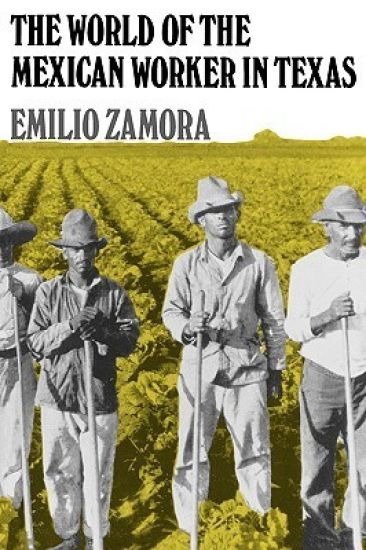
The twentieth century brought industrialization to Texas cities. For Mexican workers in the state, this meant worsening economic conditions, widespread discrimination, and an indifferent or at times hostile Anglo labor movement. Faced with such challenges, Mexicans often looked to each other or toward Mexico for support and inspiration in building a largely autonomous, occasionally trans-border labor movement. In this first book-length examination of the earliest organized efforts by Mexican-origin workers in Texas, Emilio Zamora challenges the usual, stereotypical depiction of Mexican workers as passive and hard to organize. Instead, working within the framework of the "new labor history, " he looks beyond the conventional focus on trade unionism and collective bargaining to encompass the broader social experiences and culture of Mexicans as a national minority and a repressed segment of the working class. Through extensive use of Spanish-language archives in Mexico and the United States, Zamora examines workers' independent organizations - including mutual aid societies and cooperatives that functioned as unions - as well as spontaneous informal actions, including strikes, by Texas Mexican workers. He portrays the gradual yet increasing integration of those organizations into the mainstream labor movement and examines labor solidarity across ethnic lines. In addition, he discusses the special role Mexican labor played in bridging labor struggles across the international border and in challenging racial exclusion on the job in the predominantly Anglo labor federations and in the broader institutional life of South Texas. Although the early efforts at inter-ethnic unity failed tomaterialize fully, Zamora concludes, they nevertheless provided a legacy that tells much about the minority position of the Mexican community, the impressive organizing activity and bid for incorporation of Mexican workers, and the ambivalent response by organized and unorganized Anglo