Kirjojen hintavertailu. Mukana 12 595 353 kirjaa ja 12 kauppaa.

Kirjahaku

Etsi kirjoja tekijän nimen, kirjan nimen tai ISBN:n perusteella.

405 tulosta hakusanalla Eoin Colfer

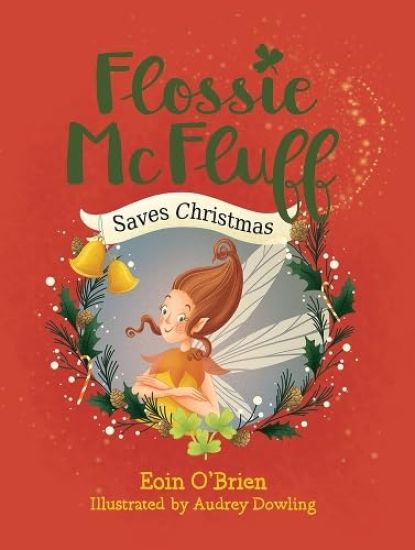
Flossie McFluff Saves Christmas

Flossie McFluff Saves Christmas

Eoin O'Brien

O'BRIEN PRESS LTD
2025
nidottu
Christmas is coming and the animals in the wood are getting excited. Flossie McFluff, the feisty forest fairy, is busy making her wee house look jolly. But when a storm blows in, the river rises … Burrows are flooded, and the creatures have nowhere to sleep. Can Flossie help her friends find somewhere safe and dry before a special visitor comes their way?
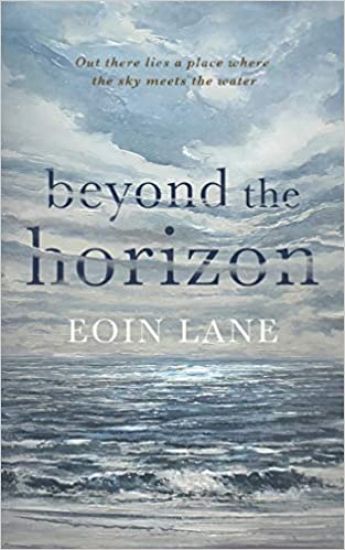
Beyond the Horizon

Beyond the Horizon

Eoin Lane

Blackstone Audiobooks,U.S.
2021
pokkari
She points the lens of the camera. The artist turns his head slightly. The light catches his brow and his silver-white hair. She snaps. He is lit like a Vermeer.Ireland. County Wexford, 1951. A father and son go swimming in the sea. The waves crash. The wind rises. Only one comes back--Colin, aged six. His mother, Eileen, runs to seek help, but this is a tragedy that will haunt them forever. Colin won't speak a word. He is mute and struggling to cope. But Eileen can see he has a talent for painting. She shows him his father's artwork and gives him a print of a Paul Henry landscape, and slowly, with her encouragement, he begins to follow his dream.Years later on Inishbofin island off the west coast of Ireland, out walking with his dog on the sand, Colin meets Laura, a young woman on holiday, and a tentative friendship starts to develop. Gradually his past comes to life in a story filled with love and frustration, loss and betrayal, but above all with the passion he has held through his life for the light in the sea and the sky and his search for that distant shore where the sky sweeps down to the water.One man. The sea. One painting.
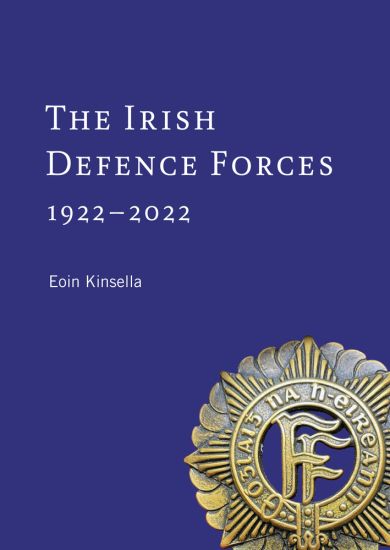
The Irish Defence Forces, 1922-2022

The Irish Defence Forces, 1922-2022

Eoin Kinsella

FOUR COURTS PRESS LTD
2023
sidottu
Tracing its history to the foundation of the Irish Volunteers in 1913, the Irish Defence Forces has evolved beyond recognition from the force that emerged in tandem with the new state in 1922. Plunged immediately into chaos of a bitter civil war, the path to a modern, professional Defence Forces during the 1920s and 1930s was rarely smooth, with progression hampered by internal dissent, political manoeuvrings and limited financial investment. The difficulties of creating and maintaining a force capable of defending the neutrality of a small island nation, with a geopolitical and strategic importance that belied its size, were brought home during the Emergency. Nonetheless, the state's desire to maintain its neutrality as global politics became increasingly polarised in the post-war years allowed new opportunities to develop. Following Ireland's accession to the United Nations in 1955, the Defence Forces emerged as a core member of the UN's peacekeeping efforts, concurrently developing as a vital element of Ireland's international relations. The Defence Forces' duties in aid of the civil power became ever more vital with the outbreak of violence in Northern Ireland in 1969.
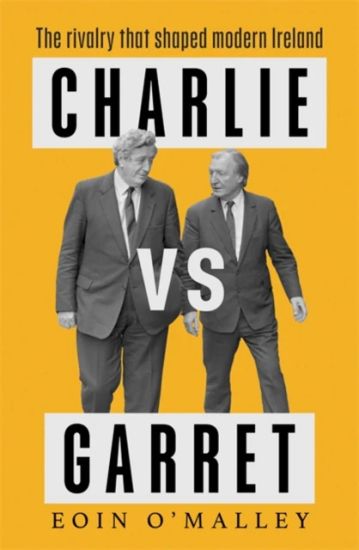
Charlie Vs Garret

Charlie Vs Garret

Eoin O'Malley

Footnote Press Ltd
2025
sidottu
The two opposing political figures that shaped Irish life in the 1980s and beyond.In the 1980s, Irish politics was dominated by a fierce rivalry between Charles J. Haughey and Dr Garret FitzGerald, both leaders of their respective parties, Fianna Fáil and Fine Gael. Between them they each led all Irish governments in that decade; to say their two opposing personalities shaped Irish life during this era is an understatement.Eoin O'Malley has amassed an extraordinary body of research, including in-depth interviews with dozens of the most consequential public figures of the time, every Taoiseach, cabinet ministers, TDs, civil servants, and advisers.As political rivals with different approaches to public life and contrasting visions for Ireland, each enshrined in quite different personalities, the choice between Haughey and FitzGerald came to signify a great deal more than party loyalty or policy preference: it felt like a choice between opposing worldviews. And, as O'Malley's work finally makes clear through an accumulation of extraordinary insights, including interviews with Haughey and FitzGerald themselves, it was fed by a deep reservoir of personal insecurity and paranoia. Each was deeply preoccupied - obsessed even - with the strengths, appeal and threats of the other, to the extent that this rivalry itself became one of the decisive factors in Irish life that shaped Ireland well after they had left power.
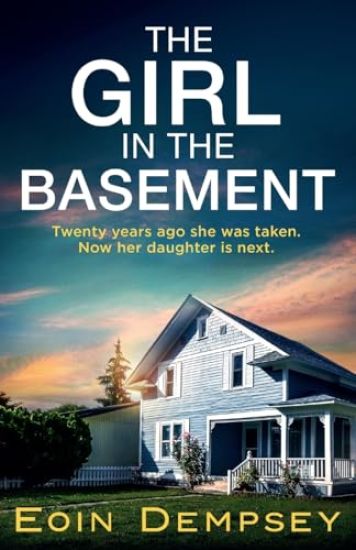
The Girl in the Basement

The Girl in the Basement

Eoin Dempsey

Storm Publishing
2024
pokkari
Twenty years ago she was taken. Now her daughter is next.Seventeen-year-old Ellie was last seen at a party with her boyfriend, star quarterback Josh, before she went missing...Twenty years later, Ellie has rebuilt her life. The man who ruined it is behind bars. He can't hurt her now. But as Ellie leaves her therapy group, a face she hasn't seen in decades appears before her. Josh, her high school boyfriend, is back in town.As they reconnect after years apart, trying to make sense of their shared trauma, a few streets away, Ellie's seventeen-year-old daughter Jess vanishes. Is history repeating itself? Ellie is about to discover the shocking truth about the night she was taken but can she unearth long-buried secrets to save her daughter?The Girl in the Basement is a heart-pounding psychological thriller that will keep you turning pages late into the night. Perfect for fans of The Housemaid, Gone Girl and Shari Lapena.
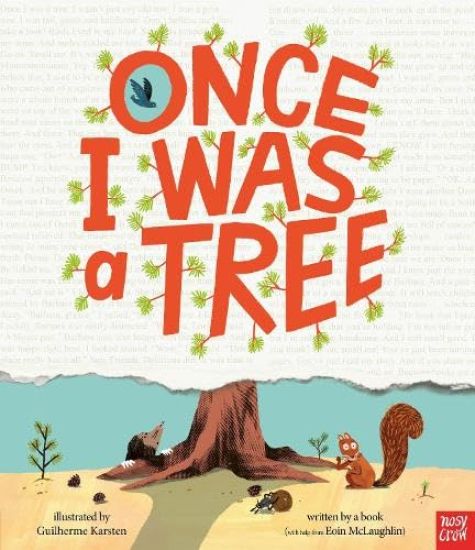
Once I Was a Tree

Once I Was a Tree

Eoin McLaughlin

Nosy Crow Ltd
2025
sidottu
Join the hilarious adventures of a seed that turns into a tree, then into a book . . . THIS book! From the author of The Hug and While We Can't Hug series - over 65,000 copies sold!Eoin McLaughlin's The Hug was named one of the best books of the year by The Guardian.Guilherme Karsten is the winner of the BookTrust Storytime Prize for Are You a Monster?Get ready to meet Barbara the beetle and Derek the squirrel who (through the power of poo) help a wise-cracking seed turn into a handsome tree . . . and become a wonderful book! And GUESS WHAT? It's the book that you're holding! A book to be loved, shared and cherished forever. Perfect perfect for fans of Jon Klassen and Oliver Jeffers.Tactile jacket cover with a surprise underneath!Have fun with turn-around pages.If you are looking for a laugh-out-loud picture book about the wonder of trees, books and stories . . . this is for you!
Once I Was a Tree

Once I Was a Tree

Eoin McLaughlin

Nosy Crow Ltd
2025
nidottu
Join the amazing adventures of a wise-cracking tree as it transforms from a tiny seed into a handsome tree . . . and becomes a wonderful book! And . . . GUESS WHAT? It's the book that you're holding! A book to be loved, shared and cherished forever.
Beyond Redemption

Beyond Redemption

Eoin McLennan Murray

AMZ Marketing Hub
2024
pokkari
Beyond Redemption tells the true story behind one of the most controversial events in modern Prison Service history. This story has never before been revealed. The raid on Blantyre House resettlement prison in Kent in May 2000 by a battalion of prison officers, many wearing full riot gear, wielding staves, crowbars and sledge hammers, was the climax to an ongoing conflict between myself and my line manager at Prison Service headquarters, Tom Murtagh. The conflict was due to our opposing views about how a prison should be run and what a prison should achieve.As the Governor of the prison I insisted on giving long term prisoners with serious criminal histories trust and responsibility. This resulted in Blantyre House being credited with the lowest reoffending figures in the country. Tom Murtagh however was not impressed. He was heard by a teacher at the prison exclaiming that Blantyre prisoners were "beyond redemption," and using bullying tactics and threats against me he pressed for more control and tighter security. I resisted for nearly two years until finally at Tom Murtagh's instigation the Director General of the Prison Service sanctioned the infamous raid.Nothing comparable had ever happened before in a UK prison. Just ten weeks earlier the Chief Inspector of Prisons had written a glowing report about what he found when he inspected Blantyre House: "I conclude by praising the consistent, innovative and courageous approach of the Governor and Staff. Blantyre House has established a reputation for excellence." Yet raid officers had been briefed to look for firearms and explosives and had been told that the prison was "awash with drugs." They had also been told that the prisoners were, "running the place." Rigorous searching during the raid by specialist teams including dog handlers lasted for 15 hours yet produced, "no significant finds." All the prisoners were tested for drugs - all tested negative.The raid was dramatic. But the lengths to which the Prison Service went in order to protect Murtagh and discredit me after the event were extraordinary and the truth behind what happened has never been told until now.I was charged with "financial irregularities" and accused of "disobeying orders." And finally, in an outrageous smear in a secret evidence session the HASC was told categorically by the Director General of the Prison Service that I was "corrupt." In the end none of the charges or allegations stuck and I was vindicated by the HASC who declared they were, "dissatisfied at the attempts made (by the Prison Service) to mislead the Committee and public."The episode almost destroyed both me and Murtagh. In the months following the raid, shunned by my local community and some colleagues I found myself up against the combined forces of the organisation I had served loyally for 22 years. In this book I will explain how I was brought almost to breaking point and how I fought back against the odds to finally have my name cleared. After my vindication I did eventually return to service as a prison governor and later I was elected President of the Prison Governor's Association. Tom Murtagh retired under a cloud two years after the raid.
Beyond Redemption

Beyond Redemption

Eoin McLennan

AMZ Marketing Hub
2024
sidottu
Beyond Redemption tells the true story behind one of the most controversial events in modern Prison Service history. This story has never before been revealed. The raid on Blantyre House resettlement prison in Kent in May 2000 by a battalion of prison officers, many wearing full riot gear, wielding staves, crowbars and sledge hammers, was the climax to an ongoing conflict between myself and my line manager at Prison Service headquarters, Tom Murtagh. The conflict was due to our opposing views about how a prison should be run and what a prison should achieve.As the Governor of the prison I insisted on giving long term prisoners with serious criminal histories trust and responsibility. This resulted in Blantyre House being credited with the lowest reoffending figures in the country. Tom Murtagh however was not impressed. He was heard by a teacher at the prison exclaiming that Blantyre prisoners were "beyond redemption," and using bullying tactics and threats against me he pressed for more control and tighter security. I resisted for nearly two years until finally at Tom Murtagh's instigation the Director General of the Prison Service sanctioned the infamous raid.Nothing comparable had ever happened before in a UK prison. Just ten weeks earlier the Chief Inspector of Prisons had written a glowing report about what he found when he inspected Blantyre House: "I conclude by praising the consistent, innovative and courageous approach of the Governor and Staff. Blantyre House has established a reputation for excellence." Yet raid officers had been briefed to look for firearms and explosives and had been told that the prison was "awash with drugs." They had also been told that the prisoners were, "running the place." Rigorous searching during the raid by specialist teams including dog handlers lasted for 15 hours yet produced, "no significant finds." All the prisoners were tested for drugs - all tested negative.The raid was dramatic. But the lengths to which the Prison Service went in order to protect Murtagh and discredit me after the event were extraordinary and the truth behind what happened has never been told until now.I was charged with "financial irregularities" and accused of "disobeying orders." And finally, in an outrageous smear in a secret evidence session the HASC was told categorically by the Director General of the Prison Service that I was "corrupt." In the end none of the charges or allegations stuck and I was vindicated by the HASC who declared they were, "dissatisfied at the attempts made (by the Prison Service) to mislead the Committee and public."The episode almost destroyed both me and Murtagh. In the months following the raid, shunned by my local community and some colleagues I found myself up against the combined forces of the organisation I had served loyally for 22 years. In this book I will explain how I was brought almost to breaking point and how I fought back against the odds to finally have my name cleared. After my vindication I did eventually return to service as a prison governor and later I was elected President of the Prison Governor's Association. Tom Murtagh retired under a cloud two years after the raid.
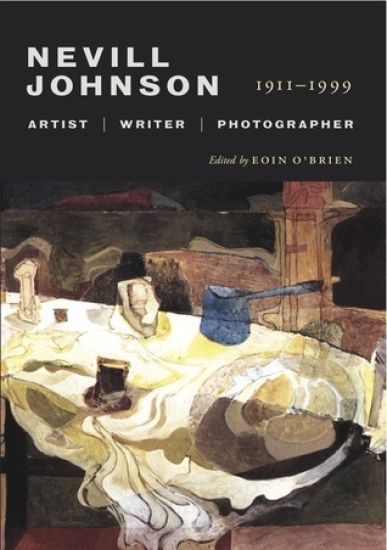
Nevill Johnson

Nevill Johnson

Eoin O'Brien

The Lilliput Press Ltd
2015
sidottu
Nevill Johnson is better known as a painter and photographer than as a writer. Eoin O'Brien, close friend of Nevill Johnson and literary executor of his estate, has edited his writings in this volume for the first time. The resulting book, provides an intriguing insight into the life of one of the most innovative artists of the 20th century.
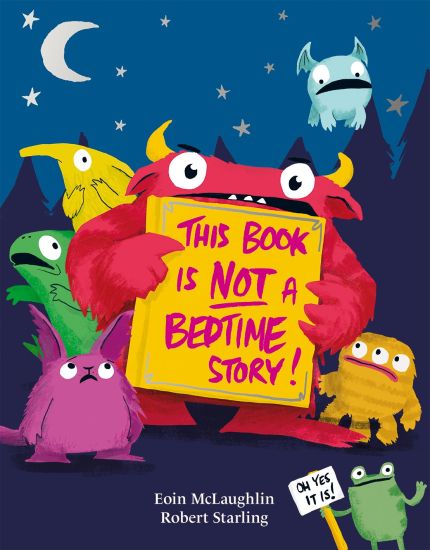
This Book is Not a Bedtime Story

This Book is Not a Bedtime Story

Eoin McLaughlin

HARPERCOLLINS PUBLISHERS
2020
nidottu
Renowned author Eoin McLaughlin and award-nominated illustrator Rob Starling join forces to create a hilarious, not-so-spooky tale! This book is NOT a bedtime story. It’s scary, strange and rather gory. Bedtime stories make you sleepy. This book won’t. It’s much too CREEPY. Except it isn't… this book is told by a group of monsters who think they're very scary, but in fact they're not – they're cute and cuddly. They try their hardest to scare you – in a haunted house, creepy wood, ghostly ship and darkest dark, but each time they fail! The problem is, these monsters aren't at all spooky. They're a bit silly, actually. And a bit cuddly. In fact, they share the insecurities and worries of us humans and all they want is a cosy, snoozy good night's sleep. Despite the title of this book it really is a bedtime story. A brilliant tale that reassures children, makes them laugh and gets them ready for a peaceful night's sleep.
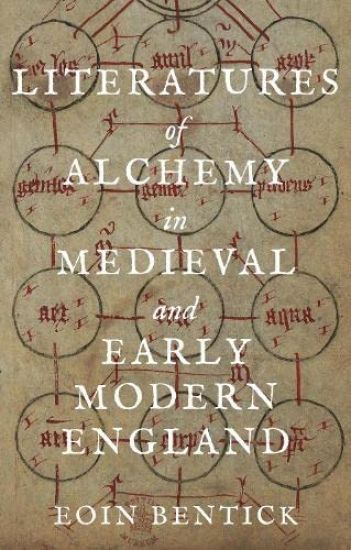
Literatures of Alchemy in Medieval and Early Modern England
Explores the myriad ways in which alchemy was conceptualised by adepts and sceptics alike, from those with recourse to a fully functioning laboratory to those who did not know their pelican from their athanor! The language of alchemy (the art of transmuting metals and manufacturing pharmaceutical medicine) is defined by obscure imagery, authorial play and dense knottiness, tempting curious readers to unpick its impenetrable promises. From the fourteenth to the seventeenth century, alchemical literature was read, interpreted and reimagined both by those with recourse to a fully functioning laboratory and those who did not know their pelican from their athanor. Recent studies by historians of science have succeeded in decoding the difficult language of these texts, revealing the replicable chemical procedures behind their metaphors. However, as a literary investigation of alchemy, this book explores more fluid understandings of the art in the period. Through an analysis of medieval and early modern texts and manuscript cultures, the volume explores the myriad ways in which alchemy was conceptualised in this period, by adept and sceptic alike. From Geoffrey Chaucer's mockery of the impotence of alchemical 'pryvetee' in The Canterbury Tales, and John Gower's macrocosmic hope for societal amelioration in the Confessio Amantis, to Elias Ashmole's angelic alchemy in the Theatrum chemicum britannicum, it explores the natural philosophy that underpinned such diverse representations of this 'slidynge science', proffering a theory of 'alchemical hermeneutics' as a conspiratorial way of reading that sees alchemy in all.
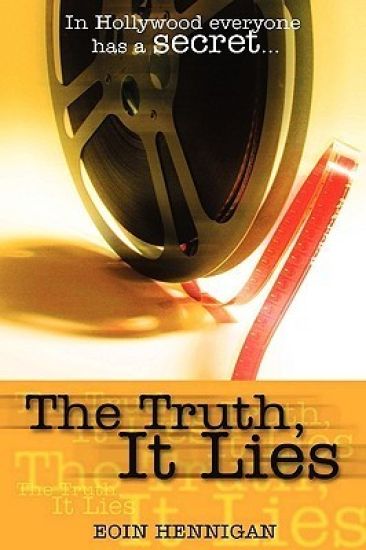
The Truth, It Lies

The Truth, It Lies

Eoin Hennigan

Lulu.com
2006
pokkari
A lawyer on the brink of ruin, a paranoid director, a dead movie star, and a picture no one will ever see! It is 1952 and showbusiness lawyer Robert L Harvey is on the brink of financial ruin. The Hollywood witch-hunt is putting him out of business. That is, until, he receives a call from movie director, and constant paranoid, Michael Bloom. The big shot has misplaced the film reels of his latest project, the star of which has recently died. Harvey thinks it's a job for the police but the director is adamant he doesn't want his employer, Mayor Studios, to know their investment is lost. Desperate for the money Harvey agrees, but when he delves into a side of the movie industry he's never seen before his priorities have to change!
Our Grannies' Recipes

Our Grannies' Recipes

Eoin Purcell

The Mercier Press Ltd
2010
nidottu
We all have recipes that are dear to our hearts, passed on to us from our grannies, grandads, great aunts and uncles. This book is the culmination of an effort to collect, document and sample those recipes. Collected online and by post from people across Ireland, the book is a true flavour of what Irish people value about cooking and baking on this changing island. With a mix of sweet and savoury, full meals, snacks and desserts, Our Grannies' Recipes is a charming book of Irish recipes for the whole family to enjoy and includes favourites such as: Apple Pie, Irish Beef Stew, Brown Bread, Pancakes and Chicken Soup. 'A unique collection of delightful recipes from Grannies kitchens all over Ireland' -The Irish Examiner.
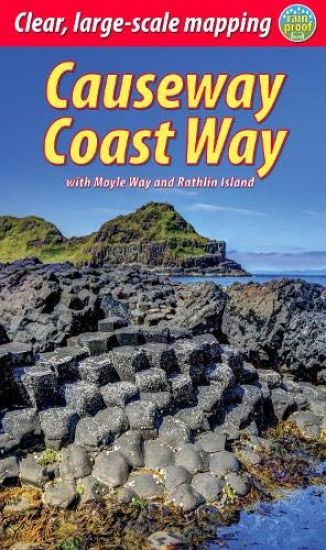
Causeway Coast Way (2 ed)

Causeway Coast Way (2 ed)

Eoin Reilly; Jacquetta Megarry

Rucksack Readers
2020
nidottu
The unspoiled Causeway Coast of Antrim was one of Ireland's best-kept secrets until its glorious scenery and castles became familiar to fans of ‘Game of Thrones’. The World Heritage Site of the Giant's Causeway shows intriguing geology and is best enjoyed on foot. The Causeway Coast Way offers 32 miles (51 km) of waymarked, easy-going walking with welcoming B&Bs and pubs at strategic intervals. It combines well with a trip to the enchanting offshore island of Rathlin; the book also covers how to walk the more challenging Moyle Way – a 26-mile inland route that links up at Ballycastle. This guidebook contains all that a walker needs to plan and enjoy their holiday, including route maps for Causeway Coast and Moyle Ways (1:35,000); concise, up-to-date directions for both routes; geology and legend of the Giant's Causeway; background on habitats and wildlife; feature on Rathlin Island, with map and walks; contact details for accommodation and transport; over 80 glorious colour photos; and is in lightweight, rucksack-friendly format.
The Austrian Anschluss in History and Literature
Following his thesis that history-writing and literature are mutually complementary, Eoin Bourke illuminates literary texts for audiences which might be unfamiliar with the historical background against which they were conceived, he attempts to "deepen the retelling" of history, and make it more immediate to the modern-day reader by use of personal anecdotes, excerpts from works of literature and journalistic articles.Bourke begins with a succinct but informative description of the political circumstances which obtained during the 1930s in Austria, and proceeds to draw on the abundance of contemporary texts in order to depict the nazification of Austria in all its dimensions: the sights and sounds of the scenes of jubilation which greeted the arrival of the German invader, the sense of nightmare and foreboding experienced by Jews and others who had reason to fear Hitler's armies, the expressions of blatant anti-Semitism by the administration and the citizenry, the humiliation of Jews in the streets of Vienna, their gradual exclusion from society, the Holocaust, and the attempts at resistance.Linking the passages he has selected, Bourke provides an instructive, absorbing and well researched commentary on the events: he describes the systematic and brutal elimination of the opponents of the regime, lists a catalogue of cruelty inflicted on the Jews of Vienna, and highlights the bureaucratic difficulties encountered by would-be emigrants. However, he allows the works themselves to speak more eloquently in conveying the private thoughts, sensation. and pain of the individual. The personal anecdotes and remembrances imbue the bare facts—and sometimes even horrific facts can become mere statistics—with an immediacy which conveys to the modern-day reader the keen sense of tragedy, loss and ever-present anxiety of those who live through the events.
Religion, Law and the Irish State

Religion, Law and the Irish State

Eoin Daly

Clarus Press Ltd
2012
nidottu
Religion features prominently in Irish history and politics. Its peculiar legal status represents one of the distinctive features of the Irish constitutional tradition. The 1937 Constitution accords religion a central position as an anchoring point of Ireland's national identity, yet also includes ostensibly strong guarantees of freedom of conscience and religion, and of equality on religious grounds, that are typical of liberal-democratic constitutional systems. It synthesizes competing theories and models, tentatively affirming religion's public status, yet committing it to the "private sphere" for most purposes. For the most part, the historically close relationship between the State and the Catholic Church found no clear mandate in the constitutional text, which, contrary to prevailing perceptions, imposes a limited form of Church-State separation - although the exact boundaries it imposes remain unclear. More specifically, the legal principles and doctrines relating to religious practice are ambiguous and underdeveloped, particularly in issues surrounding religious freedom and denominational autonomy. The extent to which the Constitution protects religious activity from State interference has never been decisively resolved; additionally, constitutional considerations underlie resurgent contemporary controversies in the field of Church and State - particularly in the recent public debate on the role of religion in schools. Accordingly, Religion, Law and the Irish State examines the constitutional framework governing State and religion in the broader context of the history, politics, and theory of the Church-State relationship. From a lawyer's perspective, the book provides an account of the case law and doctrine in specific areas, including religious freedom, religious equality, denominational autonomy, and Church-State separation, while also giving these subjects a comparative and theoretical treatment. For those approaching Church and State from different perspectives - including historians, political scientists, sociologists, and theologians - it offers an accessible and contextual account of the constitutional dimensions of the State-religion relationship. It explores the constitutional provisions as an expression of, but also a potential fetter upon, the evolving social and political role of religion.
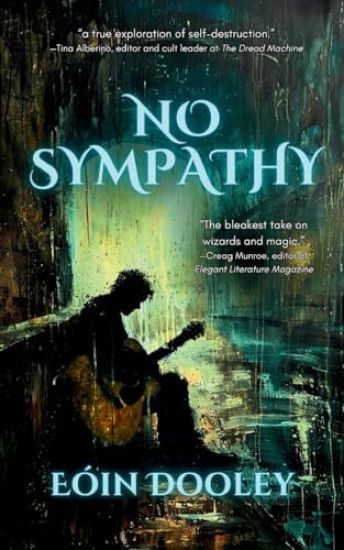
No Sympathy

No Sympathy

Eóin Dooley

Android Press
2024
pokkari
Theo is the kind of guy who'd steal your painkillers and lie to you about it while high. He's the kind of guy who swears he just scored a gig and so he can totally pay you back-rent, don't worry about it. He is an asshole, and our story begins when he alienates the last of his friends in Berlin and is kicked out onto the street. Unbeknownst to him however, this cutting of social ties enables him to tap into a world of sympathetic magic, which he does by accidentally teleporting to China. There, he meets a mentor named Gabriel, who instructs him in the art of sympathy, in the art of seeing things as similar to allow them to become the same. The caveat is that only those who go unnoticed, those without ties, can perform magic. Gabriel brings Theo to an enclave of magicians, who perform global charity work at the margins of society. As he works with them and trains to become a better magician, Theo is forced to confront himself, and to learn the difference between self-hatred and egolessness, with an ultimately tragic conclusion.One part Neverwhere, one part Bojack Horseman, with more than a dash of Ursula Le Guin, this is a story about the magical thinking within modernity, and the importance of self-compassion in trying to make the world a better place.
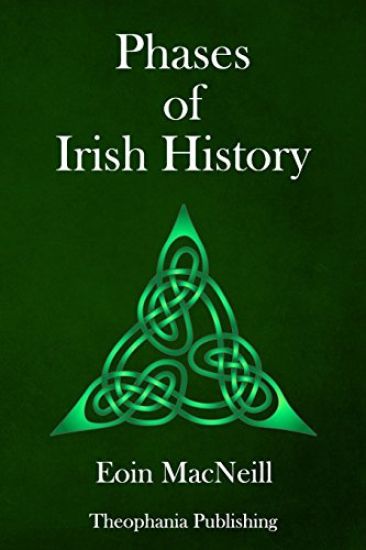
Phases of Irish History

Phases of Irish History

Eoin MacNeill

Createspace Independent Publishing Platform
2018
nidottu
Thank you for checking out this book by Theophania Publishing. We appreciate your business and look forward to serving you soon. We have thousands of titles available, and we invite you to search for us by name, contact us via our website, or download our most recent catalogues. Every people has two distinct lines of descent-by blood and by tradition. When we consider the physical descent of a people, we regard them purely as animals. As in any breed of animals, so in a people, the tokens of physical descent are mainly physical attributes-such as stature, complexion, the shape of the skull and members, the formation of the features. When we speak of a particular race of men, if we speak accurately, we mean a collection of people whose personal appearance and bodily characters, inherited from their ancestors and perhaps modified by climate and occupation, distinguish them notably from the rest of mankind. It is important for us to be quite clear in our minds about this meaning of Race, for the word Race is often used in a very loose and very misleading way in popular writings and discussions. Thus we hear and read of the Latin races, the Teutonic race, the Anglo-Saxon race, the Celtic race. If these phrases had any value in clear thinking, they would imply that in each instance it is possible to distinguish a section of mankind which, by its inherited physical characters, differs notably from the rest of mankind. Now in not one of the instances mentioned is any such distinction known to those who have made the races of man the subject of their special study. There is no existing Latin race, no Teutonic race, no Anglo-Saxon race, and no Celtic race. Each of the groups to whom these names are popularly applied is a mixture of various races which can be distinguished, and for the most part they are a mixture of the same races, though not in every case in the same proportions.