Ralph Waldo Emerson (May 25, 1803 - April 27, 1882) was an American essayist, lecturer, and poet who led the transcendentalist movement of the mid-19th century. He was seen as a champion of individualism and a prescient critic of the countervailing pressures of society, and he disseminated his thoughts through dozens of published essays and more than 1,500 public lectures across the United States. Emerson gradually moved away from the religious and social beliefs of his contemporaries, formulating and expressing the philosophy of transcendentalism in his 1836 essay "Nature". Following this work, he gave a speech entitled "The American Scholar" in 1837, which Oliver Wendell Holmes Sr. considered to be America's "intellectual Declaration of Independence". Emerson wrote most of his important essays as lectures first and then revised them for print. His first two collections of essays, Essays: First Series (1841) and Essays: Second Series (1844), represent the core of his thinking. They include the well-known essays "Self-Reliance", "The Over-Soul", "Circles", "The Poet" and "Experience". Together with "Nature", these essays made the decade from the mid-1830s to the mid-1840s Emerson's most fertile period. Emerson wrote on a number of subjects, never espousing fixed philosophical tenets, but developing certain ideas such as individuality, freedom, the ability for humankind to realize almost anything, and the relationship between the soul and the surrounding world. Emerson's "nature" was more philosophical than naturalistic: "Philosophically considered, the universe is composed of Nature and the Soul". Emerson is one of several figures who "took a more pantheist or pandeist approach by rejecting views of God as separate from the world." He remains among the linchpins of the American romantic movement, and his work has greatly influenced the thinkers, writers and poets that followed him. When asked to sum up his work, he said his central doctrine was "the infinitude of the private man." Emerson is also well known as a mentor and friend of Henry David Thoreau, a fellow transcendentalist. Ernest Percival Rhys ( 17 July 1859 - 25 May 1946) was a Welsh-English writer, best known for his role as founding editor of the Everyman's Library series of affordable classics. He wrote essays, stories, poetry, novels and plays.Rhys was born in London, and brought up in Carmarthen and Newcastle-upon-Tyne. After working in the coal industry, he was employed doing editorial work on the Camelot Series of 65 reprints and translations from 1886, for five years, while he turned to writing as a profession. He was a founder member in 1890 of the Rhymers' Club in London, and a contributor to The Book of the Rhymers' Club (1893). In 1906, Rhys persuaded J. M. Dent, the publisher, for whom he was working on The Lyric Poets series, to start out on the ambitious Everyman project, aiming to publish 1000 titles; the idea was to put out ten at a time. The target was eventually reached, ten years after Rhys died.
Max Carrados is a fictional blind detective in a series of mystery stories and books by Ernest Bramah, beginning in 1914. The Max Carrados stories appeared alongside Sherlock Holmes in the Strand Magazine, in which they often had top billing, and frequently outsold his eminent contemporary at the time, even if they failed to achieve the longevity of Holmes. George Orwell wrote that, together with those of Conan Doyle and R. Austin Freeman, Max Carrados and The Eyes of Max Carrados "are the only detective stories since Poe that are worth re-reading."
A Bride from the Bush is the first novel written by E. W. Hornung.He started writing the book while working as a tutor for Charles Joseph Parsons in Mossgiel Station, New South Wales, Australia. The novel was initially published by Smith, Elder & Co. as a serial in the Cornhill Magazine, and then published in book format by the same company in October 1890.As with Tiny Luttrell and The Unbidden Guest, two of Hornung's other early novels, A Bride from the Bush points out flaws in British society by presenting the country through an Australian perspective. A reviewer from The New York Times called the novel "a most piquant contrast between civilization and crudity". The writer Thomas Alexander Browne called the titular character of A Bride from the Bush "a libel to Australian womankind". A Punch editor made the opposite claim, arguing that the protagonist of the novel is more kind-hearted and attractive than actual Australians.Hornung's later stories in the A. J. Raffles series achieved much more popularity than A Bride from the Bush. Nonetheless, he himself liked A Bride from the Bush and his other Australian stories better than those of Raffles.When he published the novel Peccavi in 1900, a critic from The Advertiser wrote a scathing review, writing that Hornung should go back to Australia so he would be inspired to write something as good as A Bride from the Bush again.Upon Hornung's death, a tribute in The Freeman's Journal called A Bride from the Bush "the best and the best known" of Hornung's Australia-related stories.In 1924 Andr Coeuroy and Theodore Baker argued in The Musical Quarterly that Hornung's characterisation of the novel's hero as being pitiable for being unable to appreciate anthems demonstrates that A Bride from the Bush is typical of other novels of the time in favouring vocal church music..... Ernest William Hornung (7 June 1866 - 22 March 1921) was an English author and poet known for writing the A. J. Raffles series of stories about a gentleman thief in late 19th-century London. Hornung was educated at Uppingham School; as a result of poor health he left the school in December 1883 to travel to Sydney, where he stayed for two years. He drew on his Australian experiences as a background when he began writing, initially short stories and later novels. In 1898 he wrote "In the Chains of Crime", which introduced Raffles and his sidekick, Bunny Manders; the characters were based partly on his friends Oscar Wilde and his lover, Lord Alfred Douglas, and also on the characters of Sherlock Holmes and Dr. Watson, created by his brother-in-law, Arthur Conan Doyle. The series of Raffles short stories were collected for sale in book form in 1899, and two further books of Raffles short stories followed, as well as a poorly received novel. Aside from his Raffles stories, Hornung was a prodigious writer of fiction, publishing numerous books from 1890, with A Bride from the Bush to his 1914 novel The Crime Doctor. The First World War brought an end to Hornung's fictional output. His son, Oscar, was killed at the Second Battle of Ypres in July 1915. Hornung joined the YMCA, initially in England, then in France, where he helped run a canteen and library. He published two collections of poetry during the war, and then, afterwards, one further volume of verse and an account of his time spent in France, Notes of a Camp-Follower on the Western Front. Hornung's fragile constitution was further weakened by the stress of his war work. To aid his recuperation, he and his wife visited the south of France in 1921. He fell ill from influenza on the journey, and died on 22 March 1921, aged 54. Although much of Hornung's work has fallen into obscurity, his Raffles stories continued to be popular, and have formed numerous film and television adaptations.......
Ernest William Hornung (7 June 1866 - 22 March 1921) was an English author and poet known for writing the A. J. Raffles series of stories about a gentleman thief in late 19th-century London. Hornung was educated at Uppingham School; as a result of poor health he left the school in December 1883 to travel to Sydney, where he stayed for two years. He drew on his Australian experiences as a background when he began writing, initially short stories and later novels. In 1898 he wrote "In the Chains of Crime", which introduced Raffles and his sidekick, Bunny Manders; the characters were based partly on his friends Oscar Wilde and his lover, Lord Alfred Douglas, and also on the characters of Sherlock Holmes and Dr. Watson, created by his brother-in-law, Arthur Conan Doyle. The series of Raffles short stories were collected for sale in book form in 1899, and two further books of Raffles short stories followed, as well as a poorly received novel. Aside from his Raffles stories, Hornung was a prodigious writer of fiction, publishing numerous books from 1890, with A Bride from the Bush to his 1914 novel The Crime Doctor. The First World War brought an end to Hornung's fictional output. His son, Oscar, was killed at the Second Battle of Ypres in July 1915. Hornung joined the YMCA, initially in England, then in France, where he helped run a canteen and library. He published two collections of poetry during the war, and then, afterwards, one further volume of verse and an account of his time spent in France, Notes of a Camp-Follower on the Western Front. Hornung's fragile constitution was further weakened by the stress of his war work. To aid his recuperation, he and his wife visited the south of France in 1921. He fell ill from influenza on the journey, and died on 22 March 1921, aged 54. Although much of Hornung's work has fallen into obscurity, his Raffles stories continued to be popular, and have formed numerous film and television adaptations. Hornung's stories dealt with a wider range of themes than crime: he examined scientific and medical developments, guilt, class and the unequal role played by women in society. Two threads that run through a sizeable proportion of his books are Australia and cricket; the latter was also a lifelong passion............
Ernest William Hornung (7 June 1866 - 22 March 1921) was an English author and poet known for writing the A. J. Raffles series of stories about a gentleman thief in late 19th-century London. Hornung was educated at Uppingham School; as a result of poor health he left the school in December 1883 to travel to Sydney, where he stayed for two years. He drew on his Australian experiences as a background when he began writing, initially short stories and later novels. In 1898 he wrote "In the Chains of Crime", which introduced Raffles and his sidekick, Bunny Manders; the characters were based partly on his friends Oscar Wilde and his lover, Lord Alfred Douglas, and also on the characters of Sherlock Holmes and Dr. Watson, created by his brother-in-law, Arthur Conan Doyle. The series of Raffles short stories were collected for sale in book form in 1899, and two further books of Raffles short stories followed, as well as a poorly received novel. Aside from his Raffles stories, Hornung was a prodigious writer of fiction, publishing numerous books from 1890, with A Bride from the Bush to his 1914 novel The Crime Doctor. The First World War brought an end to Hornung's fictional output. His son, Oscar, was killed at the Second Battle of Ypres in July 1915. Hornung joined the YMCA, initially in England, then in France, where he helped run a canteen and library. He published two collections of poetry during the war, and then, afterwards, one further volume of verse and an account of his time spent in France, Notes of a Camp-Follower on the Western Front. Hornung's fragile constitution was further weakened by the stress of his war work. To aid his recuperation, he and his wife visited the south of France in 1921. He fell ill from influenza on the journey, and died on 22 March 1921, aged 54. Although much of Hornung's work has fallen into obscurity, his Raffles stories continued to be popular, and have formed numerous film and television adaptations. Hornung's stories dealt with a wider range of themes than crime: he examined scientific and medical developments, guilt, class and the unequal role played by women in society. Two threads that run through a sizeable proportion of his books are Australia and cricket; the latter was also a lifelong passion.
Mary I (18 February 1516 - 17 November 1558) was the Queen of England and Ireland from July 1553 until her death. Her executions of Protestants led to the posthumous sobriquet "Bloody Mary". She was the only child of Henry VIII by his first wife Catherine of Aragon to survive to adulthood. Her younger half-brother Edward VI (son of Henry and Jane Seymour) succeeded their father in 1547. When Edward became mortally ill in 1553, he attempted to remove Mary from the line of succession because of religious differences. On his death their first cousin once removed, Lady Jane Grey, was proclaimed queen. Mary assembled a force in East Anglia and deposed Jane, who was ultimately beheaded. Mary was-excluding the disputed reigns of Jane and the Empress Matilda-the first queen regnant of England. In 1554, Mary married Philip of Spain, becoming queen consort of Habsburg Spain on his accession in 1556. Mary is remembered for her restoration of Roman Catholicism after her half-brother's short-lived Protestant reign. During her five-year reign, she had over 280 religious dissenters burned at the stake in the Marian persecutions. After her death in 1558, her re-establishment of Roman Catholicism was reversed by her younger half-sister and successor Elizabeth I, daughter of Henry and Anne Boleyn.
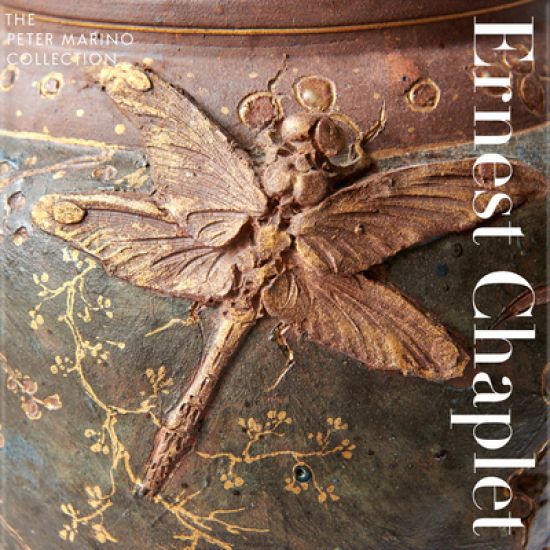
A fascinating look at an extraordinary collection of ceramic masterpieces by celebrated French ceramicist Ernest Chaplet. Over the last forty years, architect and collector Peter Marino has acquired a remarkable collection of pieces by French ceramicist, Ernest Chaplet. This collection is a precious testimony of a rare production - a new line of ceramics created by Chaplet in 1883 for the Limoges-based factory Haviland & Co. Ernest Chaplet sheds deserved light on this great artist, whose career exemplifies the evolution of artistic ceramics at the turn of the 20th century, and whose work entered the collections of many museums during his lifetime.
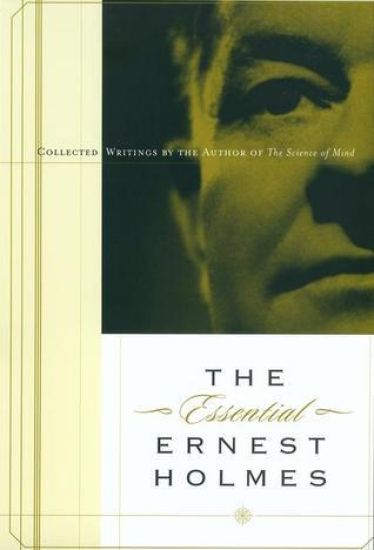
Here, in one volume, is a selection of the core and essential writings by internationally renowned scholar, mystic, and author Ernest Holmes, providing readers with a library of the most important ideas in the religious psychology that Holmes defined. The Essential Ernest Holmes comprises selections from classic works such as This Thing Called You, The Science of Mind textbook, and Creative Mind and Success-but also included are brilliant passages from some of Holmes's lesser-known works, such as The Voice Celestial, as well as a generous sampling from articles and lectures. The book features remembrances of the beloved sage and teacher from the works of his contemporaries; a chronology of Holmes's life and work; and an accessible introduction by editor Jesse Jennings that frames Holmes's body of ideas for all readers.
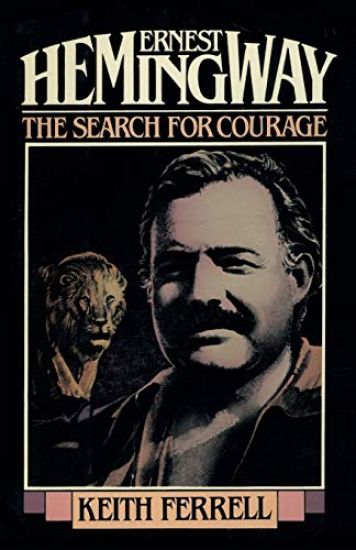
Ernest Hemingway was one of the most controversial and admired writers of his time. This biography covers his life from his childhood in Oak Park, Illinois, to his suicide in 1961. It offers a sympathetic portrait of a brilliant artist and a complex individual—a private man who led a very public life. Hemingway’s formal education ended after high school when the ambitious young writer went off to work for The Kansas City Star. Eager to see the war, he volunteered for ambulance corps duty in Italy during World War I. Some of his most exciting and productive years were spent in postwar Paris, living among a group of writers and artists from around the world. In the 1930s Hemingway became as famous for his personality as for his writing, and he spent more of his time hunting and fishing competitively. But when war broke out in his beloved Spain, he went to serve as a correspondent on the loyalist side. In 1940 his novel For Whom the Bell Tolls, based on his wartime experiences, was published to critical acclaim and financial success. World War II found Hemingway working as a correspondent once again, and prone to fighting and drinking. Despite this decline, he wrote The Old Man and the Sea, which celebrated the courage of an aged Cuban fisherman, and went on to win the Nobel Prize for literature in 1954. Keith Ferrell conveys the scope of Hemingway’s achievement as a writer and gives a vivid portrait of one of America’s finest authors.
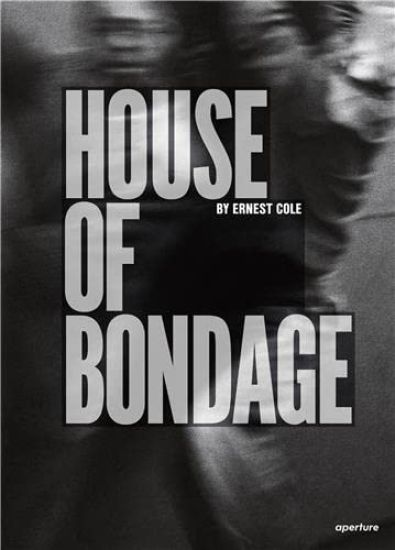
First published in 1967, Ernest Cole’s House of Bondage has been lauded as one of the most significant photobooks of the twentieth century, revealing the horrors of apartheid to the world for the first time and influencing generations of photographers around the globe. Reissued for contemporary audiences, this edition adds a chapter of unpublished work found in a recently resurfaced cache of negatives and recontextualizes this pivotal book for our time. Cole, a Black South African man, photographed the underbelly of apartheid in the 1950s and ’60s, often at great personal risk. He methodically captured the myriad forms of violence embedded in everyday life for the Black majority under the apartheid system—picturing its miners, its police, its hospitals, its schools. In 1966, Cole fled South Africa and smuggled out his negatives; House of Bondage was published the following year with his writings and first-person account. This edition retains the powerful story of the original while adding new perspectives on Cole’s life and the legacy of House of Bondage. It also features an added chapter—compiled and titled “Black Ingenuity” by Cole—of never-before-seen photographs of Black creative expression and cultural activity taking place under apartheid. Made available again nearly fifty-five years later, House of Bondage remains a visually powerful and politically incisive document of the apartheid era.
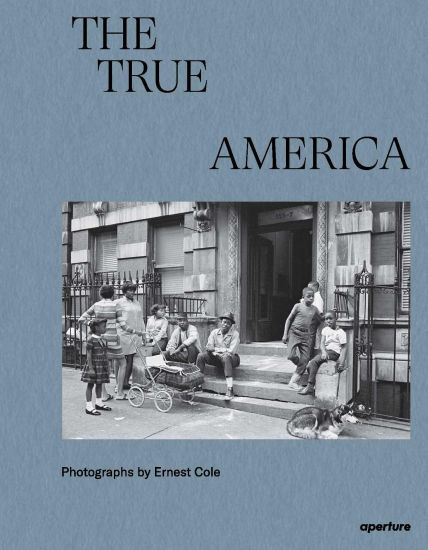
The first publication of Ernest Cole’s photographs depicting Black lives in the United States during the turbulent and eventful late 1960s and early ’70s After the publication of his landmark 1967 book House of Bondage on the horrors of apartheid, Ernest Cole moved to New York and received a grant from the Ford Foundation to document Black communities in cities and rural areas of the United States. He released very few images from this body of work while he was alive. Thought to be lost entirely, the negatives of Cole’s American pictures resurfaced in Sweden in 2017. Ernest Cole photographed extensively in New York City, documenting the lively community of Harlem, including a thrilling series of color photographs, as he turned his talent to street photography across Manhattan. In 1968 Cole traveled to Chicago, Cleveland, Memphis, Atlanta, and Los Angeles, as well as rural areas of the South, capturing the mood of different Black communities in the months leading up to and just after the assassination of Martin Luther King Jr. The pictures both reflect a newfound hope and freedom that Cole felt in America, and an incisive eye for inequality as he became increasingly disillusioned by the systemic racism he witnessed. This treasure trove of rediscovered work provides an important window into American society and redefines Cole’s oeuvre, presenting a fuller picture of the life and work of a man who fled South Africa and exposed life under apartheid to the world.
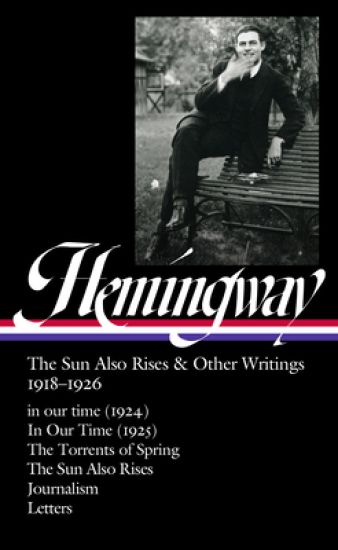
Library of America launches its long-awaited Hemingway edition with a landmark collection of writings from his breakthrough years, in newly edited, authoritative texts. With a letter of introduction from Sherwood Anderson, Ernest Hemingway travelled to Paris in 1921. There, he ame into contact with Gertrude Stein, F. Scott Fitzgerald, Pablo Picasso, James Joyce, and other expatriate writers and artists integral to his rapid development as a writer. This volume brings together work from the extraordinary period of 1918 to 1926, in which Hemingway's famous prose style became fully formed. It includes his work for the Toronto Star and Hearst's International News Service, the indelible stories of In Our Time (1925), The Torrents of Spring (1925), and his masterpiece, The Sun Also Rises (1926). Edited by Hemingway scholar Robert W. Trogdon, this volume features newly edited, corrected texts of In Our Time, The Torrents of Spring and The Sun Also Rises, fixing errors and restoring Hemingway's original punctuation. It presents the 1924 edition of in our time issued by Three Mountains Press as a modernist masterpiece in its own right, apart from the subsequent versions published by Boni & Liveright and Scribners. It includes the story "Up in Michigan," one of only a few stories dating from the period before 1923 that was not lost in Hemingway's suitcase in the Gare de Lyon and that was originally intended as the opening story of In Our Time, and the hard-to-find, previously uncollected story "A Divine Gesture." Also here are a selection of Hemingway's letters from the period, which cast light on his breakthrough years and at the extraordinary international modernist moment of which he was a crucial part.
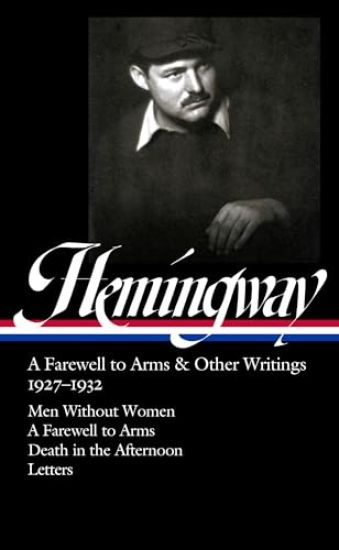
The Library of America's definitive Hemingway edition continues with three classic works, all presented in new, corrected texts. This much anticipated second volume in Library of America's edition of the collected writings of Ernest Hemingway brings together 3 of the author's classic works from the late 1920s and early 1930s, all presented in new, corrected texts prepared by Hemingway scholar Robert W. Trogdon. Reinstating expletives redacted by Hemingway's editor Maxwell Perkins, fixing numerous errors, and restoring Hemingway's preferred American spellings, these texts bring us closer than ever before to Hemingway's intentions for his books. Here for the first time in one volume are: Men Without Women (1927), Hemingway's second short story collection, which includes such classic stories as "In Another Country," "The Killers," "Ten Indians," and "Hills Like White Elephants"A Farewell to Arms (1929), Hemingway's heartbreaking novel of love and warDeath in the Afternoon (1932), his grand meditation on bullfighting, mortality, and writing. For this deluxe edition, all 81 of the book's photographs of bullfights and bullfighters have been reproduced from the original prints and postcards gathered by the author, bringing them vividly to life as never before.The volume also includes a selection of Hemingway's letters from 1927 to 1932 that cast light on his life, artistic aims, and publishing activities during this period. A detailed chronology of the author's life, explanatory notes, and a textual essay bring added value for readers.

![Lectures on the English poets: [and] The spirit of the age; or contemporary portraits. By: William Hazlitt: edited By: Ernest Rhys, introduction By:](/covers/9781543235302.jpg)