Kirjojen hintavertailu. Mukana 11 342 296 kirjaa ja 12 kauppaa.

Kirjahaku

Etsi kirjoja tekijän nimen, kirjan nimen tai ISBN:n perusteella.

1000 tulosta hakusanalla F. Freeman

F.W. Woolworth and the American Five and Dime

F.W. Woolworth and the American Five and Dime

Jean Maddern Pitrone

McFarland Co Inc
2007
pokkari
For more than a century, Woolworth's five and dime stores represented Americana, mirroring the country's growth, its good times and bad, its foibles and its fads. The chain was founded by Frank W. Woolworth, who in 1879 established two stores--one in Utica, New York, which failed and was closed down, and another in Lancaster, Pennsylvania, which succeeded and marked the beginning of the legacy of the Woolworth's Five and Tens. This work is a full account of the chain, its rags-to-riches founder, Frank W. Woolworth, and his flamboyant and tragic descendants. It traces the important role that Woolworth stores played in the sit-down strikes of the 1930s, the lunch counter sit-ins that began in Greensboro, North Carolina, as part of the Civil Rights movement (which tainted Woolworth's as the Big Business enemy of the downtrodden), and the gradual disintegration of the five and tens during the 1980s and early 1990s. The dramatic story is enhanced with important photos featuring such events as the closing of a Woolworth's in Germany by Nazi soldiers and the Greensboro sit-in as well as archival photos from Woolworth's 40th, 50th, and 60th anniversary booklets.

F-105 Thunderchiefs

F-105 Thunderchiefs

W. Howard Plunkett

McFarland Co Inc
2008
pokkari
One of the U.S. Air Force's most important fighter bombers, the F-105 Thunderchief was in operation for almost thirty years. It played a key role in the Vietnam War. This book details the histories of the 103 F-105s that are displayed around the world. Part One of the work summarizes the 29 years of F-105 operations, focusing on events, aircraft configurations, units and bases. The individual histories and photographs of each surviving F-105 from its production to its static display are contained in Part Two. Appendices provide a mapped-out, state by state "Thunderchief Tour," and the fate, by serial number, of all 117 of the F-105s that survived their operational career only to end up in scrap yards.
F. F. Bruce: A Life

F. F. Bruce: A Life

Tim Grass

William B. Eerdmans Publishing Company
2012
nidottu
This is the first-ever full-length biography of Frederick Fyvie Bruce (1910-1990), one of the most influential British biblical scholars of the twentieth century. Over his lifetime F. F. Bruce authored some fifty books and nearly two thousand articles and reviews. His career offers valuable insights into key issues that affected evangelicals from the 1950s onwards, including the relationship between academic theology and church life and the perception of evangelical scholarship within the academy at large.
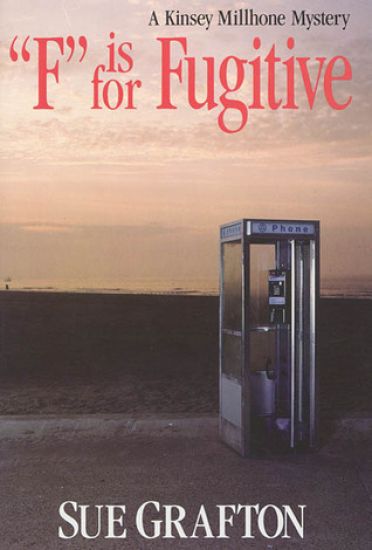
F Is for Fugitive

F Is for Fugitive

Sue Grafton

St. Martin's Press
1989
sidottu
#1 New York Times bestselling author Sue Grafton crafts a thriller set in a town so small that P.I. Kinsey Millhone wonders just how private her investigation can be . . . F is for Fugitive Floral Beach wasn't much of a town: six streets long and three deep, its only notable feature a strip of sand fronting the Pacific. It was on that sandy beach seventeen years ago that the strangled body of Jean Timberlake had been found. The people of floral Beach didn't pay a whole lot of mind to past history, especially when Bailey Fowler, the self-confessed killer, had been properly processed and convicted. They weren't even unduly concerned when, a year after the murder, Fowler walked away from the men's prison at San Luis Obispo, never to be seen again. After all, everyone knew Jean had been a wild kid. "Like mother, like daughter," some said--though never within hearing of Shana Timberlake, who, whatever her faults, still mourned her murdered child. And then, by sheer fluke, the cops stumbled on Bailey Fowler. And a case seventeen years dead came murderously to life again. For Royce Fowler, old and sick with not much time left, his son's reappearance was the chance to heal an old wound. For Kinsey Millhone, the case was a long shot, but she agreed to take it on. She couldn't know then it would lead her to probe the passions buried just below the surface of family relations, where old wounds fester and the most cherished emotions become warped until they fuse into deadly, soul-destroying time bombs. "A" Is for Alibi"B" Is for Burglar"C" Is for Corpse"D" Is for Deadbeat"E" Is for Evidence"F" Is for Fugitive"G" Is for Gumshoe"H" Is for Homicide"I" Is for Innocent"J" Is for Judgment"K" Is for Killer"L" is for Lawless"M" Is for Malice"N" Is for Noose"O" Is for Outlaw"P" Is for Peril "Q" Is for Quarry"R" Is for Ricochet "S" Is for Silence "T" Is for Trespass"U" Is for Undertow "V" Is for Vengeance "W" Is for Wasted "X"
F. Scott Fitzgerald's "The Beautiful and Damned

F. Scott Fitzgerald's "The Beautiful and Damned

LOUISIANA STATE UNIVERSITY PRESS
2022
sidottu
F. Scott Fitzgerald's second novel, The Beautiful and Damned, has frequently been dismissed as an outlier and curiosity in his oeuvre, a transitional work from the coming-of-age plot of This Side of Paradise to the masterful critique of American aspiration in The Great Gatsby.The Beautiful and Damned belongs to a genre that is widely misunderstood, the "bright young things" novel in which spoiled and wealthy characters succumb to decay because of their privilege and lack of purpose. Set between 1913 and 1922, Fitzgerald's longest novel touches on many of the decisive issues that mark the passage from the Gilded Age and the Progressive Era into the Jazz Age: conspicuous consumption, income inequality, yellow journalism, the Great War, the rise of the movie industry, automobile travel, Wall Street stock scams, immigration and xenophobia, and the fixation with youth and aging. Published to coincide with the novel's centennial in 2022, this collection approaches The Beautiful and Damned for its insights more than its faults. Prominent Fitzgerald scholars analyze major themes and reveal unappreciated issues with attention to history, biography, literary influence, gender studies, and narratology. While acknowledging the novel's shortcomings, the essayists illustrate that The Beautiful and Damned has much more to say about its milieu than previously recognized. This collection provides a guide for understanding Fitzgerald's aims while demonstrating the richness of ideas that this novel explores, alongside the anxieties and ambitions that reverberate within it.
F. Scott Fitzgerald's "the Beautiful and Damned

F. Scott Fitzgerald's "the Beautiful and Damned

LOUISIANA STATE UNIVERSITY PRESS
2022
pokkari
F. Scott Fitzgerald's second novel, The Beautiful and Damned, has frequently been dismissed as an outlier and curiosity in his oeuvre, a transitional work from the coming-of-age plot of This Side of Paradise to the masterful critique of American aspiration in The Great GatsbyThe Beautiful and Damned belongs to a genre that is widely misunderstood, the "bright young things" novel in which spoiled and wealthy characters succumb to decay because of their privilege and lack of purpose. Set between 1913 and 1922, Fitzgerald's longest novel touches on many of the decisive issues that mark the passage from the Gilded Age and the Progressive Era into the Jazz Age: conspicuous consumption, income inequality, yellow journalism, the Great War, the rise of the movie industry, automobile travel, Wall Street stock scams, immigration and xenophobia, and the fixation with youth and aging. Published to coincide with the novel's centennial in 2022, this collection approaches The Beautiful and Damned for its insights more than its faults. Prominent Fitzgerald scholars analyze major themes and reveal unappreciated issues with attention to history, biography, literary influence, gender studies, and narratology. While acknowledging the novel's shortcomings, the essayists illustrate that The Beautiful and Damned has much more to say about its milieu than previously recognized. This collection provides a guide for understanding Fitzgerald's aims while demonstrating the richness of ideas that this novel explores, alongside the anxieties and ambitions that reverberate within it.
F.O. Matthiessen

F.O. Matthiessen

Stern Frederick C.

The University of North Carolina Press
2011
nidottu
Matthiessen succeeded in uniting critical formalism with political radicalism, Christian concerns with social egalitarianism, to make a major contribution to American literature and culture. As a major literary critic and distinguished teacher, his extraordinary output of critical works constitutes a crucial part of American intellectual development. Stern's compassionate study reveals now Matthiessen synthesized the opposing forces in his own ideas to interpret the art of literature.A UNC Press Enduring Edition -- UNC Press Enduring Editions use the latest in digital technology to make available again books from our distinguished backlist that were previously out of print. These editions are published unaltered from the original, and are presented in affordable paperback formats, bringing readers both historical and cultural value.
The Best Early Stories of F. Scott Fitzgerald

The Best Early Stories of F. Scott Fitzgerald

F. Scott Fitzgerald; Roxana Robinson

Modern Library Inc
2005
pokkari
Edited and with an Introduction by Bryant MangumForeword by Roxana Robinson Benediction - Head and Shoulders - Bernice Bobs Her Hair - The Ice Palace - The Offshore Pirate - May Day - The Jelly Bean - The Diamond as Big as the Ritz - Winter Dreams - Absolution In the euphoric months before and after the publication of "This Side of Paradise, F. Scott Fitzgerald, the flapper's historian and poet laureate of the Jazz Age, wrote the ten stories that appear in this unique collection. Exploring characters and themes that would appear in his later works, such as "The Beautiful and Damned and "The Great Gatsby, these early selections are among the very best of Fitzgerald's many short stories. This Modern Library Paperback Classic includes notes, an appendix of nonfiction essays by Scott and Zelda Fitzgerald and their contemporaries, and vintage magazine illustrations.
F Is For Phony

F Is For Phony

Juhasz Alexandra; Lerner Jesse

University of Minnesota Press
2006
sidottu
Fake documentaries mimic documentary genre expectations, unraveling the documentary’s authority and dismantling understandings of identity, history, and nation. The interdisciplinary essays in F Is for Phony discuss a broad scope of works and explore issues raised by “fake docs” such as the fiction/documentary divide, the ethics of reality-based manipulation, and whether documentariness derives from form or reception. Defining the borderline between fact and fiction, the contributors reveal what fake documentaries imply and usually make explicit: that many documentaries lie to tell the truth, and that the truth is relative. Contributors: Steve Anderson, Catherine L. Benamou, Mitchell W. Block, Luis Buñuel, Marlon Fuentes, Craig Hight, Charlie Keil, Alisa Lebow, Eve Oishi, Robert F. Reid-Pharr, Gregorio C. Rocha, Jane Roscoe, Catherine Russell, Elisabeth Subrin. Alexandra Juhasz is professor of media studies at Pitzer College. She is author of Women of Vision: Histories in Feminist Film and Video (Minnesota, 2001). Jesse Lerner is associate professor of media studies at Pitzer College.
F Is for Phony

F Is for Phony

Alexandra Juhasz; Jesse Lerner

University of Minnesota Press
2006
nidottu
Fake documentaries mimic documentary genre expectations, unraveling the documentary’s authority and dismantling understandings of identity, history, and nation. The interdisciplinary essays in F Is for Phony discuss a broad scope of works and explore issues raised by “fake docs” such as the fiction/documentary divide, the ethics of reality-based manipulation, and whether documentariness derives from form or reception. Defining the borderline between fact and fiction, the contributors reveal what fake documentaries imply and usually make explicit: that many documentaries lie to tell the truth, and that the truth is relative. Contributors: Steve Anderson, Catherine L. Benamou, Mitchell W. Block, Luis Buñuel, Marlon Fuentes, Craig Hight, Charlie Keil, Alisa Lebow, Eve Oishi, Robert F. Reid-Pharr, Gregorio C. Rocha, Jane Roscoe, Catherine Russell, Elisabeth Subrin. Alexandra Juhasz is professor of media studies at Pitzer College. She is author of Women of Vision: Histories in Feminist Film and Video (Minnesota, 2001). Jesse Lerner is associate professor of media studies at Pitzer College.
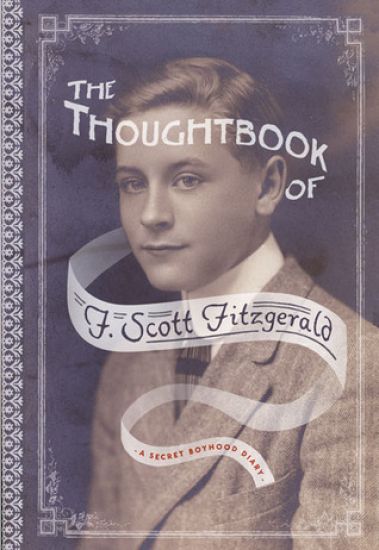
The Thoughtbook of F. Scott Fitzgerald

The Thoughtbook of F. Scott Fitzgerald

F. Scott Fitzgerald

University of Minnesota Press
2013
nidottu
When F. Scott Fitzgerald was fourteen and living in the Crocus Hill neighborhood of St. Paul, he began keeping a short diary of his exploits among his friends, friendly rivals, and crushes. He gave the journal a title page-Thoughtbook of Francis Scott Key Fitzgerald of St. Paul Minn. U.S.A.-and kept it securely locked in a box under his bed. He would later use The Thoughtbook as the basis for “The Book of Scandal” in his Basil Lee Duke stories, and brief sections were copied over the years for use by scholars and even published in Life magazine. “Are you going to the Ordways’? the Herseys’? the Schultzes’?” Here, for the first time, is a complete transcription of this charming, twenty-seven-page diary highlighting Fitzgerald’s escapades among the children of some of St. Paul’s most influential families-models for the families described in The Great Gatsby. Presented in a simple format for both scholars and general readers alike, The Thoughtbook of F. Scott Fitzgerald includes a new introduction by Dave Page that covers the history and provenance of the diary, its place and meaning in Fitzgerald’s literary development, and its revelations about his life and writing process.One of the earliest known works by F. Scott Fitzgerald, The Thoughtbook provides a unique glimpse of Fitzgerald as a young boy and his social circle as they played among the grand homes of Summit Avenue, making up games, starting secret societies, competing with rivals, and (at all times) staying up-to-date on who exactly is vying for whose attention.
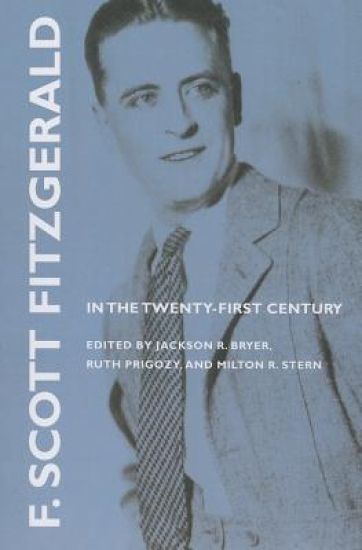
F.Scott Fitzgerald in the Twenty-first Century

F.Scott Fitzgerald in the Twenty-first Century

The University of Alabama Press
2003
sidottu
F.Scott Fitzgerald is read and studied all over the world and his works continue to elicit spirited responses. This collection grew out of the F.Scott Fitzgerald conference that convened in Princeton at the centennial of this author's birth. Bringing together dozens of scholars and commentators, the conference and the book celebrate the growing legacy of Fitzgeralds's art. The subjects of these 19 essays reflect the contributors' wish to shine new light on less-frequently discussed aspects of Fitzgerald's work. Topics include Fitzgerald's Princeton influences and his expression of catholic romanticism; his treatments of youth culture, the devil, and waste, parallels in the work of Mencken, Cather, and Murakami; and the ways gender, pastoral mode, humour, and the Civil War are variously presented in his work. One illustrated summary examines Fitzgerald's effect on popular culture through his appearance in the comics. Two broad overviews - one on Fitzgerald's career and another on the final developments in the author's style - round out the collection.
F. Scott Fitzgerald at Work

F. Scott Fitzgerald at Work

Horst H. Kruse

The University of Alabama Press
2014
sidottu
F. Scott Fitzgerald at Work probes the complex story behind the sources that inspired Fitzgerald, his writing of the novel, and the enduring legacy of The Great Gatsby.F. Scott Fitzgerald’s The Great Gatsby occupies a preeminent place in American letters. Scholars have argued that Jay Gatsby is, in fact, the embodiment of American culture and social aspiration. Though The Great Gatsby has been studied in detail since its publication, both readers and scholars have continued to speculate about Fitzgerald’s sources of inspiration.The essays in F. Scott Fitzgerald at Work examine fresh facts that illuminate the experiences and source materials upon which Fitzgerald based this quintessentially American masterpiece. They confirm author Horst Kruse’s view that Fitzgerald’s flights of fancy, even at their most spectacular, are firmly grounded in biographical experience as well as in the social, literary, and philosophical circumstances of his era.In the first essay, Kruse reconstructs the life story of the individual who allegedly inspired the character of Jay Gatsby: Max von Gerlach. Kruse recounts his journeys to various archives and libraries in the United States as well as in Germany to unearth new facts about the genesis of the Gatsby characters. In another journey, readers travel with Kruse to Long Island to explore its physical and moral geography in relation to Fitzgerald, specifically the role of certain elite Long Island families in the advancement of the “science of eugenics” movement. The final two essays take Kruse across the globe to various destinations to consider the broader place of The Great Gatsby in American and international intellectual history.Replete with fascinating discoveries and insights, F. Scott Fitzgerald at Work both corrects previous assumptions about The Great Gatsby and deepens our appreciation and understanding of Fitzgerald‘s imagination.
F. Scott Fitzgerald in the Twenty-first Century
This thought-provoking collection explores significant new facets of an American author of lasting international stature. As the author of some of the most compelling short stories ever written, two of the central novels in American literature, and some of the most beautiful prose ever penned, F. Scott Fitzgerald is read and studied all over the world. Sixty-two years after his death, his works - protean, provocative, multilayered, and rich - continue to elicit spirited responses. This collection grew out of the F. Scott Fitzgerald Conference that convened in Princeton at the centennial of this author's birth. Bringing together dozens of the world's leading scholars and commentators, the conference and the book celebrate the ever-growing legacy of Fitzgerald's art. The subjects of these 19 essays reflect the contributors' wish to shine new light on less-frequently discussed aspects of Fitzgerald's work. Topics include Fitzgerald's Princeton influences and his expression of Catholic romanticism; his treatments of youth culture, the devil, and waste; parallels in the work of Mencken, Cather, and Murakami; and the ways gender, pastoral mode, humor, and the Civil War are variously presented in his work. One illustrated summary examines Fitzgerald's effect on popular culture through his appearance in the comics. Two broad overviews - one on Fitzgerald's career and another on the final developments in the author's style - round out the collection. The international scope of the contributors to this volume reflects Fitzgerald's worldwide reputation and appeal. With extensive treatments of This Side of Paradise, The Beautiful and Damned, The Last Tycoon, and the Pat Hobby stories, this collection makes an unusual and significant contribution to the field of Fitzgerald studies.
F. Scott Fitzgerald at Work

F. Scott Fitzgerald at Work

Horst H. Kruse

The University of Alabama Press
2017
nidottu
F. Scott Fitzgerald’s The Great Gatsby occupies a preeminent place in American letters. Scholars have argued that Jay Gatsby is, in fact, the embodiment of American cultural and social aspiration. Though The Great Gatsby has been studied in detail since its publication, both readers and scholars have continued to speculate about Fitzgerald’s sources of inspiration. The essays in F. Scott Fitzgerald at Work examine fresh facts that illuminate the experiences and source materials upon which Fitzgerald based this quintessentially American masterpiece. They confirm author Horst Kruse’s view that Fitzgerald’s flights of fancy, even at their most spectacular, are firmly grounded in biographical experience as well as in the social, literary, and philosophical circumstances of his era. In the first essay, Kruse reconstructs the life story of the individual who allegedly inspired the character of Jay Gatsby: Max von Gerlach. Kruse recounts his journeys to various archives and libraries in the United States as well as in Germany to unearth new facts about the genesis of the Gatsby characters. In another journey, readers travel with Kruse to Long Island to explore its physical and moral geography in relation to Fitzgerald, specifically the role of certain elite Long Island families in the advancement of the ?science of eugenics” movement. The final two essays take Kruse across the globe to various destinations to consider the broader place of The Great Gatsby in American and international intellectual history. Replete with fascinating discoveries and insights, F. Scott Fitzgerald at Work both corrects previous assumptions about The Great Gatsby and deepens our appreciation and understanding of Fitzgerald?s imagination.
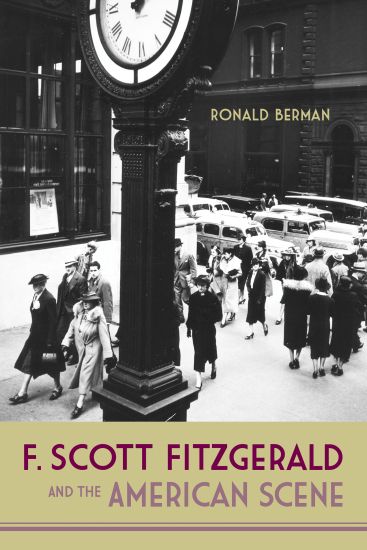
F. Scott Fitzgerald and the American Scene

F. Scott Fitzgerald and the American Scene

Ronald Berman

The University of Alabama Press
2019
nidottu
A study of the philosophical, intellectual, and political influences on the artistic creations of Fitzgerald and key early American modernist writers.F. Scott Fitzgerald and the American Scene continues Ronald Berman’s lifelong study of the philosophical, intellectual, and political influences on the artistic creations of key early American modernist writers. Each chapter in this volume elaborates on a crucial aspect of F. Scott Fitzgerald’s depiction of American society, specifically through the lens of the social sciences that most influenced his writing and thinking.Berman addresses, among other subjects, Fitzgerald’s use of philosophy, cultural analyses, and sociology—all enriched by the insights of his own experience living an American life. He was especially interested in how life had changed from 1910 to 1920. Many Americans were unable to navigate between the 1920s and their own memories of a very different world before the Great War; especially Daisy Buchanan who evolves from girlhood (as typified in sentimental novels of the time) to wifehood (as actually experienced in the new decade). There is a profound similarity between what happens to Fitzgerald’s characters and what happened to the nation.Berman revisits classics like The Great Gatsby but also looks carefully at Fitzgerald’s shorter fictions, analyzing a stimulating spectrum of scholars from more contemporary critics like Thomas Piketty to George Santayana, John Maynard Keynes, John Dewey, and Walter Lippmann. This fascinating addition to F. Scott Fitzgerald scholarship, although broad in its content, is accessible to a wide audience. Scholars and students of Fitzgerald and twentieth-century American literature, as well as dedicated Fitzgerald readers, will enjoy Berman’s take on a long-debated and celebrated author.