
Kirjahaku
Etsi kirjoja tekijän nimen, kirjan nimen tai ISBN:n perusteella.
1000 tulosta hakusanalla FREEDOM DIVIDEND
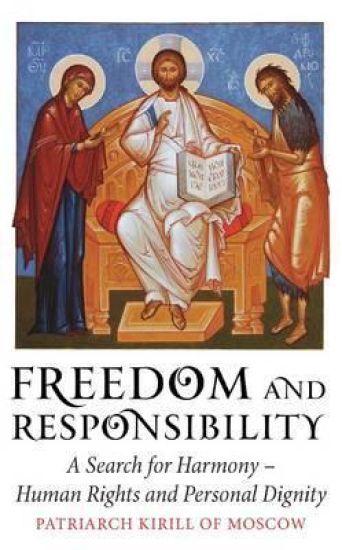
Freedom and Responsibility: A Search for Harmony is a remarkable personal vision of a `multi-polar’ future for the world by the leader of the Russian Orthodox Church. Two antagonistic systems are ranged against each other, one liberal, secular and humanistic, the other religious and traditionalist. Patriarch Kirill draws on the bitter experience of the Russian people in the twentieth century to illustrate the dangers of totalitarianism and how grave the break with one’s spiritual roots can be for civilization. Rather than a struggle to the death between competing value systems, he proposes instead the way of co-existence, grounded in mutual respect for moral categories that are common to all. He calls not for liberal values to be abandoned but to be supplemented by other cultural and philosophical systems, and to create a harmony between the two, not just with declarations of mutual friendship and respect but also through the reform of law and global governance. The Patriarch shares the concerns of Pope Benedict XVI for the dangers of moral relativism. `The Catholic and the Orthodox Churches are, it seems, the only allies in the tough struggle between secular liberalism infected with the bacillus of self-destruction and bearers of the forward-looking idea of human salvation.’ Freedom and Responsibility is an invaluable introduction to the thinking of the Russian Orthodox Church on the relations between the Church and the wider world.
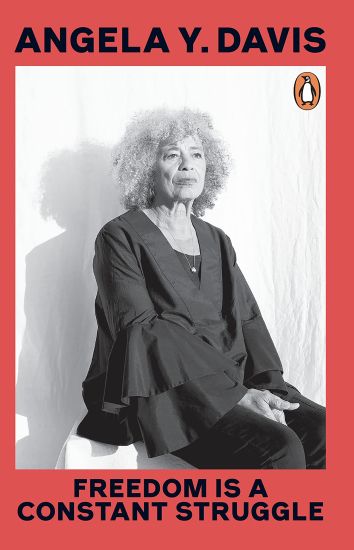
From the Author of WOMEN, RACE AND CLASS, this is a timely provocation that examines the concept of attaining freedom in light of our current world conflictsIn these newly collected essays, interviews and speeches, world-renowned activist and scholar Angela Y. Davis illuminates the connections between struggles against state violence and oppression throughout history and around the world.Reflecting on the importance of black feminism, intersectionality and prison abolitionism for today's struggles, Davis discusses the legacies of previous liberation struggles, from the Black Freedom Movement to the South African anti-Apartheid movement. She highlights connections and analyses today's struggles against state terror, from Ferguson to Palestine.Facing a world of outrageous injustice, Davis challenges us to imagine and build the movement for human liberation. And in doing so, she reminds us that 'Freedom is a constant struggle.'

Journal writing has been helping humanity for centuries. It is a powerful tool for self-discovery, creativity, moving on from the past, expression of deep inner emotions and also releasing trauma from things that have happened or are happening. Journal writing is free, available to everyone and completely effective for releasing people of unwanted stress or emotions in a holistic way. In this encouraging and inspiring book, Suzanne has designed seven journal writing prompts including quotes to get you started on your journey. The Freedom Writing Journal includes exercises to provoke thought and questions that will showcase the power of writing therapy when a person delves deeply into their own inner world. These exercises will help anyone who wants to experience freedom from stress or pain that is possible through journal writing. This book is a second edition to her first book Freedom Writing and is based on ten years of research, and personal experience with the power of writing therapy.

Freedom of a Warrior Princess is my story of hitting rock bottom and beginning a journey to self love and personal freedom. This story is my personal recollection of happenings during my life that enabled me develop a negative attitude, that lowered my self worth to zero and that set a path for me to a life of poor choices and self destruction. Ending a toxic marriage, losing my children and the "system" that did not work in the way I felt it should. I found myself prepared to end my suffereing and thus my life, but, in one moment and with one smile all of that turned around and allowed me to move in a new direction and start a mental, physical and spiritual journey to reveal a Warrior Princess.
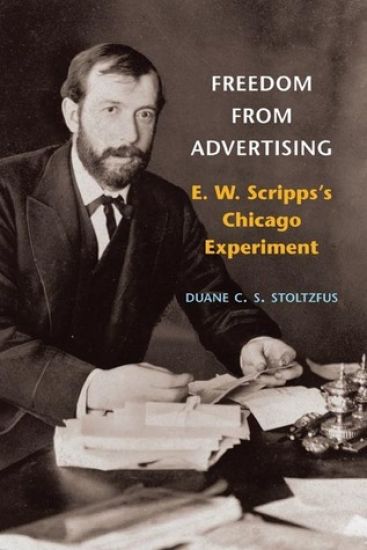
Disgusted by publishers and editors who refused to cover important stories for fear of offending advertisers, the press baron E. W. Scripps rejected conventional wisdom and set out to prove that an ad-free newspaper could be profitable entirely on circulation. Duane C. S. Stoltzfus details the history of Scripps’s innovative 1911 experiment, which began in Chicago amid great secrecy. The tabloid-sized newspaper was called the Day Book, and at a penny a copy, it aimed for a working-class market, crusading for higher wages, more unions, safer factories, lower streetcar fares, and women’s right to vote. It also tackled the important stories ignored by most other dailies, like the labor conflicts that shook Chicago in 1912. Though the Day Book’s financial losses steadily declined over the years, it never became profitable, and publication ended in 1917. Nevertheless, Stoltzfus explains that the Day Book served as an important ally of workers, a keen watchdog on advertisers, and it redefined news by providing an example of a paper that treated its readers first as citizens with rights rather than simply as consumers.
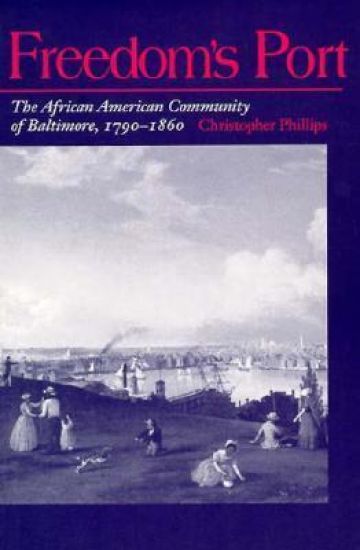
Baltimore's African-American population--nearly 27,000 strong and more than 90 percent free in 1860--was the largest in the nation at that time. Christopher Phillips's Freedom's Port, the first book-length study of an urban black population in the antebellum Upper South, chronicles the growth and development of that community. He shows how it grew from a transient aggregate of individuals, many fresh from slavery, to a strong, overwhelmingly free community less wracked by class and intraracial divisions than were other cities. Almost from the start, Phillips states, Baltimore's African Americans forged their own freedom and actively defended it--in a state that maintained slavery and whose white leadership came to resent the liberties the city's black people had achieved.
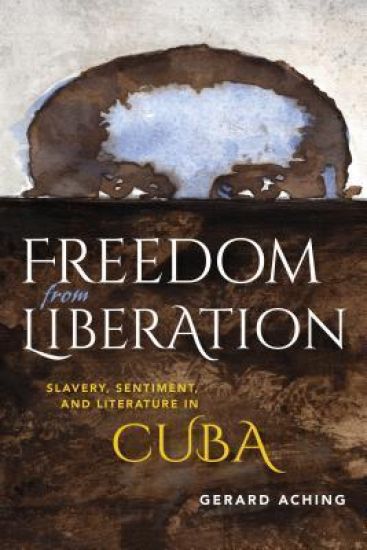
By exploring the complexities of enslavement in the autobiography of Cuban slave-poet Juan Francisco Manzano (1797–1854), Gerard Aching complicates the universally recognized assumption that a slave's foremost desire is to be freed from bondage. As the only slave narrative in Spanish that has surfaced to date, Manzano's autobiography details the daily grind of the vast majority of slaves who sought relief from the burden of living under slavery. Aching combines historical narrative and literary criticism to take the reader beyond Manzano's text to examine the motivations behind anticolonial and antislavery activism in pre-revolution Cuba, when Cuba's Creole bourgeoisie sought their own form of freedom from the colonial arm of Spain.
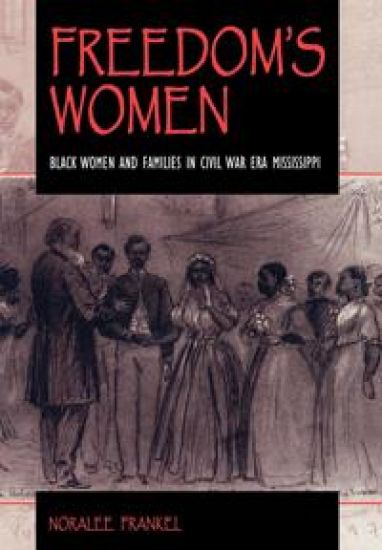
"Frankel's scholarship in this carefully researched and clearly written study is impressive. . . . The study is thoroughly documented with 70 pages of footnotes and a 14-page bibliography, refleccting Frankel's grasp of the secondary literature as well as extensive work in primary documents." —Choice Freedom's Women examines African American women's experiences during the Civil War and early Reconstruction years in Mississippi. Exploring issues of family and work, the author shows how African American women's attempts to achieve more control over their lives shaped their attitudes toward work, marriage, family, and community.
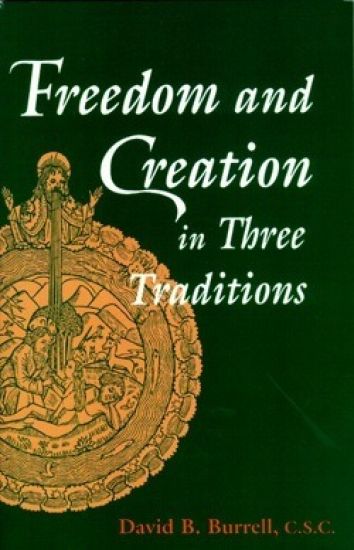
Freedom and Creation in Three Traditions
Burrell David B.
UNIVERSITY OF NOTRE DAME PRESS
1993
sidottu
With creation of the universe as its focus and a deeper understanding of human freedom as its goal, Freedom and Creation in Three Traditions is a work of philosophical theology that brings together Jewish, Christian, and Muslim perspectives on the complex questions surrounding divine and human freedom. Burrell shows how the three traditions (each avowing the free creation of the universe by God) have developed a view of free human actors in relation to their initial affirmations that the universe is freely created by God. The concept of a free creation of the universe forms a motif for all three traditions, and their respective encounters with divine relation—in the Torah, Jesus Christ, and the Qur’an—offer distinctive ways of articulating and assimilating the original faith in a free creator. Burrell emphasizes the common ground among the traditions, but does not limit his discourse to a search for a common denominator among them. Instead, he traces the interactions among the traditions, employing an explicitly interfaith perspective that offers new ways to probe the vexing question of the relations between a free creator and free creatures. The results of this comparative method of reflection produce fresh insights into perennial human questions about creation and freedom—questions that have constituted a major body of theological reflection over the centuries. Aimed at graduates and advanced undergraduates as well as laypersons interested in interfaith dialogue and reflection, Freedom and Creation in Three Traditions illustrates the value of tradition-directed inquiry and clearly demonstrates the fruitfulness of comparative inquiries in philosophical theology.
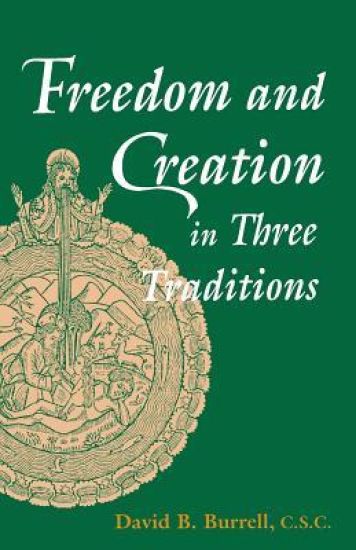
Freedom and Creation in Three Traditions
David B. Burrell
University of Notre Dame Press
1993
nidottu
With creation of the universe as its focus and a deeper understanding of human freedom as its goal, Freedom and Creation in Three Traditions is a work of philosophical theology that brings together Jewish, Christian, and Muslim perspectives on the complex questions surrounding divine and human freedom. Burrell shows how the three traditions (each avowing the free creation of the universe by God) have developed a view of free human actors in relation to their initial affirmations that the universe is freely created by God. The concept of a free creation of the universe forms a motif for all three traditions, and their respective encounters with divine relation—in the Torah, Jesus Christ, and the Qur'an—offer distinctive ways of articulating and assimilating the original faith in a free creator. Burrell emphasizes the common ground among the traditions, but does not limit his discourse to a search for a common denominator among them. Instead, he traces the interactions among the traditions, employing an explicitly interfaith perspective that offers new ways to probe the vexing question of the relations between a free creator and free creatures. The results of this comparative method of reflection produce fresh insights into perennial human questions about creation and freedom—questions that have constituted a major body of theological reflection over the centuries. Aimed at graduates and advanced undergraduates as well as laypersons interested in interfaith dialogue and reflection, Freedom and Creation in Three Traditions illustrates the value of tradition-directed inquiry and clearly demonstrates the fruitfulness of comparative inquiries in philosophical theology.
Freedom and Tradition in Hegel stands at the intersection of three vital currents in contemporary ethics: debates over philosophical anthropology and its significance for ethics, reevaluations of tradition and modernity, and a resurgence of interest in Hegel. Thomas A. Lewis engages these three streams of thought in light of Hegel's recently published Vorlesungen über die Philosophie des Geistes. Drawing extensively on these lectures, Lewis addresses an important lacuna in Hegelian scholarship by first providing a systematic analysis of Hegel's philosophical anthropology and then examining its fundamental role in Hegel's ethical and religious thought. Lewis contends that Hegel's anthropology seeks to account for both the ongoing significance of the religious and philosophical traditions in which we are raised and our ability to transcend these traditions. Pursuing the implications of the integral role of practice in Hegel's anthropology, Lewis argues for a more progressive interpretation of Hegel's ethics and a "Hegelian" critique of Hegel's most problematic statements on political and social issues. Lewis concludes that Hegel offers a powerful strategy for reconciling freedom and tradition. This fresh interpretation of Hegel's work provides a challenging new perspective on his ethical and religious thought. It will be of significant value to students and scholars in religious studies, philosophy, and political theory.

Freedom Readers: The African American Reception of Dante Alighieri and the Divine Comedy is a literary-historical study of the many surprising ways in which Dante Alighieri and the Divine Comedy have assumed a position of importance in African American culture. Dennis Looney examines how African American authors have read, interpreted, and responded to Dante and his work from the late 1820s to the present. In many ways, the African American reception of Dante follows a recognizable narrative of reception: the Romantic rehabilitation of the author; the late-nineteenth-century glorification of Dante as a radical writer of reform; the twentieth-century modernist rewriting; and the adaptation of the Divine Comedy into the prose of the contemporary novel. But surely it is unique to African American rewritings of Dante to suggest that the Divine Comedy is itself a kind of slave narrative. Only African American "translations" of Dante use the medieval author to comment on segregation, migration, and integration. While many authors over the centuries have learned to articulate a new kind of poetry from Dante's example, for African American authors attuned to the complexities of Dante's hybrid vernacular, his poetic language becomes a model for creative expression that juxtaposes and blends classical notes and the vernacular counterpoint in striking ways. Looney demonstrates this appropriation of Dante as a locus for black agency in the creative work of such authors as William Wells Brown, the poet H. Cordelia Ray, Richard Wright, Ralph Ellison, Amiri Baraka, Gloria Naylor, Toni Morrison, and the filmmaker Spencer Williams. Looney fruitfully suggests that we read Dante's Divine Comedy with its African American rewritings in mind, to assess their effect on our interpretation of the Comedy and, in turn, on our understanding of African American culture.
It is commonly observed that behind many of the political and cultural issues that we face today there are impoverished conceptions of freedom, which, according to D. C. Schindler, we have inherited from the classical liberal tradition without a sufficient awareness of its implications. Freedom from Reality presents a critique of the deceptive and ultimately self-subverting character of the modern notion of freedom, retrieving an alternative view through a new interpretation of the ancient tradition. While many have critiqued the inadequacy of identifying freedom with arbitrary choice, this book seeks to penetrate to the metaphysical roots of the modern conception by going back, through an etymological study, to the original sense of freedom. Schindler begins by uncovering a contradiction in John Locke's seminal account of human freedom. Rather than dismissing it as a mere "academic" problem, Schindler takes this contradiction as a key to understanding the strange paradoxes that abound in the contemporary values and institutions founded on the modern notion of liberty: the very mechanisms that intend to protect modern freedom render it empty and ineffectual. In this respect, modern liberty is "diabolical"—a word that means, at its roots, that which "drives apart" and so subverts. This is contrasted with the "symbolical" (a "joining-together"), which, he suggests, most basically characterizes the premodern sense of reality. This book will appeal to students and scholars of political philosophy (especially political theorists), philosophers in the continental or historical traditions, and cultural critics with a philosophical bent.
It is commonly observed that behind many of the political and cultural issues that we face today there are impoverished conceptions of freedom, which, according to D. C. Schindler, we have inherited from the classical liberal tradition without a sufficient awareness of its implications. Freedom from Reality presents a critique of the deceptive and ultimately self-subverting character of the modern notion of freedom, retrieving an alternative view through a new interpretation of the ancient tradition. While many have critiqued the inadequacy of identifying freedom with arbitrary choice, this book seeks to penetrate to the metaphysical roots of the modern conception by going back, through an etymological study, to the original sense of freedom. Schindler begins by uncovering a contradiction in John Locke's seminal account of human freedom. Rather than dismissing it as a mere "academic" problem, Schindler takes this contradiction as a key to understanding the strange paradoxes that abound in the contemporary values and institutions founded on the modern notion of liberty: the very mechanisms that intend to protect modern freedom render it empty and ineffectual. In this respect, modern liberty is "diabolical"—a word that means, at its roots, that which "drives apart" and so subverts. This is contrasted with the "symbolical" (a "joining-together"), which, he suggests, most basically characterizes the premodern sense of reality. This book will appeal to students and scholars of political philosophy (especially political theorists), philosophers in the continental or historical traditions, and cultural critics with a philosophical bent.
Freedom and Tradition in Hegel stands at the intersection of three vital currents in contemporary ethics: debates over philosophical anthropology and its significance for ethics, reevaluations of tradition and modernity, and a resurgence of interest in Hegel. Thomas A. Lewis engages these three streams of thought in light of Hegel's recently published Vorlesungen über die Philosophie des Geistes. Drawing extensively on these lectures, Lewis addresses an important lacuna in Hegelian scholarship by first providing a systematic analysis of Hegel's philosophical anthropology and then examining its fundamental role in Hegel's ethical and religious thought. Lewis contends that Hegel's anthropology seeks to account for both the ongoing significance of the religious and philosophical traditions in which we are raised and our ability to transcend these traditions. Pursuing the implications of the integral role of practice in Hegel's anthropology, Lewis argues for a more progressive interpretation of Hegel's ethics and a "Hegelian" critique of Hegel's most problematic statements on political and social issues. Lewis concludes that Hegel offers a powerful strategy for reconciling freedom and tradition. This fresh interpretation of Hegel's work provides a challenging new perspective on his ethical and religious thought. It will be of significant value to students and scholars in religious studies, philosophy, and political theory.

Freedom Readers: The African American Reception of Dante Alighieri and the Divine Comedy is a literary-historical study of the many surprising ways in which Dante Alighieri and the Divine Comedy have assumed a position of importance in African American culture. Dennis Looney examines how African American authors have read, interpreted, and responded to Dante and his work from the late 1820s to the present. In many ways, the African American reception of Dante follows a recognizable narrative of reception: the Romantic rehabilitation of the author; the late-nineteenth-century glorification of Dante as a radical writer of reform; the twentieth-century modernist rewriting; and the adaptation of the Divine Comedy into the prose of the contemporary novel. But surely it is unique to African American rewritings of Dante to suggest that the Divine Comedy is itself a kind of slave narrative. Only African American "translations" of Dante use the medieval author to comment on segregation, migration, and integration. While many authors over the centuries have learned to articulate a new kind of poetry from Dante's example, for African American authors attuned to the complexities of Dante's hybrid vernacular, his poetic language becomes a model for creative expression that juxtaposes and blends classical notes and the vernacular counterpoint in striking ways. Looney demonstrates this appropriation of Dante as a locus for black agency in the creative work of such authors as William Wells Brown, the poet H. Cordelia Ray, Richard Wright, Ralph Ellison, Amiri Baraka, Gloria Naylor, Toni Morrison, and the filmmaker Spencer Williams. Looney fruitfully suggests that we read Dante's Divine Comedy with its African American rewritings in mind, to assess their effect on our interpretation of the Comedy and, in turn, on our understanding of African American culture.
To be free is to escape all limitations and obstacles—or so we think at first. But if we probe further, we discover that freedom embraces its own necessities, a set of conditions without which it could not exist. Freedom's Embrace explores these necessities of freedom.J. Melvin Woody surveys competing conceptions of freedom and traces debates about the nature and reality of freedom to confusions about knowledge, humanity, and nature that are rooted in some of the most fundamental assumptions of modern Western thought. The preemption of freedom as an exclusively human privilege with all nature relegated to mechanical necessity is a fatal error that renders both humanity and nature equally unintelligible. What distinguishes human beings from other animals is not freedom but the use of symbols, which vastly extends the range of available options and enables us to envision freedom as an ideal by which customary institutions and norms may be judged and transformed.By carefully surveying its necessary conditions and limitations, Woody reconciles the salient competing conceptions of freedom and weaves them together into a richer and broader theory that resolves old controversies and opens the way toward an ethics of freedom that can meet the challenges of relativism and nihilism that arise from recognizing the historicity and malleability of culture.
To be free is to escape all limitations and obstacles—or so we think at first. But if we probe further, we discover that freedom embraces its own necessities, a set of conditions without which it could not exist. Freedom's Embrace explores these necessities of freedom.J. Melvin Woody surveys competing conceptions of freedom and traces debates about the nature and reality of freedom to confusions about knowledge, humanity, and nature that are rooted in some of the most fundamental assumptions of modern Western thought. The preemption of freedom as an exclusively human privilege with all nature relegated to mechanical necessity is a fatal error that renders both humanity and nature equally unintelligible. What distinguishes human beings from other animals is not freedom but the use of symbols, which vastly extends the range of available options and enables us to envision freedom as an ideal by which customary institutions and norms may be judged and transformed.By carefully surveying its necessary conditions and limitations, Woody reconciles the salient competing conceptions of freedom and weaves them together into a richer and broader theory that resolves old controversies and opens the way toward an ethics of freedom that can meet the challenges of relativism and nihilism that arise from recognizing the historicity and malleability of culture.
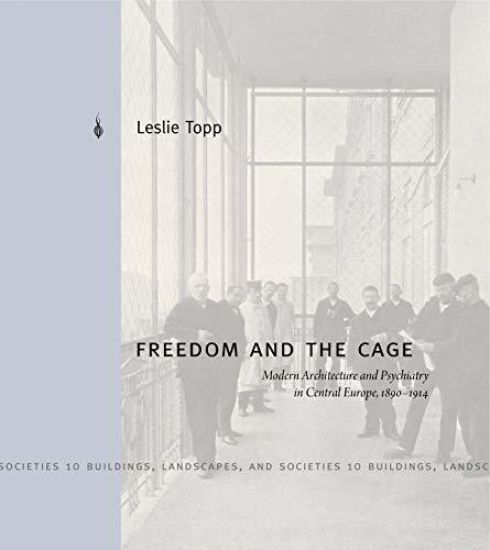
Spurred by ideals of individual liberty that took hold in the Western world in the late nineteenth century, psychiatrists and public officials sought to reinvent asylums as large-scale, totally designed institutions that offered a level of freedom and normality impossible in the outside world. This volume explores the “caged freedom” that this new psychiatric ethos represented by analyzing seven such buildings established in the Austro-Hungarian monarchy between the late 1890s and World War I.In the last two decades of the Habsburg Empire, architects of asylums began to abandon traditional corridor-based plans in favor of looser formations of connected villas, echoing through design the urban- and freedom-oriented impulse of the progressive architecture of the time. Leslie Topp considers the paradoxical position of designs that promoted an illusion of freedom even as they exercised careful social and spatial control over patients. In addition to discussing the physical and social aspects of these institutions, Topp shows how the commissioned buildings were symptomatic of larger cultural changes and of the modern asylum’s straining against its ideological anchorage in a premodern past of “unenlightened” restraint on human liberty.Working at the intersection of the history of architecture and the history of psychiatry, Freedom and the Cage broadens our understanding of the complexity and fluidity of modern architecture’s engagement with the state, with social and medical projects, and with mental health, psychiatry, and psychology.