Kirjojen hintavertailu. Mukana 11 717 486 kirjaa ja 12 kauppaa.

Kirjahaku

Etsi kirjoja tekijän nimen, kirjan nimen tai ISBN:n perusteella.

1000 tulosta hakusanalla Frederick Beiser

Frederick William Maitland

Frederick William Maitland

H. A. L. Fisher

Cambridge University Press
2013
pokkari
Frederic William Maitland (1850–1906) was a pioneering English legal historian. Originally published in 1910, this memoir of Maitland's life and achievements was written by the renowned historian and politician Herbert Fisher (1865–1940). Illustrative figures and numerous extracts from Maitland's letters are included. This book will be of value to anyone with an interest in Maitland's life and legal history.
Narrative of the Life of Frederick Douglass

Narrative of the Life of Frederick Douglass

Frederick Douglass

Cambridge University Press
2011
pokkari
Frederick Douglass (c.1818–1895) was born into slavery but escaped in 1838, quickly becoming involved in the abolitionist movement. Following publication in 1845 of this autobiography he risked recognition and recapture by his owner, and so fled the United States. This reissue is of the Dublin edition of 1845, with a preface by Douglass explaining his reasons for his journey to Britain. Opening with a touching explanation of how he doesn't know his birthday, Douglass describes his early life and the growing awareness of the injustices he suffered. The beatings he witnessed and received himself are described in painful detail. Later, Douglass highlights the hypocrisy of the 'slaveholding religion of this land', condemning it as 'the grossest of libels'. The eloquence of the writing, with an immediacy and honesty found shocking at the time, make this an invaluable first-hand record of one of humanity's most shameful acts.
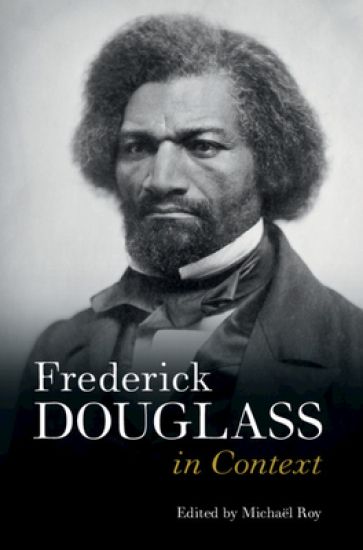
Frederick Douglass in Context

Frederick Douglass in Context

Cambridge University Press
2021
sidottu
Frederick Douglass in Context provides an in-depth introduction to the multifaceted life and times of Frederick Douglass, the nineteenth-century's leading black activist and one of the most celebrated American writers. An international team of scholars sheds new light on the environments and communities that shaped Douglass's career. The book challenges the myth of Douglass as a heroic individualist who towered over family, friends, and colleagues, and reveals instead a man who relied on others and drew strength from a variety of personal and professional relations and networks. This volume offers both a comprehensive representation of Douglass and a series of concentrated studies of specific aspects of his work. It will be a key resource for students, scholars, teachers, and general readers interested in Douglass and his tireless fight for freedom, justice, and equality for all.
Frederick the Great

Frederick the Great

Theodor Schieder; H.R. Scott; Sabina Krause

Routledge
2018
sidottu
Since its publication in 1983, Theodor Schieder's study has been recognised as the most distinguished modern study of Prussia's most famous King and a leading figure of the eighteenth century. This abbreviated translation provides the first comprehensive scholarly treatment in English published since 1975.
Frederick the Great and his Musicians: The Viola da Gamba Music of the Berlin School
After decades of stagnation during the reign of his father, the 'Barracks King', the performing arts began to flourish in Berlin under Frederick the Great. Even before his coronation in 1740, the crown prince commenced recruitment of a group of musician-composers who were to form the basis of a brilliant court ensemble. Several composers, including C.P.E. Bach and the Graun brothers, wrote music for the viola da gamba, an instrument which was already becoming obsolete elsewhere. They were encouraged in this endeavour by the presence in the orchestra from 1741 of Ludwig Christian Hesse, one of the last gamba virtuosi, who was described in 1766 as 'unquestionably the finest gambist in Europe'. This study shows how the unique situation in Berlin produced the last major corpus of music written for the viola da gamba, and how the more virtuosic works were probably the result of close collaboration between Hesse and the Berlin School composers. The reader is also introduced to the more approachable pieces which were written and arranged for amateur viol players, including the king's nephew and ultimate successor, Frederick William II. O'Loghlin argues that the aesthetic circumstances which prevailed in Berlin brought forth a specific style that is reflected not only in the music for viola da gamba. Characteristics of this Berlin style are identified with reference to a broad selection of original written sources, many of which are hardly accessible to English-speaking readers. There is also a discussion of the rather contradictory reception history of the Berlin School and some of its composers. The book concludes with a complete thematic catalogue of the Berlin gamba music, with a listing of original manuscript sources and modern publications. The book will appeal to professional and amateur viola da gamba players as well as to scholars of eighteenth-century German music.
Frederick Delius
First published in 1998, Carley collates twelve essays by an international group of contributors reflects the truly cosmopolitan nature of Delius’s life and his music. They reveal the manner in which he absorbed the culture of the nations he came to know, their music, art and literature, and the influences they brought to bare on his own work. Also discussed are some of the often mixed, but rarely equivocal reactions that performances of his music have reactions over the years, with Lionel Carley’s in-depth study of the first production of Foleraadet in 1897, and a wide ranging analysis by Don Gillespie and Robert Beckhard of the critical reception of Delius’s music in the United States between 1909 and 1920.
Frederick Delius
First published in 1998, Carley collates twelve essays by an international group of contributors reflects the truly cosmopolitan nature of Delius’s life and his music. They reveal the manner in which he absorbed the culture of the nations he came to know, their music, art and literature, and the influences they brought to bare on his own work. Also discussed are some of the often mixed, but rarely equivocal reactions that performances of his music have reactions over the years, with Lionel Carley’s in-depth study of the first production of Foleraadet in 1897, and a wide ranging analysis by Don Gillespie and Robert Beckhard of the critical reception of Delius’s music in the United States between 1909 and 1920.
Frederick Douglass and Ireland
Frederick Douglass spent four months in Ireland at the end of 1845 that proved to be, in his own words, ‘transformative’. He reported that for the first time in his life he felt like a man, and not a chattel. Whilst in residence, he became a spokesperson for the abolition movement, but by the time he left the country in early January 1846, he believed that the cause of the slave was the cause of the oppressed everywhere. This book adds new insight into Frederick Douglass and his time in Ireland. Contemporary newspaper accounts of the lectures that Douglass gave during his tour of Ireland (in Dublin, Wexford, Waterford, Cork, Limerick, and Belfast) have been located and transcribed. The speeches are annotated and accompanied by letters written by Douglass during his stay. In this way, for the first time, we hear Douglass in his own words.
Frederick Douglass and Ireland
Frederick Douglass spent four months in Ireland at the end of 1845 that proved to be, in his own words, ‘transformative’. He reported that for the first time in his life he felt like a man, and not a chattel. Whilst in residence, he became a spokesperson for the abolition movement, but by the time he left the country in early January 1846, he believed that the cause of the slave was the cause of the oppressed everywhere. This book adds new insight into Frederick Douglass and his time in Ireland. Contemporary newspaper accounts of the lectures that Douglass gave during his tour of Ireland (in Dublin, Wexford, Waterford, Cork, Limerick, and Belfast) have been located and transcribed. The speeches are annotated and accompanied by letters written by Douglass during his stay. In this way, for the first time, we hear Douglass in his own words.
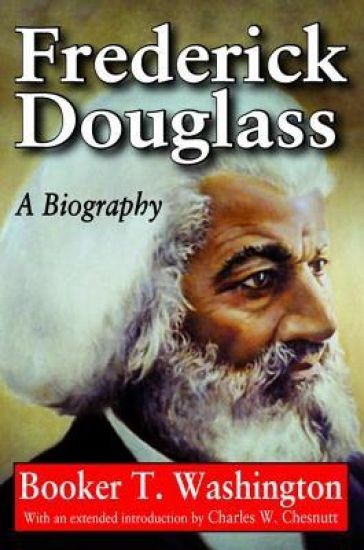
Frederick Douglass

Frederick Douglass

Booker T. Washington

Routledge
2017
sidottu
This biography, written by Booker T. Washington, one of most important post-Civil War African-American thinkers, is an account of the life and career of Frederick Douglass. The biographical account is set within a nation struggling to solve one of the most excruciating social problems that any modern people facedslavery. This volume encompasses the experiences of Frederick Douglass as a slave and then as a public man, through the anti-slavery movement, the Civil War, and the period of reconstruction.Douglass's fame as a speaker was secure. His position as the champion of an oppressed race was, in his own generation, as picturesque as it was unique. From the blight of slavery, Douglass emerged, passed through, and triumphed over the lingering prejudice that he encountered as a freeman. Like the author of his biography, Douglass seized his place in history. His life is an epic, one that finds few to equal it in the realms of either romance or reality. Douglass was a role model to the author, and his early narrative was a guide to black and white people alike.Among the subjects covered are the Genesis of the Anti-Slavery Agitation, the Fugitive Slave Law, the Underground Railway, the American Colonization Society, the Conflict in Kansas for Free Soil, the John Brown Raid, the Civil War, the Enlistment of Colored Troops, and Reconstruction.