Kirjojen hintavertailu. Mukana 11 342 296 kirjaa ja 12 kauppaa.

Kirjahaku

Etsi kirjoja tekijän nimen, kirjan nimen tai ISBN:n perusteella.

1000 tulosta hakusanalla Gavin Edwards

The Great Inoculator

The Great Inoculator

Gavin Weightman

Yale University Press
2020
sidottu
This timely history of the neglected figure of Daniel Sutton—the medical revolutionary who paved the way for present-day vaccination—was named a best book of 2020 by BBC History Magazine Smallpox was the scourge of the eighteenth century: it showed no mercy, almost wiping out whole societies. Young and old, poor and royalty were equally at risk – unless they had survived a previous attack. Daniel Sutton, a young surgeon from Suffolk, used this knowledge to pioneer a simple and effective inoculation method to counter the disease. His technique paved the way for Edward Jenner’s discovery of vaccination – but, while Jenner is revered, Sutton has been vilified for not widely revealing his methods until later in life. Gavin Weightman reclaims Sutton’s importance, showing how the clinician’s practical and observational discoveries advanced understanding of the nature of disease. Weightman explores Sutton’s personal and professional development, and the wider world of eighteenth-century health in which he practised inoculation. Sutton’s brilliant and exacting mind had a significant impact on medicine – the effects of which can still be seen today.
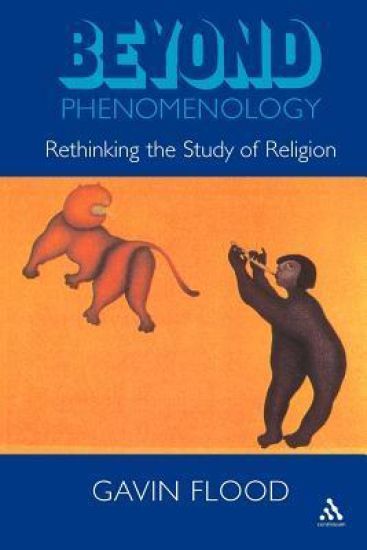
Beyond Phenomenology

Beyond Phenomenology

Gavin Flood

Continuum International Publishing Group Ltd.
1999
nidottu
This book argues that the understanding and explanation of religion is always historically contingent. Grounded in the work of Bakhtin and Ricoeur, Flood positions the academic study of religion within contemporary debates in the social sciences and humanities concerning modernity and postmodernity, particularly contested issues regarding truth and knowledge. It challenges the view that religions are privileged, epistemic objects, argues for the importance of metatheory, and presents an argument for the dialogical nature of inquiry. The study of religion should begin with language and culture, and this shift in emphasis to the philosophy of the sign in hermeneutics and away from the philosophy of consciousness in phenomenology has far-reaching implications. It means a new ethic of practice which is sensitive to the power relationship in any epistemology; it opens the door to feminist and postcolonial critique, and it provides a methodology which allows for the interface between religious studies, theology, and the social sciences.
An Archaeology of Colonial Identity

An Archaeology of Colonial Identity

Gavin Lucas

Kluwer Academic/Plenum Publishers
2004
sidottu
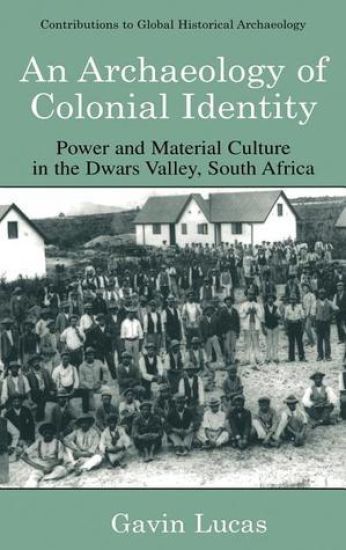
This book is the based on the work of many people, and while I discuss many of them in the general context of this book in Chapter 1,1 would like to emphasize here the contribution of all those people involved. My apologies in advance to any I have omitted to mention. The backbone of the book is based on a project, 'Farm Lives' conducted between 1999 and 2002, funded exclusively by the McDonald Institute for Archaeolog- ical Research at the University of Cambridge; without their essential financial support, this would not have been possible. The project involved three components: archaeological fieldwork, archive research and oral history interviews. For the fieldwork, spe- cial thanks goes to Marcus Abbott, Jenny Bredenberg, Glenda Cox, Olivia Cyster, Andy Hall, Odile Peterson, and Sarah Winter; for po- excavation analysis of materials, I thank Duncan Miller (University of Cape Town), Peter Nilsson (South African Museum) and Jane Klose (University of Cape Town). For the archive research, I would like to thank J. Malherbe (Huguenot Museum) and Harriet Clift (South African Heritage Resources Agency), but most of all, Jaline de Villiers (Paarl Museum). For the oral history, my thanks go to Sarah Winter, Rowena Peterson and Jaline de Villiers for conducting interviews, and to the informants, Johanna Dressier, Louisa Adams, Geoffrey Leslie Hendricks, William Davids, Absolom David Lackay, John Cyster November and Lillian Aubrey Idas.
An Archaeology of Colonial Identity

An Archaeology of Colonial Identity

Gavin Lucas

Kluwer Academic/Plenum Publishers
2006
nidottu
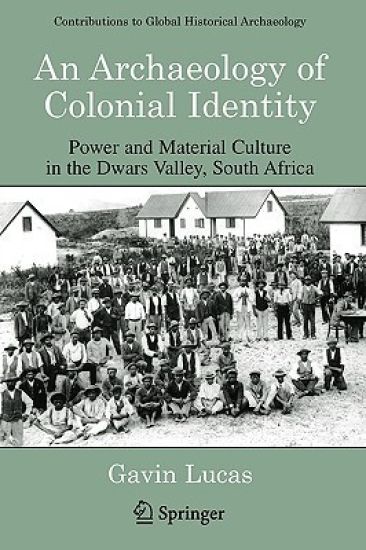
This book is the based on the work of many people, and while I discuss many of them in the general context of this book in Chapter 1,1 would like to emphasize here the contribution of all those people involved. My apologies in advance to any I have omitted to mention. The backbone of the book is based on a project, 'Farm Lives' conducted between 1999 and 2002, funded exclusively by the McDonald Institute for Archaeolog- ical Research at the University of Cambridge; without their essential financial support, this would not have been possible. The project involved three components: archaeological fieldwork, archive research and oral history interviews. For the fieldwork, spe- cial thanks goes to Marcus Abbott, Jenny Bredenberg, Glenda Cox, Olivia Cyster, Andy Hall, Odile Peterson, and Sarah Winter; for po- excavation analysis of materials, I thank Duncan Miller (University of Cape Town), Peter Nilsson (South African Museum) and Jane Klose (University of Cape Town). For the archive research, I would like to thank J. Malherbe (Huguenot Museum) and Harriet Clift (South African Heritage Resources Agency), but most of all, Jaline de Villiers (Paarl Museum). For the oral history, my thanks go to Sarah Winter, Rowena Peterson and Jaline de Villiers for conducting interviews, and to the informants, Johanna Dressier, Louisa Adams, Geoffrey Leslie Hendricks, William Davids, Absolom David Lackay, John Cyster November and Lillian Aubrey Idas.
Signor Marconi's Magic Box

Signor Marconi's Magic Box

Gavin Weightman

Da Capo Press Inc
2004
pokkari
The world at the turn of the twentieth century was in the throes of "Marconi-mania"-brought on by an incredible invention that no one could quite explain, and by a dapper and eccentric figure (who would one day win the newly minted Nobel Prize) at the centre of it all. At a time when the telephone, telegraph, and electricity made the whole world wonder just what science would think of next, the startling answer had come in 1896 in the form of two mysterious wooden boxes containing a device Marconi had rigged up to transmit messages "through the ether." It was the birth of the radio, and no scientist in Europe or America, not even Marconi himself, could at first explain how it worked...it just did.Here is a rich portrait of the man and his era-a captivating tale of British blowhards, American con artists, and Marconi himself-a character par excellence, who eventually winds up a virtual prisoner of his worldwide fame and fortune.
Big Shoes to Fill

Big Shoes to Fill

Gavin Adams; Jeff Henderson

ZONDERVAN
2024
sidottu
How to step into an inherited leadership role and guide your team through a polished transition process. Starting something from the ground up is challenging. But how about transitioning into the leadership role of an existing organization? No matter how qualified you are, it can feel like an impossible juggling act to manage expectations without creating unnecessary conflict. Or to build trust and learn from others while implementing changes.And yet most leaders step into roles they didn't create. You have to navigate special personal, professional, and organizational needs that take into account the entire team and requires a certain mindset that doesn't come naturally to many leaders.Gavin Adams has spent his professional life innovating solutions and implementing strategies for leaders of businesses and ministries. Whether you're a first-time manager, a CEO, or a church pastor, Big Shoes to Fill will help you more confidently step into a new role and effectively lead your inherited team through that tricky transitional process. You'll learn how to:Reduce the time it takes for you to transition from positional authority to relational influence.Understand the tensions and problems associated with stepping into new leadership spaces.Create a learning environment focused on teams that expedites trust.Guide everyone through the emotional demands of change
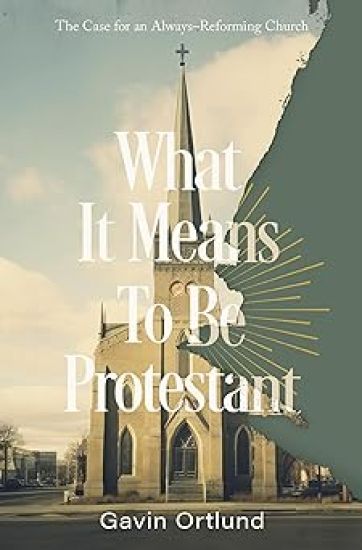
What It Means to Be Protestant

What It Means to Be Protestant

Gavin Ortlund

ZONDERVAN
2024
nidottu
A Powerful Defense of The Protestant Tradition. Winner of the 2024 Christianity Today Book of the Year Award and Popular Theology category; Winner of Credo Magazine’s Award in Theological RetrievalThere's a movement among evangelicals of exploring the more sacramental, liturgical, and historically-conscious church traditions, including Roman Catholicism and Eastern Orthodoxy. This hunger for historical rootedness is welcome—but unfortunately, many assume that this need can only be met outside of Protestant contexts.In What it Means to Be Protestant, Gavin Ortlund draws from both his scholarly work in church history and his personal experience in ecumenical engagement to offer a much-needed defense of the Protestant tradition.Retrieving classical Protestant texts and arguments, he exposes how many of the contemporary objections leveled against Protestants are rooted in caricature. He shows how historic Protestantism offers the best pathway forward and to historical rootedness for Christians today.In his charitable style, Ortlund demonstrates that the 16th century Reformation represented a genuine renewal of the gospel. This does not entail that Protestantism is without faults. But because it is built upon the principle of semper reformanda (always reforming), Protestantism is capable of reforming itself according to Scripture as the ultimate authority."I find it hard to overstate the importance of this book for every pastor/minister, elder, and serious Bible student that I know. . .This book automatically becomes my new go-to resource explaining Protestantism. It is fantastic, and I thank God for it. . ." —Bobby Harrington, co-founder of RENEW.org and Discipleship.org, founding pastor Harpeth Christian Church
The Gift of Fear: Survival Signals That Protect Us from Violence
As seen on TikTok, protect yourself by learning how to trust -- and act on -- your instincts with the "empowering" (Boston Globe) #1 bestselling guide to personal safety, from security expert Gavin de Becker. A carjacker lurking in a shopping mall parking lot. An abusive husband pounding on the door. A disgruntled employee brandishing a gun. These days, no one is safe from the specter of violence. But according to Gavin de Becker, everyone can feel safer, act safer, be safer -- if they learn how to listen to their own sixth sense about danger. De Becker has made a career of protecting people and predicting violent behavior. His firm handles security for many of the leading figures in Hollywood and Silicon Valley, and his computerized risk-assessment system helps analyze threats to members of Congress and the Supreme Court. Now, in this unprecedented guide, de Becker shares his expertise with everyone. Covering all the dangerous situations people typically face -- street crime, domestic abuse, violence in the workplace -- de Becker provides real-life examples and offers specific advice on restraining orders, self-defense, and more. But the key to self-protection, he demonstrates, is learning how to trust our own intuitions. For everyone who's ever felt threatened, this book is essential reading.
The Universe Versus Alex Woods

The Universe Versus Alex Woods

Gavin Extence

Redhook
2014
nidottu
A rare meteorite struck Alex Woods when he was ten years old, leaving scars and marking him for an extraordinary future. The son of a fortune teller, bookish, and an easy target for bullies, Alex hasn't had the easiest childhood. But when he meets curmudgeonly widower Mr. Peterson, he finds an unlikely friend. Someone who teaches him that that you only get one shot at life. That you have to make it count. So when, aged seventeen, Alex is stopped at customs with 113 grams of marijuana, an urn full of ashes on the front seat, and an entire nation in uproar, he's fairly sure he's done the right thing . . . Introducing a bright young voice destined to charm the world, The Universe Versus Alex Woods is a celebration of curious incidents, astronomy and astrology, the works of Kurt Vonnegut and the unexpected connections that form our world.
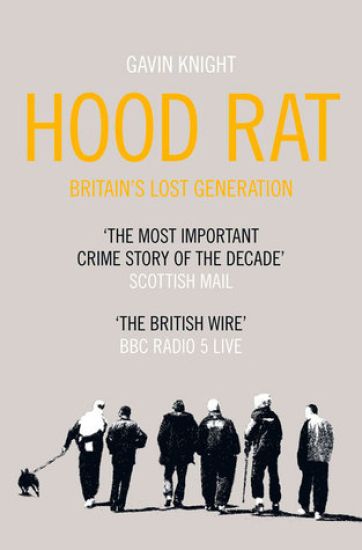
Hood Rat

Hood Rat

Gavin Knight

Picador
2012
pokkari
BBC RADIO 4 BOOK OF THE WEEK SHORTLISTED FOR THE ORWELL PRIZE 2012 SHORTLISTED FOR THE CRIME WRITERS ASSOCIATION NON-FICTION DAGGER AWARD ‘THE MOST IMPORTANT CRIME STORY OF THE DECADE’ Scottish Mail Manchester. London. Glasgow. In the summer of 2011 violence erupted in our inner cities and many blamed gang culture. But is the truth so simple? Hood Rat tells the human stories that the media miss: of young men who have fallen through the system, and of one young woman with a vision for change. ‘Unflinching. It penetrates environments that most of us only ever glimpse’ Observer ‘Impressive. Knight uncovers the sort of stories that never make the news’ Scotsman ‘This British sensation is a must. Disturbingly compelling’ Marie Claire ‘A gripping novelistic immersion in the lives of young criminals’ Louis Theroux ‘The British Wire’ BBC Radio 5 Live
Albee: Who's Afraid of Virginia Woolf?

Albee: Who's Afraid of Virginia Woolf?

Gavin Selerie

Red Globe Press
1992
nidottu
Part of a series of literature guides designed for GCSE coursework requirements, this book contains - author details, background to the work, summaries of the text, critical commentaries, analysis of characterization, and sample questions with guideline answers.
Sexing the Trinity

Sexing the Trinity

Gavin D'Costa

SCM Press
2000
nidottu
'This is an astonishingly rich and fascinating book, which engages with French feminist theory as well as with Islam, Hinduism and Judaism, as it revisits traditional Catholic themes: a book destined, I am sure, to renew and deepen reflection on the doctrine of God as Trinity.' -- Fergus Kerr, OP, Blackfriars, Oxford 'Gavin D'Costa is already well known for his questioning and sensitive theology of religions. In this book, he brings the same openness and sensitivity to a profound consideration of the Christian Trinity and its gendered representations in human culture. Through a series of lively and challenging engagements with the work of Luce Irigaray, Salman Rushdie and the Indian artist Jyoti Sahi, D' Costa develops a searching argument for why God is beyond gender and yet necessarily symbolized in both male and female terms. At once both deeply critical of his own Roman Catholic tradition, and yet passionate in defence of its possibilities, D' Costa argues for an understanding of the Church as 'completing' God's incarnation - in which all follow Mary as 'co-redeemers' with Christ - as a Marian and multi-gendered community. Confronting the complacency of both conservative and radical, this book is a brilliant example of the new 'theology of culture' that treats Christian tradition and contemporary concerns with equal seriousness.' -- Gerard Loughlin, University of Durham Gavin D'Costa is Senior Lecturer in Theology and Religious Studies at the University of Bristol.
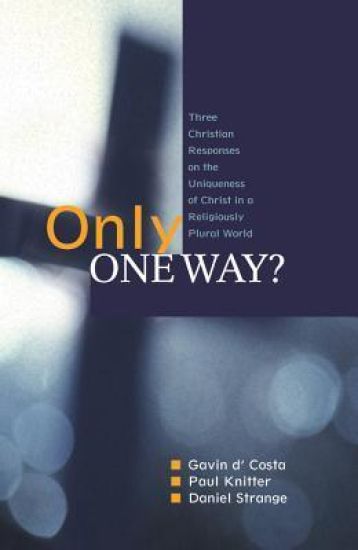
Only One Way?

Only One Way?

Gavin D'Costa; Paul F. Knitter; Daniel Strange

SCM Press
2011
nidottu
This book presents three different, influential and representative theological approaches towards the world religions. Students are not only introduced to the field, but get three passionate and intelligent 'takes' on what is at stake. By means of a response to each of the primary essays, the authors are put into interaction with each other, and are also engaged with the most contemporary scholarship in the field of theology of religions.This sustained and high level critical interaction between the authors provides a feature that is not to be found in any other current work in theology of religions. The three views represent: conservative Roman Catholic Christianity (D'Costa), Reformed evangelical Christianity (Strange) and liberationist liberal Christianity (Knitter). This book will therefore appeal to a very wide theological market from all sections of the theological spectrum.
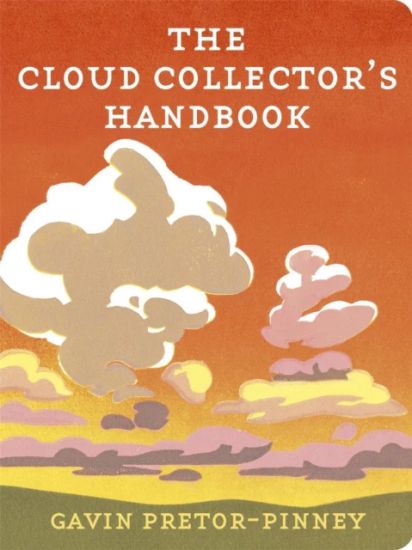
The Cloud Collector's Handbook

The Cloud Collector's Handbook

Gavin Pretor-Pinney

Sceptre
2009
sidottu
The essential aid for everyday cloudspotting, from the author of the bestselling THE CLOUDSPOTTER'S GUIDE'The perfect companion for a gloomy day'New Scientist'Float away with this unstuffy guide to all things fluffy'Good HousekeepingTHE CLOUD COLLECTOR'S HANDBOOK fits into pockets, allowing cloudspotters to identify cloud formations anytime and anywhere. All the common cloud types are represented, as are many of the rare ones, each fully described and illustrated with a range of photographs. Not only is THE CLOUD COLLECTOR'S HANDBOOK an invaluable resource for anyone who wants to be able to identify and understand every cloud that floats by, it also caters for the competitive cloudspotter. Points are awarded for each cloud type identified - the rarer the cloud, the greater points - and there's space to fill in where and when it was sighted.Beautifully designed, in colour throughout, and full of the humour that made THE CLOUDSPOTTER'S GUIDE so engaging, the HANDBOOK is the essential reference for anyone with their head in the clouds.PRAISE FOR THE CLOUDSPOTTER'S GUIDE'A lovely book, the sort that everybody should have in the car or on the kitchen windowsill'Daily Telegraph'Read this eye-opening and amusingly written book'Daily Mail 'His style is genial, his enthusiasm uplifting and his book is nothing less than a subtle but glorious mantra for a way of life'Metro
Somewhere Over The Rainbow
Near the southern tip of Africa, there is a mountain that does a conjuring trick with the biggest tablecloth on earth. In a sacred forest near the Limpopo river, there is a bird that flies on wings of thunder, flashing lightning from its eyes and bearing rain in its beak. In between, there is a hauntingly beautiful land and millions of confused people. When Archbishop Desmond Tutu dubbed his native South Africa the 'Rainbow Nation', he conjured a vision of ethnic diversity and harmony in a country with eleven official languages, two national anthems, and a parliament that shuttled between two cities. As a foreign correspondent reporting on the last days of apartheid, Gavin Bell thought it was a brave image and wondered how long it would endure. A few years later, he returned to find out what had happened to Tutu's rainbow. In his travels he found a country at odds with itself, swinging between hope and despair, buoyed by a sense of freedom and haunted by a fear of violent crime. SOMEWHERE OVER THE RAINBOW is not only a fine travel book by an award-winning writer, it is a compelling portrait of a country in search of an identity. The leopard stories are good too.
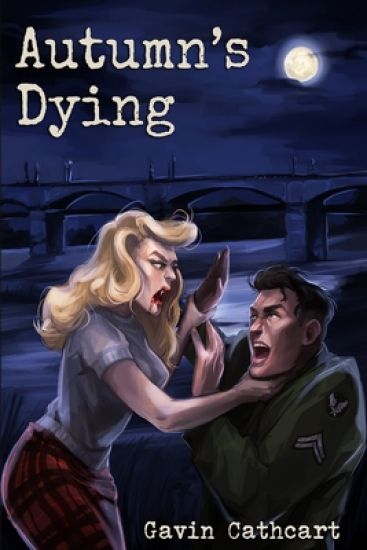
Autumn's Dying

Autumn's Dying

Gavin Cathcart

Lulu.com
2018
pokkari
Immortality can be a tough row to hoe, particularly when you have to continually kill folks to keep on going. Since being slain by a female vampire in the autumn of 1944, Luke Bennek has stuck to the shadows, carving out a gritty existence in the decaying sections of America's cities. To avoid detection, he feeds only when necessary, taking those that will be little missed. For over seven decades it'd been going fairly well, but time catches up with everyone. In a rapidly changing world, Luke is finding it harder and harder to stay under the radar, and now someone has discovered what he is. When the predator becomes the prey, all bets are off, and something's gotta give.
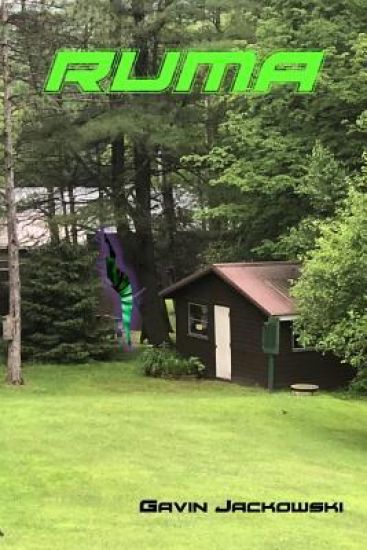
Ruma

Ruma

Gavin Jackowski

Lulu.com
2018
pokkari
When Andrew accidentally unleashes a fury that could wipe out the entirety of the human race, he along with his friend Mack must travel to the past and alter Andrew's future. Camp Ruma is the place in which Andrew must reunite his younger self with all of his old friends and train them to wield a power known as Pura against one of the greatest evils the earth has ever seen. Will Andrew succeed at destroying this threat to the human race or will he perish?
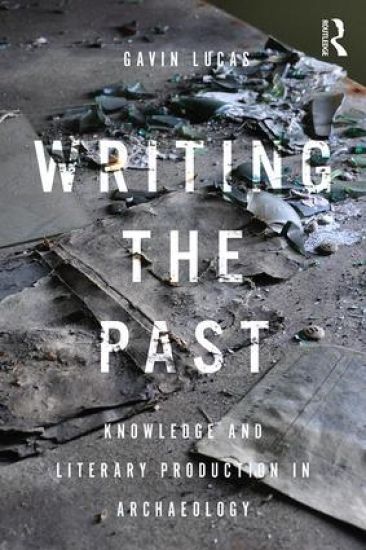
Writing the Past

Writing the Past

Gavin Lucas

Routledge
2018
sidottu
How do archaeologists make knowledge? Debates in the latter half of the twentieth century revolved around broad, abstract philosophies and theories such as positivism and hermeneutics which have all but vanished today. By contrast, in recent years there has been a great deal of attention given to more concrete, practice-based study, such as fieldwork. But where one was too abstract, the other has become too descriptive and commonly evades issues of epistemic judgement.Writing the Past attempts to reintroduce a normative dimension to knowledge practices in archaeology, especially in relation to archaeological practice further down the ‘assembly line’ in the production of published texts, where archaeological knowledge becomes most stabilized and is widely disseminated. By exploring the composition of texts in archaeology and the relation between their structural, performative characteristics and key epistemic virtues, this book aims to move debate in both knowledge and writing practices in a new direction.Although this book will be of particular interest to archaeologists, the argument offered has relevance for all academic disciplines concerned with how knowledge production and textual composition intertwine.
Writing the Past

Writing the Past

Gavin Lucas

Routledge
2018
nidottu
How do archaeologists make knowledge? Debates in the latter half of the twentieth century revolved around broad, abstract philosophies and theories such as positivism and hermeneutics which have all but vanished today. By contrast, in recent years there has been a great deal of attention given to more concrete, practice-based study, such as fieldwork. But where one was too abstract, the other has become too descriptive and commonly evades issues of epistemic judgement.Writing the Past attempts to reintroduce a normative dimension to knowledge practices in archaeology, especially in relation to archaeological practice further down the ‘assembly line’ in the production of published texts, where archaeological knowledge becomes most stabilized and is widely disseminated. By exploring the composition of texts in archaeology and the relation between their structural, performative characteristics and key epistemic virtues, this book aims to move debate in both knowledge and writing practices in a new direction.Although this book will be of particular interest to archaeologists, the argument offered has relevance for all academic disciplines concerned with how knowledge production and textual composition intertwine.