This work has been selected by scholars as being culturally important and is part of the knowledge base of civilization as we know it.This work is in the public domain in the United States of America, and possibly other nations. Within the United States, you may freely copy and distribute this work, as no entity (individual or corporate) has a copyright on the body of the work.Scholars believe, and we concur, that this work is important enough to be preserved, reproduced, and made generally available to the public. To ensure a quality reading experience, this work has been proofread and republished using a format that seamlessly blends the original graphical elements with text in an easy-to-read typeface.We appreciate your support of the preservation process, and thank you for being an important part of keeping this knowledge alive and relevant.
This book has been considered by academicians and scholars of great significance and value to literature. This forms a part of the knowledge base for future generations. We have represented this book in the same form as it was first published. Hence any marks seen are left intentionally to preserve its true nature.
Friedrich II. als Schrifsteller im Elisium is an unchanged, high-quality reprint of the original edition of 1789. Hansebooks is editor of the literature on different topic areas such as research and science, travel and expeditions, cooking and nutrition, medicine, and other genres. As a publisher we focus on the preservation of historical literature. Many works of historical writers and scientists are available today as antiques only. Hansebooks newly publishes these books and contributes to the preservation of literature which has become rare and historical knowledge for the future.
Mikä on elämässä tärkeintä? Mikä tekee elämästä elämisen arvoista?Useille kielille käännetyn, itävaltalaisen nykykirjailija Arno Geigerin (s. 1968) teoksessa nelikymppinen kirjailija Arno Geiger kohtaa vanhenevan isänsä Alzheimerin taudissa. Edessä on uusi tutustuminen isään, jonka mieli alkaa elää toista todellisuutta. Isän sairaudesta kasvaa pojalle tie elämän perusasioiden ja arvojen ymmärtämiseen. Keski-Euroopassa menestyksen saavuttanut teos on riipaiseva kuvaus jokaista meistä koskettavasta tematiikasta ja mahdollisuudesta, joka voi toteutua omalla kohdallamme.Samalla teos on valoisa ja eloisa kuvaus ihmisestä, jonka elinvoima ja viisaus eivät katoa Alzheimerin taudin kehittyessä. "Syvällinen, yksilöllinen ja ajattomasti yleispätevä pohdiskelu aiheesta, joka koskettaa meitä kaikkia: Ikä ja sairaus, kotiseutu ja perhe ..." Felicia von Lovenberg "Frankfurter Allgemeine Zeitung"
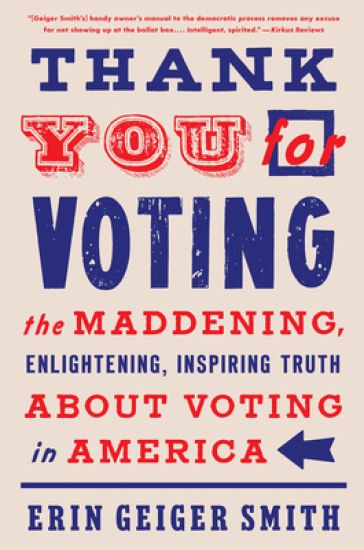
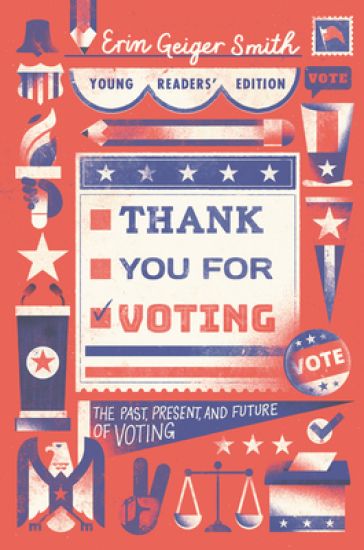
"If you want to celebrate your essential right as a citizen and encourage others to do the same, Thank You for Voting provides an engaging and concise tutorial of what it means to cast your ballot--past, present, and future. Read this book (And be sure to vote.)" --Ann PatchettA concise, lively look at voting in America, including insights into why so few Americans today vote and innovative ways to educate and motivate them--updated with a new epilogue analyzing the 2020 election.Voting is a prized American right. The 2018 midterm elections saw record turnout--more than 110 million Americans cast ballots. Yet about half of those eligible did not participate. Why isn't voter turnout higher, and what can we do about it? The problem, Erin Geiger Smith contends, is a lack of understanding about how our electoral system works and too little appreciation for the power of voting. To inspire action, she looks at the voting process from the Framers' perspective through the Voting Rights Act to the present, examining the difficult and inspiring stories of how different groups got the right to vote, state prohibitions against felons voting, charges of fraud and suppression, and new methods to increase voter registration. She explains topics that confuse even the most informed voters: polling, news literacy, gerrymandering, and the Electoral College. And she explores how age, race, and socioeconomic factors influence turnout.Most important, Geiger Smith outlines simple actions everyone should take to increase civic participation in elections, and reveals how innovative get-out-the-vote movements energize first-time voters. Informative and empowering--and with a new epilogue analyzing the 2020 election--Thank You for Voting is an essential call to the polls.
A fascinating look into America's voting history that will inspire young people to get involved This young readers' edition of Thank You for Voting, from debut author and journalist Erin Geiger Smith, presents its information in clear, interesting chapters. Broken into three sections--The Stories of How We Got the Vote, Know Before You Vote, and How to Get People to Vote--this is a book that will appeal to kids 8 to 13 who are politically engaged. But it will also help a middle grader who is more focused on just finding good resources for history and social studies reports.Voting is a privilege and a right, but it hasn't always been for many people. From the founding fathers to Jim Crow to women's suffrage to gerrymandering--and everything in between--readers will get a look at the complex history of voting and become empowered to ask BIG questions like: --What can I do to support my favorite leader? --Who can I talk to about the issues I believe in? --How can I make a difference in my community? Every citizen has the right to vote. Let each one count
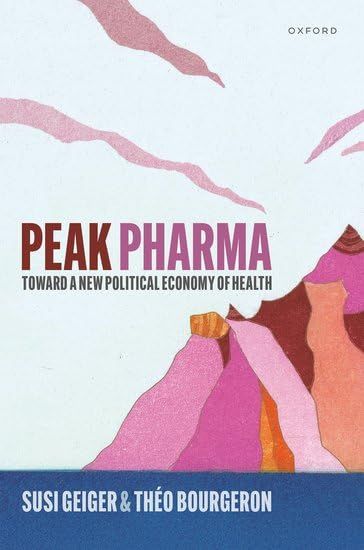
This book argues that we have reached the 'peak' of a particular model for pharmaceutical production - the neoliberal value model that has been in place since the early 1980s. 'Peak' designates a state where a value model's contradictions become exacerbated to a point where the system cannot but change: it is a point where an industry's products become too expensive and its resources exhausted, and where the coalitions that have held up that particular value model disintegrate. In other words, it is the point where an industry collapses under its own greed, of having captured too much value for itself, leaving none to the other actors in the system. Peak Pharma argues that the neoliberal pharmaceutical system is reaching its 'peak' in several vital respects - peak pricing, peak concentration, peak financialization, and peak expansion. It uses the term to signal the crisis and possible end of an era-defining business model in the pharmaceutical sector. The book presents a synthesis of the authors' decade-long empirical investigations into social movements contesting the pharmaceutical market. It brings together a large body of knowledge that is currently spread across political economy, sociology, STS, organization studies, and the history of medicine, to follow the neoliberal dynamics that have engendered an acceleration toward 'peak' over the span of the last 40 years. It traces the emergence of different voices and groups that have contested this evolution, particularly around specific crisis points and revelatory moments, including the fight for access to HIV/AIDS medicines, the global health era, pharmaceutical corporate social responsibility, the advent of personalized medicine and digital health, Covid-19, and others. The authors trace the shifting coalitions between the pharmaceutical industry, patient organisations, and governments that kept propping up the neoliberal value system throughout this evolution. They show that the recent acceleration toward peak has led many centrist voices from patient organizations, academia and politics to start changing course from market repair to imagining alternative pharmaceutical economies, prominently including imaginaries around the pharmaceutical commons. The book closes with a set of recommendations for policy makers and civil society actors interested in fostering an alternative political economy of health. This is an open access title available under the terms of a [CC BY-NC-ND 4.0 International] licence. It is free to read at Oxford Scholarship Online and offered as a free PDF download from OUP and selected open access locations.
This book argues that we have reached the 'peak' of a particular model for pharmaceutical production - the neoliberal value model that has been in place since the early 1980s. 'Peak' designates a state where a value model's contradictions become exacerbated to a point where the system cannot but change: it is a point where an industry's products become too expensive and its resources exhausted, and where the coalitions that have held up that particular value model disintegrate. In other words, it is the point where an industry collapses under its own greed, of having captured too much value for itself, leaving none to the other actors in the system. Peak Pharma argues that the neoliberal pharmaceutical system is reaching its 'peak' in several vital respects - peak pricing, peak concentration, peak financialization, and peak expansion. It uses the term to signal the crisis and possible end of an era-defining business model in the pharmaceutical sector. The book presents a synthesis of the authors' decade-long empirical investigations into social movements contesting the pharmaceutical market. It brings together a large body of knowledge that is currently spread across political economy, sociology, STS, organization studies, and the history of medicine, to follow the neoliberal dynamics that have engendered an acceleration toward 'peak' over the span of the last 40 years. It traces the emergence of different voices and groups that have contested this evolution, particularly around specific crisis points and revelatory moments, including the fight for access to HIV/AIDS medicines, the global health era, pharmaceutical corporate social responsibility, the advent of personalized medicine and digital health, Covid-19, and others. The authors trace the shifting coalitions between the pharmaceutical industry, patient organisations, and governments that kept propping up the neoliberal value system throughout this evolution. They show that the recent acceleration toward peak has led many centrist voices from patient organizations, academia and politics to start changing course from market repair to imagining alternative pharmaceutical economies, prominently including imaginaries around the pharmaceutical commons. The book closes with a set of recommendations for policy makers and civil society actors interested in fostering an alternative political economy of health. This is an open access title available under the terms of a [CC BY-NC-ND 4.0 International] licence. It is free to read at Oxford Scholarship Online and offered as a free PDF download from OUP and selected open access locations.